
Wikipedia:Wikipedia Signpost/2026-07-13/In the media

Battle for a soul – who won?


Battle for the soul of the internet

Wikipedia is in peril, "under threat from MAGA, A.I. and foreign autocrats," according to The New York Times. Wikimedia Foundation CEO Bernadette Meehan "will not say Wikipedia is at war — not after she spent much of 2007 in Iraq, in an actual war zone ... [b]ut she accepts that the site is in a metaphorical battle for its very existence." The WMF is reacting by posting advertisements in Times Square and increasing its human rights team to protect volunteers. (See Global Advocacy for continuing developments.) The Times even tells us why Meehan wears a Timex watch. "Wikipedians aren’t flashy, but they are tough... Ms. Meehan fits in."
The Times lines up some of Wikipedia's critics: Elon Musk, Tucker Carlson, Ted Cruz, David Sacks, and even Larry Sanger. You can almost hear them quaking in their Gucci loafers as The Times reads out Meehan's qualifications. But more seriously, Meehan directly states that Wikipedia is at an inflection point and asks the important question. "How do we keep this project alive?" The Signpost is glad that Bernadette gets to answer that question. Readers are encouraged to give their answers in the comments section below. – S
Larry indefinitely blocked after community ban at noticeboard
- See related content on the ban itself at this issue's News and notes
The New York Post said on June 22 that Wikipedia co-founder Larry Sanger was "indefinitely blocked from editing"; he was actually community banned, which is more severe – see story in this issue's News and notes. Coverage also provided by 404 Media, iHeartRadio, Newsmax, Gizmodo, The Times of India, The New York Times, and Fox Business (video). The New York Post followed up with a June 23 piece signed by their editorial board titled "Oust the commissars from control of Wikipedia", referring to the action as evidence that "[f]actions of fanatic editors – possibly state-sponsored – have assumed control of the process, especially concerning Israel and its war against Hamas", and part of a broader societal "knowledge economy [takeover] where extremists define their positions on gender, racism, climate change and so on as scientifically true, and thus undebatable".
The Free Press published a front page editorial from Sanger on June 26. Washington Examiner ran another op-ed by Sanger on July 8. Most of the piece is paywalled, but we can read the introduction in which he refers to administrators as "an anonymous mob with practically unlimited power".
Jake Orlowitz, a contributor to Wikipedia @ 20, posted on Medium the essay "Not Here to Build an Encyclopedia: Larry Sanger, Jimmy Wales, and the twenty-five-year fight over who founded Wikipedia". Orlowitz's essay has this to say:
He [Sanger] was also uneasy with what he had made, almost from the start. By the middle of 2001 he was calling the growing community overrun by trolls and by what he named "anarchist types", people who rejected the idea that anyone should hold authority others didn't. While Wikipedia was just raw material for Nupedia, this hadn't bothered him...
He clashed with editors who resented his attempts to organize and direct them [on Wikipedia]...
Sanger believed an encyclopedia needed experts and authority at its center. The community he had gathered believed the opposite, that the wiki's radical equality was the point and that no credential earned anyone the last word. Both convictions could not win. The community's did, partly by outlasting him.
— Jake Orlowitz, Medium
– B
A red card for Wiki?
Jewish News and The Forward (later reprinted in Haaretz (paywalled)) state that the Wikipedia article on French World Cup referee Francois Letexier falsely identified the ref as being Jewish for up to eight hours. Two of his calls during the Argentine-Egypt round of 16 game were considered very controversial and may have affected the outcome of the game. The game ended 3–2 in favor of Argentina after they were down 0–2. The Forward identifies this edit as the start of the problem in the Wikipedia article.
A preliminary investigation by The Signpost reveals that an incident did in fact occur on Wikipedia over an extended period and that at least one editor did get a red card for a flagrant dangerous tackle. No VAR needed for this one. – S
- As we went to press, a similar story by Ashley Rindsberg appeared in The Free Press.
In brief

- Wiki Spy: Neal Agarwal, of Spend Bill Gates' Money fame, created a fun new web-based diversion called Wiki Spy. It creates a collage of items related to a base topic. Cut-out images are created from files on Wikimedia Commons and arranged in a collage. A link to a relevant Wikipedia article appears if the user clicks the button, or clicking an image takes the user to a new collage related to that image. We learned about it from Boing Boing. As of now we don't know what the special sauce is for determining object relatedness for constrution of a collage. – B
- Who won?: Jewish News Syndicate says "A footnote from the reference" at 2026 Iran War "links to news articles that fail to confirm the claim" that Islamic Republic of Iran prevailed in the conflict, despite that being the outcome stated by the article. The JNS article specifically refers to the use of this article from The Indian Express, which states: "So, who actually won? / The answer depends entirely on who is being asked." As of writing, the text in the Wikipedia article is as follows:
"Writing for The Indian Express, journalist Mashkoora Khan said that the outcome depended on who is being asked: for Trump, a decisive victory; for Iran, a defeat of Washington because it survived, adding that "Independent analysts are similarly divided, and many conclude that nearly everyone lost something."
— 2026 Iran war Wikipedia article
- It is possible that a previous revision did conclude Iranian victory from this source, which got removed in a later edit. The current text was originally added on June 24. (see prior Signpost coverage) – B, M
- Dwile flonking, the ancient pub dance from 1966: Boing Boing describes the Wikipedia article on dwile flonking, an English dance that requires a person to fling a beer-soaked cloth at circling dancers. It was once claimed that the dance goes back to 1585, but that was just a hoax. A quick check by the Signpost shows that the Wikipedia article (which goes back to 2006) got the history right thanks to User:Caeciliusinhorto who ran into the article in this condition. "The article then was woolly about whether dwile flonking was a genuine medieval pastime. I started digging and the more I looked... I ended up rewriting the whole thing a few days later." Let's drink (not flonk) a beer to all those editors who take their subjects seriously. – S
- Been flonked? Need some new clothes?: See 25th anniversary clothing collaboration (Hypebeast)
- Blocks, not bans: "What 20 million bans [sic] reveal about the strain on Wikipedia's volunteers" (The Conversation) – researchers describe how terse or boilerplate reasons for blocks, and increasing block durations, could be a reflection of unsustainable workloads for a decreasing administrator cadre, "increasingly prioritizing prevention, efficiency, and content quality over efforts to rehabilitate new users". See prior coverage on the shrinking admins topic, latest in ongoing Signpost coverage. – B
- Beyond fake news, or: Kremlin loves Mediawiki?: "The Kremlin Creates Wikipedia Clones in Foreign Languages to Teach Neural Networks to Spread Its Propaganda", describing Russian information operations of the Агентство Социального Проектирования (Agentsvo Sotsialnogo Proektirovania, or Social Design Agency), including data poisoning aimed at large-language model training datasets (Nasha Niva, Belarus, in English) – S, B,
- Reduce, recycle, re-wiki: How-To Geek shows how to turn an old Kindle into an offline Wikipedia reader . It's a bit like using Kiwix for offline web browsing, but by transferring ebook files cleverly prepared from a Wikipedia vital articles stream. – B
- A swift reversion: "Taylor Swift's surname on Wikipedia changes swiftly after Kelce wedding mix-up": It's still "Swift" even if the Daily Mail says otherwise (The Oregonian) – B
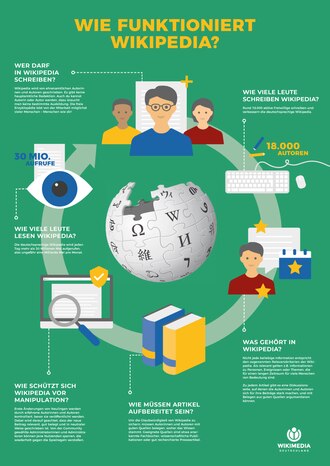
- DW asks: "How reliable are German Wikipedia articles?" (Deutsche Welle, geoblocked, video in English). German newspaper Frankfurter Allgemeine Zeitung found errors in almost half of 1,000 randomly chosen articles in a study announced a year ago (see prior Signpost coverage). DW then speculates that a new (paid) model is needed to meet the reality of falling numbers of volunteer editors, a solution apparently ruled out last year. – S, B

Discuss this story