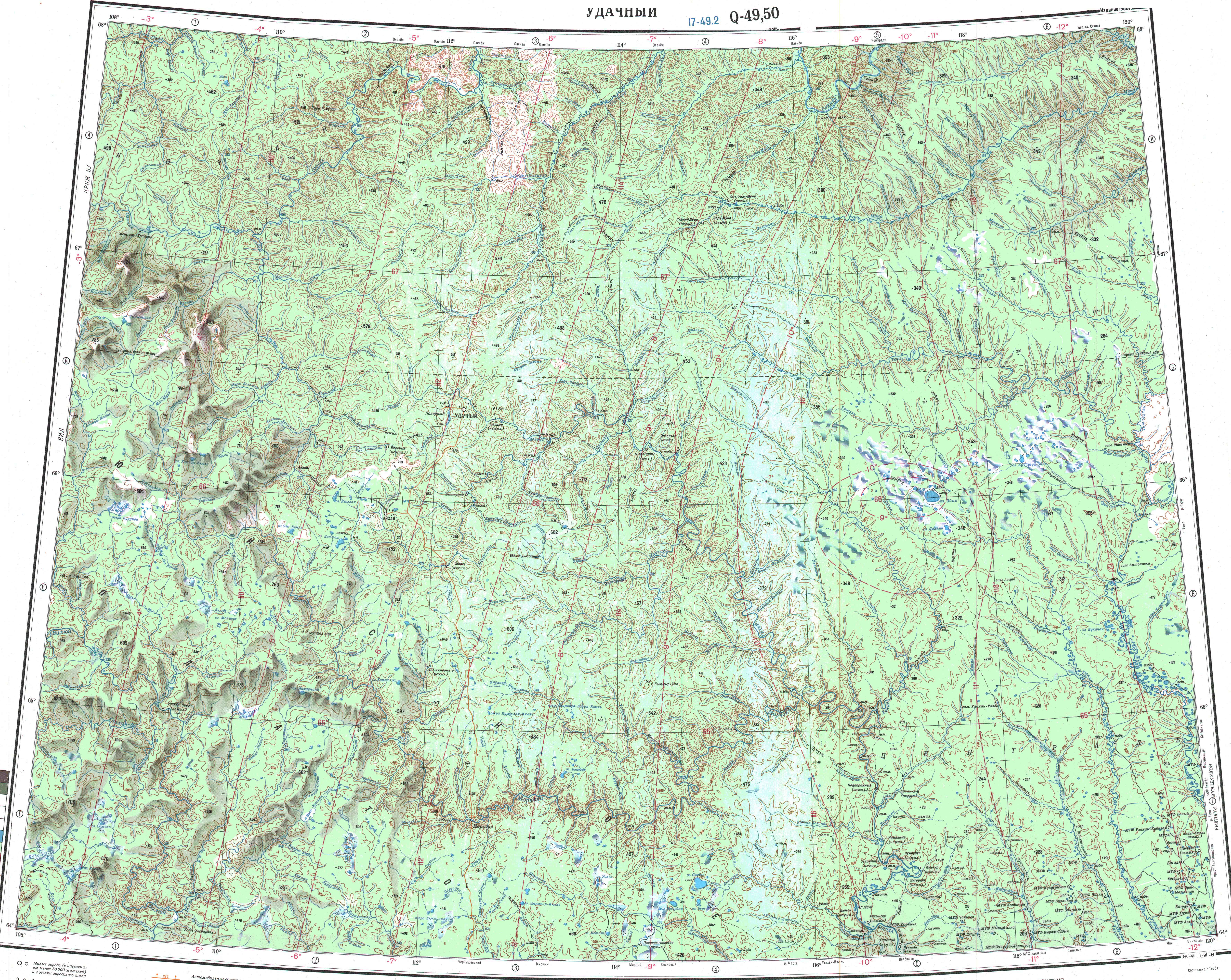
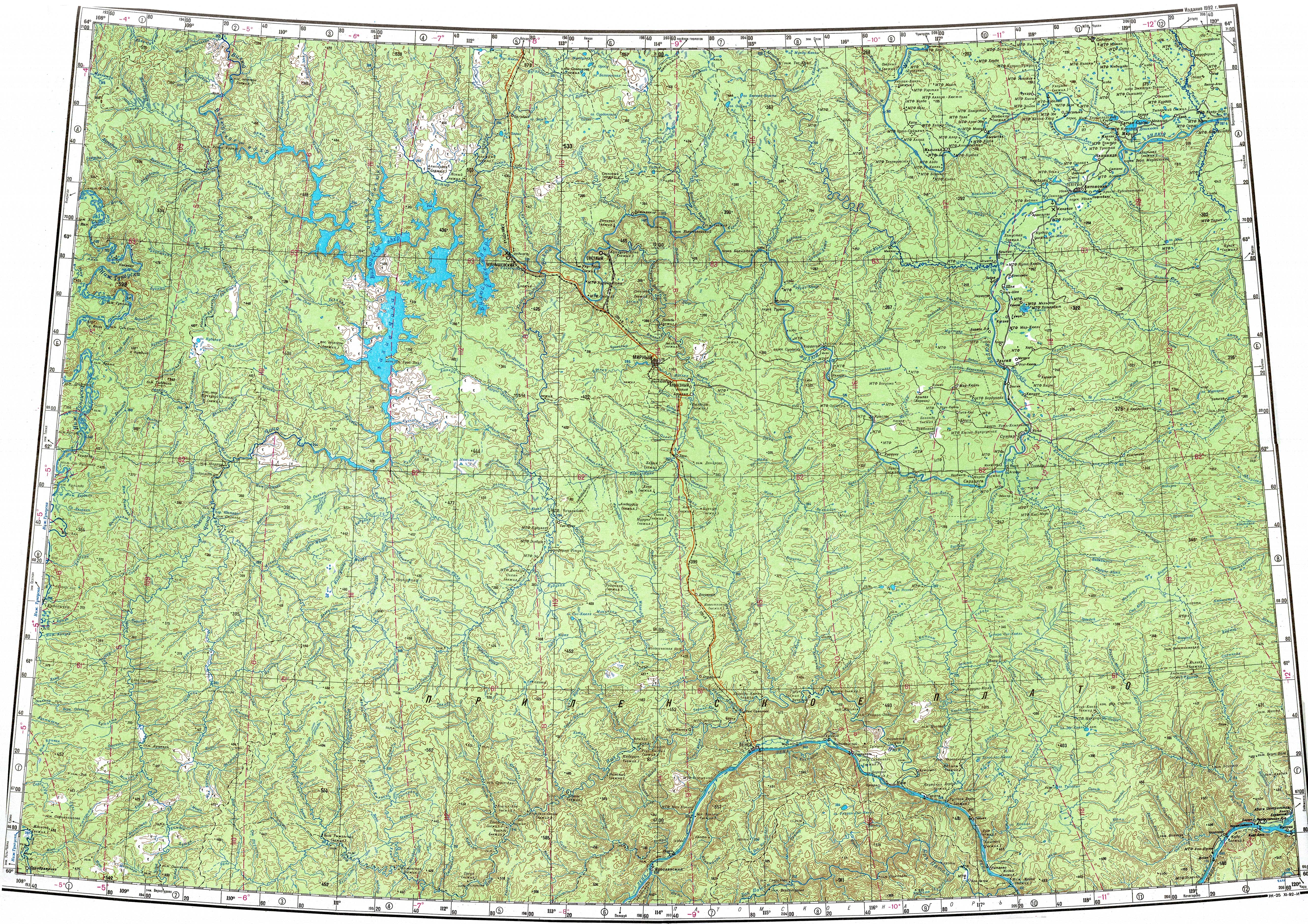
The Olguydakh (Russian: Олгуйдах; Yakut: Олгуйдаах), is a river in Yakutia (Sakha Republic), Russia. It is a left hand tributary of the Akhtaranda, part of the Vilyuy basin. The river is 191 kilometres (119 mi) long and has a drainage basin of 5,450 square kilometres (2,100 mi2).[1]
| Olguydakh Олгуйдах / Олгуйдаах | |
|---|---|
 Panorama of the river | |
  Mouth location in Yakutia, Russia | |
| Location | |
| Federal Subject | Yakutia |
| Physical characteristics | |
| Source | |
| • location | Lake Toymoku Vilyuy Plateau |
| • coordinates | 64°16′22″N 112°17′37″E / 64.27278°N 112.29361°E |
| • elevation | 427 m (1,401 ft) |
| Mouth | Akhtaranda |
• coordinates | 63°27′02″N 112°06′50″E / 63.45056°N 112.11389°E |
• elevation | 250 m (820 ft) |
| Length | 191 km (119 mi) |
Basin size | 5,450 km2 (2,100 sq mi) |
| Basin features | |
| Progression | Akhtaranda → Lena→ Laptev Sea |
The river flows across an uninhabited sector of Mirninsky District.[2][3] An area where mysterious events reportedly took place lies near the abandoned Olguydakh village on the banks of the lower course of the river.[4]
Course
editThe Olguydakh belongs to the upper stretch of the Vilyuy basin. It originates in the northeastern end of lake Toymoku (Yakut: Тоймоку) of the Vilyuy Plateau. The river heads first northwards for a short stretch, then it bends and heads roughly southeastwards and southwards, meandering slightly for the remainder of its course. There are many small lakes in its basin.[2] In its last stretch the Olguydakh turns to the southwest. Its mouth is at the confluence with the 227 km (141 mi) long Alymdya from the right to form the Akhtaranda, 75 km (47 mi) from its mouth in the Vilyuy Reservoir.[5] There is a bridge of the Aykhal—Chernyshevsky highway over the Olguydakh.[6]
Tributaries
editParanormal claims
editClaims have been made dating back to the middle of the 19th century regarding large, copper, dome-shaped objects ("cauldrons" or "boilers," Yakut: олгуй) found in a region along the river known as the Valley of Death.[4] The alleged radioactive-like sickness hunters who spent the night in these cauldrom led to the area being deemed cursed by the local Yakut and given the name of Yelyuyu Chörköçüökh (Yakut: Өлүү Чөркөчүөх). A number of expeditions to Olguydakh and surrounding regions which report these stories have been made, such as those from Richard Maack and Ivan Mackerle.
See also
editReferences
edit- 1 2 "Река Олгуйдаах in the State Water Register of Russia". textual.ru (in Russian).
- 1 2 "Q-49-50 Topographic Chart (in Russian)". Retrieved 20 April 2023.
- ↑ "P-49-50 Topographic Chart (in Russian)". Retrieved 20 April 2023.
- 1 2 Mysteries of Siberia's 'Valley of Death'
- ↑ Nature.ykt
- ↑ Google Earth
External links
edit Media related to Olguydakh at Wikimedia Commons
- Copper boilers in the swamps of Siberia.