
Talk:Kabyles Hadra
| This is the talk page for discussing improvements to the Kabyles Hadra article. This is not a forum for general discussion of the subject of the article. |
Article policies
|
| Find sources: Google (books · news · scholar · free images · WP refs) · FENS · JSTOR · TWL |
 | This article is rated Start-class on Wikipedia's content assessment scale. It is of interest to the following WikiProjects: | ||||||||||||||||||||
| |||||||||||||||||||||


problematic contribution
edit- Morizot does not say that the term Kabyle hadara is a "French invention."
- It is specified
Celle de « Kabyles el hadra » serait admise partous les habitants du Nord-Constantinois au témoignage du militant nationaliste Hocine Lahouel, originaire de Skida (ex-Philippeville). Personnellement je l'ai entendue dans la région de Mila.
which you have removed.
- You have removed the source from Omar Carlier which states:
sont appelés Kbails badra les gens de Djidjelli, qui ne parlent que l'arabe mais avec un accent kabyle marqué et se disent eux-mêmes kabyles. Et ces Kbails hadra appellent Kbails niras ceux qui, à l'ouest, parlent kabyle.
- The linguistic observations about the region are entirely relevant; the revert (especially of the map) is not justified
- Please don't "break" the references in the process (it's a formatting issue).
Monsieur Patillo (talk) 21:19, 14 December 2025 (UTC)
- Kitouni (the source that you cited) says it. Did you read it or did you just copy the parts that interests you?
- I have removed it from the lead (it's mentioned in the article's body, where it's belongs).
- I disagree. If the sources doesn't mention the primary topic, then whatever it says doesn't belong in the article.
- No reference broken when you reverted.
- Don't present terms that nobody uses in Algeria in the present tense. M.Bitton (talk) 21:26, 14 December 2025 (UTC)
- Where does Kitouni say that the term was invented by the French?
- I disagree with you; it has its role in the introduction to help the reader geographically understand the subject.
- The inhabitants of Djidjel and its region are Kabyle Hadara, so observations on their dialect are part of the subject.
- Yes, a bot fixed it. You didn't even realize you deleted a source...
- This is a matter of personal opinion; I present the subject as the source presents it, with the tenses consistent across the sources... Wp:V
- Monsieur Patillo (talk) 21:40, 14 December 2025 (UTC)
- Almost everything in the Kitouni source is about what the French said (including the usual racism of the time).
- Nope.
- If the sources doesn't mention the primary topic, then whatever it says doesn't belong in the article, period.
- Nope, facts are not a matter of opinion. The sources are talking about a term that nobody uses nowadays. M.Bitton (talk) 21:56, 14 December 2025 (UTC)
- Kitouni begins by saying:
Dans la tradition locale, le nom par lequel on désignait les populations du Nord-Constantinois semble avoir été Kabaile el Had'ra par opposition à Kabaile En-nighass [...]]"
Which passage supports your claim ? - We acknowledge a disagreement on this point.
- What do you think they are referring to? In your latest revert you removed the source from Mohammed Matmati which links Kabyle Hadara, Petite Kabylie and the language...
- No source says that this term is not used nowadays. That's your personal opinion AND WP:OR.
- Kitouni begins by saying:
- Monsieur Patillo (talk) 22:22, 14 December 2025 (UTC)
- He says a lot more than: apart from "semble avoir" et "on désignait", I can cite the racist mumbo jumbo that he refers to while mentioning what the French said.
- I'm not them.
- No reliable source says that it's used nowadays for the simple reason that there is no such ethnic minority in Algeria. Good luck finding a RS that would say otherwise. M.Bitton (talk) 22:28, 14 December 2025 (UTC)
- What are you referring to? It's up to you to support your changes with a specific passage. Which page?
- I did not receive a response regarding Mohammed Matmati.
- Jean Morizot is indeed speaking in the present tense:
Dans l'Est algérien et en Tunisie, les « Arabes » distinguent deux sortes de Kabyles, les « ennigh'as » et les « el hadra »".
So it's your assumption that's unfounded
- Monsieur Patillo (talk) 22:36, 14 December 2025 (UTC)
- They already are supported by the sources that refer to what the French said in the 19th century.
- You won't because I can't guess what they re referring to, and nor should I. Like I said, if the sources doesn't mention the primary topic, then whatever it says doesn't belong in the article.
- Who is Jean Morizot? What makes you think he's in any position to make such claims about today's Algeria and Tunisia? M.Bitton (talk) 22:44, 14 December 2025 (UTC)
- As I see that the discussion is not progressing, I am requesting a third opinion. Monsieur Patillo (talk) 22:58, 14 December 2025 (UTC)
- You made a claim,
Kitouni (the source that you cited) says it, this hasn't been proven yet; you haven't even provided the page number for this information... Monsieur Patillo (talk) 23:04, 14 December 2025 (UTC)- I already explained that everything they said is based on the old French sources (they are literally citing the likes of Étienne Carette, etc). M.Bitton (talk) 23:11, 14 December 2025 (UTC)
- You made a claim,
- I believe Jean Morizot was an administrator during the French colonial period. This indicates clear bias, and this article heavily relies on him for sourcing which is problematic. Skitash (talk) 23:10, 14 December 2025 (UTC)
- To say that Morizot was a colonial administrator and therefore biased without a source is a personal opinion, not an established fact. Gilbert Meynier simply describes him as "the historian Jean Morizot" . Mohamed Harbi, an eminent historian of the Algerian War, was an independence activist; this does not diminish his merit. In any case, Mr. Bitton says he based his writing on Kitouni: . However, he does not claim that it is a French invention.
- Monsieur Patillo (talk) 08:27, 15 December 2025 (UTC)
- I have included the relevant excerpts below. Verifiable citations indicate that the current version is a misappropriation of source. Monsieur Patillo (talk) 08:51, 15 December 2025 (UTC)
- As I see that the discussion is not progressing, I am requesting a third opinion. Monsieur Patillo (talk) 22:58, 14 December 2025 (UTC)
- Not only is "invented" unsourced, but the term has NPOV issues as well. In the context of anthropology, "invented" has clear connotations (see e.g. Shlomo Sand's The Invention of the Jewish People). "coined" would be a much better proper term for describing well... a coinage. Either way, we don't have the sourcing for it. Katzrockso (talk) 20:36, 22 December 2025 (UTC)
Kitouni
editThis section addresses Mr. Bitton's repeated claims that the cited sources support positions they do not explicitly state. The concept of Kabyle hadara is not a French invention; the source does not support it. The excerpts below are provided solely to allow verification of the actual content of the sources. in case the geographical settings do not allow you to view the Google Books excerpts properly. Hosni Kitouni, La Kabylie orientale dans l'histoire, : pays des Kutama et guerre coloniale : Monsieur Patillo (talk) 08:51, 15 December 2025 (UTC)
ceux de toute l'Algérie qui approchent le plus du sauvage1. » Manière pour eux d'insulter une bravoure si difficilement contenue ou simple prétention de vainqueur inconsolable d'avoir été si rudement combattu ? Qu'importe ! Il y a assurément dans l'esprit d'indépendance des Kabaile El Had'ra non point l'« instinct de sauvage », mais un vrai frémissement d'une sensibilité singulière, réductible à nulle autre. Sensibilité qui n'a pu être forgée que par les événements de « la longue durée ». C'est cette histoire que nous tenterons de suivre à travers ses péripéties, ses grands drames et revers multiples, pour aller à la rencontre d'un pays et de ses hommes depuis si longtemps livrés à l'oubli sinon au dédain. Cette « Kabylie orientale dans l'histoire » qu'il eut été plus juste d'intituler « Kabaile El Had'ra dans l'histoire » nous la divisons en deux parties : l'avant et l'après 13 mai 1839, année de l'occupation française de Jijel2. Dans la première partie, nous tenterons de répondre à la question de savoir comment, et à travers quels processus complexes, l'entité Kabaile El Had'ra - le pays des Kutama - s'est forgée. C'est un survol rapide des grands mouvements historiques qui ont balayé l'Afrique du Nord en général et notre région en particulier. Une approche soutenue par le souci constant de restituer les événements dans les diverses interactions qui les ont déterminés. Si nous parvenons à faire la démonstration qu'un particularisme Kabaile El Had'ra a bel et bien existé avant 1830, nous aurons assurément atteint notre objectif. Nous entendons, par particularisme, les empreintes que laissent les événements sur l'« âme » d'une communauté, sur la manière qu'elle a de s'organiser pour vivre son présent et engager l'avenir des siens. Il nous reste alors à démontrer dans la seconde partie comment la colonisation, telle une bourrasque meurtrière, a détruit paysages, hommes, organisation sociale,
culture. Autrement dit comment le résultat de quinze siècles d'histoire a été, en moins de quarante ans, anéanti. Destruction entreprise au nom de « la civilisation qui vient au secours d'un peuple de sauvages ». Les crimes coloniaux, accomplis en Kabylie orientale, l'ont été avec une telle barbarie et une telle haine qu'il est insoutenable d'en évoquer même le souvenir. Pourtant, il faut bien que cette histoire soit écrite pour que nous avancions dans la connaissance de nous-mêmes, mais surtout, pour déjouer les pièges tendus par l'historiographie coloniale qui continue à faire des ravages dans la pensée dominante. Sous sa forme la plus visible, cette pensée « tourne autour de quelques thèmes qui tous au fond visent à fonder la légitimité de la conquête française et la charger d'une mission civilisatrice ». Dans cette vision largement ethnique, poursuit Yvon Thebert, « l'indigène est expulsé d'avant-scène et réduit à une masse de manœuvres dans laquelle suivant lesMonsieur Patillo (talk) 08:51, 15 December 2025 (UTC)
- I will address the two issues at the same time (since they are related).
- Morizot:
To say that Morizot was a colonial administrator and therefore biased without a source is a personal opinion, not an established fact.
The fact that he was administrator is mentioned on pages 7-8 of the very source that you used. Jean Morizot graduated from the H.E.C (l'Ecode des Hautes Etudes Commerciales), he then worked in a bank before being assigned to the CHEAM (Centre des hautes études d'administration musulmane) where he worked as an administrator until 1962.- Also worth noting is the fact that the book (Les Kabyles: propos d'un témoin) in question was first published in 1962 (what you cited is a reprint). This "witness account" is a primary source which may or may not be of use to scholars, but it's not something that we should use, much less present what it says in the present tense (like you did).
 Note: for anyone else reading this discussion: please refer to this comment for why these two important facts are extremely relevant.
- Kitouni:
Nous savons que Kabaile est un mot arabe. Pour Nedjma Abdelfattah-Lalmi : « Au fur et à mesure que les villes maghrébines se développaient et s'arabisaient leurs arrière-pays étaient désignés comme territoires de "qbaïl", c'est-à-dire de tribus. »
- We know that Kabaile is an Arabic word. According to Nedjma Abdelfattah-Lalmi: "As the Maghreb cities developed and became Arabized, their hinterlands were designated as territories of 'qbaïl,' that is, of tribes."
le nom par lequel on désignait les populations du Nord-Constantinois semble avoir été « Kabaile El Had'ra » par opposition à « Kabaile En-nighass » ou « Kabaile » berbérophones du Djurdjura.
- The name that was used to designate the populations of northern Constantine seems to have been "Kabaile El Had'ra," as opposed to the Berber-speaking "Kabaile En-nighass" or simply "Kabaile" of the Djurdjura Mountains.
D'après Marmol, il aurait été en usage au XVIIIe siècle « dans les tribus, chez les Kbail » pour désigner avec une connotation dédaigneuse les Arabes « qui demeurent dans les villes d'Afrique [et qui] sont appelés communément Hadara c'est-à-dire courtisans [urbanisés] et se mêlent la plupart de trafic [commerce]4 ». L'historien Moussa Lakbal5 introduit une explication qui conforte ce qu'écrit Marmol, selon lui, le néologisme « Kabaile El Had'ra » a été inventé pour désigner les descendants des tribus kutama qui auraient abandonné la vie de montagne pour aller s'installer dans les plaines et dans les cités.
- According to Marmol, it was in use in the 18th century "among the tribes, among the Kbail" to designate, with a disdainful connotation, the Arabs "who reside in the cities of Africa [and who] are commonly called Hadara, that is to say, [urbanized] courtiers, and are mostly involved in trade [commerce]4." The historian Moussa Lakbal5 offers an explanation that supports Marmol's account; according to him, the neologism "Kabaile El Had'ra" was coined to designate the descendants of the Kutama tribes who abandoned mountain life to settle in the plains and cities.
Les Français, après la conquête, les ignorèrent. Ils adoptèrent cependant l'ethnonyme « Kbaile » par opposition à Maures et Arabes pour désigner les habitants sédentaires des montagnes. Ils lui affectèrent cette graphie. « K'baile » devenant ensuite par glissement imperceptible « Kabile » pour être enfin francisé en Kabyle, Kabylie, etc.
- After the conquest, the French ignored them. However, they adopted the ethnonym "Kbaile" to distinguish it from Moors and Arabs, designating the settled inhabitants of the mountains. They assigned it this spelling. "K'baile" then became, through imperceptible evolution, "Kabile," before finally being Gallicized to Kabyle, Kabylie, etc.
Cette généralisation posait problème dès lors qu'il fallait diviser le pays, l'organiser et attribuer un nom à chacune des subdivisions créées par le nouvel ordre. Étienne Carette chargé de mener une enquête scientifique dans le Djurdjura, entre 1841-43, publia en 1847 son fameux ouvrage dont le titre est à lui seul un programme : La Kabylie proprement dite. Développant une batterie d'arguments tirés d'une étude fouillée du pays, Carette conclut qu'il existe bien une « Kabylie proprement dite » marquée par un ensemble de caractères propres à cette région. Il limite son territoire à 146 kilomètres, entre Dellys et Bougie, établissant la frontière sud au Gergour et au Medjana.
- This generalization posed a problem when it came to dividing the country, organizing it, and assigning a name to each of the subdivisions created by the new order. Étienne Carette, tasked with conducting a scientific survey in the Djurdjura Mountains between 1841 and 1843, published his famous work in 1847, the title of which is itself a manifesto: *La Kabylie proprement dite* (Kabylia Proper). Developing a battery of arguments drawn from a thorough study of the region, Carette concluded that there was indeed a "Kabylia proper," marked by a set of characteristics specific to this area. He limited its territory to 146 kilometers, between Dellys and Bougie, establishing the southern border at Gergour and Medjana.
- Note: What the above should tell you is that the ethnonym "Kabyle" was invented by the French, first to designate the settled inhabitants of the mountains and later to designate exclusively the inhabitants of Kabylia (a region which was never known by that name before the French occupation). In other words, the word Kabaile (tribes) shouldn't be used interchangeably with the word "Kabyle", unless one is referring the the Kabyle people (which isn't the case here).
- If this article is to survive (I don't see how, once it has been stripped of what is attributed to an administrator), then it should be renamed "Kabaile El Hadra" and its content adjusted accordingly. M.Bitton (talk) 23:46, 18 December 2025 (UTC)
- Kabaile and Kabyle are alternative romanizations of the same word, Qabaïl... This passage from Kitouni seems very clear to me:
Les Français, après la conquête, les ignorèrent. Ils adoptèrent cependant l'ethnonyme « Kbaile » par opposition à Maures et Arabes pour désigner les habitants sédentaires des montagnes. Ils lui affectèrent cette graphie. « K'baile » devenant ensuite par glissement imperceptible « Kabile » pour être enfin francisé en Kabyle, Kabylie, etc.
There's no need to make an unnecessary connection between "Kabyle" and "Kabail"... - The reading will have definitively confirmed that the French did not invent the term Kabyle Hadra, but rather that upon their arrival, this term, which predated their presence, had fallen into disuse.
- The ethnonym Qbail/Kabyle was not invented by the French; the source says exactly the opposite (the passage that begins with ...
Dans la tradition locale, le nom par lequel on désignait les populations du Nord-Constantinois ...
). France has made a certain use of it (pour désigner les habitants sédentaires des montagnes.
, this generalization goes beyond the framework of Kabylia, it concerns all of Algeria: Aurès etc... and even Morocco .)... that's the whole nuance. If we return to the author's narrative (Kitouni), he does indeed use the term "Kabyle hadra", it's not a french POV/invention. You can therefore auto-revert your version (WP:OR).
- Kabaile and Kabyle are alternative romanizations of the same word, Qabaïl... This passage from Kitouni seems very clear to me:
- Monsieur Patillo (talk) 16:48, 19 December 2025 (UTC)
- Morizot : The question isn't whether he was a colonial administrator or not, but rather why that would necessarily be a disqualifying fact ? Applied to a recommendation from the publishing space, this would be contrary to MOS: LABEL.
- The rest of the observations are fairly accurate, except that CHEAM is the "Center for Advanced Studies on Modern Africa and Asia," and there's nothing preventing the use of a primary or older secondary source, especially in a context of limited sources for a "straightforward, descriptive statement of facts." (WP:PRIMARY). This brings us back to the fundamental question: you want to impose a past tense conjunction that isn't used by the sources. It must be justified with sources and not by disqualifying those that do not suit you. Monsieur Patillo (talk) 18:22, 19 December 2025 (UTC)
- I would add this quote from Youcef Allioui, Les Archs, tribus berbères de Kabylie : histoire, résistance, culture et démocratie , 2006, p.154 which speaks very well to the present:
Beaucoup de Setifiens parlent kabyle. Les Jijiliens qui se disent pourtant « Kabyles citadins » (Qbayel Hadra : kabyles citadins par opposition aux Qbayel nniyas : kabylophones) sont aussi rétifs que les Dellysois.
Monsieur Patillo (talk) 19:02, 19 December 2025 (UTC)
- I would add this quote from Youcef Allioui, Les Archs, tribus berbères de Kabylie : histoire, résistance, culture et démocratie , 2006, p.154 which speaks very well to the present:
- As explained above, the word "Kabaile" and the ethnonym "Kabyle" have different meanings. The former is an Arabic word that simply means "tribes", while the latter is an ethnonym that was invented by the French, first to designate the settled inhabitants of the mountains and later to designate exclusively the inhabitants of Kabylia (hence the definition of the word Kabyle that we know today).
- Aside from Morizot not being a historian, and therefore, not a reliable source, it's the fact that you presented his old claims in the present tense that is the big issue. If you still don't get this, then I can't help you.
- You are also wrong about what CHEAM stands for ("Centre des hautes études d'administration musulmane" and not "Center for Advanced Studies on Modern Africa and Asia").
- Youcef Allioui was a professor of economics at the University of Paris who also held an admin role in France for decades. His claim (made in passing in a book about something else) is both extraordinary and contradicted by the source that you quoted above, which says that the term survived until the 19th century before falling into disuse.
- In other words, there is no such ethnic group as "Kabyle Hadra" in today's Algeria. If there was, you wouldn’t need to scrape the bottom of the sourcing barrel in a vain attempt to prove its existence.
- Like I said, If this article is to survive, it should be renamed "Kabaile El Hadra" and its content adjusted accordingly. M.Bitton (talk) 23:13, 19 December 2025 (UTC)
- Please address the questions step by step:
- Nothing in the sources indicates that the term Kabyle Hadra was invented by the French. Therefore, you have written a WP:OR (we are talking about the term Kabyle Hadra, not Kabyle, Kabail, or any other spelling). For the spelling, see the first quote of my previous message .
- The CHEAM has also been called the "Centre des hautes études d'administration musulmane"; we are talking about the same thing.It's a minor point.
- Harmattan Edition : Youcef Allioui holds a doctorate in social sciences. He was notably a disciple of the historian Charles André Julien. This still looks like an attack on the source.
- Désuétude means "unaccustomed" or "loss of a habit", not that it has disappeared... the WP:NPOV can also help to represent different points of view:
According to X, the term is falling into disuse, but Y attests to its use...(which Wikipedia normally advises doing and not tinkering with a WP:OR to talk in the past tense about something that no one talks about in the past tense. Kitouni also states p.10« La Kabylie Orientale dans l'histoire », qu'il eut été plus juste d'intituler « Kabaile El Had'ra dans l'histoire ».
He speaks clearly in the present tense (narrative present) with a before and after 1839 (French conquest of Jijel). - There are topics with few sources, that's just how it is, it doesn't allow for WP:OR.
- I did not agree to the previous linguistic revert , which is entirely relevant to the topic because it concerns the dialect spoken in the region (Jijel), that of eastern Kabylia (Kabylie orientale). Consensus from both parties is necessary before any changes are made. Yet another secondary source, Mohammed Matmati, in his "Souvenirs d'enfance de la guerre d'Algérie", makes the direct link
Ainsi, cette dénomination serait le produit, d'après Kitouni (2013), de la relative arabisation de la langue de la population berbère du fait de ce contact avec les arabes. Cette transformation de la langue berbère, devenue berbéro-arabe par l'interpénétration réciproque des deux langues, associée à l'appropriation par les populations de la Petite Kabylie de certaines coutumes de la vie citadine dans leur quotidien et leurs rapports sociaux, a donné le qualificatif de « Kbaïl El-hadra », qui peut être traduit ou que l'on traduit par la Kabylie « civilisée ». C'est aussi cette « nouvelle » langue qui distingue principalement les deux Kabylies, la « Grande » et la « Petite ». Les habitants de la « Grande » Kabylie, bien qu'ils aient adopté l'Islam, ont gardé le berbère comme langue d'où le qualificatif « Kbaïl ennighas » ou le « kabyle authentique/originel ».
.
- Monsieur Patillo (talk) 00:07, 20 December 2025 (UTC)
- Désuétude means disuse. The French definition is "Disparition de fait d'une coutume, d'une pratique, d'un usage".
- Mohammed Matmati is not a historian. He's simply commenting on what Kitoumi says (
d'après Kitouni (2013)....
). - I said what I needed to say (while quoting the sources), so I'm not going to entertain your relentless demands for satisfaction. Also, just because you created the article doesn't mean that can add whatever you want to it (WP:ONUS is a policy that you ought to familiarize yourself with). M.Bitton (talk) 00:27, 20 December 2025 (UTC)
- I had used the definition from the CNRTL : "qui n'est plus ou presque plus en usage" which is based on the Latin etymology Borrowed from Latin desuetudo "disaccustomment, loss of a habit". Apart from definition questions, see my remark on WP:NPOV (it is possible to provide two points of view on two subjects).
- I understand, but your draft is a WP:OR. I therefore intend to request an RFC to resolve the issue.
- Monsieur Patillo (talk) 00:43, 20 December 2025 (UTC)
- I am returning the comment on WP:ONUS because
are terms that were invented by the French in the 19th century
- Since the author is referring to the 19th century, the hair splitting is clearly pointless (we are in the 21st century).
- Your repeated baseless assertion about has been properly addressed (not once, but twice) is getting very tiring and will therefore be rightly ignored from now on.
- Renaming the article Kabaile el Hadra (as I suggested above) will solve the issue of what the French did (without guaranteeing the article's survival). Incidentally, Kabaile el Hadra is used more often to refer to this non-notable subject (given the low number of hits for all the names, "common name" seems like a stretch). The stub-like article, which is devoid of any encyclopedic substance, is unsurprisingly based on a couple of sources: one written by an "independent researcher" and the second, by an administrator from the colonial period. M.Bitton (talk) 01:53, 20 December 2025 (UTC)
- No, you didn't answer, you wrote a long post paraphrasing what the source says and cobbled together a new synthesis Kitouni doesn't say that the term "kabyle hadra" was invented by the French, but that they adopted the term "Kabyle" (short form). The expression "kabyle hadara" even pre-existed by several centuries before French colonization (19th century). Here are Kitouni's precise quotes concerning the word "Kabyle hadra" :
- p.10 :
Demeurait alors une vieille entité, berceau d'une longue et tumultueuse histoire, singularité culturelle et ethnographique surnommée « Kabaile El Had'ra ». Ensemble de trente tribus, occupant un territoire compris entre Collo et Jijel, Marsa Zitoun et Bni Haroun que Marmol, au XVIIe siècle, décrivait ainsi : « Ces montagnes sont toutes ensemble quarante mille hommes de combat, dont il y a quatre mille chevaux, et depuis peu force mousquetaires et arbalétriers, mais ils sont si braves, que s'ils étaient bien d'accord, ils seraient capables de conquérir une grande partie de l'Afrique1. »
- p.11
Qu'importe ! Il y a assurément dans l'esprit d'indépendance des Kabaile El Had'ra non point l'« instinct de sauvage », mais un vrai frémissement d'une sensibilité singulière, réductible à nulle autre.[...]
- p.13
Aux origines du nom « Kabylie orientale » Dans la tradition locale, le nom par lequel on désignait les populations du Nord-Constantinois semble avoir été « Kabaile El Had'ra » par opposition à « Kabaile En-nighass » ou « Kabaile » berbérophones du Djurdjura.[...] Étrangement le terme « Had'ra » semble avoir une origine totalement opposée. D'après Marmol, il aurait été en usage au XVIIIe siècle « dans les tribus, chez les Kbail » pour désigner avec une connotation dédaigneuse les Arabes « qui demeurent dans les villes d'Afrique [et qui] sont appelés communément Hadara c'est-à-dire courtisans [urbanisés] et se mêlent la plupart de trafic [commerce]4 ». L'historien Moussa Lakbal5 introduit une explication qui conforte ce qu'écrit Marmol, selon lui, le néologisme « Kabaile El Had'ra » a été inventé pour désigner les descendants des tribus kutama qui auraient abandonné la vie de montagne pour aller s'installer dans les plaines et dans les cités.
- p.14
D'ailleurs fait-il remarquer la prononciation exacte du terme n'est pas « Had' ra » (dénivellation, pente), mais « Hadara » (civilisation, urbanité). Kabaile El Had'ra seraient donc des « berbères arabisés » par opposition aux « Kabaile En- nighass » réputés totalement berbérophones et donc non imprégnés par la culture hégémonique arabe. Jusque très tardivement (fin XIXe siècle) les deux dénominations ont continué à être usitées à Constantine notamment pour désigner Kabyles du Nord-Constantinois et Kabyles du Djurdjura
- You also removed Omar Carlier's (Historian specializing in the Maghreb) source from the introduction, even though it is very clear and speaks in the present tense (1995):
Il y a bien une conscience collective diffuse résumée sous le nom de Kbaïls, qui n'a pas de traduction territoriale stricte, mais correspond grossièrement à l'espace compris entre Ménerville à l'ouest, Sétif et Djidjelli à l'est. Symptomatiquement, sur la frontière orientale , sont appelés Kbaïls hadra les gens de Djidjelli , qui ne parlent que l'arabe mais avec un accent kabyle marqué et se disent eux - mêmes kabyles . Et ces Kbails hadra appellent Kbaïls niras ceux qui , à l'ouest , parlent kabyle .
Monsieur Patillo (talk) 09:42, 21 December 2025 (UTC)Ménerville
should tell you everything you need to know.- At this stage, I will have to assume that you are deliberately conflating the generic term for tribes (Kabaile), the ethnonyms "Kabaile" and later "Kabyle" (as used by the French in the early 19th century to refer to those who lived in the mounatins) and the ethnonym "Kabyle" that the French invented and adopted from then on to refer to a specific ethnic group. M.Bitton (talk) 14:51, 21 December 2025 (UTC)
- Mr. Bitton's response ignores several points that were nevertheless confirmed by the sources:
- spelling and romanization :
« K'baile » devenant ensuite par glissement imperceptible « Kabile » pour être enfin francisé en Kabyle, Kabylie, etc.
(Kitouni). Kabyle or Kabaile, Hadra or el-hadra are matters of form and spelling, not of content. - Specialists who attest to the concept do indeed exist. Youcef Allioui (Doctor of Social Sciences (disciple of the historian Charles André Julien)) or Omar Carlier (Historian specializing in the Maghreb) we can also add Jean Despois (historian):
On désigne sous le nom de Kabyles les habitants de la plus grande partie de l'Atlas tellien oriental, entre la Mitidja et la plaine de Bône. La distinction qu'on a pris l'habitude de faire entre une Grande Kabylie, au Nord de l'oued Sahel-Soumam, une Petite Kabylie au Sud-Est et à l'Est de cette vallée et une Kabylie orientale qui commence un peu à l'Est du méridien de Sétif, n'a pas grand sens. Il faut, avec les indigènes, réserver le nom de Petite Kabylie ou Kabylie el hâdra à la région où les vallées se creusent entre les Hautes plaines constantinoises et la mer ;elle est arabisée de longue date. Elle s'oppose à la Kabylie en nirès ou Kabylie berbérophone...
. - I'm not even going to respond to WP:FRINGE, which consists of saying that Kabylia is a "French invention" during colonization. The source of Nedjma Abdelfettah Lalmi to which Kitouni refers, the Berber Encyclopedia, where the presence of primary sources prior to colonization by several centuries (example) is sufficient to prove it and that is not the subject.
- All the questions (spelling, ethnonym, reputation...) are dilatory, designed to obscure the essential point; no source states that the concept or term "Kabyle hadra" is a French invention. This is in direct contradiction with sources that attest to a usage that was 1) local and endogenous, and 2) ancient and established before French colonization.
- spelling and romanization :
- Monsieur Patillo (talk) 15:34, 21 December 2025 (UTC)
- Thank you for confirming what I said. M.Bitton (talk) 15:39, 21 December 2025 (UTC)
- I think you misunderstood; this contradicts what you said... Monsieur Patillo (talk) 15:46, 21 December 2025 (UTC)
- Nope, it confirms what I said. Frankly, I don't see any point in correcting you any more. M.Bitton (talk) 15:49, 21 December 2025 (UTC)
- No, precisely to be sure, you can even read Lalmi's full source... the shift from the generic term (tribe) to the region as (self-)designation is an old and indigenous (not colonial) phenomenon (Lalmi :
dans l’actuelle Kabylie, « qbaïli » (homme de tribu) devient un ethnonyme par lequel les autochtones vont finir par s’auto-désigner).
. The French merely adopted it, ratifying an old and pre-existing usage. - We're straying from the original question. There is no evidence that any source claims that Kabyle hadara is a term invented by the French (or colonist). Monsieur Patillo (talk) 16:00, 21 December 2025 (UTC)
- Addressed, repeated and summarised. M.Bitton (talk) 20:44, 21 December 2025 (UTC)
- Your argument fits the definition of WP:SYNTH. Repeated or summarised it remains WP:SYNTH. Monsieur Patillo (talk) 22:39, 21 December 2025 (UTC)
- You're simply WP:BLUDGEONing at this point. I believe it's time to drop the stick. Skitash (talk) 22:46, 21 December 2025 (UTC)
- Your argument fits the definition of WP:SYNTH. Repeated or summarised it remains WP:SYNTH. Monsieur Patillo (talk) 22:39, 21 December 2025 (UTC)
- Addressed, repeated and summarised. M.Bitton (talk) 20:44, 21 December 2025 (UTC)
- No, precisely to be sure, you can even read Lalmi's full source... the shift from the generic term (tribe) to the region as (self-)designation is an old and indigenous (not colonial) phenomenon (Lalmi :
- Nope, it confirms what I said. Frankly, I don't see any point in correcting you any more. M.Bitton (talk) 15:49, 21 December 2025 (UTC)
- I think you misunderstood; this contradicts what you said... Monsieur Patillo (talk) 15:46, 21 December 2025 (UTC)
- Thank you for confirming what I said. M.Bitton (talk) 15:39, 21 December 2025 (UTC)
- Mr. Bitton's response ignores several points that were nevertheless confirmed by the sources:
- I am returning the comment on WP:ONUS because
- Please address the questions step by step:
Request for comment (RFC) on the introduction
edit- The following discussion is closed. Please do not modify it. Subsequent comments should be made in a new section. A summary of the conclusions reached follows.
- Option 1 had consensus. The use of present tense was supported by this citation. It appears the words used pre-dated French usage, but the meaning as used by the French changed over time. This could be explained in detail in the article, but consensus is that "invented by the French" is not an acceptable summary of the etymology.
- This discussion was full of personal attacks that made it painful to read, and no doubt contributed to the long delay finding anyone to close it. Please try to do better in the future: assume good faith, and accept that sometimes we have different interpretations of the same things, rather than attacking people for having an opinion, even if you find it unfathomable. -- Beland (talk) 18:41, 17 March 2026 (UTC)
Which version seems most appropriate according to the sources?
- The Kabyles Hadra or Kabyles el Hadra are the group of Arabic-speaking mountain dwellers of North Constantine who speak a sedentary Arabic dialect.[1] The region of the Kabyles Hadara corresponds to eastern Kabylia or the land of the Kutama Berbers who have become Arabized.[2] They are therefore found throughout the Jijel province, the north of the Mila province, and the west of the Skikda province (Collo).[1]
- The Kabyles Hadra or Kabyles el Hadra are terms that were invented by the French in the 19th century to refer to the group of Arabic-speaking mountain dwellers of North Constantine who speak a sedentary Arabic dialect.[1] Their region corresponded the land of the Kutama Berbers who have become Arabized.[3] They were found throughout the Jijel province, the north of the Mila province, and the west of the Skikda province (Collo).[1]
See the talk page above. Provide your answers as Option 1 or 2, explanatory statements in Survey. Monsieur Patillo (talk) 09:43, 21 December 2025 (UTC)
 Note: a related request move was initiated below. Please comment on it. M.Bitton (talk) 13:52, 22 December 2025 (UTC)
Survey
- Option 1 : No source claims that this concept is a French invention; it's pure WP:OR. Monsieur Patillo (talk) 09:55, 21 December 2025 (UTC)
- Option 2 as explained in this thorough response, i.e., Kabyle and "Kabaile" (generic term for tribes) have had different meanings since the 19th century, when the French created the concept of Kabylia. I also suggest renaming the article Kabaile al-Hadra (which will solve the issue of the French invention). It goes without saying that use of the present tense makes no sense since there is no such ethnic group as "Kabyle Hadra" in today's Algeria (if there was, one wouldn't need to scrape the bottom of the sourcing barrel in a vain attempt to prove its existence). The other thing worth noting is the fact that this non-notable subject, which is devoid of any encyclopedic substance, is unsurprisingly based on a couple of sources: one written by an "independent researcher" and the second, by an administrator from the colonial period. M.Bitton (talk) 14:08, 21 December 2025 (UTC)
- Option 2 per above. In my opinion, this article's reliance on only two sources (which themselves are pretty problematic as extensively discussed above) makes it fundamentally a non-notable topic that fails WP:GNG. Skitash (talk) 14:52, 21 December 2025 (UTC)
- I've read the above discussion and maybe I missed it but I didn't find where the sources say "invented by the French" and I'll note that both the French and Arabic Wikipedias have an article by this name and I did find one modern source, but I couldn't find the full text, "Étude descriptive et comparative des parlers arabes d'Algérie dans une perspective Morphophonologique." However this isn't a page move or an AFD, so, for now, I am leaning Option 1 unless there is a secondary source that explicitly says "invented by the French." Andre🚐 02:07, 22 December 2025 (UTC)
- Have you read the quoted material above? Basically, "Kabyle" is a French word (an ethnonym that was used by them to refer to the Berber speaking Kabyle people and has been used as such ever since), while "Qabael"/"Kabaile" is an Arabic word that simply means "tribes" (it was used all the Maghreb to refer to various tribes regardless of their ethnicity). That's why I suggested renaming the article. M.Bitton (talk) 02:15, 22 December 2025 (UTC)
- I'm neutral on the rename, but I'm inclined to say that the different spellings are all the same so unless there is a source that explicitly says that the French invented the term (rather than that they adopted the term from an older Arabic word) or that they coined it as a novel usage of something, I see it as unsupported. Now I do speak a little bit of French but probably not as well as either of you, but I did not see the phrase something like Il a été inventé par les Français. Andre🚐 02:23, 22 December 2025 (UTC)
- The different spellings are different and have different meanings. The French coined the ethnonym "Kabyle" (as explained in the section that I linked to, with an appropriate translation below each quote). M.Bitton (talk) 02:26, 22 December 2025 (UTC)
- As I said, I read it, and I didn't see a source that says the French coined the term. I saw that they adoptèrent. Andre🚐 02:28, 22 December 2025 (UTC)
- They adopted it, Gallicized it and gave it a different meaning (to designate the settled inhabitants of the mountains). The original word simply meant tribes. M.Bitton (talk) 02:35, 22 December 2025 (UTC)
- As I said, I would need a source that explicitly says that the French coined a new term. The sources you quoted say that the term was in use and adopted by the French and Gallicized, not that they invented the term. Andre🚐 02:41, 22 December 2025 (UTC)
- The quoted source says they Gallicized it and gave it a new meaning. If that's not inventing a new word, I don't know what is. M.Bitton (talk) 02:43, 22 December 2025 (UTC)
- Well, the source you quoted says that Kabaile El Had'ra was in usage, and I'm inclined to say that since the French adopted it and Gallicized it and changed the meaning but the former already existed, the French didn't invent the term, because the terms have substantially similar shared etymology and the new meaning is a gradual evolution of the old meaning. The article should take the more common morphology and cover both related meanings under the heading of one term with two spellings. Andre🚐 02:48, 22 December 2025 (UTC)
new meaning is a gradual evolution of the old meaning
when an Arabic word is Gallicized and given a new meaning in French, then the new word is a French word. The definition of the Arabic word (in context) remains unchanged.- "Kabaile al-Hadra" was in use to mean "tribes of Hadra", just like "Kabaile En-nighass" meant "tribes of En-nighass". Both Arabic terms fell into disuse in the late 19th century, and the French, after coining the term "Kabylia", started using the word Kabyle to refer exclusively to Kabyle people (formerly "Kabaile En-nighass"). M.Bitton (talk) 02:54, 22 December 2025 (UTC)
- That's too indirect and implied for me. I need a source that spells it out explicitly. You are reading between the lines based on your background knowledge of the general topic of Algerian Arab and Berber groups that I do not have. So I can only conclude that it is unsupported SYNTH at present, because it's not given in the sources that they invented the term, merely that a term was Gallicized (meaning the spelling was changed) and the meaning evolved (to apply to slightly different groups when referring to the "city tribes" or "urban tribes" and whether they were Arabic speakers or Berbers as I understand it) but not that they invented a term or coined a new term that was substantively a departure from the old term. If the RM below adopts the common name, would this RFC become moot? Andre🚐 19:19, 22 December 2025 (UTC)
- The term was gallicized and its meaning was changed. What that means is crystal clear to me, but I understand if it isn't for the others.
- The answer to your question is yes (in fact, I proposed to rename the article during the discussion). M.Bitton (talk) 19:26, 22 December 2025 (UTC)
- I agree, even if it is very likely, you cannot just conclude that if Kabyle is term coined by the French, the new term "Kabyles hadra" has been too. There is a "Origin of the name" section where you could discuss it (though i would rather just give a one-liner and direct to other articles whose scope it is), i do not think you have to put this into an introduction of some random stub. Braganza (talk) 19:25, 8 January 2026 (UTC)
- Of course you can. The word "Kabyle" is essentially French, and most important than that, it's associated with a different ethnic group. M.Bitton (talk) 19:29, 8 January 2026 (UTC)
- That is completely new can of worms you are opening up. Like what is the discussion even about at this point. Braganza (talk) 19:31, 8 January 2026 (UTC)
- It's about the same thing that has been brought up before (multiple times). That's why I started a RM (see below) to avoid the confusion. M.Bitton (talk) 19:33, 8 January 2026 (UTC)
- That is completely new can of worms you are opening up. Like what is the discussion even about at this point. Braganza (talk) 19:31, 8 January 2026 (UTC)
- Of course you can. The word "Kabyle" is essentially French, and most important than that, it's associated with a different ethnic group. M.Bitton (talk) 19:29, 8 January 2026 (UTC)
- That's too indirect and implied for me. I need a source that spells it out explicitly. You are reading between the lines based on your background knowledge of the general topic of Algerian Arab and Berber groups that I do not have. So I can only conclude that it is unsupported SYNTH at present, because it's not given in the sources that they invented the term, merely that a term was Gallicized (meaning the spelling was changed) and the meaning evolved (to apply to slightly different groups when referring to the "city tribes" or "urban tribes" and whether they were Arabic speakers or Berbers as I understand it) but not that they invented a term or coined a new term that was substantively a departure from the old term. If the RM below adopts the common name, would this RFC become moot? Andre🚐 19:19, 22 December 2025 (UTC)
- Well, the source you quoted says that Kabaile El Had'ra was in usage, and I'm inclined to say that since the French adopted it and Gallicized it and changed the meaning but the former already existed, the French didn't invent the term, because the terms have substantially similar shared etymology and the new meaning is a gradual evolution of the old meaning. The article should take the more common morphology and cover both related meanings under the heading of one term with two spellings. Andre🚐 02:48, 22 December 2025 (UTC)
- The quoted source says they Gallicized it and gave it a new meaning. If that's not inventing a new word, I don't know what is. M.Bitton (talk) 02:43, 22 December 2025 (UTC)
- As I said, I would need a source that explicitly says that the French coined a new term. The sources you quoted say that the term was in use and adopted by the French and Gallicized, not that they invented the term. Andre🚐 02:41, 22 December 2025 (UTC)
- They adopted it, Gallicized it and gave it a different meaning (to designate the settled inhabitants of the mountains). The original word simply meant tribes. M.Bitton (talk) 02:35, 22 December 2025 (UTC)
- As I said, I read it, and I didn't see a source that says the French coined the term. I saw that they adoptèrent. Andre🚐 02:28, 22 December 2025 (UTC)
- The different spellings are different and have different meanings. The French coined the ethnonym "Kabyle" (as explained in the section that I linked to, with an appropriate translation below each quote). M.Bitton (talk) 02:26, 22 December 2025 (UTC)
- I'm neutral on the rename, but I'm inclined to say that the different spellings are all the same so unless there is a source that explicitly says that the French invented the term (rather than that they adopted the term from an older Arabic word) or that they coined it as a novel usage of something, I see it as unsupported. Now I do speak a little bit of French but probably not as well as either of you, but I did not see the phrase something like Il a été inventé par les Français. Andre🚐 02:23, 22 December 2025 (UTC)
- The full text is here . Katzrockso (talk) 08:50, 22 December 2025 (UTC)
- Thanks. That's it. It says,
Ce parler est utilisé par les Kabyles Hadra, population de montagnards originaire des Kutamas amazighs de Petite Kabylie arabophone. (Kitouni, 2013, p. 91) ... Ces habitants, dont les descendants sont appelés Kabyles hadra, appartenaient à la tribu Sanhadja Branès et étaient intégrés à la confédération des Bavares. ... les habitants de cette région, communément appelés les Kabyles hadra, descendent directement de la tribu berbère des Kutamas.
Andre🚐 21:01, 22 December 2025 (UTC)- This is the case for another thesis on urban planning from the University of Guelma which, to describe the region, speaks of
Kabylie des Babors ou KABYLE HADRA.
, another linguistic thesis from the University of Tiaret. :Kabyle Hadra
- In the press dealing with this subject, it is indeed the term "kabyle hadra" that is used, including by those who are passionate about the history of the subject .
- Kabaile al-Hadra (Scholar) corresponds to nothing. For all these reasons, the renaming proposal is compromised. Monsieur Patillo (talk) 11:37, 25 December 2025 (UTC)
- This is the case for another thesis on urban planning from the University of Guelma which, to describe the region, speaks of
- Thanks. That's it. It says,
- Have you read the quoted material above? Basically, "Kabyle" is a French word (an ethnonym that was used by them to refer to the Berber speaking Kabyle people and has been used as such ever since), while "Qabael"/"Kabaile" is an Arabic word that simply means "tribes" (it was used all the Maghreb to refer to various tribes regardless of their ethnicity). That's why I suggested renaming the article. M.Bitton (talk) 02:15, 22 December 2025 (UTC)
- Option 1. Option 2 would be a complete WP:V fail, as none of the sources provided in the discussion above support the claim that the French "invented" the term. If there are additional sources that support this claim, I hope editors can provide them.Katzrockso (talk) 07:08, 22 December 2025 (UTC)
- Since the term was gallicized and given a new meaning (this is sourced). How would you describe it (short of writing the whole sentence)? M.Bitton (talk) 13:15, 22 December 2025 (UTC)
- I saw that Gallicized was sourced, not that "given a new meaning was". Can you clarify with a direct quote? @M.Bitton Katzrockso (talk) 17:08, 22 December 2025 (UTC)
- @Katzrockso: please see quotes 1, 3 and 4 in this comment (in the Ktouni section). What's in number 1 (the fact that the locals used the word "Kabaile" to simply mean tribes) can easily be attributed to many RS. I can also cite RS that say that the French used the word "Kabyle" to mean different things at different times (first to refer to mountain dwellers, then to refer to Berber speakers and later to refer to those we know today as Kabyle people). In quote 3, there is what Marmol said, i.e., that the term was used to designate the Arabs "who reside in the cities" (not mountains) and who were "commonly called Hadara". In quote number 4 you'll also notice the word "Moor" (that the French used haphazardly after dividing the local population into groups). M.Bitton (talk) 18:58, 22 December 2025 (UTC)
- I read that comment already. The quotes 1, 3, 4 in that comment do not support the claim "given a new meaning". Katzrockso (talk) 19:38, 22 December 2025 (UTC)
- They do. "Kabaile" simply meant tribe, and according to Marmol, "Kabaile el Hadara" meant Arabs who lived the cities. the French Gallicized the word "Kabaile" into Kabyle and assigned a new meaning to it (to refer to the mountain dwellers). This is what the cited sources say.
- They then changed it to refer to Berber people throughout the Maghreb before finally assigning it to Kabyle people (this is common knowledge and easily sourced). M.Bitton (talk) 19:43, 22 December 2025 (UTC)
- This is SYNTH - you are taking a series of descriptions of usage (what the term at one point and with one transliteration was used to describe) and interpreting it with the lens "gave new meaning". You could make a great argument in a blog post, but not on Wikipedia. Katzrockso (talk) 20:21, 22 December 2025 (UTC)
- I tend to read the sources and not the sentences, but like I said above, I understand if what is clear to me isn't clear to the others and I see no point in discussing it further. The only thing I'll add is that in hindsight, "coined" would have been a more appropriate description.
- Would you mind !voting in the RM (which will make this issue moot)? Thanks. M.Bitton (talk) 20:32, 22 December 2025 (UTC)
- This is SYNTH - you are taking a series of descriptions of usage (what the term at one point and with one transliteration was used to describe) and interpreting it with the lens "gave new meaning". You could make a great argument in a blog post, but not on Wikipedia. Katzrockso (talk) 20:21, 22 December 2025 (UTC)
- I read that comment already. The quotes 1, 3, 4 in that comment do not support the claim "given a new meaning". Katzrockso (talk) 19:38, 22 December 2025 (UTC)
- @Katzrockso: please see quotes 1, 3 and 4 in this comment (in the Ktouni section). What's in number 1 (the fact that the locals used the word "Kabaile" to simply mean tribes) can easily be attributed to many RS. I can also cite RS that say that the French used the word "Kabyle" to mean different things at different times (first to refer to mountain dwellers, then to refer to Berber speakers and later to refer to those we know today as Kabyle people). In quote 3, there is what Marmol said, i.e., that the term was used to designate the Arabs "who reside in the cities" (not mountains) and who were "commonly called Hadara". In quote number 4 you'll also notice the word "Moor" (that the French used haphazardly after dividing the local population into groups). M.Bitton (talk) 18:58, 22 December 2025 (UTC)
- I saw that Gallicized was sourced, not that "given a new meaning was". Can you clarify with a direct quote? @M.Bitton Katzrockso (talk) 17:08, 22 December 2025 (UTC)
- Since the term was gallicized and given a new meaning (this is sourced). How would you describe it (short of writing the whole sentence)? M.Bitton (talk) 13:15, 22 December 2025 (UTC)
- Option 2 per M.Bitton. This entire concept relies on the writings of french colonial era authors 𐩣𐩫𐩧𐩨 Abo Yemen (𓃵) 14:51, 8 January 2026 (UTC)
- And ? Is it a Wikipedia rule? Michael Boutboul (talk) 14:14, 12 January 2026 (UTC)
- For context, you actually have to read the discussion, especially the part about the difference between Kabyles (the ethnic group) and "Kabaile" (a generic term for "tribes"). M.Bitton (talk) 14:32, 12 January 2026 (UTC)
- And ? Is it a Wikipedia rule? Michael Boutboul (talk) 14:14, 12 January 2026 (UTC)
- Option 1, the second option is just weird in my opinion. "Invented" is not a term which should be used in that context, even if it is not the native term. It kinda implies that the group itself does not exist. Also which "French" who exactly made it up, an ethnographer, some adventurer or the colonial administration? It should be clarified. Braganza (talk) 18:38, 8 January 2026 (UTC)
- It has been changed to "coined" (with regards to the terms, not the people, though, due to the recent change, the original meaning is now lost). Obviously, the colonial administrators, though that can be clarified if it's not that obvious. M.Bitton (talk) 18:44, 8 January 2026 (UTC)
- You cannot just change the options midway through the discussion unless there is a consensus for it. We are still discussing "invented" even if the article itself has been changed. Especially, when the options are rather restrictive to begin with: "term" & "by the French" OR "people" but no claimed origin. Braganza (talk) 19:20, 8 January 2026 (UTC)
- Someone else changed the sentence and the meaning it was supposed to convey. M.Bitton (talk) 19:21, 8 January 2026 (UTC)
- The change is about the form (WP:REFFERS), but fundamentally it (the invention of the term by the French) remains a complete WP:OR. Monsieur Patillo (talk) 19:28, 8 January 2026 (UTC)
- "Coined" is not WP:OR and if that means writing a whole paragraph that says the same thing, then so be it. M.Bitton (talk) 19:30, 8 January 2026 (UTC)
- Of course it is. It's the same problem that was "invented". Please stop trying to impose the same thing over and over again, without any source. Monsieur Patillo (talk) 19:36, 8 January 2026 (UTC)
- Like I said, if that means writing a whole paragraph that essentially says the same thing (already cited above), then so be it. What's more important than anything else is that the readers understand there was a difference between this group and those that are known today as Kabyles. M.Bitton (talk) 19:41, 8 January 2026 (UTC)
- This looks like WP:POINT. Please seek consensus and not impose WP:OR in another way. Monsieur Patillo (talk) 19:44, 8 January 2026 (UTC)
- Your behavior, Mr. Bitton, is becoming problematic : 1) You change the wording during RFC without seeking consensus; 2) You misrepresent a source (again). Morizot uses the term "Kabyle el Hadra" (p. 21) and not "Kabaile El Had'ra" (which you impose elsewhere after the non-consensual RM...).
- This behavior goes beyond what is simply a matter of editorial opinion... Monsieur Patillo (talk) 19:57, 8 January 2026 (UTC)
- I'll ignore the nonsense for now.
- How can the word "Kabyle" (and not the Arabic "Kabaile") be the original name? M.Bitton (talk) 20:03, 8 January 2026 (UTC)
- This looks like WP:POINT. Please seek consensus and not impose WP:OR in another way. Monsieur Patillo (talk) 19:44, 8 January 2026 (UTC)
- Like I said, if that means writing a whole paragraph that essentially says the same thing (already cited above), then so be it. What's more important than anything else is that the readers understand there was a difference between this group and those that are known today as Kabyles. M.Bitton (talk) 19:41, 8 January 2026 (UTC)
- Of course it is. It's the same problem that was "invented". Please stop trying to impose the same thing over and over again, without any source. Monsieur Patillo (talk) 19:36, 8 January 2026 (UTC)
- "Coined" is not WP:OR and if that means writing a whole paragraph that says the same thing, then so be it. M.Bitton (talk) 19:30, 8 January 2026 (UTC)
- You cannot just change the options midway through the discussion unless there is a consensus for it. We are still discussing "invented" even if the article itself has been changed. Especially, when the options are rather restrictive to begin with: "term" & "by the French" OR "people" but no claimed origin. Braganza (talk) 19:20, 8 January 2026 (UTC)
- It has been changed to "coined" (with regards to the terms, not the people, though, due to the recent change, the original meaning is now lost). Obviously, the colonial administrators, though that can be clarified if it's not that obvious. M.Bitton (talk) 18:44, 8 January 2026 (UTC)
- Option 2 As I have already stated, the term “Kabyle” refers to a specific ethnic group in Algeria and should not be applied to the population known as Kabāʾil al-Ḥaḍra of North Constantinois. These are two distinct regions inhabited by different Berber populations, each with its own historical trajectory. The Kabāʾil al-Ḥaḍra of North Constantinois played a decisive role in initiating two major periods in Maghrebi history: the rise of the Fatimid Empire and the establishment of the Ottoman Regency of Algiers. By contrast, the Kabyles of the Djurdjura and Béjaïa regions—later grouped under the colonial construct of “Kabylie” during French rule—did not play a comparable role, though they were by no means insignificant.
Most historians clearly distinguish between these two groups. For this reason, I strongly recommend avoiding reliance on French sources alone when studying Algerian history, as they tend to conflate distinct populations and historical experiences. Nourerrahmane (talk) 20:05, 8 January 2026 (UTC)
- Option 2: per above. R3YBOl (🌲) 20:28, 8 January 2026 (UTC)
- Hello @Nourerrahmane, would you be able to provide sources on this group to support your statements? As it currently stands, you have made a number of claims (I do not have very much prior knowledge of this topic, but have responded based on the limited sources cited in the article here) but have provided no sources to back them up. Thanks Katzrockso (talk) 20:33, 8 January 2026 (UTC)
- Sources for all the above ?? These are general informations and could be checked in their adequate articles. But I will quote this passage from Hugh Roberts' book (pp 2-3): (It was the French who reserved the term 'Kabyle' to refer principally if not exclusively to the inhabitants of what is now known as 'la Kabylie'. It appears that el-qbā'il was used by the townsfolk of pre-colonial Algeria to indicate all hillsmen without distinction, a practice that survives in some places. Otherwise, in Algeria today, 'Kabyle' refers to the Berber-speaking inhabitants of that part of the Tell Atlas, the coastal chain, that extends from the edge of the Mitija plain south-east of Algiers to the Babor mountains south-west of Jijel...Thus the range of reference of the word 'Kabyle' has steadily been reduced and its focus sharpened. It is not clear when the contemporary usage became established but it certainly predates the French conquest and the inhabitants of what is now known as la Kabylie or, in Arabic, Bilād el-Qbā'il, have long referred to themselves as Leqbayel (singular: Aqbayli) and to distinguish their dialect of the Berber language from others by the term Thaqbaylith.). Bsically, “Kabyle” evolved from a broad social descriptor into a focused ethnolinguistic and regional identity through a process that was decisively shaped by French colonialism. The question is what do people who live in North Constantinois have anything to do with this. ? Nourerrahmane (talk) 10:49, 9 January 2026 (UTC)
- None of this suggests that Kabyle Hadra is a French invention. It simply means that the use of the term "Kabyle" has gradually become restricted... information already present in Kitouni's book. Monsieur Patillo (talk) 12:25, 9 January 2026 (UTC)
- At some point, you have to decide whether you want to do the right thing (for the project) or simply appear to be right about something or another. M.Bitton (talk) 12:28, 9 January 2026 (UTC)
- Above all, you must not read the sources partially, because Roberts says on the following page:
Thus the range of reference of the word ‘Kabyle’ has steadily been reduced and its focus sharpened. It is not clear when the contemporary usage became established but it certainly predates the French conquest
. Monsieur Patillo (talk) 12:40, 9 January 2026 (UTC)- Once again, you are putting context aside in order to keep misleading the readers. It's clear that the only one who is partially quoting the text is you and not Nourerrahmane.
- What I wrote previously keeps getting confirmed by every single comment of yours. M.Bitton (talk) 12:47, 9 January 2026 (UTC)
- Above all, you must not read the sources partially, because Roberts says on the following page:
- So you’re telling me that Roberts is speaking about the North constantinois people ? Do these people speak taqbailith or refer to themselves as Aqbayli in pre-colonial times ? Nourerrahmane (talk) 13:01, 9 January 2026 (UTC)
- Roberts is not actually addressing the topic that interests us, and he doesn't say that the term "Kabyle" is a colonial invention, but rather that it predates it. Therefore, I don't see how he justifies option 2, "invented by France." Monsieur Patillo (talk) 13:10, 9 January 2026 (UTC)
- He says more than that and all it takes is a minimum of intellectual honesty to admit that the word Kabaile and Kabyles mean different things. Even the source that you cited traces how the word and its meaning evolved during the French colonisation period, so for you to conflate the Arabic word with the gallicised one with complete disregard for context makes one wonder what it is exactly that you're trying to achieve here. M.Bitton (talk) M.Bitton (talk) 13:13, 9 January 2026 (UTC)
- Roberts is not actually addressing the topic that interests us, and he doesn't say that the term "Kabyle" is a colonial invention, but rather that it predates it. Therefore, I don't see how he justifies option 2, "invented by France." Monsieur Patillo (talk) 13:10, 9 January 2026 (UTC)
- So if Kabyle proper as a label for a (restricted ethnolinguistic and geographical region) is a French construct per Roberts (He), the “Kabyle Hadra” which encompasses Arab speaking cities like Jijel, Mila, Collo and Skikda is not ? What logic is this ? Nourerrahmane (talk) 13:17, 9 January 2026 (UTC)
- Bitton. The "Kabyles" Roberts refers to are the Kabyle en-nighas (Berbers speaking), whom he tells us are commonly referred to in modern times by the word Kabyle (without further specification). The Kabyles en-nighas also have the obsolete spelling "Kabaile en nighas" (cf. Kitouni). Therefore, you are misleading the reader by suggesting that the difference between Berber-speaking Kabyle and Kabyle Hadra lies in the spelling "Kabyle" or "Kabailes"; this is a deceptive assumption supported by no author. Roberts neither denies nor addresses the case of the Kabyles Hadra and their spelling or say that it's a French invention... so it has nothing to do with the RFC, by the way...
- Finally, I would quote Morizot (p. 19)
D'après les spécialistes de la linguistique, c'est ce mot qui, entendu par les voyageurs européens, a été traduit par eux en Koubals, Cabyles, Kabaïles et, finalement Kabyles.
, who then states p.21Dans l'Est algérien et en Tunisie, les « Arabes » distinguent deux sortes de Kabyles, les « ennigh'as » et les « el hadra ».[...] Celle de « Kabyles el hadra » serait admise partous les habitants du Nord-Constantinois
. The debate is pointless; are we going to be debating the obsolete form "Cabaïle" in the next stage? - Nourreahamane :you said
is a French construct per Roberts... I think we'll stop here... since he said exactly the opposite (It is not clear when the contemporary usage became established but it certainly predates the French conquest
), and provided proof .. Monsieur Patillo (talk) 13:35, 9 January 2026 (UTC)- This is getting repetitive and extremely boring. The bottom line: Kabaile and Kabyles mean different things, an undisputed fact that and no walls of irrelevant and highly misleading cherry picked text will change. 13:38, 9 January 2026 (UTC) M.Bitton (talk) 13:38, 9 January 2026 (UTC)
- Unsupported by any source and denied by Kitouni p.13:
Dans la tradition locale, le nom par lequel on désignait les populations du Nord-Constantinois semble avoir été « Kabaile El Had'ra » par opposition à « Kabaile En-nighass » ou « Kabaile » berbérophones du Djurdjura
[translation : In local tradition, the name used to designate the populations of North Constantine seems to have been "Kabaile El Had'ra" as opposed to the Berber-speaking "Kabaile En-nighass" or "Kabaile" of the Djurdjura Mountains.] - The difference between Berber-speaking Kabyles and Arabic-speaking Kabyles is not related to the spelling Kabyle/Kabailes, as you are still trying to mislead us. Monsieur Patillo (talk) 13:46, 9 January 2026 (UTC)
- Once again, the source uses Kabaile and not Kabyles. Why are you trying to deliberately mislead others? M.Bitton (talk) 13:48, 9 January 2026 (UTC)
- Unsupported by any source and denied by Kitouni p.13:
- That's not an answer to my questions. Did the people of North Constantinois call themselves Kabyles Yes or No in pre-colonial times ? if not then why are you cherrypicking Robert's as a way to deny what was previously stated here : "It was the French who reserved the term 'Kabyle' to refer principally if not exclusively to the inhabitants of what is now known as 'la Kabylie'".
- Bottom line is, why even trying to make "Kabyle" abstract and extensible by misleading readers into beleiving that pre-colonial Qaba'il and colonial Kabyle are the same thing ? Nourerrahmane (talk) 13:48, 9 January 2026 (UTC)
- Roberts: "It appears that el-qbā'il was used by the townsfolk of pre-colonial Algeria to indicate all hillsmen without distinction', a practice that survives in some places. Otherwise, in Algeria today, Kabyle' refers to the Berber-speaking inhabitants of that part of the Tell Atlas, the coastal chain, that extends from the edge of the Mitija plain south-east of Algiers to the Babor mountains south-west of Jijel." Nourerrahmane (talk) 13:53, 9 January 2026 (UTC)
- All the sources above refer to the fact that the people of North-Constantinois use this term, which is not colonial (Morizot, Kitouni...). Roberts uses the spelling Qabail when referring to the Arabic usage
la Kabylie or, in Arabic, Bilad el-Qba'il,
. For English, he uses either Kabyle or Kabylie (orientale), including for the Arabic-speaking Kabylie of Jijel :Most authors further distinguish the Berberophone districts of Lesser Kabylia, consisting of the Soummam valley and the Biban, Guergour and Babor mountains from the Arabic-speaking region to the east of the Wad Agrioun - that is, the mountainous hinterland of Jijel, usually referred to as 'la Kabylie orientale'.
- Since you are trying to misrepresent the source, I am including the full passage . Everyone will be able to see that he concludes his statement with:
Thus the range of reference of the word 'Kabyle' has steadily been reduced and its focus sharpened. It is not clear when the contemporary usage became established but it certainly predates the French conquest [...]
- Roberts also states that his study does not focus on Petite Kabylie (which includes the Kabyle Hadra group that interests us):
This study is primarily concerned with the region known as Grande Kabylie (in Arabic: el-Qba'il el-kubra),
- We come back to the point: Nothing justifies Option 2, which is a pure WP:OR Monsieur Patillo (talk) 14:16, 9 January 2026 (UTC)
- We keep getting back to the same issue: your persistent attempt at misleading the readers into thinking that Kabaile and Kabyles are the same thing. They are two different words with two different meanings (this is an undisputed fact). M.Bitton (talk) 14:20, 9 January 2026 (UTC)
- Repeating something without sources does not make it verifiable: see the quote from Morizot and Kitouni here which contradicts your WP:SYNTH. Have a good day. Monsieur Patillo (talk) 14:30, 9 January 2026 (UTC)
- Kabaile/Qabail (قَبائِل) (Arabic word for tribes) and Kabyles (a Kabyle speaking ethnic group) are two different words with two different meanings (this undisputed simple fact that a 5 year old can understand has been explained and is sourced). M.Bitton (talk) 14:37, 9 January 2026 (UTC)
- Repeating something without sources does not make it verifiable: see the quote from Morizot and Kitouni here which contradicts your WP:SYNTH. Have a good day. Monsieur Patillo (talk) 14:30, 9 January 2026 (UTC)
- We keep getting back to the same issue: your persistent attempt at misleading the readers into thinking that Kabaile and Kabyles are the same thing. They are two different words with two different meanings (this is an undisputed fact). M.Bitton (talk) 14:20, 9 January 2026 (UTC)
- All the sources above refer to the fact that the people of North-Constantinois use this term, which is not colonial (Morizot, Kitouni...). Roberts uses the spelling Qabail when referring to the Arabic usage
- Roberts: "It appears that el-qbā'il was used by the townsfolk of pre-colonial Algeria to indicate all hillsmen without distinction', a practice that survives in some places. Otherwise, in Algeria today, Kabyle' refers to the Berber-speaking inhabitants of that part of the Tell Atlas, the coastal chain, that extends from the edge of the Mitija plain south-east of Algiers to the Babor mountains south-west of Jijel." Nourerrahmane (talk) 13:53, 9 January 2026 (UTC)
- This is getting repetitive and extremely boring. The bottom line: Kabaile and Kabyles mean different things, an undisputed fact that and no walls of irrelevant and highly misleading cherry picked text will change. 13:38, 9 January 2026 (UTC) M.Bitton (talk) 13:38, 9 January 2026 (UTC)
- At some point, you have to decide whether you want to do the right thing (for the project) or simply appear to be right about something or another. M.Bitton (talk) 12:28, 9 January 2026 (UTC)
- None of this suggests that Kabyle Hadra is a French invention. It simply means that the use of the term "Kabyle" has gradually become restricted... information already present in Kitouni's book. Monsieur Patillo (talk) 12:25, 9 January 2026 (UTC)
- Sources for all the above ?? These are general informations and could be checked in their adequate articles. But I will quote this passage from Hugh Roberts' book (pp 2-3): (It was the French who reserved the term 'Kabyle' to refer principally if not exclusively to the inhabitants of what is now known as 'la Kabylie'. It appears that el-qbā'il was used by the townsfolk of pre-colonial Algeria to indicate all hillsmen without distinction, a practice that survives in some places. Otherwise, in Algeria today, 'Kabyle' refers to the Berber-speaking inhabitants of that part of the Tell Atlas, the coastal chain, that extends from the edge of the Mitija plain south-east of Algiers to the Babor mountains south-west of Jijel...Thus the range of reference of the word 'Kabyle' has steadily been reduced and its focus sharpened. It is not clear when the contemporary usage became established but it certainly predates the French conquest and the inhabitants of what is now known as la Kabylie or, in Arabic, Bilād el-Qbā'il, have long referred to themselves as Leqbayel (singular: Aqbayli) and to distinguish their dialect of the Berber language from others by the term Thaqbaylith.). Bsically, “Kabyle” evolved from a broad social descriptor into a focused ethnolinguistic and regional identity through a process that was decisively shaped by French colonialism. The question is what do people who live in North Constantinois have anything to do with this. ? Nourerrahmane (talk) 10:49, 9 January 2026 (UTC)
- also to Nourerrahmane, i don't really understand why you prefer option 2 when it says nothing about your argument? Braganza (talk) 20:43, 8 January 2026 (UTC)
- All of this will become irrelevant if the common name "Kabaile el-Had'ra" is used. M.Bitton (talk) 20:46, 8 January 2026 (UTC)
- i guess? But this is a different debate Braganza (talk) 20:47, 8 January 2026 (UTC)
- What's the point of debating something that is complicated for the average editor who is not fluent in French and Arabic, as well as the history of the region, when we can solve the issue by simply renaming the article? I'd understand if "Kabaile el-Had'ra" wasn't the common name, but in this case, it is. M.Bitton (talk) 20:52, 8 January 2026 (UTC)
- That's not the point; the issue is the alleged French "invention" which is WP:OR. And please stop repeating the same misrepresentations of sources about "Kabailes" over and over again: Monsieur Patillo (talk) 20:57, 8 January 2026 (UTC)
- You don't get to decide what the point is, and no, I won't let you mislead the readers. M.Bitton (talk) 20:59, 8 January 2026 (UTC)
- i am just saying that we are talking about the introduction. Your proposal to rename it did not reach a consensus and should not be discussed here in this discussion. Braganza (talk) 21:03, 8 January 2026 (UTC)
- Bitton. We are dealing with an RFC that must decide between two divergent options regarding the claim "invented by the French in the 19th century.". A proposition that has failed to be supported by sources.
- You proposed an RM to suggest a title you considered more accurate (Kabaile el Hadra), but it was rejected (no consensus). Therefore, please refrain from misleading the reader and diverting them from the main point with digressions. Monsieur Patillo (talk) 21:05, 8 January 2026 (UTC)
- It didn't attract a lot of editors and the closer didn't explain why the common name was ignored. That said, there is nothing stopping us from finding a solution to the issue and if that means agreeing on renaming it or making another proposal, then why not? M.Bitton (talk) 21:09, 8 January 2026 (UTC)
- That's not the point; the issue is the alleged French "invention" which is WP:OR. And please stop repeating the same misrepresentations of sources about "Kabailes" over and over again: Monsieur Patillo (talk) 20:57, 8 January 2026 (UTC)
- What's the point of debating something that is complicated for the average editor who is not fluent in French and Arabic, as well as the history of the region, when we can solve the issue by simply renaming the article? I'd understand if "Kabaile el-Had'ra" wasn't the common name, but in this case, it is. M.Bitton (talk) 20:52, 8 January 2026 (UTC)
- i guess? But this is a different debate Braganza (talk) 20:47, 8 January 2026 (UTC)
- All of this will become irrelevant if the common name "Kabaile el-Had'ra" is used. M.Bitton (talk) 20:46, 8 January 2026 (UTC)
- Option 1 per sources and WP:OR.
Panam2014 (talk) 23:05, 8 January 2026 (UTC)
- Option 1. This version provides an accurate description which is based upon the reliable sources. After witnessing edit warring in this page while I am reading it, I want to mention that live in this region of Algeria and the term Kabyle hadara is adapted and not invented by the French, I doubt that Bitton can provide any sources on the wild claim that the French invented it ~2026-17152-7 (talk) 00:19, 9 January 2026 (UTC) — ~2026-17152-7 (talk • contribs) has made few or no other edits outside this topic.
- If you don't know the difference between the words "Kabaile" (Arabic word for tribes) and Kabyles (Kabyle speaking ethnic group), then I see no point in discussing the issue with you. Where you live is not an indication of knowledge of any kind, let alone history. As for your so-called "doubt": I suggest you read this comment (especially the part about the word "Kabyle").M.Bitton (talk) 00:38, 9 January 2026 (UTC)
- Option 1 - The provided sources do not support the claim that the terms were "invented/coined by the French in the 19th century". It says the issue as demonstrating a pre-1830 particularisme and reports an author’s view about a possible neologism, but he does not attribute the coinage specifically to the French. Therefore Option 2 goes beyond what these sources say.Michael Boutboul (talk) 14:28, 12 January 2026 (UTC)
- Kabaile/Qabail (قَبائِل) (Arabic word for tribes) and Kabyles (a Kabyle speaking ethnic group) are two different words with two different meanings (this undisputed simple fact that a 5 year old can understand has been explained and is sourced). Hence why I suggested renaming the article (i.e., using the common name Kabaile El Had'ra to avoid misleading the readers). M.Bitton (talk) 14:29, 12 January 2026 (UTC)
- You are bludgeoning WP:BLUDGEON Michael Boutboul (talk) 15:01, 12 January 2026 (UTC)
- Kabaile/Qabail (قَبائِل) (Arabic word for tribes) and Kabyles (a Kabyle speaking ethnic group) are two different words with two different meanings (this undisputed simple fact that a 5 year old can understand has been explained and is sourced). Hence why I suggested renaming the article (i.e., using the common name Kabaile El Had'ra to avoid misleading the readers). M.Bitton (talk) 14:29, 12 January 2026 (UTC)
Discussion
I'm just responding to a few remarks from Mr. Bitton.
- As my answer here indicates, the shift of the word Qbail/Kabyle from a simple tribal signifier to an ethnic one is an acquisition that predates colonization (dating back to the medieval period).
- The term Kabyle/Kabail Hadara is not simply a meaning of "tribe" but an ethnographic entity predating the arrival of the French, as it is mentioned under Marmol...
Demeurait alors une vieille entité, berceau d'une longue et tumultueuse histoire, singularité culturelle et ethnographique surnommée « Kabaile El Had'ra ». Ensemble de trente tribus, occupant un territoire compris entre Collo et Jijel, Marsa Zitoun et Bni Haroun que Marmol, au XVIIe siècle, décrivait ainsi [...]
. Monsieur Patillo (talk) 08:27, 22 December 2025 (UTC)
- "singularité culturelle et ethnographique » applies to all "Kabaile [whatever]", but the meaning that was given to it by the French was new. Also, Marmol said that it was used to designate the Arabs "who reside in the cities of Africa [and who] are commonly called Hadara, that is to say, [urbanized] courtiers, and are mostly involved in trade [commerce]". M.Bitton (talk) 13:15, 22 December 2025 (UTC)
- no because Kitouni p.10 says
singularité culturelle et ethnographique
is nicknamedKabaile El Had'ra
, not to all "Kabaile [whatever]" as you say. To convince you, he then goes on to say that these are tribes between Collo and Jijel (Kitouni :Ensemble de trente tribus, occupant un territoire compris entre Collo et Jijel)
... you know very well that this doesn't encompass all of Kabylia... - What is new is the term Kabylie Orientale (Eastern Kabylia) in contrast to Hadara, which is an old entity... Monsieur Patillo (talk) 14:38, 22 December 2025 (UTC)
- That has to be the least convincing argument I have read in a while. Did you actually read what I wrote? M.Bitton (talk) 19:01, 22 December 2025 (UTC)
- Gentlemen, stop fighting in the war room. We know that Bitton and Patillo stand opposed. Let's AGF that both are reading each others' arguments but simply aren't moved by them due to their preexisting strong feelings in in relation to the Berber and Arab relations of the Maghreb. That is OK just let's try not to be so snippy and repetitive. Just state your opinion and let them fall where they may. Andre🚐 19:21, 22 December 2025 (UTC)
- That has to be the least convincing argument I have read in a while. Did you actually read what I wrote? M.Bitton (talk) 19:01, 22 December 2025 (UTC)
- no because Kitouni p.10 says
- "singularité culturelle et ethnographique » applies to all "Kabaile [whatever]", but the meaning that was given to it by the French was new. Also, Marmol said that it was used to designate the Arabs "who reside in the cities of Africa [and who] are commonly called Hadara, that is to say, [urbanized] courtiers, and are mostly involved in trade [commerce]". M.Bitton (talk) 13:15, 22 December 2025 (UTC)
- COMMONNAME would support whichever one has the most currency in RS. I do not get many for the current title. "Kabaile El Had'ra" seems to have more. Andre🚐 19:16, 22 December 2025 (UTC)
- @AndreJustAndre can you list which RS use one form or the other? I didn't find very much of a difference when I looked, so I am skeptical we can meaningfully decide a "common name". Katzrockso (talk) 21:09, 22 December 2025 (UTC)
- Since there is almost no difference in spelling between "Kabaile el Hadra" and "Kabaile El Had'ra", we just choose the one that gets more hits overall (i.e., the first one). M.Bitton (talk) 21:12, 22 December 2025 (UTC)
- More hits in Google searches can result from the same source being indexed on a number of different websites. There are a number of other criterion in WP:CRITERIA. Katzrockso (talk) 21:25, 22 December 2025 (UTC)
- True and I honestly don't mind which of the two names ("Kabaile el Hadra" and "Kabaile El Had'ra") with a negligible difference in spelling gets chosen. M.Bitton (talk) 21:31, 22 December 2025 (UTC)
- More hits in Google searches can result from the same source being indexed on a number of different websites. There are a number of other criterion in WP:CRITERIA. Katzrockso (talk) 21:25, 22 December 2025 (UTC)
- I agree that the difference is negligible, Katzrockso, but "Kabaile El Had’ra" is used by Kitouni and Matmati Andre🚐 21:17, 22 December 2025 (UTC)
- Since there is almost no difference in spelling between "Kabaile el Hadra" and "Kabaile El Had'ra", we just choose the one that gets more hits overall (i.e., the first one). M.Bitton (talk) 21:12, 22 December 2025 (UTC)
- @AndreJustAndre can you list which RS use one form or the other? I didn't find very much of a difference when I looked, so I am skeptical we can meaningfully decide a "common name". Katzrockso (talk) 21:09, 22 December 2025 (UTC)
References
- 1 2 3 4 Morizot 2001, pp. 19–21
- ↑ Kitouni 2013, p. 10
- ↑ Kitouni 2013, p. 10
Requested move 22 December 2025
edit- The following is a closed discussion of a requested move. Please do not modify it. Subsequent comments should be made in a new section on the talk page. Editors desiring to contest the closing decision should consider a move review after discussing it on the closer's talk page. No further edits should be made to this discussion.
 | It was proposed in this section that Kabyles hadra be renamed and moved to Kabaile al-Hadra.
result: |
Kabyles hadra → Kabaile al-Hadra – "Kabaile al-Hadra" is the WP:COMMONAME. While the subject is non-notable, the few sources that refer to it in Google search, Google books and Scholar are more numerous for this name (or one of its variants, such as Kabaile el Hadra) than the one currently used. Being precise and less prone to misinterpretation, it also has the added benefit of making the above issue of the Gallicised term moot. M.Bitton (talk) 13:18, 22 December 2025 (UTC) — Relisting. TarnishedPathtalk 23:34, 31 December 2025 (UTC)
- Notifying all those who participated in the above RfC. AndreJustAndre, Skitash, Katzrockso and Monsieur Patillo. M.Bitton (talk) 13:19, 22 December 2025 (UTC)
- Support Kabaile el Hadra or Kabaile el-Had'ra (while the difference between the two is negligible, the former get more hits overall and the latter gets more hits in Google Scholar). What matters is the fact that they both represent the transliteration of the Arabic name. I oppose the use the word Kabyle given a) it's not the common name, and b) it is highly misleading as it refers to a different ethnic group (that uses a different language, has different customs, lifestyle, etc.). M.Bitton (talk) 13:34, 22 December 2025 (UTC)
- Against I disagree with it both in substance and in form. Substantively, there are conventions for titles like WP:UCRN and WP:CRITERIA. For Kabaile al-Hadra, there are no results on Google Books, whereas the current form "Kabyle hadra" allows one to find sources related to the subject. . The first sentence already contains a common alternative, "Kabyles el Hadra," so playing with romanization adds nothing. I don't understand the form of this request, given that the RFC is in progress. As the arguments above on the alleged invention by the French of this concept are contradicted by the sources. The romanizations between Qabail, Kabail, Kabyle, etc., although they are alternative forms, are now well established and indisputable in English (via French): Kabyle. The standardized spelling applies to the description of the ethnic group before colonization (in articles about the Turkish period, academics speak of Kabyles and Kabyles Hadara, not Kabail or Qabail...).Monsieur Patillo (talk) 14:19, 22 December 2025 (UTC)
- There are no results whatsoever for either "Kabyles hadra" or "Kabyle hadra" in Google books and one result for "Kabaile El Had'ra". Also, whereas "Kabaile el Hadra" gets 1810 hits in Google search, "Kabyles hadra" gets 216. The results speak for themselves. M.Bitton (talk) 14:24, 22 December 2025 (UTC)
- "Kabyle Hadra" : and "Kabaile el Hadra" (none) : ... You need to search with the exact expression, otherwise "hadra" will give you results... for other expressions. Monsieur Patillo (talk) 14:42, 22 December 2025 (UTC)
- As well as I what said regarding the variant "Kabaile El Had'ra", I will repeat the very important information (so that it doesn't get lost): "Kabaile el Hadra" gets 1810 hits in Google search, while "Kabyles hadra" (the current title) gets 216. M.Bitton (talk) 15:09, 22 December 2025 (UTC)
- Shouldn't the common name therefore be Kabaile el Hadra, not Kabaile al-Hadra? Andre🚐 19:00, 22 December 2025 (UTC)
- I don't see why not. M.Bitton (talk) 19:01, 22 December 2025 (UTC)
- Shouldn't the common name therefore be Kabaile el Hadra, not Kabaile al-Hadra? Andre🚐 19:00, 22 December 2025 (UTC)
- As well as I what said regarding the variant "Kabaile El Had'ra", I will repeat the very important information (so that it doesn't get lost): "Kabaile el Hadra" gets 1810 hits in Google search, while "Kabyles hadra" (the current title) gets 216. M.Bitton (talk) 15:09, 22 December 2025 (UTC)
- "Kabyle Hadra" : and "Kabaile el Hadra" (none) : ... You need to search with the exact expression, otherwise "hadra" will give you results... for other expressions. Monsieur Patillo (talk) 14:42, 22 December 2025 (UTC)
- There are no results whatsoever for either "Kabyles hadra" or "Kabyle hadra" in Google books and one result for "Kabaile El Had'ra". Also, whereas "Kabaile el Hadra" gets 1810 hits in Google search, "Kabyles hadra" gets 216. The results speak for themselves. M.Bitton (talk) 14:24, 22 December 2025 (UTC)
Yeah, IMHO, you should adjust the RM to the name that has the results, I am getting very few for other variants. Andre🚐 19:14, 22 December 2025 (UTC)
- You're welcome to adjust it if you think it's necessary, but I don't think it is since editors can support "Kabaile el Hadra" or adjust their !vote (like I did). M.Bitton (talk) 20:34, 22 December 2025 (UTC)
- The source to which you referred on p.37 uses "Kabyles hadra", this is also the case for Morizot.
- If I follow Mr. Bitton's argument (since he splits Kabylia in two), we should also rename the Kabyle to "Kabaile En-nighass"... Archaic transcriptions of endonyms do not constitute titles and are only mentioned in the text or in footnotes for historical purposes. Here, Kitouni explains the process p.14 (
« K'baile » devenant ensuite par glissement imperceptible « Kabile » pour être enfin francisé en Kabyle, Kabylie, etc...
) Monsieur Patillo (talk) 20:20, 22 December 2025 (UTC)- I didn't split anything. Kabylia was coined by the French, but that's another story. We won't rename Kabyle because that's the common name for Kabyle people (the why is another story). M.Bitton (talk) 20:25, 22 December 2025 (UTC)
- What is the most common name outside of WP:NONENG sources? Yes, I see Kabyles used in that one, but it's all in French. Andre🚐 21:00, 22 December 2025 (UTC)
- Kabaile el Hadra is the most common name. M.Bitton (talk) 21:06, 22 December 2025 (UTC)
- M.Biton. Which source treats the Kabyle or Kabaile spelling differently when referring to Berber-speaking (nighas) and Arabic-speaking (hadra) Kabyles? Which source calls some (Arabic speakers/Hadara) Kabailes, and others (Berber speakers) Kabyles? Because in the end, that's what you're proposing, even though the authors treat these two groups the same spelling every time (either they call them Cabaile, Kabaile, or Kbail, or Kabyles, etc...) and the standard spelling is Kabyle in European languages (and in English). University theses in Algeria use "Kabyle" (including for hadara/oriental/Arabic speakers) and not Kabaile, as you know. Monsieur Patillo (talk) 21:25, 22 December 2025 (UTC)
- WP:COMMONNAME is a policy. M.Bitton (talk) 21:28, 22 December 2025 (UTC)
- It is one part of the article titling policy and suggests weighing factors/criteria against each other.
- WP:CONSISTENT is also a criteria (which is how I am understanding @Monsieur Patillo's argument). Katzrockso (talk) 21:38, 22 December 2025 (UTC)
- WP:COMMONNAME is a policy. M.Bitton (talk) 21:28, 22 December 2025 (UTC)
- M.Biton. Which source treats the Kabyle or Kabaile spelling differently when referring to Berber-speaking (nighas) and Arabic-speaking (hadra) Kabyles? Which source calls some (Arabic speakers/Hadara) Kabailes, and others (Berber speakers) Kabyles? Because in the end, that's what you're proposing, even though the authors treat these two groups the same spelling every time (either they call them Cabaile, Kabaile, or Kbail, or Kabyles, etc...) and the standard spelling is Kabyle in European languages (and in English). University theses in Algeria use "Kabyle" (including for hadara/oriental/Arabic speakers) and not Kabaile, as you know. Monsieur Patillo (talk) 21:25, 22 December 2025 (UTC)
- Kabaile el Hadra is the most common name. M.Bitton (talk) 21:06, 22 December 2025 (UTC)
- What is the most common name outside of WP:NONENG sources? Yes, I see Kabyles used in that one, but it's all in French. Andre🚐 21:00, 22 December 2025 (UTC)
- I didn't split anything. Kabylia was coined by the French, but that's another story. We won't rename Kabyle because that's the common name for Kabyle people (the why is another story). M.Bitton (talk) 20:25, 22 December 2025 (UTC)
They claim that playing with romanization adds nothing
, yet, there is a debate in the above discussion (over an apostrophe). M.Bitton (talk) 21:44, 22 December 2025 (UTC)
- If I refer to Andre's sources above, they have the same pair: Kabaile (or Kbaïl) El Had'ra/Kabaile (or Kbaïl) En-nighass.
- Kitouni:
In local tradition, the name used to designate the populations of North Constantine seems to have been "Kabaile El Had'ra," as opposed to the Berber-speaking "Kabaile En-nighass" or simply "Kabaile" of the Djurdjura Mountains.
- Matmati :
The appropriation by the populations of Little Kabylia of certain customs of urban life in their daily routines and social interactions gave rise to the term "Kbaïl El-hadra," which can be translated, or is translated, as "civilized" Kabylia. It is also this "new" language that primarily distinguishes the two Kabylias, "Greater" and "Little." The inhabitants of "Greater" Kabylia, although they adopted Islam, retained Berber as their language, hence the term "Kbaïl ennighas" or "authentic/original Kabyle".
- My only suggestion is to avoid any renaming but to insert them in the introduction. Monsieur Patillo (talk) 21:54, 22 December 2025 (UTC)
- Nope. We don't ignore the common name just because one disagrees with it. M.Bitton (talk) 21:56, 22 December 2025 (UTC)
- « the common name » : The romanization changes between Matmati and Kitouni... so it's not that common. And we should rename Kabyle people to Kabail/Kbail Nighass... it's endless. Sorry, but I'm not convinced. A writing style like
The Kabyles Hadra or Kabyles el Hadra[a]would be more helpful to the reader... objectively. Monsieur Patillo (talk) 22:06, 22 December 2025 (UTC)- I disagree. We have a common name: "Kabaile el Hadra" or "Kabaile El Had’ra" (not much difference between the two).
- I guess it comes down to a simple choice: if you want people to find this non-notable article, then you'd support the precise common name. If, on the other hand, you're after something else, then please tell us what it is. M.Bitton (talk) 22:09, 22 December 2025 (UTC)
- The reader will find it much easier to understand with the "Kabyle" form than with the orientalizing "Kabaile" form... Monsieur Patillo (talk) 22:15, 22 December 2025 (UTC)
- I disagree. As well as not being the common name (this is getting tiring), Kabyle is highly misleading as it refers to Kabyle people (you know, the Berber speaking people). M.Bitton (talk) 22:18, 22 December 2025 (UTC)
- those very same people that Kitouni calls... "Kabaile En-nighass". Monsieur Patillo (talk) 22:26, 22 December 2025 (UTC)
- "Kabaile En-nighass" were different (they led different lives and even spoke a different language). M.Bitton (talk) 22:29, 22 December 2025 (UTC)
- those very same people that Kitouni calls... "Kabaile En-nighass". Monsieur Patillo (talk) 22:26, 22 December 2025 (UTC)
- I disagree. As well as not being the common name (this is getting tiring), Kabyle is highly misleading as it refers to Kabyle people (you know, the Berber speaking people). M.Bitton (talk) 22:18, 22 December 2025 (UTC)
- What's the point of initiating a RM for an article you believe isn't notable? The proper response would be to take the article to AfD, not initiate a RM. Katzrockso (talk) 22:43, 22 December 2025 (UTC)
- Do you believe it's notable? M.Bitton (talk) 22:50, 22 December 2025 (UTC)
- Not sure, I haven't evaluated the totality of the sources here, but I would learn more towards this topic being notable than non-notable based on what I have seen. Katzrockso (talk) 22:58, 22 December 2025 (UTC)
- Do you believe it's notable? M.Bitton (talk) 22:50, 22 December 2025 (UTC)
- The reader will find it much easier to understand with the "Kabyle" form than with the orientalizing "Kabaile" form... Monsieur Patillo (talk) 22:15, 22 December 2025 (UTC)
- « the common name » : The romanization changes between Matmati and Kitouni... so it's not that common. And we should rename Kabyle people to Kabail/Kbail Nighass... it's endless. Sorry, but I'm not convinced. A writing style like
- Nope. We don't ignore the common name just because one disagrees with it. M.Bitton (talk) 21:56, 22 December 2025 (UTC)
- Support per nom. Google search results indicate that "Kabaile el Hadra" is far more common than the current title. Skitash (talk) 17:53, 22 December 2025 (UTC)
- Oppose. After thinking about this some more, I have to agree with Monsieur Patillo's argument from a WP:CONSISTENT standpoint. Both terms are used commonly in the sources, and there is no clear WP:COMMONNAME (which doesn't simply mean whatever has the most Google hits or has a slight edge in usage, but needs to refer to predominance in usage; it states
When there is no single, obvious name that is demonstrably the most frequently used for the topic by these sources, editors should reach a consensus as to which title is best by considering these criteria directly.
). It seems likely that were there more sources on this topic, they would use a wider variety of forms, likely corresponding to whatever form the author uses for Kabyles. I agree that Kabaile and Kabyle seem to refer to the same group of people and there are many sources (particularly in French) that use Kabaile for this subject, but we have decided at Kabyle that the better title would be the Kabyle form. So for consistency, we should keep the title at the current title Kabyles hadra. Katzrockso (talk) 20:16, 25 December 2025 (UTC)Kabaile and Kabyle seem to refer to the same group of people
they most definitely don't. While "Kabaile" means tribes, Kabyles refers to a specific ethnic group (with its own language, customs, etc.). M.Bitton (talk) 11:35, 26 December 2025 (UTC)
Neutral leaning weak support on Kabaile el-Had'ra, oppose Kabaile al-Hadra. I pretty much agree with the analysis of Katzrockso but I do think Kabaile el-Had'ra is slightly more common and I don't care about the consistency issue since they are different but related things but may have different name commonalities. But I don't see any usage of the latter. At the end of the day I think Kabaile el-Had'ra is slightly more common but since there are very few WP:NONENG sources at all, it is a negligible difference anyway. So please note my neutral leaning weak support for Kabaile el-Had'ra should be counted more as a neutral, and an oppose for "al" because I can't find any sources for that one at all. [20:46, 25 December 2025 (UTC)] My overall view is now Oppose. Andre🚐 01:37, 27 December 2025 (UTC)- I think that "Kabyles hadra" is supposed to represent a subset of "Kabyles", no? If that's the case, consistency would be paramount barring significant usage otherwise. That's how I'm understanding it, at least. Katzrockso (talk) 21:27, 25 December 2025 (UTC)
- I mean it is a modifier to the general term. Kabyles or Kabaile or Kbail or Qbaïl generally refers to tribes, but more specifically there are the Kabyle people and Kabyle language. I don't see it as paramount that the spelling has to be consistent with Kabyles hadra because although that stems from the same etymology and is related, my understanding is that Kabyles hadra aren't necessarily the Kabyle people or Kabyle language speakers. It is a parallel derivation is my understanding. Andre🚐 21:49, 25 December 2025 (UTC)
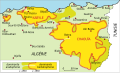
- Hello, I posted a message yesterday, but I don't know if it was seen in the flood of messages... In addition to consistency, current theories favor the "Kabyle" spelling, as do popular sources on the subject (press, enthusiasts, etc.). Even if we're told it's not a valid argument, the Francophone project has adopted the Kabyle spelling (and I wasn't the one who created the article there...). The Kabyles hadra are merely the Arabized part of the Kabyle people, not a fundamentally different ethnic group (see map)...
- I would also like to add that Mr. Bitton's opinions have proven false, his initial premise being that the Kabyle Hadra are "like all other Arabs of the region who speak Arabic.". Changing the name is another way of bringing back this POV-pushing, which comes back in another form (giving the article an "orientalized" name means this group is "Arabs"...). Monsieur Patillo (talk) 10:32, 26 December 2025 (UTC)
- M. Patillo, thanks, maybe you could shed more light on the venn diagram of Kabyles, Kabails, hadra, language, people, and which spellings are used for which based on any further research or by quoting the sources we have so far. I think we think Kitouni is the best source? Is it that Kabyles people/language are a group that also has a parallel derivation to Kabyles hadra, or are they both the same subgroups of the larger groups and share both the derivation and the reference it is to? Andre🚐 10:41, 26 December 2025 (UTC)
- you mean blogs by nobodies? The French wiki is unreliable.
hadra are merely the Arabized part of the Kabyle people
this is pure nonsense. 1) Even if we ignore what Marmol said (he described Kabaile el-Had'ra as Arabs) and blindly accept the theory that "Kabaile el-Had'ra" were originally Berbers (more than a thousand years ago), we simply cannot ignore the fact that that there was no such thing as Kabyle people back then. 2) Kabyle people are a different ethnic group (own language, customs, etc.). This is an fact., M.Bitton (talk) 11:28, 26 December 2025 (UTC)- To answer André, I think it's safer to cite a source from earlier: Omar Carlier
Il y a bien une conscience collective diffuse résumée sous le nom de Kbaïls, qui n'a pas de traduction territoriale stricte, mais correspond grossièrement à l'espace compris entre Ménerville à l'ouest, Sétif et Djidjelli à l'est. Symptomatiquement, sur la frontière orientale , sont appelés Kbaïls hadra les gens de Djidjelli , qui ne parlent que l'arabe mais avec un accent kabyle marqué et se disent eux - mêmes kabyles . Et ces Kbails hadra appellent Kbaïls niras ceux qui , à l'ouest , parlent kabyle .
There is therefore a Kabyle bloc stretching from west to east, including 1) Berber speakers (Kabyle/Kabaile Nighas) and 2) Arabic speakers (including the Kabyles/Kabaile Hadra). Carlier exclusively italicizes the terms "kbail" or "kabil hadra" to indicate that it is a usage in a local language. - Thus, from Thénia (=Menerville) (to the west) to Sétif/Jijel (to the east), Carlier defines a Kabyle region. It is worth noting that this Kabyle area has been attested to for centuries in primary sources, including this 17th century map . However, within this area (whose borders are variable), questions of subdivision arise. Linguistically, a distinction is made between Berber speakers and Arabic speakers (who have lost their language), some of whom were affected by French colonization, because, as Carlier reminds us :
la colonisation accélère le recul berbère et l'arabisation des Kabyles.
- Kitouni refers to these two groups of Kabyles when he speaks of Kabailes (en-nighas or El Had'ra). Morizot himself wrote
"Kabyles el hadra"
on this same category, like the university theses cited above. Monsieur Patillo (talk) 16:21, 26 December 2025 (UTC)- Bitton. You're still mistaken. Marmol is talking about the word "hadara" (courtier, urbanized) on its own (without "Kabyle" before it), which originally referred to Arabs living in cities. He's not talking about "Kabyle Hadara," which, later, designates Kabyles who have become arabized/urbanized. Monsieur Patillo (talk) 16:25, 26 December 2025 (UTC)
- I'm not mistaken and I don't appreciate you falsely claiming that I am.
According to Marmol, it [Kabaile El Had'ra] was in use in the 18th century "among the tribes, among the Kbail" to designate, with a disdainful connotation, the Arabs "who reside in the cities of Africa [and who] are commonly called Hadara, that is to say, [urbanized] courtiers, and are mostly involved in trade..
M.Bitton (talk) 17:49, 26 December 2025 (UTC)
- Kabyle people are a different ethnic group and have been so for centuries. The fact that they spoke a different language and had different customs is what led the French to differentiate between them and their Arabic speaking neighbours. The "sont appelés Kbaïls hadra..." claim is baseless and contradicted by what Kitouni says about the names (they fell into disuse in the late 19th century). M.Bitton (talk) 18:00, 26 December 2025 (UTC)
- Read the passage in its entirety...p.13 :
Étrangement le terme « Had'ra » semble avoir une origine totalement opposée. D'après Marmol, il aurait été en usage au XVIIIe siècle « dans les tribus, chez les Kbail » pour désigner avec une connotation dédaigneuse les Arabes « qui demeurent dans les villes d'Afrique [et qui] sont appelés communément Hadara c'est-à-dire courtisans [urbanisés] et se mêlent la plupart de trafic [commerce]4 »
- The passage refers to the word "Hadara" alone. "Hadara" has an origin opposed to what? ... To "Kabyle hadara"...Therefore, to deduce from this passage that Kabyle/"Kabail hadara" refers to Arabs is a misinterpretation. Monsieur Patillo (talk) 18:27, 26 December 2025 (UTC)
- I have read and understood exactly what he said. I suggest you learn how to read the sources properly. Why would anyone cite Marmol for a term that was used throughout the Arab word? M.Bitton (talk) 18:29, 26 December 2025 (UTC)
- Your quote was missing the key sentence at the beginning that clarifies what we're talking about p.13 :
Étrangement le terme « Had'ra » semble avoir une origine totalement opposée.
which can be translated as"Strangely, the term 'Had'ra' seems to have a completely opposite origin."
. The entire passage is copied here: Monsieur Patillo (talk) 18:35, 26 December 2025 (UTC)- Your attempt at falsely claiming that the Arab speaking people (i.e., Arabs) are Kabyle won't work. M.Bitton (talk) 18:38, 26 December 2025 (UTC)
- If you have nothing to add regarding the reading of the source, I'll stop here... Monsieur Patillo (talk) 18:41, 26 December 2025 (UTC)
- You should have stopped a long time ago since all you've been doing is misleading those who don't know any better. To cut to the chase, I will remind you that the mother tongue of the "Kabaile el-Had'ra" is Arabic and ask you a simple question:
- Is Arabic the mother tongue of the Kabyles? M.Bitton (talk) 18:46, 26 December 2025 (UTC)
- As the sources explain. Carlier :
Il y a bien une conscience collective diffuse résumée sous le nom de Kbaïls [...] Symptomatiquement, sur la frontière orientale , sont appelés Kbaïls hadra les gens de Djidjelli , qui ne parlent que l'arabe mais avec un accent kabyle marqué et se disent eux - mêmes kabyles . Et ces Kbails hadra appellent Kbaïls niras ceux qui , à l'ouest , parlent kabyle
There are Arabic-speaking Kabyles and Kabyle-speaking Kabyles... Those who have become Arabized have, moreover, retained a Kabyle accent which does not originate from the Middle East...findings confirmed by the source of the thesis from the University of Jijel. - You also persist in denying the phenomenon of Arabization which is documented and mapped including for the 19th/20th century: .
- So you remained true to your POV :
The claim of "Arabized", besides being impossible to prove
which directly contradicts Kitouni - [p.14 (Kabaile El Had'ra seraient donc des « berbères arabisés » par opposition aux « Kabaile En- nighass » réputés totalement berbérophones et donc non imprégnés par la culture hégémonique arabe.
] - and all sources on the subject, which speak of "Arabized Berbers" at a more or less distant date... - I would therefore appreciate it if you would refrain from reopening the discussion to talk about personal opinions. Monsieur Patillo (talk) 19:27, 26 December 2025 (UTC)
- Like I said, whomever the ancestors of "Kabaile el-Had'ra" were (a thousand years ago), they most certainly weren't Kabyles as there was no such thing back then.
- Since you insist on misleading those who don't know the subject, I'll just make it simple for everyone to see the contradiction in your claims.
- Reminding you that Arabic is the recorded mother tongue of "Kabaile el-Had'ra" for centuries (which makes them Arabs), my polar question is this:
- Is Arabic the mother tongue of the Kabyles? M.Bitton (talk) 20:42, 26 December 2025 (UTC)
- As the sources explain. Carlier :
- If you have nothing to add regarding the reading of the source, I'll stop here... Monsieur Patillo (talk) 18:41, 26 December 2025 (UTC)
- Your attempt at falsely claiming that the Arab speaking people (i.e., Arabs) are Kabyle won't work. M.Bitton (talk) 18:38, 26 December 2025 (UTC)
- Your quote was missing the key sentence at the beginning that clarifies what we're talking about p.13 :
- I have read and understood exactly what he said. I suggest you learn how to read the sources properly. Why would anyone cite Marmol for a term that was used throughout the Arab word? M.Bitton (talk) 18:29, 26 December 2025 (UTC)
- Read the passage in its entirety...p.13 :
- Bitton. You're still mistaken. Marmol is talking about the word "hadara" (courtier, urbanized) on its own (without "Kabyle" before it), which originally referred to Arabs living in cities. He's not talking about "Kabyle Hadara," which, later, designates Kabyles who have become arabized/urbanized. Monsieur Patillo (talk) 16:25, 26 December 2025 (UTC)
- To answer André, I think it's safer to cite a source from earlier: Omar Carlier
- From my understanding of specifically the sources cited here (I haven't read other sources that haven't been provided here), the phrase "Kabaile" was used first and this was later "Gallicized" to the other forms. The form "Kabyles" now has the most common usage. Katzrockso (talk) 23:05, 26 December 2025 (UTC)
- That's exactly it, but for phonological reasons, authors sometimes continue to use these notations (Qabail, Kabailes, etc.) to reflect the pronunciation of the original term in Arabic (also borrowed in Berber).
- Bitton, I don't understand your point. Some Arabized Kabyles speak Arabic (like the "Hadara Kabyles"), while other Kabyles (en-Nighas) speak Berber as their mother tongue. In the Berber-speaking Kabylia , 85% of people speak Kabyle as their mother tongue, so 15% speak something else. Some of your statements (example:
which makes them Arabs
) are not encyclopedic. Monsieur Patillo (talk) 23:14, 26 December 2025 (UTC)- Please refrain from insulting my intelligence with the "Arabized" nonsense. 1) You know as well as I do that all Arabs are Arabized something or another. 2) There was no such thing as Kabyle a thousand years ago (the Hadara have been speaking Arabic for centuries and are therefore, Arabs). 3) The word Berber is not synonymous with Kabyle. M.Bitton (talk) 23:58, 26 December 2025 (UTC)
- Kabaile was and is still used to refer to tribes (regardless of their ethnicity or where they live). By itself, it doesn't mean much, but when combined with other words, such as "Kabaile X", then it refers to specific tribes. For example, Tabula Rogeriana uses the word Kabail to refer to the Sanhadja and Lamta tribes (Kabail lamta ua sanhadja).
- The French gallicised the word and used it to refer to various tribes throughout the Maghreb, but after coining Kabylia, they (gradually) started using the word Kabyle to refer specifically to the people that we now know as Kabyles. Even though, some writers who rely on old sources still make mistakes, nowadays, Kabyles has only one meaning. M.Bitton (talk) 23:54, 26 December 2025 (UTC)
- I mean it is a modifier to the general term. Kabyles or Kabaile or Kbail or Qbaïl generally refers to tribes, but more specifically there are the Kabyle people and Kabyle language. I don't see it as paramount that the spelling has to be consistent with Kabyles hadra because although that stems from the same etymology and is related, my understanding is that Kabyles hadra aren't necessarily the Kabyle people or Kabyle language speakers. It is a parallel derivation is my understanding. Andre🚐 21:49, 25 December 2025 (UTC)
- I think that "Kabyles hadra" is supposed to represent a subset of "Kabyles", no? If that's the case, consistency would be paramount barring significant usage otherwise. That's how I'm understanding it, at least. Katzrockso (talk) 21:27, 25 December 2025 (UTC)
- Support. Using the word "Kabyle" for people who are not "Kabyles" can mislead readers easily, and most importantly the region where these people live in is not Kabylia but North constantinois. Nourerrahmane (talk) 20:04, 27 December 2025 (UTC)
- Fix the article first... it currently starts out The Kabyles Hadra or Kabyles el Hadra are terms that were invented by the French and this is sourced, so far so good, but if that's the scope of the article then it is a dicdef, and despite the sourcing it smells of POV in my opinion. So the first thing IMO is to properly scope the article and reflect this scope in the lead. Andrewa (talk) 22:53, 31 December 2025 (UTC)
- Yeah, per the discussion above, the source doesn't support the statement at any rate. Andre🚐 22:55, 31 December 2025 (UTC)
- It does, but as explained above, "coined" (instead of "invented") would have been a more appropriate term. Regardless, the RM is meant to solve that issue (especially the use of the highly misleading word "Kabyle"); and since "Kabaile el Hadra" is the common name, the result of this RM should be straightforward. M.Bitton (talk) 17:14, 1 January 2026 (UTC)
- For almost 15 days no source has proven the claim that "Kabyles hadara" is a French invention... not a single quote, not a page, nothing.
- The renaming is also problematic for the reasons explained above: it uses an archaic form of romanization to separate the Kabyles en-nighas (also spelled Kabailes en-nighas in the same source) from the Kabyles hadara. Monsieur Patillo (talk) 18:30, 1 January 2026 (UTC)
- I disagree for all the reasons that I have cited previously, but most important of all, for the fact that Kabaile el Hadra is the WP:COMMONNAME (which also happens to be precise and not misleading, unlike the current one). M.Bitton (talk) 18:33, 1 January 2026 (UTC)
- Once again, your claim is unfounded. "Kabaile hadra" can be justified based solely on Kitouni's source, but it is absent from both academic theses, which favor the spelling "Kabyle hadra". Monsieur Patillo (talk) 20:38, 1 January 2026 (UTC)
"it is absent from both academic theses, which favor the spelling "Kabyle hadra""
That's not true at all. "Kabaile el Had'ra" is mentioned in more RS as Andre pointed out above, while "Kabaile el Hadra" gets substantially more Google search results. I'd much prefer the article title to be an accurate Arabic transliteration than something misleading like "Kabyles Hadra." Skitash (talk) 16:10, 2 January 2026 (UTC)
- Once again, your claim is unfounded. "Kabaile hadra" can be justified based solely on Kitouni's source, but it is absent from both academic theses, which favor the spelling "Kabyle hadra". Monsieur Patillo (talk) 20:38, 1 January 2026 (UTC)
- I disagree for all the reasons that I have cited previously, but most important of all, for the fact that Kabaile el Hadra is the WP:COMMONNAME (which also happens to be precise and not misleading, unlike the current one). M.Bitton (talk) 18:33, 1 January 2026 (UTC)
- It does, but as explained above, "coined" (instead of "invented") would have been a more appropriate term. Regardless, the RM is meant to solve that issue (especially the use of the highly misleading word "Kabyle"); and since "Kabaile el Hadra" is the common name, the result of this RM should be straightforward. M.Bitton (talk) 17:14, 1 January 2026 (UTC)
- Yeah, per the discussion above, the source doesn't support the statement at any rate. Andre🚐 22:55, 31 December 2025 (UTC)


- Relisting comment: Relisting as it appears that discussion is still occurring. TarnishedPathtalk 23:34, 31 December 2025 (UTC)
- Note: WikiProject France and WikiProject Languages have been notified of this discussion. TarnishedPathtalk 23:36, 31 December 2025 (UTC)
Notes
- ↑ also spelled in the forms Kabaile al-Hadra or Kbail al-Hadra