This is an archive of past discussions about Huns. Do not edit the contents of this page. If you wish to start a new discussion or revive an old one, please do so on the current talk page.
Latest comment: 2 years ago29 comments5 people in discussion
@Ermenrich: where's the consensus on the talk page? Why there's no wikilink to Origin of the Huns#Genetic evidence where can be found genetic information in more details? Why there's no mention of Neparáczki et al. 2019? Why there's no mention of Y-DNA and mtDNA haplogroups which are, with atDNA, crucial in showing Asian origin and mixing with other Eurasians? Miki Filigranski (talk) 00:17, 30 November 2023 (UTC)
I think the additions were not necessarily bad. The main point is to discuss first. The approach on this article has been to take small careful steps on this topic. A second point is that as you apparently already know, there is also an Origins article, which should logically handle most such detail.--Andrew Lancaster (talk) 12:49, 30 November 2023 (UTC)
Andrew’s right: haplogroups etc are a level of detail unsuitable for this article. I also do not think a blanket statement that archaeogenetics has shown the Huns origins with the Xiongnu is correct without a ton of caveats. Archaeogenetics shows that some burials from the Hun period show some connection to East Asia, while others show origins in Europe. Are the Europeans less Huns than the Asians? How do we know that the East Asians were Huns? There are a lot of elements that need to be discussed, particularly since there’s very little ancient DNA that’s been found or analyzed. Such detail is better suited to the other article.—- Ermenrich (talk) 13:22, 30 November 2023 (UTC)
Hi Ermenrich, reading many genetic test and publications about these result, they explained well the situation: The Asian Scythians in the Minusinsk Hollow and Altai Mountains played a key role in the formation of the Asian Hun Empire. At the beginning of the Xiongnu period (200 BC – 100 AD), in present-day Mongolia the predominantly European-looking Asian Scythians merged with the local population in East Asia and southern Siberia, followed by another European Sarmatians during the Xiongnu period, later Alan elements. The ethnically diverse Mongolia actually only gained the homogeneous anthropological image during the time of Genghis Khan. It follows from all this that the members of the losing Xiongnu tribes belonged largely to the Europid anthropological type who were displaced to Central Asia in the first century. Expanding to the west they integrated the related Sarmatian tribes, and then they emerged as European Huns. OrionNimrod (talk) 13:43, 30 November 2023 (UTC)
@Ermenrich, then why there's no wikilink to the "other article" in the section? Why the section doesn't show all studies with European Huns sample analysis? Haplogroups are by nothing unsuitable, many years ago entered common readers terminology and are the most searched information regarding genetics by anyone interested in population genetics & genetic genealogy. We cannot add so much of our personal opinion on the matter and ignoring scientific primary and secondary sources. We are in no position to in a WP:OWN-WP:OR style question, discuss and heavily edit the POV when exist secondary source like Saag, Lehti; Staniuk, Robert (2022).--Miki Filigranski (talk) 13:58, 30 November 2023 (UTC)
Haplogroups [...] are the most searched information regarding genetics by anyone interested in population genetics & genetic genealogy... Many papers from the 2010s and 2020s must be very disappointing then for this particular readership, since it's not haplogroups that most studies base their main conclusions on, but the analysis full autosomal genomic relations. Uniparental markers are an interesting "tracer dye" that might contain information about sex bias in admixture and also attest punctual imprints of ancestries that might be completely washed out in the autosomal genome, but nevertheless the full story can only be extracted from the latter. Just look at the densely printed two-pager by Saag and Staniuk: although entirely devoted to genetic history, it does not list a single haplogroup. If they don't, why should we do so in a short summary section of the main discussion in Origin of the Huns#Genetic evidence? But fair enough, a hatnote to that article and its section about genetics is very useful, much more than all these other "see also"-links. –Austronesier (talk) 19:58, 30 November 2023 (UTC)
But our general readership most likely isn't that deep into haplocruft either... As a tertiary source, we should give due weight to the various aspects of genetic research in the same proportion as in our secondary sources (=review articles) about genetic research. And in most such sources from the last 5-10 years, uniparental markers generally play a minor role. –Austronesier (talk) 20:46, 30 November 2023 (UTC)
I agree that enthusiasts often overrate the importance of uniparental markers, especially Y DNA. However, in this particular case the markers and frequencies involved look fairly notable at first sight. As opposed to the infinite number of times we see people obsessing over the percentages of R1b and R1a and so on this looks like a consistently high amount of a haplogroup in the "wrong place". This does not necessarily mean much for the body text, because it agrees with what we are already saying I think. Nevertheless the sources could be considered as additional evidence.--Andrew Lancaster (talk) 22:10, 30 November 2023 (UTC)
Exactly, they dominantly and characteristically have Y-DNA, most probably also mtDNA haplogroups, not from European continent but from Asian continent i.e. not Western Eurasia but Eastern Eurasia. It cannot be more significant and important evidence than that for migration and origin of a specific population, tribe and so on. Maybe we don't need to name the specific haplogroup, but at least deserves mentioning of findining and confirming Asian haplogroups alongside atDNA.--Miki Filigranski (talk) 22:57, 30 November 2023 (UTC)
Also compare the following passage from Saag & Staniuk (2022)
Maróti and colleagues show that the genomes of European Huns vary from western (European) to eastern (Northeast Asian) similar to Avars, with individuals with the easternmost affinities genetically sharing the most with Mongolia-related groups (Xiongnu, Xianbei).
I don't see heavy spotlight in the edit as that's literally what is said in the sources and Xiongnu connection deserves more spotlight in the article anyway because that's European Huns characteristic direct-distant ancestry. Doesn't make much sense speaking about European Huns and trying to diminish their original Asian origin and giving more light to some Germanic or else ancestry which they got in a westward migration. I recall lead and section having a more neutral and balanced POV regarding both ancestries than it is now.--Miki Filigranski (talk) 20:23, 30 November 2023 (UTC)
The historical Huns are by definition those people who entered on the scene of European history in the 4th century. All genetic evidence produced so far shows that at this point they were a diverse bunch of folks. Sure, those Hun-associated individuals with East Asian ancestry appear to be most closely linked to genomic profiles found among Xiongnus (who themselves had a highly diverse origin that never fully consolidated into a stable equilibrum genepool), but what conclusive evidence do we have that these Xiongnu descendants among the Huns were the "original" Huns? –Austronesier (talk) 20:39, 30 November 2023 (UTC)
"...what conclusive evidence do we have that these Xiongnu descendants among the Huns were the "original" Huns?" - the Asian origin. As the scientific sources say. The fact they aren't some Germanic or other people who they assimilated moving westward. What is going on here exactly? Are we going to engage in some postmodernistic-never ending-epystemology? What is next, questioning African origin of African Americans because until now they mixed with European Americans?--Miki Filigranski (talk) 22:48, 30 November 2023 (UTC)
Would you use African Americans to argue that Americans have an African origin? The DNA says some of them do, after all.
We don’t know what role any Xiongnu linked elements played in the ethnogenesis of the European Huns. We can make theories, but you can’t prove anything with DNA like that. And what about the Scythian, etc elements? These are not questions that can be answered by saying some individuals have East Asian ancestry and plopping a bunch of haplogroups onto the article.—-Ermenrich (talk) 12:34, 1 December 2023 (UTC)
I think the American comparison is actually pretty apt. Compare this statement from 2021 by Warwick Ball (can be found in article bibliography and on de Gruyter online): The Xiongnu- Hun identity is largely academic as both were steppe tribal con-federations that incorporated large bodies of non- Hun and non- Xiongnu tribes; even if totally distinct (which is unlikely), both would have incor-porated elements of each other in any case. Even if it can be proved that the Xiongnu are the same as the Huns of the European sources, there is no way that they could be the ‘same’ people in the fifth century ad in Europe as those in second-century bc Mongolia: no people are the ‘same’ after seven centuries, even if they preserve the same name, especially over such distance: twenty- first-century Americans, for example, are not the ‘same’ as fourteenth-century Britons.--Ermenrich (talk) 19:47, 1 December 2023 (UTC)
When Maróti at al. talk about 19 out of 23 Hun-era indivuduals belonging to Xiongnu-associated Y-haplogroups, they aggregate non-European individuals together with Carpathian Hun-era individuals and label them as "Huns" because some of the European Hun-era samples bear this affinity. Do you see the self-predicting circularity? If you take the effort and look at the ancestries of those samples that can actually be labeled as "Hunnic" in the historical sense with at least some spatiotemporal plausibilty, the ratio of ancestries and haplogroups changes drastically. –Austronesier (talk) 20:52, 1 December 2023 (UTC)
See my previous remark. I think we should cite such sources for what they have expertise in, when we cite them. So for example "similarity to populations X, Y, Z", rather than going too far with the extra steps in the speculation about implied languages, political grouping names etc.--Andrew Lancaster (talk) 21:37, 1 December 2023 (UTC)
I think one of the main types of conclusions we need to be careful of in articles about specific genetic studies, primary data, are strong or surprising conclusions about complex historical or linguistic points. Some of the bigger studies now make the effort to put historians etc in their writing team, but those studies tend to be autosomal studies these days.--Andrew Lancaster (talk) 22:10, 30 November 2023 (UTC)
Maroti et al. are explicitly criticized by Walter Pohl, Frühmittelalterliche Migrationen und Identitäten im Spiegel naturwissenschaftlicher DNA-Analysen in Kontroversen in der jüngeren Mediävistik (Böhlau Köln 2023):
Zum Beispiel werden in einer 2022 als pre-print publizierten und in manchem durchaus differenziert angelegten ungarischen Studie die „Conquerors“ (also die landnehmenden Ungarn von ca. 900 AD) als solche bis in die Bronzezeit in Westsibirien zurückverfolgt, wo sie sich von den (ebenfalls über Jahrtausende zurückprojizierten) ugrischen Mansis trennen. Damit wird eine nationale Identität im Stil des späten 19. Jahrhunderts auf eine (ebenfalls auf klare Identifikationen mit Sarmaten und Hunnen zugespitzte) Abfolge von Prozessen der ‚admixture‘ aufgepfropft. Den Autorinnen und Autoren scheint der Widerspruch zwischen diesen beiden sehr unterschiedlichen Modellen – lineare Herkunftserzählung und Rekonstruktion von komplexen Vermischungen – gar nicht aufzufallen.
(Translation: For example, in an article that appeared as a pre-print in 2022, a in many ways very sophisticated Hungarian study, the "conquerors" (the Hungarians who conquered land around 900 AD) are followed back to the Bronze Age in Western Siberia, as if they were the same, where they separated from the Mansis, who are also projected back over millenia. In this way a national identity is grafted to succession of processes of admixture in the style of the late 19th century, which was also brought to a head in a clear identification with Sarmatians and Huns. The authors seem not at all to have noticed the contradiction between these two very different models - linear descent and the reconstruction of complex mixture.)
With due respect - recent commentary and work by Pohl, Curta, Dzino etc. reads as ignorant - because show really low level of understanding and complete ignorance of archaegenetic data and conclusions - and butthurt last-straw defense of their post-processual and post-structuralist historiographical and archaeological school which opposed culture-historial school, while archaeogenetics overwhelmingly opposes the former revisionism and supports the latter conclusions. Such criticism is ridiculosuly biased in the same way others are supposedly "nationalistic" or "far-right". --Miki Filigranski (talk) 18:06, 4 December 2023 (UTC)
Do you really not see the contradiction between claiming "the Hungarians" existed back over thousands of years and the fact that whoever it is you've identified as "the Hungarians" are found to have constantly mixed with other groups and changed their genetic makeup? Accusing those criticizing some archaeogentic studies (and Pohl is engaged in a very large scale archaeogenetics project as well as a historian) of being "butthurt" (because of what exactly?) does not change the validity of the criticism.--Ermenrich (talk) 18:13, 4 December 2023 (UTC)
The fact that the geneticists aren't so stupid as he claims them to be nor easily claim such things. It shows his preconcieved ideological subjective bias what biological ancestry of a specific population should be rather than what it is actually. Pohl may be engaged in them but his viewpoint is far from strong bias as he is literally part of a specific Vienna School of History which viewpoints are far from any controversy and often "resorting to rather dubious sorts of evidence" and political agenda supported by the European Science Foundation. Anyway, we are going off-track here so won't continute this discussion. --Miki Filigranski (talk) 18:51, 4 December 2023 (UTC)
@Miki Filigranski: it is worth making the effort to explain the case for different sources in cases like this, and be open to concerns. Thanks for putting that effort in and please make such efforts when you see the need. Remember that many genetics articles are basically WP:PRIMARY and if you look around WP you will see that just accepting everything such sources say can cause strange things. Not everyone adding such sources is thinking this through carefully.--Andrew Lancaster (talk) 18:57, 4 December 2023 (UTC)
Of course, personally believe that only editors with some long term experience and understanding of the topic should edit primary sources. The problem is such criticism is only an opinion and could be missing the point/truth. If it would be cited then needs to be attributed while taking care of WEIGHT and BALANCE.--Miki Filigranski (talk) 19:03, 4 December 2023 (UTC)
"resorting to rather dubious sorts of evidence" You realize you're quoting someone who is accusing the Vienna School of not going far enough in deconstructing ethnic identity, right? Isn't that opposite of the point you want to be making? And what on earth is wrong with being supported by the European Science Foundation?
There is no reason to keep throwing around terms like "postmodern" etc. when dealing with historians discussing ethnicity and the problems with applying genetics sources to define them. As Pohl writes, even many archaeogeneticists have come to recognize problems with defining "genetic populations" as ethnicities. Maroti et al. are not careful in how they discuss this (though there's nothing wrong with their data), and that's why he singles them out. It's the same reason we have to be careful in how we discuss the origins of "the Huns".--Ermenrich (talk) 00:20, 5 December 2023 (UTC)
I agree strongly with Ermenrich about this. The Vienna and Toronto schools are taken seriously in the field and we should also take them seriously. Just as it is true that geneticists are not stupid, neither are they. Postmodernism has somehow become an insult for some people, which has made the term useless. It is the insult you throw at someone how is thinking critically about a much-loved theory, but the criticisms of these schools are not new and radical anymore. There are genetics papers which consider several disciplines. I notice Patrick J. Geary has been involved with some. It is certainly also true that many archaeologists are already now much more careful about equating specific material markers with ethnic identity. Hopefully it will become more true of geneticists, but I think the simpler types of articles which want to announce small amounts of raw data are often very tempted to go overboard in their interpretations. There is a big incentive to do this. But the more comprehensive reports are pretty clear these days that genetic variations in Europe are mostly easily explained in terms of geographical location, not language or identity. In other words, your closest matches are normally people from nearby areas. What creates real excitement is a real discontinuity or sudden change over time. By my understanding there is real evidence of east Asian entry into Europe and no one here is debating that.--Andrew Lancaster (talk) 10:19, 5 December 2023 (UTC)
Hi, I have a thought regarding the Hun and Hungarian genetic and genetic studies. I think the ethnogenesis of a people is a really complicated thing. Everybody has 4 grandparents, after 10 generation which can be about 300 years everybody has 1024 ancestors, which means the people are really mixed everywhere, but of course people who are living in the same place are mixing together more each other so they have more shared genoms that is why there are typical "Italian, Vietnamese, Japanese, Russian, Swedish, Spanish, etc faces". And today's Hungarian genetic is similar like their neighbor countries (Poland, Austria, Slovakia, Eastern Germany, Slovenia, Croatia, Ukraine). Many of my Hungarian family members did a personal genetic test, and not a surprise but I have close and vast amount of genetic matches with local Carpathian Basin (where is Hungary and was the Kingdom of Hungary) archeogenetic samples from all ages from the Stone/Bronze/Iron age before the arrival of the Hungarian tribes of Arpad (Carpahtian Basin: Celtic, pre-Scythian, Scythian, proto Thracian, Illyiran, Vekerzug culture, Maros culture, Roman period, Sarmatian, Hun, Gepid, Goth, Frank, Avar...) which means the people did not evaporate but the locals always mixed with the newcomer and forming the future generations together. Genetic studies show a continous steppe migration to the Carpathian Basin from the Bronze age. Hungarian scholars also claim the Hungarians are not only the incoming tribes of the Hungarian conquerors, but we cannot exclude the higher number locals who became Hungarians together (they admixed also with the surviving Carpathian Basin Avars Saint László is more Asian than most of our kings). There are also genetic studies of the locals and it is a plan to make more for example from the Sarmatian period. Also there is no more issue with the Finno-Ugric language theory, regarding the genetic tests the scholars say the ancient Ugric folk was part of the Asian Scythians, because all medieval sources claimed the Hungarians are Scythians, Huns, Avars. Which means the Scythian and Finno-Ugric origin theory does not contradict each other, however I think the oirign of the language could be not the same as origin of the people (like Afro-Americans speak English but they did not origin from England). The genetic studies say the Huns, also the Hungarians were a very diverse groups, which means the Huns were not only just Huns, like the old Hungarians and Carpathian Basin had many tribes, but always the strongest leader from the leading tribe was erected to the shield and became the leader, that is why Hungarians called themselves "Magyar" because Arpad the grand prince was the leader of the Magyar tribe. Genetic studies show that the Hungarian conquerors were a mix of Ugric+Sarmatian+Hun folks. I see this in my personal genetic test, my closest archeogenetic sample is the Scythian, I also have vast amount of genetic samples from the full steppe zone before 1000AD: Avar, Hungarian conqueror, Hun from Carpathian Basin, Asian Hun from Mongolia, Asian Hun from Tian Shan, Saka, Tarim mummy, Pazirik Scythian, Asian Scythian, Sarmatian, European Scythian, which means that those horse arches steppe folks mixed and moved on the long steppe zone. Grand prince Arpad claimed that he is the descendant of Attila, and medieval sources from the Hungarian royal court claimed they are the Huns, and Scythians. I see the identity of a folk always came from the leading class. I checked the genetic study of the Hungarian Arpad kings (III Béla, Saint Ladislaus), it show the most closest paternal haplogroup to the local Carpathian Basin, Scythian, Asian Scythian, Asian Hun samples.
"Our genome analysis results confirm that the Arpad dynasty was not a foreigner family appointed to rule the Hungarians but originated from the same ethnic group as other members of the conquering Hungarian elite, and that then their Central Asian genomes were progressively attenuated during the centuries through marriages with Central European royal families" "The genomic analyses of the royal family members are in line with the reported conquering Hungarian-Hun origin of the dynasty in harmony with their Y-chromosomal phylogenetic connections."OrionNimrod (talk) 12:41, 5 December 2023 (UTC)
Burial practices
Latest comment: 2 years ago2 comments2 people in discussion
It seems to me that a section on what (we think) we know about Hunnic burial practices is in order. My question: does it belong in society and culture or material culture? It's clearly not actually an aspect of material culture, as it's a practice, but what we know about it is both how we derive our knowledge of Hunnic material culture and known through material culture. Thoughts?--Ermenrich (talk) 15:13, 20 December 2023 (UTC)
Hi, I know this: The very typical feature of the Asian Hun and European Hun cemeteries is the partial horse burials, almost in all Hun graves there are only remain of horses. Outside the Huns, only the Hungarians used partial horse burials. This ancient tradition that went through centuries, it is easily identifiable in the Huns and Hungarians graves. OrionNimrod (talk) 15:35, 20 December 2023 (UTC)
awkward sentence in lede?
Latest comment: 2 years ago4 comments3 people in discussion
to European tradition, they were first reported living east of the Volga River, in an area that was part of Scythia at the time;[1] the Huns' arrival in Europe is associated with the migration westward of an Iranian people, the Alans. No big issue but apart from wondering why this is not two sentences I am not sure readers will be able to understand the point about the Alans if they do not already know it. I suppose the intention is to mention that the Huns are seen as having caused other people to migrate? I am not really sure why this is in the lead. But it is an interesting point that they changed the demographic and political landscape in Eastern Europe, creating an ethnically diverse barbarian power centre on the Roman danubian frontier, but why only mention the Alans, and why tag this on the end of another sentence? Andrew Lancaster (talk) 12:49, 16 March 2024 (UTC)
I'm sure there was originally a reason for these things, but I don't remember what it was. Feel free to change as you see fit.--Ermenrich (talk) 13:22, 16 March 2024 (UTC)
The clause about the Alans is cited to Sinor (pp. 179–180), who says:
There can be no quarrel with the statement that, before their coming into contact with the Roman world, the Huns lived east of the Azov Sea, on the south Russian steppe, or perhaps even further east in the not clearly circumscribed, measureless lands of "Scythia," whence all bad things come. The first to bear the brunt of a Hun attack were the Alans nomadizing along the Don (Tanais), a people whose way of life was in many ways similar to that of the Huns, but who were not filled with the fury of aggression. The paucity of available information does not allow the compilation of a precise account of the clashes between Huns and Alans but it is clear that the former were victorious and that the surviving Alans joined the victors in their further warlike undertakings. These events took place in the early 370s. Carlstak (talk) 04:37, 17 March 2024 (UTC)
Missing word in first paragraph
Latest comment: 2 years ago3 comments3 people in discussion
"By 430, they had established a vast, but short-lived, on the Danubian frontier of the Roman empire in Europe"
There seems to be a word missing between "short-lived" and "on" here. I'm guessing it should be either realm, kingdom, confederation etc., but I'm not knowledgeable enough about Hunnic history to say for sure. Can someone with more info add the right word? Lamaredia (talk) 14:28, 26 March 2024 (UTC)
Latest comment: 2 years ago2 comments2 people in discussion
This edit request to Huns has been answered. Set the |answered= parameter to no to reactivate your request.
In the paragraph discussing cranial elongation, taking should be taken.
“ with the argument that it was practiced by their nobility and then taking up by Germanic groups” HooterMcGavin (talk) 05:51, 9 April 2024 (UTC)
User OrionNimrod has an agenda regarding the Huns, aiming to portray them as ancestors of the conquering Hungarians.
He claims that Serb, Slovak, and Romanian nationalists use the slur 'Mongol' against Hungarians due to their "Hun origin." His source does not mention anything about Huns and Hun ancestry.
Nations in Europe with Asian origins, such as the Finns and Turks, are also called 'Mongol' as a slur by foreigners. What evidence supports that Hungarians are descended from the Huns at this point? A medieval myth?
Asian Huns were in today Mongolia, Hungarian name including the Hun word and medieval documents claim Hungarian Hun connection. It does not matter is true or not in this case, but as we can see the ethnic slur come from this. Asia is very big, and slur for Hungarians is “Mongol” because of that and not “Chinese, Indonesian, Pakistanian, Afgan, Balinese…” OrionNimrod (talk) 18:00, 9 July 2024 (UTC)
Such slurs may or may not give an indication of real history, but they are not a reliable source we can use. On WP we summarize what experts have published when writing carefully.--Andrew Lancaster (talk) 06:02, 10 July 2024 (UTC) Note that my answer is written on the understanding that this question is about whether such slurs might be relevant to THIS article, which is about the real historical Huns.--Andrew Lancaster (talk) 06:04, 10 July 2024 (UTC)
Latest comment: 1 year ago1 comment1 person in discussion
In this article we have a longer discussion about the history of this generalization. On Odoacer I have called for comment about whether this generalization can simply be used (without such balancing). Andrew Lancaster (talk) 20:07, 28 July 2024 (UTC)
Semi-protected edit request on 7 August 2024
Latest comment: 1 year ago3 comments3 people in discussion
This edit request to Huns has been answered. Set the |answered= parameter to no to reactivate your request.
Latest comment: 1 year ago3 comments3 people in discussion
This edit request to Huns has been answered. Set the |answered= parameter to no to reactivate your request.
I only want to add after "Huns" I want to add "Also known as Attila's Huns and Black Huns". I want to add this because they are at times referred to as so. Holyorthocracy (talk) 04:41, 7 August 2024 (UTC)
Latest comment: 1 year ago1 comment1 person in discussion
The Hun empire fall apart after Attila's death around 450 AD.
The Magyars - as they call themselves - came into the Carpathian basin around 950 AD.
They DO NOT call themselves HUNs. So why does the west call them HUNgarians after some half-a-thousand years? Surely not because it's easy to identify that they are the same genetic stock with the same culture! Rather invent a confusing 'history' of an unknown nothing-here-move-on story of gobbledygook. —Preceding unsigned comment added by 115.70.29.185 (talk) 03:33, 10 October 2024 (UTC)
Hungary etymology
Latest comment: 1 year ago1 comment1 person in discussion
Latest comment: 1 year ago1 comment1 person in discussion
The article names "Attila's Court" as the empire's capital. I believe this is taken directly from the game Sid Meier's Civilization V wherein this name is a contrivance for not having an actual list of cities in the empire. Should be removed. 23.241.35.25 (talk) 04:59, 14 February 2025 (UTC)
New genetics paper
Latest comment: 1 year ago8 comments4 people in discussion
There appears to be a new genetics paper on this subject, by Gnecchi-Ruscone et al. . According to the abstract: We find no evidence for the presence of a large eastern/steppe descent community among the Hun- and post-Hun-period Carpathian Basin population. We also observe a high genetic diversity among the eastern-type burials that recapitulates the variability observed across the Eurasian Steppe. This suggests a mixed origin of the incoming steppe conquerors. Nevertheless, long-shared genomic tracts provide compelling evidence of genetic lineages directly connecting some individuals of the highest Xiongnu-period elite with 5th to 6th century CE Carpathian Basin individuals, showing that some European Huns descended from them.@Austronesier and Andrew Lancaster: I differ to your superior understanding of genetics, but it seems like something to be added (in brief!) here and to Origins of the Huns, I'd say? We need to be careful how we frame this, of course, and not give it overdue weight given that it's a single study.--Ermenrich (talk) 15:21, 25 February 2025 (UTC)
It strikes me that the paper's most important points are:
Even the Hunnic elite shows a high genetic diversity, with only some individuals showing connections to the Xiongnu;
There isn't evidence for a mass migration of the type later performed by the Avars;
I don't know if this disproves mass migration in the sense of mass migration from the eastern European steppes - I meant a mass migration of the Xiongnu across Eurasia, just to clarify.--Ermenrich (talk) 22:56, 25 February 2025 (UTC)
Hi, as we can see from these genetic studies, the horselord (Scythian) steppe folks migrated both westward and eastward across the 8,000 km-long steppe zone, mixing with many peoples. For example, there were many Asian Scythian and Sarmatian components among the Xiongnu. , and ancient Mongolia also was ethnically diverse. Other genetic study stated that European Hun elite had connection to Xiongnu, but majority of European Huns were Sarmatian and Germanic . Which means Huns were not only Huns as we can see also from this new genetic study, but it was many tribes always, a tribal confederation. Like according to genetic studies Hungarian conquerors also were very diverse (they also had Xiongnu and Sarmatian components ), even the name of Magyars (Hungarians) came just from the leader tribe name. This Hun origin story of Hungarians came from the Hungarian royal dynasty, according to genetic studies the royal Arpad and Aba family had Hun connections . But of course the Hungarian conquerors just mixed with the locals (like with the remnant of Avars, Slavs...), and those locals already mixed with every other previous incomer people. Uploading my personal DNA sample to MyTrueAncestry, as Hungarian from the Carpathian Basin, my genetic is ancient local + I have sample matches from all of those above listed steppe folks (Scythian, Sarmatian, Asian Scythian, Hungarian conquerors, Avars, Carpathian Basin Hun, Xionghu...) + Germanic and Slavic components. When a new genetic study published like this, I check my new sample matches, after this mentioned Avar genetic study I found about 50 Avar Carpathian Basin sample matches with my DNA: OrionNimrod (talk) 19:47, 27 February 2025 (UTC)
Physical appearance, religion, modern associations with savagery.
Latest comment: 1 year ago15 comments4 people in discussion
Ammianus Marcellinus describes the Huns as physically misshapen and monstrously ugly, with deep scars on their cheeks to prevent beard growth. He mentions their strong, compact limbs, thick necks, and overall appearance, which he compares to two-legged beasts or rough-hewn statues. Their facial features, particularly the lack of beauty and beard growth, are depicted as signs of their harsh upbringing.[1]
[[Ammianus Marcellinus]] described the Huns as "like unreasoning beasts, they are utterly ignorant of the difference between right and wrong; they are deceitful and ambiguous in speech, never bound by any reverence for religion or for superstition.{{sfnm|1a1=Ammianus Marcellinus|1y=1862|1t=Res Gestae|1p=31|2a1=Yonge|2y=1862|2t=Res Gestae|2p=31|3a1=Harvard University Press|3y=1862|3p=1}}
[[Adolf Hitler]] referenced the Huns in his book [[Mein Kampf|''Mein Kampf'']] as part of his broader ideological framework regarding race and the supposed superiority of the Aryan race. He associated the Huns with the invasions of Europe during the 4th and 5th centuries, which he considered destructive and destabilizing to the [[Roman Empire]]. Hitler’s racial theories linked the Huns to the concept of racial degeneration of [[Slavs]] in Europe.{{sfn|Koonz|2003|pp=178–180}}
The first quote is Ammianus describing the Huns as monstrous - this is already discussed as a general trope in the article and is not useful in actually figuring out how the Huns appeared. I don't think we ought to include it.
The second quote (on religion) just says the same thing as what's already in the article, just with a quote rather than a brief summary. We know Ammianus is wrong, so I'm not sure why we should emphasize this to our readers.
The last one is far too long. There's no reason to say that Hitler associated the Huns with invasions in the 4th and 5th centuries - that's what modern historians do as well! I'd say we could include at most a sentence about the misuse for racial purposes, and I'm not sure we really need even that. It's not as though Hitler and other racists used the Huns alone to describe Slavs as racial degenerate. It had more to do with Mongols and the Golden Horde.--Ermenrich (talk) 14:40, 2 April 2025 (UTC)
Hitler's mention of the invasion of the Huns and the effect on the Roman Empire is certainly relevant as it would have immense influence on his audience at the time.
Ammianus's comments on physical appearance and religion do seem to add to what has briefly been mentioned but I thought it would be insightful as he is a Roman writer describing the Huns from when they were invading Europe. I am curious what you mean when you say "We know Ammianus is wrong". Oa0214 (talk) 20:18, 2 April 2025 (UTC)
Since Hitler himself acted without any convincing traceability against ethnic minorities with a cruelty that was in no way inferior to the Huns, he should not be quoted. Tympanus (talk) 18:32, 3 April 2025 (UTC)
It is relevant under the section "modern associations with savagery" because of the affect it would have had on society, it has nothing to do with bias of the author. Oa0214 (talk) 06:12, 4 April 2025 (UTC)
I don't think Hitler's musings on Huns and Slavs are particularly noteworthy, as he did not say anything original. If you can find a source discussing the Huns (and Mongols, etc) more generally as a source of racial degeneration, that might be worth adding.
And I say that Ammianus is wrong because the Huns did not look like monsters. There's likewise no point in quoting him saying the Huns were dumb brutes without religion. There's no point in quoting him when his information is useless according to modern scholars.--Ermenrich (talk) 14:44, 4 April 2025 (UTC)
you need to provide a source for that claim because if we are disregarding an eyewitness testimony on the appearance of the Huns then there needs to be a valid reason. Oa0214 (talk) 01:30, 5 April 2025 (UTC)
I should also note that the section on appearance is in the "Origins" section. It's not just a general section on what the Huns looked like and was originally titled "Race".--Ermenrich (talk) 13:34, 5 April 2025 (UTC)
@ Oa0214: Your objection misses the point, as Hitler was not a historian, but – possibly apart from a chance hit – an exorbitant political failure. His ethnic views are generally rejected and therefore not favoured for referencing. However, I would not reject Ammianus' assessment of the Huns on the basis of non-negligible historical transmissions! Tympanus (talk) 21:57, 4 April 2025 (UTC)
Ammianus’s views are already referenced in the article. The question is whether they need to be quoted verbatim.—Ermenrich (talk) 22:33, 4 April 2025 (UTC)
At best, I would quote Ammianus verbatim with another contemporary author who at least basically agrees with his depictions. Tympanus (talk) 10:47, 5 April 2025 (UTC)
I think that the view regarding the failure of the Roman Empire caused by the Huns does seem relevant to bring up, not as a source of fact but as the view some people had in the pre WW2 era. Oa0214 (talk) 01:31, 5 April 2025 (UTC)
We are already reporting some of the general types of opinions people had in the past. What you are asking for is a specific focus upon the opinions of one person. But his opinions on this particular point on not (as far as I know) particularly influential or even very different from the opinions of other people in the past?--Andrew Lancaster (talk) 06:49, 5 April 2025 (UTC)


 Done Thanks, HooterMcGavin, well spotted.—Odysseus1479 06:21, 9 April 2024 (UTC)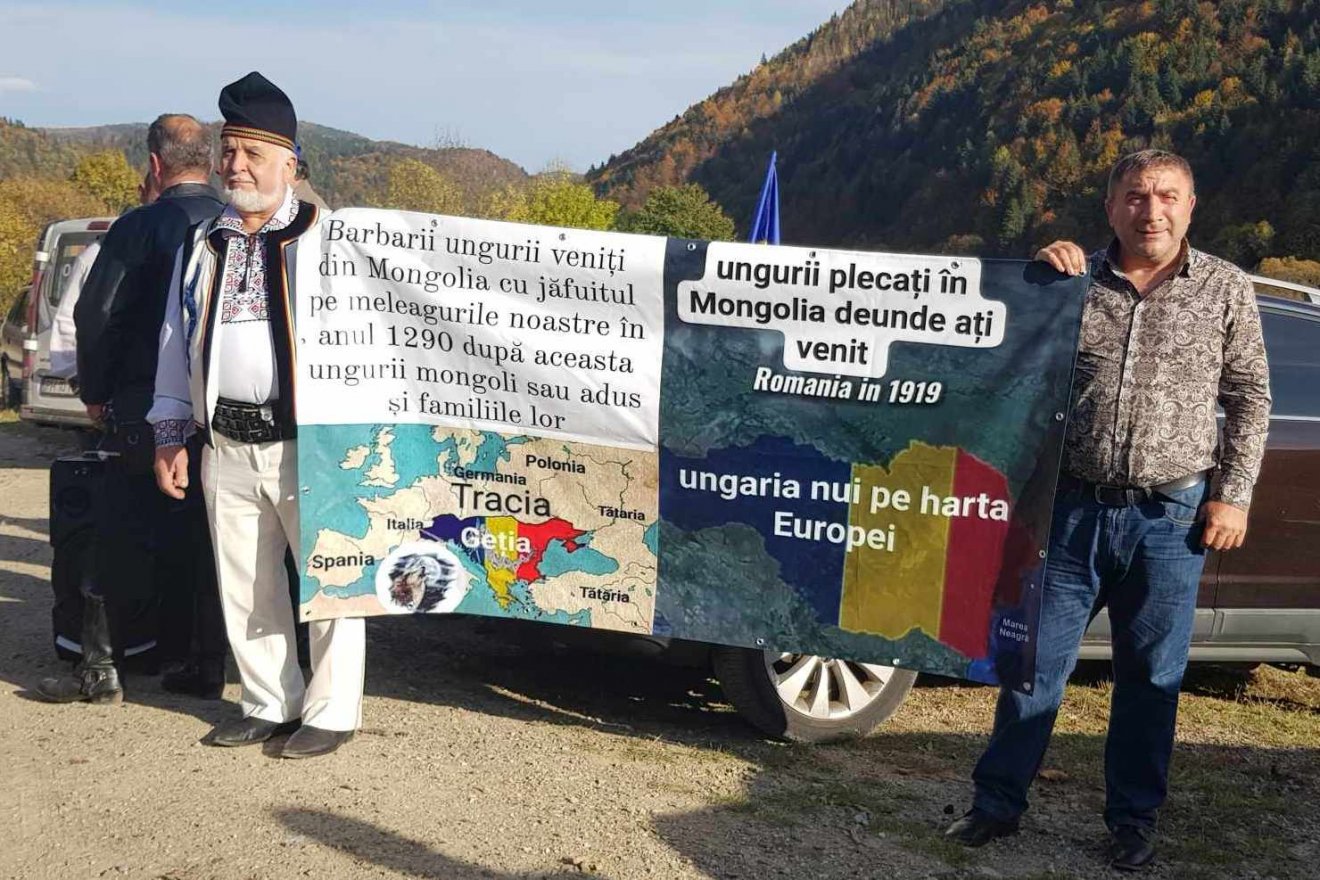
 Not done: it's not clear what changes you want to be made. Please mention the specific changes in a "change X to Y" format and provide a reliable source if appropriate. Charliehdb (talk) 13:22, 7 August 2024 (UTC)
 Not done: please provide reliable sources that support the change you want to be made. Charliehdb (talk) 13:23, 7 August 2024 (UTC)