This article is written in British English, which has its own spelling conventions (colour, travelled, centre, defence, artefact, analyse) and some terms may be different or absent from other varieties of English. According to the relevant style guide, this should not be changed without broad consensus.
Angkor Wat is a former featured article. Please see the links under Article milestones below for its original nomination page (for older articles, check the nomination archive) and why it was removed.
This article appeared on Wikipedia's Main Page as Today's featured article on August 26, 2005, and on May 19, 2021.
This article is within the scope of WikiProject Hinduism, a collaborative effort to improve the coverage of Hinduism on Wikipedia. If you would like to participate, please visit the project page, where you can join the discussion and see a list of open tasks.HinduismWikipedia:WikiProject HinduismTemplate:WikiProject HinduismHinduism
This article falls within the scope of WikiProject Buddhism, an attempt to promote better coordination, content distribution, and cross-referencing between pages dealing with Buddhism. If you would like to participate, please visit the project page for more details on the projects.BuddhismWikipedia:WikiProject BuddhismTemplate:WikiProject BuddhismBuddhism
This article is within the scope of WikiProject Archaeology, a collaborative effort to improve the coverage of Archaeology on Wikipedia. If you would like to participate, please visit the project page, where you can join the discussion and see a list of open tasks.ArchaeologyWikipedia:WikiProject ArchaeologyTemplate:WikiProject ArchaeologyArchaeology
This article is within the scope of WikiProject Architecture, a collaborative effort to improve the coverage of Architecture on Wikipedia. If you would like to participate, please visit the project page, where you can join the discussion and see a list of open tasks.ArchitectureWikipedia:WikiProject ArchitectureTemplate:WikiProject ArchitectureArchitecture
Angkor Wat is part of WikiProject Cambodia, a project to improve all Cambodia-related articles. The WikiProject is also a part of the Counteracting systematic bias group on Wikipedia, aiming to provide a wider and more detailed coverage on countries and areas of the encyclopedia which are notably less developed than the rest. If you would like to help improve this and other Cambodia-related articles, please join the project. All interested editors are welcome.CambodiaWikipedia:WikiProject CambodiaTemplate:WikiProject CambodiaCambodia
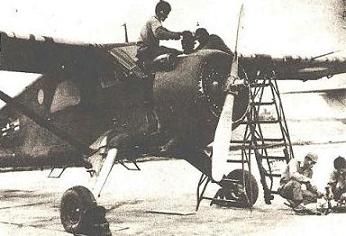
I'm looking for the best picture or any informations about the KAF's U-6 (Beaver). It seem that the KAF had 3 aircrafts.
But in 1971, during the viet cong's sapper attack at the Pochentong Air Base,at least 1 Beaver was destroyed.In 1972
at leat 1 Beaver was refurbished with a new engine.
http://www.khmerairforce.com/AAK-KAF/AVNK-AAK-KAF/Cambodia-Beaver-KAF.JPG
This article is within the scope of WikiProject Southeast Asia, a collaborative effort to improve the coverage of Southeast Asia-related subjects on Wikipedia. If you would like to participate, please visit the project page, where you can join the discussion and see a list of open tasks.Southeast AsiaWikipedia:WikiProject Southeast AsiaTemplate:WikiProject Southeast AsiaSoutheast Asia
This article is within the scope of WikiProject Historic sites, a collaborative effort to improve the coverage of historic sites on Wikipedia. If you would like to participate, please visit the project page, where you can join the discussion and see a list of open tasks.Historic sitesWikipedia:WikiProject Historic sitesTemplate:WikiProject Historic sitesHistoric sites
This article is within the scope of WikiProject World Heritage Sites, a collaborative effort to improve the coverage of World Heritage Sites on Wikipedia. If you would like to participate, please visit the project page, where you can join the discussion and see a list of open tasks.World Heritage SitesWikipedia:WikiProject World Heritage SitesTemplate:WikiProject World Heritage SitesWorld Heritage Sites
The article states a maximum weight for sandstone blocks of 1.5 tonnes, this would mean a volume of around 20 cubic feet per block. I have just visited the site and there are many blocks of stone far in excess of this volume. I measured one pillar in a colonnade at 12 ft by 1.5 ft by 1.5 ft with many more of similar dimensions - thereby giving a volume of around 27 cubic feet. Then on the second level near an exit is an abandoned block of 52 cubic feet. On the third level the entrances are flanked by great pillars which were inaccessible to the public (as it was a special day for Buddhists), they are possibly twice the dimensions of the ones in the colonnade. All of this suggests that the maximum weight of any block is at least 3.5 tonnes. Iain 10:08, 14 February 2017
This is quite a good article. I think with an expanded history section and inline citations, it could be a featured article. Tuf-Kat 05:38, Jun 23, 2005 (UTC)
Citations should be easy enough- I've got everything I used to hand. I found a great old French pic for the History section, and I'm working on a plan of the temple which should see the light of day fairly soon. Mark1 08:47, 25 Jun 2005 (UTC)
Under construction techniques is the line: Moreover, unlike the Egyptian pyramids which use limestone quarried barely 0.5 km (0.31 mi) away all the time, the entire city of Angkor was built with sandstone quarried 40 km (25 mi) (or more) away.[74]
Latest comment: 4 months ago1 comment1 person in discussion
This article was the subject of a Wiki Education Foundation-supported course assignment, between 15 January 2026 and 6 May 2026. Further details are available on the course page. Student editor(s): Dex Dalton(article contribs).


 level-4 vital article is rated B-class on Wikipedia's content assessment scale.
_name_of_the_God_as_per_the_Vedas.svg)


.svg)


 This article was the subject of a Wiki Education Foundation-supported course assignment, between 7 January 2026 and 16 March 2026. Further details are available on the course page. Student editor(s): Major Major M. Major, Frostynoodles12 (article contribs). Peer reviewers: Hmp12, Annika9.