

| Main | Topics and categories | Tasks and projects |
The Politics portal
.jpg)
Politics is the activity of settling affairs in an organized society. Politics is usually concerned with resolving issues within a society via a government. Politicians are individuals engaged in the activity of politics. The branch of social science that studies politics and government is referred to as political science.
A variety of methods are deployed in politics, which include promoting one's own political views among people, negotiation with other political subjects, making laws, and exercising internal and external force, including warfare against adversaries. Politics is exercised on a wide range of social levels, from clans and tribes of traditional societies, through modern local governments, companies and institutions up to sovereign states, to the international level.
In modern states, people often form political parties to represent their ideas. Members of a party often agree to take the same position on many issues and agree to support the same changes to law and the same leaders. An election is usually a competition between different parties.
A political system is a framework which defines acceptable political methods within a society. The history of political thought can be traced back to early antiquity, with seminal works such as Plato's Republic, Aristotle's Politics, Confucius's political manuscripts and Chanakya's Arthashastra.
Politics may be used positively in the context of a "political solution" which is compromising and non-violent, or descriptively as "the art or science of government", but the word often also carries a negative connotation. (Full article...)
Selected article
"Donald Trump" is a segment of the HBO news satire television series Last Week Tonight with John Oliver that is devoted to Donald Trump, later the president of the United States. It first aired on February 28, 2016, as part of the third episode of Last Week Tonight's third season, when Trump was the frontrunner for the Republican Party nomination for the presidency. During the 22-minute segment, comedian John Oliver discusses Trump's 2016 presidential campaign and his career in business. Oliver outlines Trump's campaign rhetoric, varying political positions, and failed business ventures. The comedian also criticizes Trump for making offensive and false statements, and says the Trump family name was changed at one point from the ancestral name Drumpf.
Featured picture
.jpg)
David Ben-Gurion (born David Grün; 16 October 1886 – 1 December 1973) was the primary national founder of the State of Israel and the first Prime Minister of Israel. Adopting the name of Ben-Gurion in 1909, he rose to become the preeminent leader of the Jewish community in British-ruled Mandatory Palestine from 1935 until the establishment of the State of Israel in 1948, which he led until 1963 with a short break in 1954–55.
 Featured lists -


The governor of New Jersey is the head of government of New Jersey and the commander-in-chief of the state's military forces. The governor has a duty to enforce state laws and the power to either approve or veto bills passed by the New Jersey Legislature, to convene the legislature, and to grant pardons, except in cases of treason or impeachment.
The first New Jersey State Constitution, ratified in 1776, provided that a governor be elected annually by the state legislature, the members of which were selected by the several counties. Under this constitution, the governor was president of the upper house of the legislature, then called the Legislative Council. The 1844 constitution provided for a popular vote to elect the governor, who no longer presided over the upper house of the legislature, now called the Senate. The 1844 constitution also lengthened the governor's term to three years, set to start on the third Tuesday in January following an election, and barred governors from succeeding themselves. The 1947 constitution extended terms to four years, and limits governors from being elected to more than two consecutive terms, though they can run again after a third term has passed. Joseph Bloomfield, Peter Dumont Vroom, Daniel Haines, Joel Parker, Leon Abbett, and Walter Evans Edge each served two non-consecutive stints as governor while A. Harry Moore served three non-consecutive stints. Foster McGowan Voorhees, James Fairman Fielder, and Richard Codey each served two non-consecutive stints, one as acting governor and one as official governor. (Full article...)
The Sultan of Zanzibar (Arabic: سلاطين زنجبار; Swahili: Sultani wa Zanzibar) was the ruler of the Sultanate of Zanzibar, which was created on 19 October 1856 after the death of Said bin Sultan. He had ruled Oman and Zanzibar as the sultan of Oman since 1804. The sultans of Zanzibar were of a cadet branch of the Al Bu Said dynasty of Oman.
In 1698, Zanzibar became part of the overseas holdings of Oman, falling under the control of the sultan of Oman. Omani and other Arab traders had already been prominent in trade with the island for hundreds of years. It was also visited by traders from Persia and India, who arrived with the seasonal musim (west wind). Months later they could return east with a change in the wind. (Full article...)- The Constitution of the Soviet Union recognised the Presidium of the Supreme Soviet (between 1938 and 1989) and the earlier Central Executive Committee (CEC) of the Congress of Soviets (between 1922 and 1938) as the highest organs of state authority in the Union of Soviet Socialist Republics (USSR) between legislative sessions. Under the 1924, 1936 and 1977 Soviet Constitutions these bodies served as the collective head of state of the Soviet Union. The chairman of these bodies personally performed the largely ceremonial functions assigned to a single head of state but was provided little real power by the constitution.
The Soviet Union was established in 1922. However, the country's first constitution was only adopted in 1924. Before that time, the 1918 Constitution of the Russian Socialist Federative Soviet Republic functioned as the constitution of the USSR. Based on the 1918 Constitution of the Russian SFSR, the Central Executive Committee (CEC) was established. It had a Presidium with a collective group of chairmen considered as the heads of state and had the power to determine what matters of income and taxation would go to the state budget and what would go to the local soviets, as well as the power to limit taxes. In periods between convocations of the Congress of Soviets the CEC held supreme power. In between sessions of the Congress of Soviets the CEC was responsible for all the affairs of the Congress of Soviets. The CEC and the Congress of Soviets was replaced by the Presidium and the Supreme Soviet respectively by several amendments to the 1936 Constitution in 1938. (Full article...) 
West Virginia counties (clickable map)
The U.S. state of West Virginia has 55 counties. Fifty of them existed at the time of the Wheeling Convention in 1861, during the American Civil War, when those counties seceded from the Commonwealth of Virginia to form the new state of West Virginia. West Virginia was admitted as a separate state of the United States on June 20, 1863. Five additional counties (Grant, Mineral, Lincoln, Summers, and Mingo) were formed from the original counties in the decades following admission.
After the Civil War, Berkeley County and Jefferson County, the two easternmost counties of West Virginia, refused to recognize their inclusion in the state, and the Virginia General Assembly passed legislation attempting to reclaim them. In March 1866, the United States Congress passed a joint mandate assenting to their inclusion in the new state, and the Supreme Court of the United States confirmed this outcome in the case of Virginia v. West Virginia (1871). (Full article...)
Seal of the United States Congress
Over 20 graduates of the United States Naval Academy (USNA) have served as members of the United States Congress as legislators in the United States Senate or United States House of Representatives or in their home nation. The Naval Academy is an undergraduate college in Annapolis, Maryland, with the mission of educating and commissioning officers for the Navy and Marine Corps. The Academy is often referred to as Annapolis, while sports media refer to the Academy as "Navy" and the students as "Midshipmen"; this usage is officially endorsed. During the latter half of the 19th century and the first decades of the 20th, the United States Naval Academy was the primary source of U.S. Navy and Marine Corps officers, with the Class of 1881 being the first to provide officers to the Marine Corps. Graduates of the Academy are also given the option of entering the United States Army or United States Air Force. Most Midshipmen are admitted through the congressional appointment system. The curriculum emphasizes various fields of engineering.
This list is drawn from graduates of the Naval Academy who became members of Congress or its equivalent in their native country. The Academy was founded in 1845 and graduated its first class in 1846. The first alumnus to graduate and go on to become a member of Congress was John Buchanan Robinson, who graduated from the Class of 1868. As of March 2009, three alumni are members of Congress: Senator John McCain (class of 1958), Senator James H. Webb, Jr. (class of 1968), and Representative Joe Sestak (class of 1974). Roilo Golez (class of 1970) served as a Congressman in his native country, the Philippines. (Full article...)
Districts (Sinhala: දිස්ත්රික්ක, romanized: Distrikka, Tamil: மாவட்டம், romanized: Māvaṭṭam) are the second level administrative divisions of Sri Lanka, preceded by provinces. Sri Lanka has 25 districts organized into 9 provinces. Districts are further divided into a number of divisional secretariats (commonly known as D.S. divisions), which are in turn subdivided into 14,022 grama niladhari divisions. There are 331 DS divisions in Sri Lanka.
Each district is administered by a district secretary, who is appointed by the central government. The main tasks of the district secretariat involve coordinating communications and activities of the central government and divisional secretariats. The district secretariat is also responsible for implementing and monitoring development projects at the district level and assisting lower-level subdivisions in their activities, as well as revenue collection and coordination of elections in the district. (Full article...)
The chief minister of Tamil Nadu is the head of government of the Indian state of Tamil Nadu. In accordance with the Constitution of India, the governor is a state's de jure head, while the de facto authority rests with the chief minister. Following elections to the Tamil Nadu Legislative Assembly, the state's governor usually invites the party (or coalition) with the majority of seats in the assembly to form the government. The governor appoints the chief minister, whose council of ministers are collectively responsible to the assembly. Given that the chief minister has the confidence of the assembly, the chief minister's term is for five years and is subject to no term limits.
Since 1950, Tamil Nadu has had 14 chief ministers. The first four chief ministers belonged to the Indian National Congress, of which K. Kamaraj held the post for the longest, for more than nine years. With the rise of Dravidian parties in the state, C. N. Annadurai of the Dravida Munnetra Kazhagam (DMK) became the first non-Congress chief minister in 1969. Annadurai was from the Tamil film industry, and since his tenure, a significant number of the state's chief ministers have hailed from the industry. (Full article...)- Since the office was established in 1789, 45 individuals have served as president of the United States. Of these, eight have died in office, of whom four were assassinated and four died of natural causes. In each of these instances, the vice president has succeeded to the presidency. This practice is now governed by Section One of the Twenty-fifth Amendment to the United States Constitution, ratified in 1967, which declares that, "the Vice President shall become President" if the president is removed from office, dies, or resigns. The initial authorization for this practice was provided by Article II, Section 1, Clause 6, of the U.S. Constitution.
The first incumbent U.S. president to die was William Henry Harrison, on April 4, 1841, only one month after Inauguration Day. He died from complications of what at the time was believed to be pneumonia. The second U.S. president to die in office, Zachary Taylor, died on July 9, 1850, from acute gastroenteritis. Abraham Lincoln was the third U.S. president to die in office, and was the first to be assassinated. He was shot by John Wilkes Booth on the night of April 14, 1865, and died the following morning. Sixteen years later, on July 2, 1881, James A. Garfield was shot by Charles J. Guiteau, surviving for 79 days before dying on September 19, 1881. (Full article...) 
Global Peace Index 2025 (latest available map). Countries appearing with a deeper shade of green are ranked as more peaceful, countries appearing more red are ranked as more violent.
The Global Peace Index (GPI) is a report produced by the Australia-based NGO Institute for Economics & Peace (IEP) which measures the relative position of nations' and regions' peacefulness. The GPI ranks 163 independent states and territories (collectively accounting for 99.7 per cent of the world's population) according to their levels of peacefulness. In the past decade, the GPI has presented trends of increased global violence and less peacefulness.
The GPI (Global Peace Index) is developed in consultation with an international panel of peace experts from peace institutes and think tanks with data collected by the Economist Intelligence Unit. The index was first launched in 2007, with subsequent reports being released annually. In 2015 it ranked 165 countries, up from 121 in 2007. The study was conceived by Australian technology entrepreneur Steve Killelea, and is endorsed by individuals such as former UN Secretary-General Kofi Annan, the Dalai Lama, and 2008 Nobel Peace Prize laureate Martti Ahtisaari. The updated index is released each year at events in London, Washington, D.C., and at the United Nations Secretariat in New York City. (Full article...)- Canada is a federation that comprises ten provinces and three territories. Its government is structured as a constitutional monarchy and a parliamentary democracy, with a monarch as its sovereign and a Prime Minister as its head of government. Each of the country's provinces and territories also has a head of government, called premier in English. Collectively, the federal Prime Minister and provincial and territorial premiers are referred to as first ministers. In French, the term premier ministre is used in both the federal and provincial/territorial contexts.
The longest-serving current first minister is Scott Moe of Saskatchewan, who assumed office on February 2, 2018; the newest first minister is Christine Fréchette of Quebec, who assumed office on April 15, 2026. The oldest first minister, Tony Wakeham of Newfoundland and Labrador, is 70; the youngest first minister, Currie Dixon of Yukon, is 40. Of the current first ministers, three (Danielle Smith of Alberta, Susan Holt of New Brunswick, and Christine Fréchette of Quebec) are women and two (Wab Kinew of Manitoba and R.J. Simpson of the Northwest Territories) are Indigenous. (Full article...) 
Kathy Hochul has been governor since August 24, 2021. She is the first woman to hold the position.
The governor of New York is the head of government of the U.S. state of New York, the head of the executive branch of New York's state government, and the commander-in-chief of the state's military forces. The officeholder has a duty to enforce state laws, to convene the New York State Legislature, the power to either approve or veto bills passed by the legislature, as well as to grant pardons, except in cases of treason and impeachment.
Fifty-seven people have served as state governor, four of whom served non-consecutive terms (George Clinton, DeWitt Clinton, Horatio Seymour, and Al Smith); the official numbering lists each governor only once. There has only been one female governor so far: Kathy Hochul. This numbering includes one acting governor: the lieutenant governor who filled the vacancy after the resignation of the governor, under the 1777 Constitution. The list does not include the prior colonial governors nor those who have acted as governor when the governor was out of state, such as Lieutenant Governor Timothy L. Woodruff during Theodore Roosevelt's vice presidential campaign in 1900, or Acting Speaker of the New York State Assembly Moses M. Weinstein, who acted as governor for 10 days in 1968 while the governor, the lieutenant governor and the senate majority leader were out of the state, attending the Republican National Convention in Miami. (Full article...)
Emperor Guangwu of Han (r. 25–57 AD), as depicted by the Tang artist Yan Liben (600–673)
The emperors of the Han dynasty were the supreme heads of government during the second imperial dynasty of China; the Han dynasty (202 BC – 220 AD) followed the Qin dynasty (221–206 BC) and preceded the Three Kingdoms (220–265 AD). The era is conventionally periodised into the Western Han (202 BC – 9 AD) and Eastern Han (25–220 AD).
The Han dynasty was founded by the peasant rebel leader Liu Bang, known posthumously as Emperor Gao (r. 202–195 BC). The longest reigning emperor of the dynasty was Emperor Wu (r. 141–87 BC), who reigned for 54 years. The dynasty was briefly interrupted by the Xin dynasty of the former regent Wang Mang, but he was killed during a rebellion on 6 October 23 AD. The Han dynasty was reestablished by Liu Xiu, known posthumously as Emperor Guangwu (r. 25–57 AD) or Guangwu Di, who claimed the throne on 5 August 25 AD. The last Han emperor, Emperor Xian (r. 189–220 AD), was a puppet monarch of Chancellor Cao Cao (155–220 AD), who dominated the court and was made King of Wei. On 11 December 220, Cao's son Pi usurped the throne as Emperor Wen of Wei (r. 220–226 AD) and ended the Han dynasty. (Full article...)
The Canadian province of Nova Scotia was a British colony with a system of responsible government since 1848, before it joined Canadian Confederation in 1867. Since Confederation, the province has been a part of the Canadian federation and has kept its own legislature to deal with provincial matters.
Nova Scotia has a unicameral Westminster-style parliamentary government, in which the premier is the leader of the party that controls the most seats in the House of Assembly. The premier is Nova Scotia's head of government, and the king in right of Nova Scotia is its head of state and is represented by the lieutenant governor of Nova Scotia. The premier picks a cabinet from the elected members to form the Executive Council of Nova Scotia, and presides over that body. (Full article...)- There are 114 counties and one independent city in the U.S. state of Missouri. Following the Louisiana Purchase and the admittance of Louisiana into the United States in 1812, five counties were formed out of the Missouri Territory at the first general assembly: Cape Girardeau, New Madrid, Saint Charles, Saint Louis, and Ste. Genevieve. Most subsequent counties were apportioned from these five original counties. Six more counties were added through the 1836 Platte Purchase, the acquired lands of which formed the northwest tip of the state and consisted of Andrew, Atchison, Buchanan, Holt, Nodaway, and Platte counties.
In Missouri, the county level of government comes between those of the city and the state. Its primary responsibilities include maintaining roads, providing security, prosecuting criminals, and collecting taxes. Elected officials at this level include a sheriff, prosecuting attorney, and assessor. (Full article...)
The sultans of the Ottoman Empire (Turkish: Osmanlı padişahları), who were all members of the Ottoman dynasty (House of Osman), ruled over the transcontinental empire from its perceived inception in 1299 to its dissolution in 1922. At its height, the Ottoman Empire spanned an area from Hungary in the north to Yemen in the south and from Algeria in the west to Iraq in the east. Administered at first from the city of Söğüt from before 1280 and then from the city of Bursa from 1323 or 1324, the empire's capital was moved to Adrianople (now known as Edirne in English) in 1363 following its conquest by Murad I and then to Constantinople (present-day Istanbul) in 1453 following its conquest by Mehmed II.
The Ottoman Empire's early years have been the subject of varying narratives, due to the difficulty of discerning fact from legend. The empire came into existence at the end of the 13th century, and its first ruler (and the namesake of the Empire) was Osman I. According to later, often unreliable Ottoman tradition, Osman was a descendant of the Kayı tribe of the Oghuz Turks. The eponymous Ottoman dynasty he founded endured for six centuries through the reigns of 36 sultans. The Ottoman Empire disappeared as a result of the defeat of the Central Powers, with whom it had allied itself during World War I. The partitioning of the Empire by the victorious Allies and the ensuing Turkish War of Independence led to the abolition of the sultanate in 1922 and the birth of the modern Republic of Turkey in 1922. (Full article...)


.svg)


Selected quote

Selected biography

Edmund Burke PC (12 January [NS] 1729– 9 July 1797) was an Irish statesman, author, orator, political theorist and philosopher who, after moving to England, served for many years in the House of Commons of Great Britain as a member of the Whig party. He is mainly remembered for his support of the cause of the American Revolutionaries, and for his later opposition to the French Revolution. The latter led to his becoming the leading figure within the conservative faction of the Whig party, which he dubbed the "Old Whigs", in opposition to the pro–French Revolution "New Whigs", led by Charles James Fox. Burke was praised by both conservatives and liberals in the 19th century. Since the 20th century, he has generally been viewed as the philosophical founder of modern Conservatism, as well as a representative of classical liberalism.
Did you know (auto-generated) -

- ... that Romanian adventure novelist N. D. Popescu-Popnedea "generate[d] laughter" with his deposition at a political assassin's trial?
- ... the 2025 student elections at 15 constituent campuses of Tribhuvan University could not be held due to political conflicts between student organizations?
- ... that upon winning a civil war in Portuguese Timor, the political party Fretilin repeatedly requested that Portuguese authorities return?
- ... that Checheyigen's political acumen ensured that her family became one of the most powerful in the Mongol Empire?
- ... that after criticizing the political patronage system, John Silva Meehan was hired as Librarian of Congress through "purely an act of political patronage"?
- ... that an ancient Chinese political manual included a posthumous chapter on zither music?
More did you know...

- ...that the Japanese Farmer-Labour Party was banned just a few hours after its foundation in 1925?
- ...that Glenn Beck introduced a "Black-Robed Regiment" of pastors from various denominations during his Restoring Honor rally in 2010, and launched a news website called The Blaze three days later?
- ...that the book Targeted Killing in International Law argues support in the Western world for targeted killing increased following the September 11 attacks?
- ...that politicians discuss the ways in which they and their families have suffered because of Oprahization?
- ...that Democratic and Republican plans for the 2012 United States federal budget both focus on deficit reduction, but differ in their changes to taxation, entitlement programs, and research funding?
- ...that Conservative Party candidate Bernard Trottier won a seat in the 41st Canadian Parliament by defeating the incumbent Leader of the Liberal Party of Canada in the 2011 federal election?
- ...that co-founder of the Saudi Civil and Political Rights Association Mohammed al-Bejadi spent most of 2011 in prison?
- ...that Roman embassies to China are reported in Chinese historical accounts from as early as 166?
In this month
- July 20, 1944 – an assassination attempt is made on Adolf Hitler with involvement by notable German conservatives.
- July 23, 1952 – The European Coal and Steel Community is established.
- July 27, 1830 – King Charles X of France is overthrown in the French Revolution of 1830, also known as the July Revolution.
- July 31, 1912 – American conservative economist, statistician, and Nobel Prize winner Milton Friedman is born.
Political news
- 21 July 2026 – 2026 Delhi Jantar Mantar protests
- Indian police detain Lok Sabha opposition leader Rahul Gandhi during education-reform protests in New Delhi after he called for prime minister Narendra Modi's resignation. Parliament adjourns as demonstrators demand accountability for examination scandals and education minister Dharmendra Pradhan's removal. (AFP via The New Zealand Herald) (The Hindu) (The Times of India)
- 21 July 2026 – Republican People's Party absolute nullity crisis
- Özgür Özel, the leader of the Turkish opposition Republican People's Party, who was ousted in May by a judicial ruling, announces that he will establish a new political party. (AP) (Al Jazeera)
- 21 July 2026 –
- The French Parliament approves legislation allowing limited use of acetamiprid and flupyradifurone, pesticides banned nationally but permitted in the European Union. Environment minister Monique Barbut says she will resign over the measure. (AFP via News.com.au)
- 20 July 2026 – 2026 Delhi Jantar Mantar protests
- Indian riot police baton-charge protesters marching toward the Parliament House in New Delhi over irregularities involving the NEET. Thousands demand education minister Dharmendra Pradhan's resignation, while Delhi Police restrict internet access and say the demonstration lacked permission. (AFP via RFI)
- 20 July 2026 – 2026 São Toméan presidential election
- Santomean president Carlos Vila Nova wins re-election with 55.94% of the vote, while his main opposition candidate Nito Abreu comes second with 41.42% of the vote. (Reuters)
Topics and categories
General images
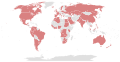 Countries with politicians, public officials or close associates implicated in the Panama Papers leak on April 15, 2016 (from Political corruption)
 Russia handing over the symbolic relay baton for the hosting rights of the 2022 FIFA World Cup to Qatar in June 2018 (from Political corruption)
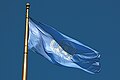 The Flag of the United Nations fly at United Nations Plaza in the Civic Center, San Francisco, California. The UN is one of the key organizations in the process of the political globalization. (from Political globalization)
 A memorial to the Great Famine (Ireland), a famine event in Ireland that faced prolonged suffering from the UK's domestic policy failures at the time under the Prime Ministers Sir Robert Peel and Lord John Russell. (from Health politics)
 Karl Marx and his theory of Communism, developed with Friedrich Engels, proved to be one of the most influential political ideologies of the 20th century. (from History of political thought)
 Eugène Delacroix's Liberty Leading the People (1830, Louvre), a painting created at a time where old and modern political philosophies came into violent conflict (from History of political thought)
 The sixth president of the United States, John Quincy Adams' "corrupt bargain" of 1824 is an example of patronage. (from Political corruption)
 US Military Police officer restraining and sedating prisoner while a soldier holds him down (from Political corruption)
 American lobbyist and businessman Jack Abramoff was at the center of an extensive corruption investigation. (from Political corruption)
 Elizabeth Warren and Bernie Sanders campaigning for extended US Medicare coverage in 2017. (from Health politics)
 The logo and slogan for change.org (from Politics and technology)
 Ferdinand Marcos (pictured with his daughter Imee) was a Philippine dictator and kleptocrat. His regime was infamous for its corruption. (from Political corruption)
 Candlelight protest against South Korean President Park Geun-hye in Seoul, South Korea, January 2017 (from Political corruption)
 Portrait of Constant c. 1820 (from History of political thought)
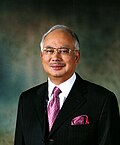 Malaysia's former Prime Minister Najib Razak was found guilty in the corruption trial over the multi-billion-dollar 1MDB scandal. He is currently serving his sentence in Kajang Prison. (from Political corruption)
 This is the divide of the different political parties in Estonia where in the 2013 elections, over 133,000 people (roughly 21.2% of participating voters) voted over the Internet. The 2013 elections were also the first elections to allow vote verification with mobile devices. (from Politics and technology)
 Protesters in support of American whistleblower Edward Snowden, Berlin, Germany, August 2014 (from Political corruption)
 A world map distinguishing countries of the world as federations (green) from unitary states (blue), a work of political science (from Political science)
 World map with the concepts of Heartland and Rimland applied (from Geopolitics)
 Detail from Corrupt Legislation (1896) by Elihu Vedder. Library of Congress Thomas Jefferson Building, Washington, D.C. (from Political corruption)

 Montenegro's former president Milo Đukanović is often described as having strong links to Montenegrin mafia. (from Political corruption)
 Savka Dabčević-Kučar, Croatian Spring participant; Europe's first female prime minister (from Civil and political rights)
 Division of the world according to Haushofer's pan-regions doctrine (from Geopolitics)
 Sir Halford Mackinder's Heartland concept showing the situation of the "pivot area" established in the Theory of the Heartland. He later revised it to mark Northern Eurasia as a pivot while keeping area marked above as Heartland. (from Geopolitics)
 Reformers like the American Joseph Keppler depicted the Senate as controlled by the giant moneybags, who represented the nation's financial trusts and monopolies. (from Political corruption)


.jpg)


.jpeg)
,_écrivain_et_homme_politique_-_P1679_-_Musée_Carnavalet_(cropped).jpg)


_(2).jpg)


Related portals


.svg)


Associated Wikimedia
The following Wikimedia Foundation sister projects provide more on this subject:
-
 Commons
Free media repository -
 Wikidata
Free knowledge base -
 Wikiquote
Collection of quotations -
 Wikisource
Free-content library -
 Wikiversity
Free learning tools -
 Wiktionary
Dictionary and thesaurus


