From 1911 until the establishment of a unified colony in 1934, the territory of the two colonies was sometimes referred to as "Italian Libya" or Italian North Africa (Africa Settentrionale Italiana, or ASI). Both names were also used after the unification, with Italian Libya becoming the official name of the newly combined colony. Through its history, various infrastructure projects, most notably roads, railways and villages were set up, as well as archeology. It had a population of around 150,000 Italians.
The Italian colonies of Tripolitania and Cyrenaica were taken by Italy from the Ottoman Empire during the Italo-Turkish War of 1911–1912, and run by Italian governors. In 1923, indigenous rebels associated with the Senussi Order organized the Libyan resistance movement against Italian settlement in Libya, mainly in Cyrenaica. The rebellion was put down by Italian forces in 1932, after the pacification campaign, which resulted in the deaths of a quarter of Cyrenaica's population. In 1934, the colonies were unified by governor Italo Balbo, with Tripoli as the capital. In 1937, the colony was divided into four provinces, and two years later the coastal provinces became a part of metropolitan Italy as the Fourth Shore. (Full article...)
Image 3
The early modern period (c.1500– c.1800) is a historical period, with divisions based primarily on the history of Europe and the broader concept of modernity. There is no exact date that marks the beginning or end of the period and its extent may vary depending on the area of history being studied. In general, the early modern period is considered to have started at the beginning of the 16th century (c.1500), and is variably considered to have ended at the 18th or 19th century (1700–1800). In a European context, it is defined as the period following the Middle Ages and preceding the advent of modernity, but there is no universal agreement on the dates of these boundaries. In the context of global history, the early modern period is often used even in contexts where there is no equivalent "medieval" period.
Historians in recent decades have argued that, from a worldwide standpoint, the most important feature of the early modern period was the spread of globalization. From this viewpoint, the Columbian contact and its newfound notion of a New World being added to the Old World is another marker of the start of the period. New economies and institutions emerged, becoming more sophisticated and globally articulated over the course of the period. The early modern period also included the rise of the dominance of mercantilism as an economic theory. Other notable developments of the period include the Scientific Revolution, increasingly rapid technological progress, secularized civic politics, accelerated travel due to improvements in mapping and ship design, and the emergence of nation states. (Full article...)
Image 4
An Austrian railway in 1895
The Second Industrial Revolution, also known as the Technological Revolution, was a phase of rapid scientific discovery, standardization, mass production and industrialization from the late 19th century into the early 20th century. The First Industrial Revolution, which ended in the middle of the 19th century, was punctuated by a slowdown in important inventions before the Second Industrial Revolution started in 1870. Though a number of its events can be traced to earlier innovations in manufacturing, such as the establishment of a machine tool industry, the development of methods for manufacturing interchangeable parts, as well as the invention of the Bessemer process and open hearth furnace to produce steel, later developments heralded the Second Industrial Revolution, which is generally dated between 1870 and 1914 when World War I commenced.
Advancements in manufacturing and production technology enabled the widespread adoption of technological systems such as telegraph and railroad networks, gas and water supply, and sewage systems, which had earlier been limited to a few select cities. The enormous expansion of rail and telegraph lines after 1870 allowed unprecedented movement of people and ideas, which culminated in a new wave of colonialism and globalization. In the same time period, new technological systems were introduced, most significantly electrical power and telephones. The Second Industrial Revolution continued into the 20th century with early factory electrification and the production line; it ended at the beginning of World War I.
The history of Spain dates to contact between the pre-Roman peoples of the Mediterranean coast of the Iberian Peninsula with the Greeks and Phoenicians. During Classical Antiquity, the peninsula was the site of multiple successive colonizations of Greeks, Carthaginians, and Romans. Native peoples of the peninsula, such as the Tartessos, intermingled with the colonizers to create a uniquely Iberian culture. The Romans referred to the entire peninsula as Hispania, from which the name "Spain" originates. As was the rest of the Western Roman Empire, Spain was subject to numerous invasions of Germanic tribes during the 4th and 5th centuries AD, resulting in the end of Roman rule and the establishment of Germanic kingdoms, marking the beginning of the Middle Ages in Spain.
The joint rule of Isabella I and Ferdinand II is historiographically considered the foundation of a unified Spain. The conquest of Granada, and the first voyage of Columbus, both in 1492, made that year a critical inflection point in Spanish history. The same year saw the expulsion of Spain's Jews and the conversion of many others to Christianity. In the subsequent decades, the voyages of the explorers and conquistadors of Spain helped establish a Spanish colonial empire which was among the largest ever. King Charles I established the Spanish Habsburg dynasty. Under his son Philip II the Spanish Golden Age flourished, the Spanish Empire reached its territorial and economic peak, and his palace at El Escorial became the center of artistic flourishing. However, Philip's rule also saw the destruction of the Spanish Armada, a number of state bankruptcies and the independence of the Northern Netherlands, which marked the beginning of the slow decline of Spanish influence in Europe. Spain's power was further tested by its participation in the Eighty Years' War, whereby it tried and failed to recapture the newly independent Dutch Republic, and the Thirty Years' War, which resulted in continued decline of Habsburg power in favor of the French Bourbon dynasty. Matters came to a head with the death of the last Habsburg ruler Charles II of Spain; the War of the Spanish Succession broke out between two European alliances led by the French Bourbons and the Austrian Habsburgs, for the control of the Spanish throne. The Bourbons prevailed, resulting in the ascension of Philip V of Spain, who took Spain into various wars and eventually recaptured the territories in southern Italy that had been lost in the War of the Spanish Succession. Spain's late entry into the Seven Years' War was the result of fear of the growing successes of the British at the expense of the French, but Spanish forces suffered major defeats. Motivated by this and earlier setbacks during Bourbon rule, Spanish institutions underwent a period of reform, especially under Charles III, that culminated in Spain's largely successful involvement in the American War of Independence. (Full article...)
Spain and Portugal colonized large parts of Central and South America, followed by France and England in Northern America and the Lesser Antilles. The Portuguese became the masters of trade between Brazil, the coasts of Africa, and their possessions in the Indies, whereas the Spanish came to dominate the Greater Antilles, Mexico, Peru, and opened trade across the Pacific Ocean, linking the Americas with the Indies. English and French privateers began to practice persistent theft of Spanish and Portuguese treasures. This era of colonialism established mercantilism as the leading school of economic thought, where the economic system was viewed as a zero-sum game in which any gain by one party required a loss by another. The mercantilist doctrine encouraged the many intra-European wars of the period and arguably fueled European expansion and imperialism throughout the world until the 19th century or early 20th century. (Full article...)
After nearly a century of political instability and several civil wars, the Restoration attempted to establish a new political system that ensured stability through the practice of turno, an intentional rotation of liberal and conservative parties in leadership, often achieved through electoral fraud. Critics of the turnismo system included republicans, socialists, communists, anarchists, Basque and Catalan nationalists, and Carlists. However, the relative stability to the turnismo system outlived its creator, the Conservative politician Antonio Cánovas del Castillo, and characterised the era with comparative peace, despite great social inequalities in the agricultural areas of Spain, and sporadic unrest relating to military defeats abroad.
Ottoman Tripolitania, also known as the Regency of Tripoli, was officially ruled by the Ottoman Empire from 1551 to 1912. It corresponded roughly to the northern parts of modern-day Libya in historic Tripolitania and Cyrenaica. It was initially established as an Ottoman province ruled by a pasha (governor) in Tripoli who was appointed from Constantinople, though in practice it was semi-autonomous due to the power of the local Janissaries. From 1711 to 1835, the Karamanli dynasty ruled the province as a de facto hereditary monarchy while remaining under nominal Ottoman suzerainty. In 1835, the Ottomans reestablished direct control over the region until its annexation by Italy in 1912.
Los Angeles had a strong economic base in farming, oil, tourism, real estate and movies. It grew rapidly with many suburban areas inside and outside the city limits. Its motion picture industry made the city world-famous, and World War II brought new industry, especially high-tech aircraft construction. Politically the city was moderately conservative, with a weak labor union sector.
Since the 1960s, growth has slowed—and traffic delays have become infamous. Los Angeles was a pioneer in freeway development as the public transit system deteriorated. New arrivals, especially from Mexico and Asia, have transformed the demographic base since the 1960s. Old industries have declined, including farming, oil, military and aircraft, but tourism, entertainment and high-tech remain strong. Over time, droughts and wildfires have increased in frequency and become less seasonal and more year-round, further straining the city's water security. (Full article...)
Image 3The international community grew in the second half of the century significantly due to a new wave of decolonization, particularly in Africa. Most of the newly independent states, were grouped together with many other so called developing countries. Developing countries gained attention, particularly due to rapid population growth, leading to a record world population of nearly 7billion people by the end of the century. (from 20th century)
Image 12The 20th century saw an explosive increase in human population, rising from about 1.6 billion in 1900 to over 6 billion by 2000, with the Green Revolution (mid-20th century) being a key factor (from 20th century)
Image 13Decolonization of the British Empire in Africa. (from Contemporary history)
Image 20A stamp commemorating Alexander Fleming. His discovery of penicillin changed the world of medicine by introducing the age of antibiotics. (from 20th century)
Image 29Oil field in California, US, in 1938. The first modern oil well is drilled in 1848 by the Russian engineer F.N. Semyonov, on the Apsheron Peninsula north-east of Baku. (from 20th century)


 In many periodizations of human history, the late modern period followed the early modern period. It began in 1789 with the start of the French Revolution and, depending on the author, either ended with the beginning of contemporary history in 1945 with the end of World War II, or includes the contemporary history period to the present day.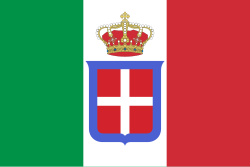


_crowned.svg)

.svg)


.svg)


 The Wall Street Crash of 1929 was a major factor contributing to the Great Depression (from 20th century)
 The international community grew in the second half of the century significantly due to a new wave of decolonization, particularly in Africa. Most of the newly independent states, were grouped together with many other so called developing countries. Developing countries gained attention, particularly due to rapid population growth, leading to a record world population of nearly 7 billion people by the end of the century. (from 20th century)
 Map of territorial changes in Europe after World War I (as of 1923). (from 20th century)
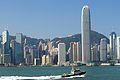 Hong Kong, under British administration from 1842 to 1997, is one of the original Four Asian Tigers. (from 20th century)
 Countries by real GDP growth rate in 2014. (Countries in brown were in recession.) (from Contemporary history)
 Photograph of the American astronaut Buzz Aldrin during the first moonwalk in 1969, taken by Neil Armstrong. The relatively young aerospace engineering industries rapidly grew in the 66 years after the Wright brothers' first flight. (from 20th century)
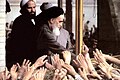 Ayatollah Ruhollah Khomeini was the Shia cleric who led the 1979 Iranian Revolution, overthrowing the Shah and establishing Iran as an Islamic Republic. (from 20th century)
 In 1924, Edwin Hubble announced that the Andromeda Nebula is actually a galaxy and that the Milky Way is just one of many galaxies in the universe. (from 20th century)
 The 20th century saw an explosive increase in human population, rising from about 1.6 billion in 1900 to over 6 billion by 2000, with the Green Revolution (mid-20th century) being a key factor (from 20th century)
 Decolonization of the British Empire in Africa. (from Contemporary history)
 Dutch colonial officer with Papuans in the Baliem Valley, Dutch New Guinea, 1958 (from 20th century)
 The Siege of Leningrad during World War II is widely considered one of the most lethal sieges in history (from 20th century)
 Martin Luther King Jr., an African American civil rights movement leader (Washington, August 1963) (from 20th century)
 World powers and empires in 1914, just before the First World War.(from 20th century)
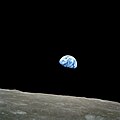 Earthrise, taken on 24 December 1968 by the American astronaut William Anders during the Apollo 8 space mission. It is the first photograph taken of Earth from lunar orbit. (from 20th century)
 A stamp commemorating Alexander Fleming. His discovery of penicillin changed the world of medicine by introducing the age of antibiotics. (from 20th century)
 The Empire State Building is an iconic building of the 1930s. (from 20th century)
 The division of Europe during the Cold War (from Contemporary history)
 The Blue Marble, Earth as seen from Apollo 17 in December 1972. The photograph is taken by LMP Harrison Schmitt. The second half of the 20th century saw humanity's first space exploration. (from 20th century)
 The mushroom cloud of the detonation of Little Boy, the first nuclear attack in history, on 6 August 1945 over Hiroshima, igniting the nuclear age with the international security dominating thread of mutual assured destruction in the latter half of the 20th century. (from 20th century)
 The Beatles in 1964, widely regarded as one of the most influential bands in Western popular music. (from 20th century)
 A visualization of the various routes through a portion of the Internet. Partial map of the Internet based in 2005 (from Contemporary history)
 First flight of the Wright brothers' Wright Flyer on 7 December 1903 in Kitty Hawk, North Carolina, US; Orville piloting with Wilbur running at wingtip. (from 20th century)
 Oil field in California, US, in 1938. The first modern oil well is drilled in 1848 by the Russian engineer F.N. Semyonov, on the Apsheron Peninsula north-east of Baku. (from 20th century)

 Changes in national boundaries after the end of the Cold War and the dissolution of the Soviet Union in 1991 (from 20th century)

.jpg)


.svg)


.jpg)


.jpg)
.jpg)


.svg)


 Commons
 Wikidata
 Wikiquote
 Wikisource
 Wikiversity
 Wiktionary


