This article has been nominated for merging into 1991 Atlantic hurricane season. You are welcome to participate in the merging discussion, which will decide whether to merge it into 1991 Atlantic hurricane season. This discussion may also result in the article being deleted, redirected, or draftified. |
Hurricane Grace was a short-lived Category 2 hurricane that contributed to the formation of the powerful 1991 Perfect Storm. Forming on October 26, Grace initially had subtropical origins, meaning it was partially tropical and partially extratropical in nature. It became a tropical cyclone on October 27, and ultimately peaked with winds of 105 mph (165 km/h). The storm had minor effects on the island of Bermuda as it passed to the south. A developing extratropical storm to the north turned Grace eastward; the hurricane was eventually absorbed into the large circulation of the larger low-pressure system.[1] Fed by the contrast between cold air to the northwest and warm air from the remnants of Grace, this storm became a large and powerful nor'easter that caused extremely high waves and resulted in severe coastal damage along the East Coast of the United States.
 Grace near Bermuda on October 28. The Perfect Storm is developing to its north. | |
| Meteorological history | |
|---|---|
| Formed | October 25, 1991 |
| Extratropical | October 29, 1991 |
| Dissipated | October 30, 1991 |
| Category 2 hurricane | |
| 1-minute sustained (SSHWS/NWS) | |
| Highest winds | 105 mph (165 km/h) |
| Lowest pressure | 980 mbar (hPa); 28.94 inHg |
| Overall effects | |
| Fatalities | None |
| Damage | None |
Areas affected | Bermuda |
| IBTrACS | |
Part of the 1991 Atlantic hurricane season | |

Meteorological history
edit
Tropical storm (39–73 mph, 63–118 km/h)
Category 1 (74–95 mph, 119–153 km/h)
Category 2 (96–110 mph, 154–177 km/h)
Category 3 (111–129 mph, 178–208 km/h)
Category 4 (130–156 mph, 209–251 km/h)
Category 5 (≥157 mph, ≥252 km/h)
Unknown


 Extratropical cyclone, remnant low, tropical disturbance, or monsoon depression
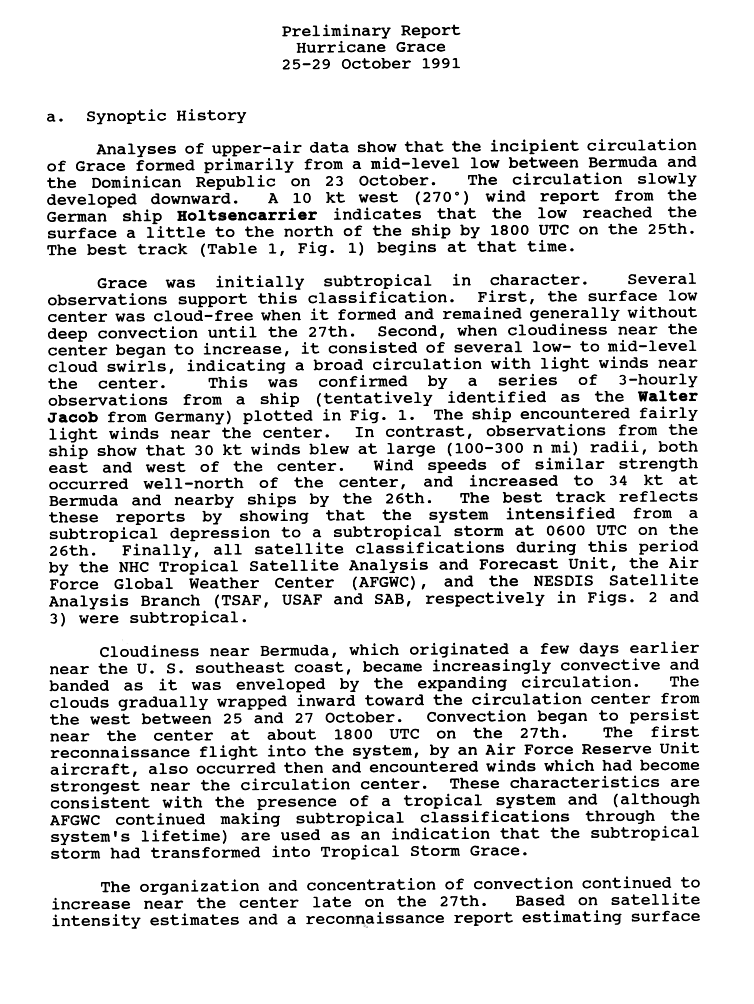
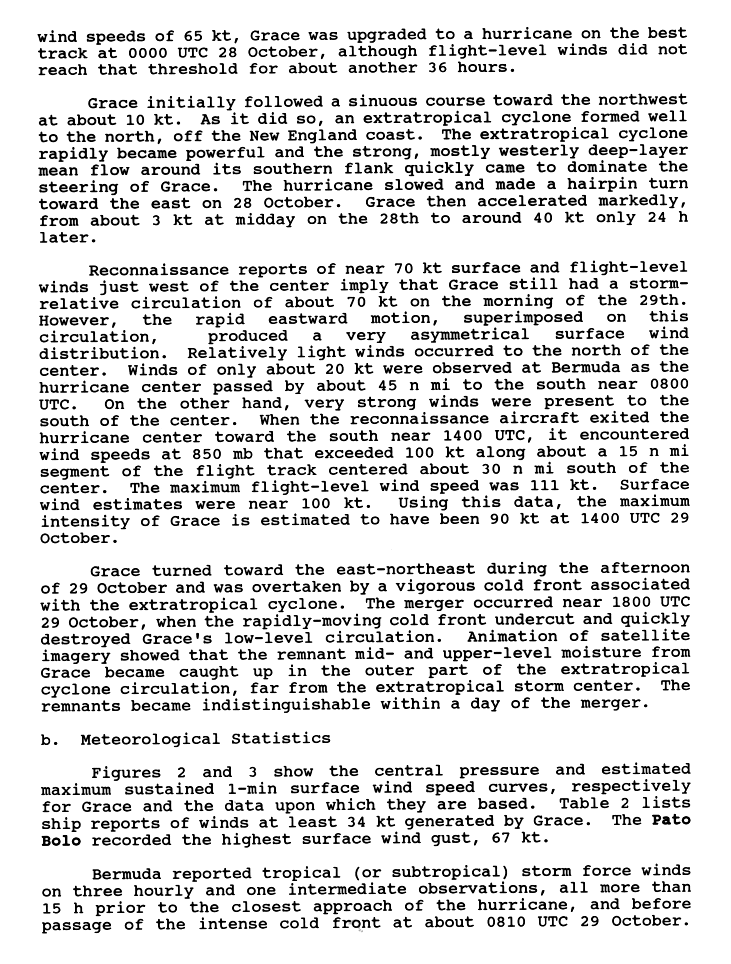
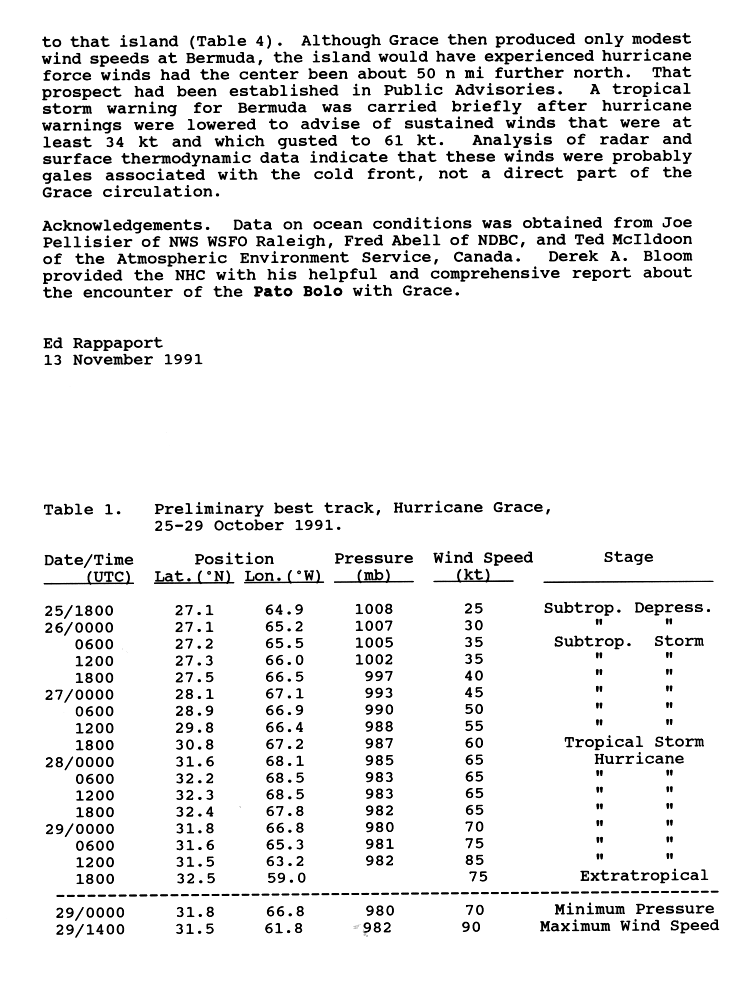
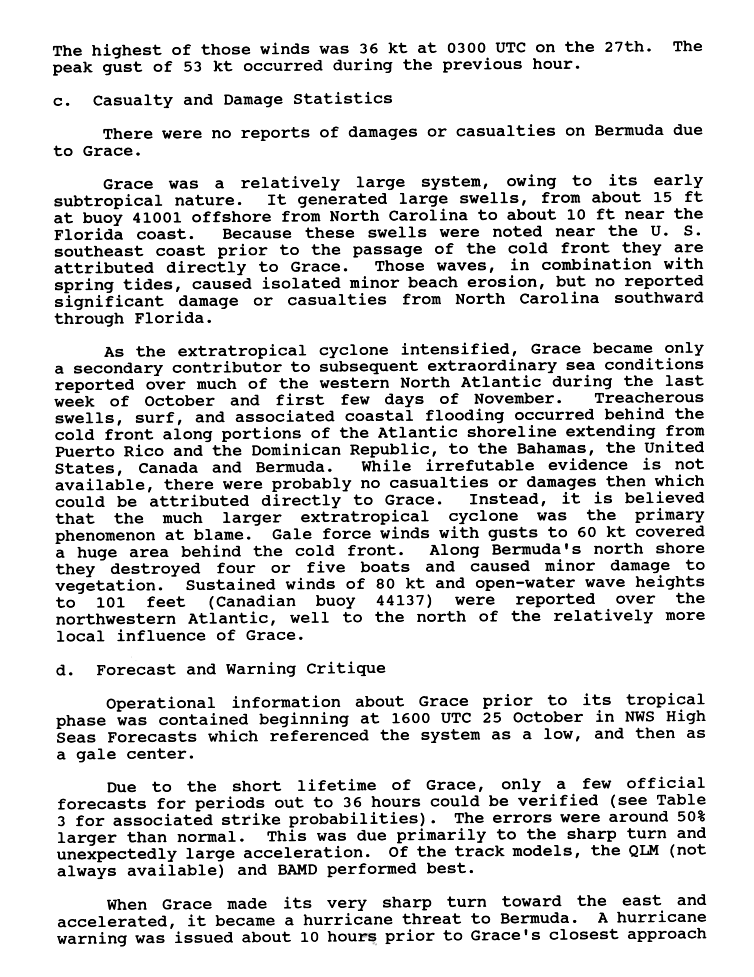
A mid-level area of low pressure formed on October 23 south of Bermuda. The low became a surface feature on October 25 and developed into a subtropical storm on October 26. An area of clouds near Bermuda became increasingly convective, and gradually became entrained into the expanding and developing circulation of the subtropical storm. Thunderstorm activity persisted near the center, and on October 27, the system was upgraded to Tropical Storm Grace.[2]
Grace continued to organize and intensify, and was eventually upgraded to a Category 1 hurricane on the Saffir–Simpson hurricane scale.[3] The hurricane tracked generally northwestward until October 28, when an extratropical cyclone off the New England coast rapidly intensified and influenced Grace's steering currents, turning the hurricane sharply east.[4] At around the same time, an eye feature associated with Hurricane Grace became apparent on satellite imagery, despite a lack of strong convective activity around the storm's center.[5] Grace accelerated as it continued eastward, and reached its peak intensity with winds of 105 mph (165 km/h) and a minimum central barometric pressure of 980 mbar (hPa; 28.94 inHg) at a Category 2 hurricane on October 29.[6] However, the storm's rapid forward movement led to an asymmetrical circulation. The center passed approximately 50 mi (80 km) south of Bermuda.[3]
Hurricane Grace turned northeast later that day, as the rapidly approaching extratropical storm undermined the storm's lower-level center. Subsequently, Grace lost its status as a tropical system.[7] Afterward, Grace moved north along the front and was completely absorbed by the passing extratropical storm to the north on October 30.[4][8] The nor'easter significantly strengthened as a result of the temperature contrast between the cold air to the northwest and the warmth and humidity associated with the remnants of Hurricane Grace. The nor'easter that absorbed Grace later became commonly known as "The Perfect Storm".[4][8]
Preparations and impact
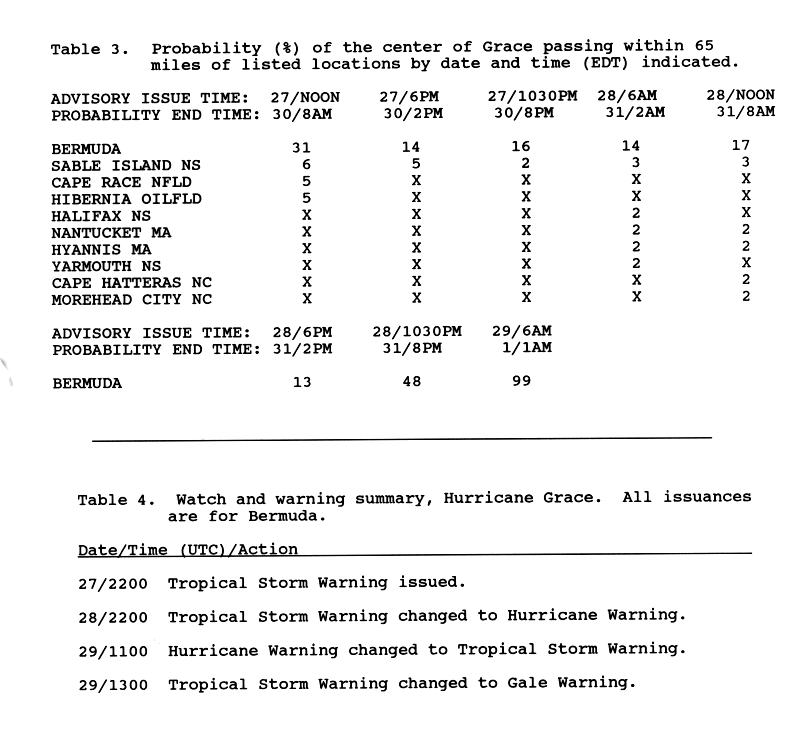
editA hurricane warning was issued for Bermuda.[6][9] The island experienced squally weather, with precipitation peaking at 3.21 in (82 mm).[10][11] Off the Virginia coast, nine people were rescued from a yacht after encountering strong winds and rough seas.[12][13] Grace generated swells of at least 15 ft (4.6 m) along the East Coast of the United States, leading to minor beach erosion.[7][14] Carolina Beach, North Carolina lost about 1 ft (0.30 m) of sand.[14]
The nor'easter that absorbed Grace caused extensive coastal damage, high seas, and powerful winds. Hurricane-force wind gusts were reported in New England. A wave 101 ft (31 m) in height was reported offshore. Extensive coastal flooding occurred along the coast of the Mid-Atlantic and Northeastern U.S., with effects as far north as Newfoundland and as far south as Jamaica.[4]
See also
edit
References
edit- ↑ Maa, Jerome P. Y.; Wang, David W. C. (1995). "Wave Transformation Near Virginia Coast: the "Halloween" Northeaster" (PDF). Journal of Coastal Research. 11 (4): 1258–1271.
- ↑ Edward Rappaport (November 13, 1991). "Hurricane Grace Preliminary Report Page 1". National Hurricane Center. Retrieved September 13, 2009.
- 1 2 Edward Rappaport (November 13, 1991). "Hurricane Grace Preliminary Report Page 2". National Hurricane Center. Retrieved September 13, 2009.
- 1 2 3 4 "Ingredients for a real 'perfect storm'". USA Today. October 30, 2000. Archived from the original on August 19, 2000. Retrieved September 13, 2009.
- ↑ Richard Pasch (October 28, 1991). "Hurricane Grace Discussion Number 5". National Hurricane Center. Retrieved September 13, 2009.
- 1 2 Edward Rappaport (November 13, 1991). "Hurricane Grace Preliminary Report Page 4". National Hurricane Center. Retrieved September 13, 2009.
- 1 2 Edward Rappaport (November 13, 1991). "Hurricane Grace Preliminary Report Page 3". National Hurricane Center. Retrieved September 13, 2009.
- 1 2 National Climatic Data Center (November 13, 1991). "The Perfect Storm". National Oceanic and Atmospheric Administration. Archived from the original on December 21, 2014. Retrieved February 8, 2021.
- ↑ Edward Rappaport (November 13, 1991). "Hurricane Grace Preliminary Report Page 7". National Hurricane Center. Retrieved September 13, 2009.
- ↑ Roth, David M. (January 3, 2023). "Tropical Cyclone Point Maxima". Tropical Cyclone Rainfall Data. United States Weather Prediction Center. Retrieved January 6, 2023.
 This article incorporates text from this source, which is in the public domain.
 - ↑ Staff Writer (October 29, 1991). "Bermuda Braces for Brush with Hurricane Grace". St. Paul Pioneer Press. Retrieved September 13, 2009.
- ↑ Staff Writer (October 29, 1991). "Crew of New Bedford boat rescued; 13 others taken from yachts hit by Grace". Providence Journal. Archived from the original on November 3, 2012. Retrieved September 13, 2009.
- ↑ Staff Writer (October 30, 1991). "Grace Bypasses Bermuda, Heads Out Into the Atlantic". Orlando Sentinel. Archived from the original on November 3, 2012. Retrieved September 13, 2009.
- 1 2 Staff Writer (October 29, 1991). "Hurricane Grace Kicks up Waves, Avoids N.C. Coast". Morning Star. Retrieved September 13, 2009.[permanent dead link]
External links
edit