


| Part of a series on |
| Chemistry |
|---|
 |


Chemistry is the scientific study of the properties and behavior of matter.[1] It examines the composition and structure of atoms, molecules, and ions, and explains how interactions between them give rise to substances, chemical bonds, and chemical reactions. As a branch of the physical sciences, chemistry connects the microscopic behavior of particles with the macroscopic materials and phenomena observed in the natural world.[2]
Chemistry investigates the fundamental concepts that govern matter, including bonding, energy and thermodynamics, reaction mechanisms, equilibrium, and the behavior of substances in different phases. These principles underpin the understanding of materials, biological systems, geological processes, atmospheric chemistry, and many natural and engineered environments. Chemistry helps explain phenomena such as plant growth, the formation of rocks, atmospheric ozone chemistry, and the action of pharmaceuticals and forensic methods.[3]
Modern chemistry is practiced through laboratory experimentation, analytical and spectroscopic techniques, computational modeling, and large‑scale industrial processes. Chemists study and manipulate substances to develop new materials, medicines, energy technologies, and methods for environmental monitoring and remediation. Because it provides a foundation for understanding both basic and applied sciences, chemistry is often described as the central science.[4] The applications of chemistry are central to the global economy through the chemical and materials industries.[5]
Chemistry has deep historical roots in ancient natural philosophy and alchemy, but developed into a modern science through the chemical revolution of the 18th century and the emergence of atomic theory and quantum chemistry in the 19th and 20th centuries.[6] Today it encompasses a wide range of subdisciplines, including organic chemistry, inorganic chemistry, physical chemistry, analytical chemistry, biochemistry, theoretical chemistry, and materials science. These fields continue to expand and interrelate, giving rise to numerous interdisciplinary areas that bridge chemistry with physics, biology, geology, engineering, and environmental science.[5]
Definition and scope
editChemistry is the scientific study of matter, the substances that compose it, and the transformations they undergo. It examines the composition, structure, and properties of atoms, molecules, and ions, and seeks to explain how interactions at the atomic and molecular scale give rise to observable chemical behaviour.[1] As a physical science, chemistry occupies an intermediate position between physics, which studies the fundamental laws governing matter and energy, and biology, which examines the chemical processes that sustain living systems.[2]
The scope of chemistry extends across multiple length and energy scales. At the microscopic level it investigates atomic structure, chemical bonding, and molecular interactions; at the macroscopic level it describes the behaviour of bulk materials, mixtures, and the various states of matter. Although chemistry primarily concerns solids, liquids, and gases, it also encompasses plasmas, supercritical fluids, and other less common or exotic states of matter when their behaviour is governed by chemical principles.[6]
Chemistry is distinguished by its focus on substances and their transformations. It studies how chemical reactions occur, how energy is exchanged or conserved during those reactions, and how the properties of materials emerge from their underlying structure. The discipline overlaps with materials science, geochemistry, biochemistry, and chemical engineering, but remains centred on understanding and manipulating matter at the molecular scale.[5]
History
editChemistry has developed over thousands of years from early natural philosophy and practical crafts into a modern scientific discipline. Ideas about the composition and behaviour of matter can be traced to ancient civilizations, but the field took shape through the experimental traditions of alchemy and the quantitative reforms of the 18th‑century chemical revolution. During the 19th and 20th centuries, advances in atomic theory, thermodynamics, and quantum chemistry transformed chemistry into a rigorous physical science supported by increasingly sophisticated laboratory and analytical techniques.[6]
Etymology and ancient ideas
edit
The word chemistry derives from the earlier term alchemy, which entered European languages during the Renaissance and ultimately traces back to the Arabic al-kīmiyāʾ (الكيمياء). The Arabic term is commonly linked to the Greek χημεία or χημία, which may itself derive from the ancient Egyptian word Kemet, the name for Egypt in the Egyptian language.[7][8]
Long before chemistry emerged as a scientific discipline, ancient cultures developed practical knowledge of materials and their transformations. Early technologies such as metal extraction, pottery and glass production, dyeing, fermentation, and the preparation of medicines and perfumes relied on empirical understanding of matter and laid the groundwork for later chemical ideas.[9]
Alchemy and proto-chemistry
editFrom late antiquity through the early modern period, alchemy combined practical experimentation with philosophical and mystical ideas about the composition and transformation of matter. Hellenistic and Byzantine writers such as Zosimos of Panopolis described techniques including distillation, sublimation, and the preparation of mineral substances, while Islamic scholars later expanded the tradition. Works attributed to Jābir ibn Hayyān (Geber) introduced systematic classifications of materials and described procedures for producing compounds such as ammonium chloride from organic sources.[10][11]
Through Arabic and Latin translations, alchemical knowledge spread into medieval and Renaissance Europe, where it continued to develop alongside metallurgy, medicine, and natural philosophy. Although alchemical theories were not scientific in the modern sense, alchemists refined laboratory apparatus, recorded experimental observations, and developed methods for manipulating substances that laid important foundations for later chemical practice.[12]
A decisive shift toward modern chemistry occurred in the 17th century. In The Sceptical Chymist (1661), Robert Boyle criticised traditional elemental theories and argued for an empirical, mechanistic approach to studying matter, helping to distinguish chemistry from its alchemical origins and establish it as an independent scientific discipline.[13]
Chemical revolution
edit.jpg)
In the late 18th century, chemistry underwent a major transformation often referred to as the chemical revolution. Central to this shift was the work of Antoine Lavoisier, who rejected the prevailing phlogiston theory and introduced a quantitative approach to studying chemical change. Through careful measurement, Lavoisier established the law of conservation of mass and demonstrated that combustion and calcination involved combination with oxygen, not the release of an imponderable substance.[14]
Lavoisier also helped reform chemical language by introducing a systematic nomenclature that linked the names of substances to their composition, providing a framework still recognisable in modern chemistry. His work, together with that of contemporaries such as Joseph Priestley, Carl Wilhelm Scheele, and Henry Cavendish—who isolated key gases including oxygen, hydrogen, and carbon dioxide—established chemistry as a quantitative, experimentally grounded science.[15]
19th century
edit
The 19th century saw chemistry develop into a mature scientific discipline grounded in atomic theory, quantitative measurement, and systematic classification. In the early decades of the century, John Dalton proposed a modern atomic theory in which elements consisted of indivisible atoms with characteristic weights. Agreement on atomic and molecular definitions was strengthened by the 1860 Karlsruhe Congress, which helped standardise atomic weights and laid the groundwork for later periodic classification.[16]
Advances in electrochemistry by Humphry Davy and Jöns Jacob Berzelius further clarified the nature of chemical bonding. Using the recently invented voltaic pile, Davy isolated several new elements—including sodium, potassium, calcium, and magnesium—by electrolysing their molten salts, demonstrating the power of electrical methods in chemical analysis.[17]
A major milestone was the creation of the periodic table in the 1860s by Dmitri Mendeleev and, independently, Julius Lothar Meyer. By arranging the known elements according to atomic weight and recurring chemical properties, Mendeleev identified gaps corresponding to undiscovered elements and successfully predicted their properties, demonstrating the predictive power of periodic classification.[18]
The century also witnessed the rise of organic chemistry following Friedrich Wöhler’s 1828 synthesis of urea, which challenged the doctrine of vitalism and showed that organic compounds could be produced from inorganic precursors. Subsequent work by chemists such as Justus von Liebig established the structural and analytical foundations of the field.[19]
Meanwhile, the application of thermodynamics to chemical systems by scientists including J. Willard Gibbs and Svante Arrhenius provided a theoretical framework for understanding chemical equilibrium, reaction spontaneity, and the energetics of chemical processes. These developments collectively transformed chemistry into a quantitative, theoretically grounded science by the end of the century.[20]
20th century
edit.jpg)
The early 20th century transformed chemistry through the emergence of quantum mechanics, which provided a theoretical basis for understanding atomic and molecular structure. Building on the discoveries of the electron, radioactivity, and the atomic nucleus, scientists such as Niels Bohr, Erwin Schrödinger, and Linus Pauling developed quantum models that explained chemical bonding, molecular geometry, and the periodic trends of the elements.[21]
Rapid advances in analytical instrumentation revolutionised chemical research. Techniques such as spectroscopy, chromatography, X-ray crystallography, and later nuclear magnetic resonance enabled chemists to determine molecular structures, identify trace substances, and study reaction mechanisms with unprecedented precision. These tools helped establish modern physical and analytical chemistry as quantitatively rigorous fields.[22]
The century also saw the rise of new subdisciplines. Polymer chemistry expanded rapidly following the development of synthetic materials such as nylon, polyethylene, and Teflon, while biochemistry grew into a major field through the elucidation of proteins, enzymes, and the structure of DNA. Research in nuclear chemistry—driven by the discovery of nuclear fission by Otto Hahn and the work of scientists such as Marie Curie—revealed the chemical behaviour of radioactive elements and enabled applications in medicine, energy, and environmental science.[23]
By the late 20th century, chemistry had become increasingly interdisciplinary, integrating concepts from physics, biology, materials science, and engineering. The development of computational chemistry and molecular modelling further expanded the ability to predict chemical behaviour and design new molecules, marking a shift toward theory‑guided chemical research.[24]
Modern chemistry
edit
Contemporary chemistry is characterised by interdisciplinary research, advanced analytical capabilities, and the integration of computational and theoretical methods. Fields such as nanotechnology, materials science, and environmental chemistry have expanded rapidly, driven by the ability to design and study matter at the molecular and nanoscale levels. Improvements in instrumentation, including high‑resolution spectroscopy, electron microscopy, and mass spectrometry, have enabled chemists to analyse complex systems with exceptional precision.[25]
The growth of computational chemistry and molecular modelling has made it possible to predict reaction pathways, simulate molecular behaviour, and design new materials and pharmaceuticals using first‑principles calculations. These approaches complement experimental work and have become central to research in both academia and industry.[26]
Modern chemistry also plays a crucial role in addressing global challenges. Research in green chemistry aims to reduce environmental impact through sustainable synthesis and energy‑efficient processes, while advances in biochemistry and chemical biology support the development of new medicines, diagnostics, and biotechnologies. Large‑scale industrial chemistry underpins the production of polymers, pharmaceuticals, fertilisers, and advanced materials, making the discipline central to the global economy and technological innovation.[27]
Core concepts
editThe core concepts of chemistry describe the nature of matter, its composition and structure, and the principles that govern its behaviour and transformations. These ideas range from the atomic and molecular basis of substances to the ways in which they interact, exchange energy, and undergo chemical change. Together, they provide a framework for understanding the properties of materials and the laws that underlie chemical processes.

Matter and its forms
editMatter encompasses the physical substances that make up the universe, from individual atoms to complex materials. Chemistry examines how matter is classified, how it is organised into substances and mixtures, and how it changes between different physical states. These distinctions provide the foundation for describing chemical behaviour and transformations.[28]
Definition of matter
editMatter is commonly described as anything that has mass and occupies space, although this definition is a practical convention rather than a strict physical boundary.[28] In chemistry, the term refers to the forms of matter that participate in chemical processes, including atoms, molecules, ions, and the materials they constitute. While exotic systems such as muonic atoms blur the distinction between matter and non‑matter, the concept remains a useful framework for describing the behaviour of ordinary chemical substances.
Substances and mixtures
editA chemical substance has a definite composition and characteristic properties, such as melting point, density, or reactivity.[28] Substances may be elements or compounds, and their identities remain constant under ordinary physical changes. A mixture contains two or more substances that are physically combined but not chemically bonded, allowing its composition to vary. Mixtures may be homogeneous—as in solutions—or heterogeneous, where components remain distinguishable on a macroscopic scale.[29] Heterogeneous mixtures include systems such as suspensions, colloids, and emulsions, which differ in particle size and stability.
Phases of matter
edit
Matter can exist in several phases, including solid, liquid, gas, and plasma, each distinguished by the arrangement and motion of particles.[30] Transitions between phases occur when energy is added or removed, altering the balance between particle motion and intermolecular forces. In addition to the classical phases, some materials exhibit intermediate or specialised states—such as liquid crystals and supercritical fluids—under particular temperature and pressure conditions.
Atoms and elements
edit
Atoms are the fundamental units of matter, and their internal structure determines the identity and behaviour of the chemical elements. Variations in the numbers of protons, neutrons, and electrons give rise to the diversity of elements and isotopes found in nature. Understanding atomic structure provides the basis for explaining bonding, periodic trends, and the properties of substances.[31]
Atomic structure
editAll matter is composed of atoms, which consist of a positively charged nucleus surrounded by negatively charged electrons. The nucleus contains protons and neutrons [b], whose numbers determine an element’s identity and its isotopes, respectively. Electrons occupy regions of space described by atomic orbitals, and their arrangement influences an element’s chemical behaviour. The modern understanding of atomic structure is based on quantum mechanics, which describes electrons as probability distributions rather than classical particles.[33]
Elements and atomic number
editA chemical element is a substance whose atoms all contain the same number of protons in their nuclei. This number, known as the atomic number, uniquely identifies each element and determines its position in the periodic table. Elements may occur as individual atoms, as molecules, or in extended structures, but their chemical identity is defined solely by their proton count. Variations in neutron number give rise to different isotopes of the same element, which share chemical behaviour but may differ in stability or physical properties.[34]
Isotopes & Allotropes
editAtoms of the same element can differ in the number of neutrons in their nuclei, giving rise to distinct isotopes. All isotopes of an element share the same atomic number and therefore the same chemical behaviour, but they may differ in mass, stability, and nuclear properties. Many elements occur naturally as mixtures of isotopes, some of which are stable while others are radioactive and undergo nuclear decay.[35]
 Dioxygen (O2)
 Ozone (O3)

.png)
Structural differences between the allotropes dioxygen (O2) and ozone (O3), illustrating how variations in atomic arrangement give rise to distinct forms of the same element.
Some chemical elements can exist in more than one structural form, known as allotropes. Allotropy arises when atoms of the same element can bond or arrange themselves in different ways, producing forms with distinct physical and chemical properties. Allotropes may differ by molecular composition, as in O2 and O3, or by extended structure, as seen in the various forms of carbon such as diamond, graphite, and graphene. Other elements with well‑known allotropes include phosphorus and sulfur, which adopt multiple molecular and polymeric forms.[36]
Chemical periodicity
editThe periodic table organises the elements according to recurring patterns in their electronic structure and chemical behaviour. These periodic trends influence properties such as atomic radius, ionization energy, and typical bonding patterns. Periodicity provides a unifying framework for predicting the behaviour of elements and the compounds they form.[37]
Periodic table
edit
The periodic table arranges the chemical elements in a systematic way that reflects recurring patterns in their properties. Elements are ordered by increasing atomic number, and the layout groups together those with similar valence‑electron configurations and characteristic chemical behaviour. The table provides a framework for understanding trends in reactivity, bonding, and physical properties, and it serves as a predictive tool for identifying relationships among known elements and anticipating the behaviour of newly discovered ones. Although the long form is the most widely used, alternative layouts—such as the left‑step (Janet) form and various spiral or circular designs—highlight different aspects of periodicity.[38]
Periodicity in properties
edit
Many physical and chemical properties of the elements vary in regular ways across the periodic table. These periodic trends arise from the systematic filling of atomic orbitals and the resulting changes in effective nuclear charge. Properties such as atomic radius, ionization energy, electron affinity, and electronegativity show characteristic patterns across periods and down groups, influencing how elements form bonds and participate in chemical reactions.[39]
Periodic behaviour is also observed in classes of compounds formed by related elements. Similarities in oxidation states, bonding patterns, and molecular or solid‑state structures lead to families of compounds with analogous reactivity and properties. Examples include trends in the oxides, halides, and hydrides of main‑group elements, where systematic changes in acidity, basicity, volatility, or lattice structure reflect the underlying periodicity of the constituent elements.[40]
Molecules, ions, and compounds
edit
-fluoride-3D-ionic.png)
Chemical substances can exist as discrete molecules, extended ionic lattices, or continuous covalent networks, each with characteristic structures and properties. The ways in which atoms combine—by sharing, transferring, or delocalising electrons—determine the forms and behaviours of the resulting compounds. The shapes of many simple molecules can be rationalised using the VSEPR model, which predicts geometry from the repulsion between regions of electron density around a central atom.[41] These structural differences underpin the diversity of materials encountered in chemistry.[42]
Molecules
editA molecule is a set of two or more atoms held together by chemical bonds in a specific arrangement. Molecular substances have discrete units with characteristic shapes, sizes, and internal bonding patterns that determine their physical and chemical behaviour. Molecules may consist of atoms of a single element, as in O2, or of different elements, as in H2O, and they range from simple diatomics to large organic and biological structures.[43]
Ions and ionic lattices
editAtoms or groups of atoms can gain or lose electrons to form charged species known as ions. Oppositely charged ions attract one another and assemble into extended ionic lattices rather than discrete molecules. The arrangement of ions in these lattices is governed by electrostatic interactions and by the relative sizes and charges of the constituent ions, giving rise to characteristic structures such as the rock‑salt and cesium‑chloride types.[44]
Network solids and formula units
editSome substances consist not of discrete molecules or ionic arrays but of continuous networks of atoms linked by covalent bonds. These network solids—such as silicon dioxide or diamond—form extended three‑dimensional frameworks with high melting points and characteristic mechanical properties. Because they lack identifiable molecular units, their compositions are expressed using formula units that represent the simplest whole‑number ratio of atoms in the structure.[45]
Functional groups
editIn organic chemistry, a functional group is a specific arrangement of atoms within a molecule that imparts characteristic patterns of reactivity. Functional groups such as hydroxyl, carbonyl, carboxyl, and amino groups define families of organic compounds and allow chemists to predict chemical behaviour based on structure. In this context, functional groups are introduced at a conceptual level, emphasising their role in classifying and comparing compounds rather than detailing reaction mechanisms.[46]
Other types
editSome substances do not fit neatly into the categories of discrete molecules, ionic lattices, or crystalline network solids. Many materials are polymers, consisting of long chains of repeating monomer units whose lengths and intermolecular interactions give rise to characteristic mechanical and thermal properties.[47] Other solids, such as glass, form amorphous networks in which atoms are linked covalently but lack long‑range periodic order.[48] These additional structural types broaden the range of behaviours observed in chemical substances and complement the more familiar molecular, ionic, and network forms.
Chemical bonding
edit
Chemical bonding describes the ways in which atoms interact to achieve more stable arrangements of electrons. Traditional models distinguish between covalent, ionic, and metallic bonding, each representing an idealised mode of electron distribution. Many simple covalent compounds can be described using the octet rule [d], a heuristic in which atoms tend to form bonds that give them eight valence electrons, although numerous exceptions [e] occur across the periodic table.[53]
Types of bonds
editChemical bonding describes the ways in which atoms interact to achieve more stable arrangements of electrons. Traditional models distinguish between covalent, ionic, and metallic bonding, each representing an idealised mode of electron distribution.

In covalent bonding, atoms share pairs of electrons to form discrete molecules or extended networks. The shared electrons occupy regions of space between the nuclei, giving rise to directional bonds and characteristic molecular geometries.
In ionic bonding, electrons are transferred from one atom to another to form oppositely charged ions. These ions attract each other electrostatically and assemble into extended ionic lattices rather than discrete molecular units, with structures determined by ion sizes and charges.
In metallic bonding, atoms in a metal lattice share a pool of delocalised electrons that move freely throughout the structure. This electron “sea” accounts for the electrical conductivity, malleability, and thermal properties characteristic of metallic solids.
Although these categories are useful models, real chemical bonds span a continuum between them. Many bonds exhibit mixed ionic and covalent character, and even metallic systems can show degrees of directionality or partial localisation of electrons. Concepts such as bond polarity, electron delocalisation, and resonance illustrate how chemical interactions occupy intermediate positions on this spectrum.[54]
Quantum‑mechanical and electromagnetic factors
editThe fundamental origins of chemical bonding lie in quantum mechanics and electromagnetic interactions. The arrangement of electrons in atoms is governed by their electron configuration, which determines the number and type of orbitals available for bonding. The energies and shapes of these atomic orbitals influence how effectively they can overlap to form bonds, as described by valence‑bond and molecular‑orbital models.
Differences in electronegativity and electron affinity affect how electron density is distributed between atoms, shaping bond polarity and the balance between ionic and covalent character. Effective nuclear charge plays a central role in these trends by controlling how strongly valence electrons are attracted to the nucleus.
Electron spin and the Pauli exclusion principle impose additional constraints: no two electrons in an atom or molecule may share the same set of quantum numbers, and paired electrons must have opposite spins. These rules determine how electrons occupy orbitals and how orbitals combine during bond formation, influencing bond order, magnetic behaviour, and the stability of molecular structures.[55]
Intermolecular forces
edit
Interactions between molecules arise from a range of intermolecular forces that are generally weaker than chemical bonds but crucial in determining physical properties.
Hydrogen bonding occurs when hydrogen is covalently bound to highly electronegative atoms such as oxygen, nitrogen, or fluorine, creating strong dipole interactions that significantly influence boiling points, solubility, and biological structure.
Dipole–dipole interactions arise between polar molecules whose permanent dipoles align to produce directional attractions. These forces contribute to trends in melting and boiling points among molecular substances.
Dispersion forces result from temporary fluctuations in electron density that induce instantaneous dipoles in neighbouring molecules. Present in all substances, they are the dominant intermolecular force in non‑polar molecules and increase with molecular size and polarisability.[56]
Acidity and basicity
editAcidity and basicity describe how substances exchange protons or electron pairs, influencing many aspects of chemical reactivity, solution behaviour, and material properties.[57] Several complementary models, including the Brønsted–Lowry and Lewis definitions, are used to characterise acid–base behaviour in different chemical contexts.
Theories of acids and bases
edit
Early descriptions of acids and bases were based on their characteristic properties, such as sour taste or the ability to neutralise one another. Modern chemistry recognises several theoretical frameworks that capture different aspects of acid–base behaviour.
In the Arrhenius model, an acid increases the concentration of hydronium ions (H3O+) in water, while a base increases the concentration of hydroxide ions (OH−).[58] The Brønsted–Lowry acid–base theory generalises this idea by defining acids as proton donors and bases as proton acceptors, allowing acid–base reactions to be described in non‑aqueous systems and emphasising the role of conjugate acid–base pairs.
The Lewis theory broadens the concept further by defining acids as electron‑pair acceptors and bases as electron‑pair donors, linking acid–base behaviour to bond formation and coordination chemistry.[59] Additional classifications, such as the hard–soft acid–base (HSAB) concept, describe trends in reactivity based on the polarizability and charge density of acids and bases.
These models highlight that no single definition captures all aspects of acidity and basicity, and each is useful in different chemical contexts.
Measures of acid strength
editAcid strength can be expressed in several ways. The most familiar is the pH scale, which relates the concentration of hydronium ions in aqueous solution to a logarithmic measure of acidity:
Lower pH values correspond to higher acidity, while higher values indicate basicity. The related quantity pOH is defined analogously for hydroxide ions and is inversely related to pH through the autoionisation equilibrium of water at 25 °C.
Under the Brønsted–Lowry framework, the tendency of an acid to donate a proton is described by its acid dissociation constant (Ka) or by pKa, its negative logarithm. Stronger acids have larger Ka values and smaller pKa values. Analogous constants describe the strength of bases. These measures are widely used to compare acid–base behaviour across different chemical environments.[60][61]

Energy and thermodynamics
editChemical processes involve changes in energy arising from the rearrangement of atoms and electrons. These changes determine whether reactions occur, how fast they proceed, and how substances interact with light and their surroundings.[62]
Stability and energy minima
editIn chemistry, stability refers to the relative energy of a system compared with alternative states. A species is more stable when it occupies a lower point on a potential energy surface, corresponding to a local or global energy minimum.[63] Differences in stability provide major driving forces for processes such as chemical reactions, redox transformations, and nuclear decay, all of which tend to move systems toward more favourable energy configurations.[64][h]
Energy changes in chemical processes
edit
Chemical reactions are accompanied by changes in the internal energy of the substances involved. When products have lower energy than reactants, the reaction is exothermic and releases heat; when products have higher energy, the reaction is endothermic and absorbs heat. Energy may also be exchanged with the surroundings as light, electricity, or mechanical work, depending on the reaction conditions.[65]
Enthalpy, entropy, and Gibbs free energy
editThermodynamic quantities help predict the direction and extent of chemical change. Enthalpy (H) describes heat flow at constant pressure, while entropy (S) reflects the dispersal of energy and matter. These contributions combine in the Gibbs free energy (G), which determines whether a reaction is thermodynamically favourable. A process is spontaneous when its change in free energy is negative, and equilibrium corresponds to a free‑energy minimum.[66]
Activation energy and reaction kinetics
edit
Even thermodynamically favourable reactions require reactants to overcome an energy barrier known as the activation energy. The reaction rate depends on the fraction of molecules with sufficient energy to reach the transition state, leading to the characteristic exponential dependence of rate on temperature described by the Arrhenius equation. Activation energy may be supplied as heat, light, electrical energy, or mechanical force.[67]
Quantisation and light–matter interactions
editQuantum mechanics requires that atoms and molecules possess discrete energy levels. Transitions between these levels occur when substances absorb or emit specific amounts of energy, often in the form of photons. These interactions underpin phenomena such as fluorescence, photochemistry, and the colour of substances.
Because each substance has characteristic energy levels, the absorption or emission of light at particular wavelengths provides a powerful means of identification. Spectroscopy techniques such as infrared spectroscopy, microwave spectroscopy, ultraviolet–visible spectroscopy, and nuclear magnetic resonance probe different types of transitions and are widely used to study molecular structure and composition.[68]

Chemical laws
editChemical behaviour is described by a number of empirical and theoretical laws that capture regularities in how substances interact, transform, and distribute energy. These laws form the foundation of chemical thermodynamics, kinetics, and the study of gases, solutions, and phases.[69]
Conservation laws
editConservation principles describe quantities that remain constant in isolated systems. Key examples include:
Gas laws
editGas behaviour under varying temperature, pressure, and volume is described by several empirical relationships:
Solution and phase laws
editThese laws describe how substances behave in mixtures, solutions, and phase equilibria:
Thermodynamic and equilibrium principles
editThese principles relate energy changes to reaction direction, extent, and response to disturbances:
Chemical reactions
edit

Chemical reactions involve the transformation of substances through the breaking and formation of chemical bonds, a process that rearranges atoms into new combinations and produces substances with different structures and properties.[70] Many reactions proceed through a sequence of elementary steps, forming short‑lived intermediates along a reaction pathway, although the detailed mechanisms of these processes are typically treated in more advanced contexts.[i]
Bond breaking and bond formation
editDuring a reaction, existing bonds between atoms are broken and new bonds are formed. Bond breaking requires an input of energy, while bond formation releases energy. The balance between these contributions determines whether a reaction is overall exothermic or endothermic.[71]
Reaction energy profiles
editThe progress of a reaction can be represented by an energy profile, which shows how the energy of the system changes as reactants are converted into products. Most reactions proceed through a high‑energy transition state, and the difference between the reactant energy and this maximum defines the activation energy. The rate of a chemical reaction depends on factors such as temperature, concentration, and the presence of catalysts, which influence how frequently and effectively reactant particles collide. Catalysts lower the activation energy and increase reaction rates without being consumed.[72]
Chemical equilibrium
editMany reactions do not go to completion but reach a state of chemical equilibrium, where the forward and reverse reaction rates are equal. The position of equilibrium depends on temperature, pressure, and the concentrations of reactants and products, and is described quantitatively by an equilibrium constant. According to Le Chatelier's principle, a system at equilibrium responds to external changes in a way that counteracts the disturbance.[73]
Redox processes
editRedox (reduction–oxidation) reactions involve the transfer of electrons between species. Oxidation corresponds to the loss of electrons, while reduction corresponds to their gain. These processes can be tracked using oxidation states, which provide a bookkeeping method for following electron flow. Redox reactions underpin phenomena such as corrosion, combustion, and electrochemical energy conversion.[74]
Stoichiometry and the mole concept
editStoichiometry describes the quantitative relationships between reactants and products in chemical reactions. To connect the microscopic world of atoms and molecules with measurable laboratory quantities, chemists use the mole, a unit that contains exactly 6.02214076×10^23 specified entities—a value known as Avogadro’s number.[75] Because a substance’s molar mass (in grams per mole) corresponds numerically to the average mass of its particles (in atomic mass units), the mole provides a consistent scale for comparing amounts of different substances and for relating mass, amount, and particle number.
Quantitative chemical calculations rely on the relationships
- and ,
where n is the amount of substance in moles, m is mass, M is molar mass, N is the number of particles, and NA is the Avogadro constant.[76] Balanced chemical equations express the stoichiometric ratios in which substances react, allowing chemists to predict the proportions of reactants consumed and products formed. These relationships underpin quantitative analysis, reaction yield calculations, and the interpretation of macroscopic chemical behaviour.[77]
Subdisciplines
editOrganic chemistry
edit
Organic chemistry is the study of carbon‑based compounds, encompassing their structures, bonding patterns, properties, and chemical reactivity.[78] Because carbon can form stable chains, rings, and extended frameworks through single, double, and triple bonds—often with delocalized electrons—the field includes an exceptionally large and diverse range of molecules. These compounds form the chemical basis of life and appear in many natural and synthetic materials.
The scope of organic chemistry extends from simple hydrocarbons to complex molecules containing elements such as oxygen, nitrogen, sulfur, phosphorus, and the halogens.[79] Its concepts underpin areas such as biochemistry, medicinal chemistry, polymer chemistry, and materials science, reflecting the central role of carbon compounds in both biological systems and modern technology.
Inorganic chemistry
edit-3D-balls.png)
Inorganic chemistry is the study of inorganic compounds and organometallic species, including their structures, bonding, reactivity, and synthesis.[80] The field encompasses the chemistry of metals, minerals, coordination complexes, and solid-state materials, many of which play central roles in catalysis, energy conversion, and industrial processes.
Inorganic compounds exhibit a wide range of chemical behaviour, from the acid–base and redox chemistry of main‑group elements to the diverse coordination geometries and electronic properties of transition metal complexes.[81] Their applications span materials science, catalysis, pigments, surfactants, coatings, fuels, agriculture, and medicinal chemistry, reflecting the broad technological relevance of inorganic substances.
Physical chemistry
edit
Physical chemistry applies the principles and methods of physics to the study of chemical systems, examining how energy, motion, and intermolecular interactions govern the behaviour of matter.[82] It connects macroscopic properties such as pressure, temperature, and phase behaviour with microscopic descriptions based on quantum chemistry, statistical mechanics, and molecular structure.
Major areas of physical chemistry include chemical thermodynamics, which describes energy changes and equilibrium; chemical kinetics, which studies reaction rates and mechanisms; and the quantum‑mechanical treatment of atoms, molecules, and chemical bonding. The field also provides the theoretical foundations for spectroscopy, electrochemistry, and many modern experimental techniques used to probe the structure and dynamics of chemical systems.[82]
Analytical chemistry
edit
Analytical chemistry is the branch of chemistry concerned with the identification of chemical components in materials and the measurement of their quantities.[83] It encompasses both qualitative analysis, which determines what substances are present, and quantitative analysis, which measures how much of each substance is contained in a sample.
The field includes classical methods such as titration and gravimetric analysis, as well as modern instrumental techniques including spectroscopy, chromatography, mass spectrometry, and electrochemical analysis.[84] Contemporary analytical chemistry is closely linked to data analysis, chemometrics, and the development of automated and miniaturized instruments, with applications across fields such as biochemistry, forensic science, environmental science, and materials science.
Biochemistry
edit
Biochemistry is the study of the chemical processes that occur within and between living organisms, focusing on the molecular basis of biological structure and function.[85] As a subdiscipline at the interface of chemistry and biology, it examines how proteins, nucleic acids, carbohydrates, lipids, and other biomolecules give rise to cellular organization, communication, and metabolism.
Major areas of biochemistry include structural biology, which investigates the three‑dimensional architecture of macromolecules; enzymology, which studies the mechanisms and kinetics of biological catalysts; and metabolism, which describes the chemical pathways that transform energy and matter in living systems.[86] Biochemistry underpins fields such as molecular biology, biotechnology, medicine, and nutrition, reflecting its central role in understanding the chemistry of life.
Theoretical and computational chemistry
editTheoretical and computational chemistry apply mathematical models and computer‑based methods to understand and predict the behaviour of chemical systems.[87] Theoretical chemistry develops frameworks such as quantum chemistry, molecular orbital theory, and potential energy surfaces to describe bonding, reactivity, and the energetics of molecules.
Computational chemistry implements these theories through computer simulations, enabling the calculation of molecular structures, reaction pathways, and material properties using methods such as density functional theory, molecular dynamics, and Monte Carlo simulations.[88] These approaches complement experimental data and allow chemists to model systems that are difficult to study directly, from small molecules to complex materials.
Materials chemistry
editMaterials chemistry applies chemical principles to the design, synthesis, and characterization of materials, focusing on how atomic‑ and molecular‑scale structure gives rise to macroscopic properties.[89] It examines classes of materials such as polymers, nanomaterials, semiconductors, and ceramics, emphasizing the relationships between composition, bonding, structure, and function.
The field overlaps with materials science but retains a chemical perspective, often centred on the controlled synthesis of new materials, the tuning of electronic, optical, or mechanical properties, and the development of functional materials for applications in energy storage, catalysis, electronics, and biomaterials.[90]

Interdisciplinary fields
editChemistry overlaps with many neighbouring disciplines, giving rise to fields that apply chemical principles to geological, environmental, astronomical, and biomedical systems. Geochemistry examines the chemical composition and processes of the Earth and other planetary bodies, while environmental chemistry studies the fate and behaviour of chemicals in natural environments.[91]
Other interdisciplinary areas include astrochemistry, which investigates chemical reactions in space; medicinal chemistry, which applies chemical design to pharmaceuticals; and the chemical aspects of chemical engineering, which focus on transforming substances at industrial scales. These fields illustrate how chemical concepts extend across the physical, life, and applied sciences.[92]
Methods and practice
editChemistry is practiced through a combination of experimental, analytical, computational, and industrial methods that allow chemists to investigate, manipulate, and apply chemical systems.[88] These activities rely on shared representational tools—such as chemical symbols, formulae, equations, and systematic nomenclature—that provide a common language for describing substances and reactions across research and industry. Laboratory work provides controlled environments for synthesizing compounds, observing reactions, and measuring physical properties, while analytical and spectroscopic techniques reveal the composition and structure of matter with high sensitivity and resolution.[82] Computational chemistry complements experiment by modelling molecular behaviour and predicting chemical phenomena using methods such as quantum chemistry and molecular dynamics.[87] At larger scales, industrial chemistry translates chemical principles into manufacturing processes, operating within frameworks that emphasize chemical safety, regulatory compliance, and environmental stewardship.[88]
Chemical symbolism and formulae
editChemists use a shared system of chemical symbols and formulae to represent substances, ions, and reactions in a compact way that can be applied to many kinds of matter, from discrete molecules to extended crystalline solids, polymers, and amorphous networks.[93] This symbolic language links microscopic composition and structure to macroscopic measurements and observations, and underpins both qualitative descriptions and quantitative work in chemistry.
Each chemical element is represented by a one‑letter or two‑letter symbol, such as H for hydrogen, O for oxygen, and Fe for iron, often derived from Latin names.[94] Ions are indicated by adding superscript charges to these symbols, for example , , , or , and oxidation states may be shown explicitly where needed, such as and . Additional notation, such as (s), (l), (g), and (aq), denotes physical states in chemical equations, while arrows and other symbols indicate the direction of reaction and experimental conditions.
Chemical formulae provide symbolic representations of the composition of substances. Empirical formulae express the simplest whole‑number ratio of elements in a compound and are widely used for substances where only composition, rather than discrete molecular structure, is specified, such as many ionic solids, minerals, and extended networks (for example, , , or ).[95] Molecular formulae indicate the actual number of atoms in a molecule, as in , , or , and are appropriate for substances composed of discrete molecular entities.[96] For polymers, formulae may represent repeat units rather than entire macromolecules, using notation such as to indicate the structure of the monomeric unit (i.e. the monomer).
Structural formulae and condensed formulae convey how atoms are connected within a molecule or repeating unit, complementing more spatially explicit models such as Lewis structures, skeletal formulas, and three‑dimensional molecular graphics.[97] For example, the structural formula shows the connectivity and bonding pattern in carbon dioxide. Skeletal formulae are widely used in organic chemistry to represent carbon frameworks and functional groups efficiently, while repeat‑unit notation is used for polymers to indicate the structure of the monomeric unit rather than the entire chain. These symbolic representations bridge the gap between simple composition and full three‑dimensional models by highlighting connectivity, functional groups, and local environments in molecules and extended structures.
Formulae are combined into chemical equations to represent reactions, with coefficients indicating the stoichiometric ratios in which substances react and are formed. For example, the combustion of methane can be written as
which expresses the conservation of atoms and charge in the reaction. Such equations provide a framework for quantitative calculations involving amounts of substances, such as determining the quantities of reactants required or products formed in a process.[98] While the symbolic notation of equations is introduced here as part of the chemical language, the quantitative relationships they encode are developed more fully in discussions of stoichiometry and the mole concept. Chemical symbolism thus provides the basic representational units—element symbols, ionic notation, and chemical formulae—that underpin both chemical equations and systematic chemical nomenclature.
Chemical nomenclature
editChemical nomenclature provides systematic ways of naming substances so that their composition and, often, aspects of their structure can be inferred from their names. It complements symbolic formulas by offering verbal labels that can be used in speech, writing, regulation, and commerce, and is designed to minimise ambiguity when chemists communicate about substances in different contexts.[99]
Systematic nomenclature is governed by conventions established by the IUPAC, with distinct but related systems for organic and inorganic chemistry.[100] Organic nomenclature emphasises carbon‑based frameworks and functional groups, whereas inorganic nomenclature focuses on composition, oxidation states, and coordination environments in substances such as salts, oxides, and coordination complexes.[101] Across both domains, nomenclature systems are applied to a wide range of substances, including molecular compounds, ionic solids, coordination complexes, minerals, and polymers. A simple example of a systematic inorganic name is “germanium arsenide”, which denotes a compound composed of germanium and arsenic in a 1:1 ratio.
Alongside systematic names, many substances have common or trivial names that arise from historical usage, source materials, or practical convenience, such as “water” for , “ammonia” for , or “acetone” for propan‑2‑one. In practice, chemists often use systematic and common names side by side, choosing between them depending on context, audience, and the need for precision. Some classes of substances, such as biomolecules, polymers, and minerals, may have multiple parallel naming systems, reflecting both formal IUPAC recommendations and entrenched disciplinary traditions.
Nomenclature and formulae together form a flexible chemical language: names provide pronounceable, human‑readable descriptions that can encode aspects of structure and composition, while formulas and symbols offer compact, manipulable representations suited to equations, calculations, and diagrams. The detailed development and application of naming rules for particular classes of compounds are treated in dedicated articles on IUPAC nomenclature and on the nomenclature of organic compounds, inorganic compounds, and coordination complexes.
Laboratory practice
edit
Laboratory practice forms the foundation of experimental chemistry, providing controlled environments for synthesizing compounds, observing reactions, and measuring physical and chemical properties.[82] Chemists use a wide range of equipment—from simple glassware such as beakers, flasks, and pipettes to specialized apparatus including fume hoods, gloveboxes, and Schlenk lines—to handle materials safely and reproducibly.
Core laboratory techniques include titration, distillation, filtration, crystallization, and calorimetry, which enable the preparation, purification, and characterization of substances.[84] Accurate measurement relies on instruments such as balances, pH meters, and spectrophotometers, alongside standardized procedures that ensure reliability and reproducibility.
Modern laboratory practice also incorporates principles of good laboratory practice (GLP), emphasizing documentation, quality control, and safety. Chemists routinely assess hazards associated with reactive, flammable, or toxic substances, using protective equipment and engineering controls to minimize risk.[88]
Analytical and spectroscopic methods
edit
Analytical and spectroscopic methods allow chemists to determine the composition, structure, and properties of substances with high precision. Spectroscopy encompasses techniques such as infrared, NMR, and UV–Vis spectroscopy, which probe how matter interacts with electromagnetic radiation to reveal molecular structure, bonding, and functional groups.[84]
Chromatography methods—including gas chromatography and HPLC—separate mixtures into their components, enabling both qualitative identification and quantitative measurement.[83] Complementary approaches such as mass spectrometry provide molecular‑level information on mass, fragmentation patterns, and elemental composition.
Microscopy techniques, including electron microscopy and atomic force microscopy, extend analytical capabilities to the nanoscale, allowing direct visualization of surfaces, particles, and materials. Together, these methods form the core toolkit for characterizing chemical systems across research, industry, and applied science.
Computational chemistry
editComputational chemistry uses computer‑based models and simulations to study the structures, properties, and behaviour of molecules and materials.[87] It applies methods from quantum chemistry and statistical mechanics to calculate energies, geometries, and reaction pathways, providing insights that complement experimental observations.
Common approaches include density functional theory (DFT), which approximates the electronic structure of atoms and molecules, and molecular dynamics, which simulates the motion of particles over time to reveal conformational changes, diffusion, and intermolecular interactions.[88] These techniques enable chemists to investigate systems that are difficult to probe experimentally, from reactive intermediates to complex materials.
Computational results support tasks such as predicting reaction outcomes, screening potential drug candidates, modelling catalytic cycles, and interpreting spectroscopic data. As computing power has increased, simulation has become an integral part of chemical research across academia and industry.
Industrial chemistry
editIndustrial chemistry applies chemical principles to large‑scale manufacturing, transforming raw materials into products such as fuels, polymers, fertilizers, and pharmaceuticals.[88] It integrates chemical engineering concepts with reaction chemistry to design processes that are efficient, economical, and environmentally responsible.
Many industrial processes rely on catalysis, including the Haber process for ammonia synthesis and catalytic cracking in petroleum refining, which enhance reaction rates and selectivity while reducing energy demands. Large‑scale operations employ continuous reactors, separation units such as distillation columns, and process‑control systems to maintain product quality and safety.
Industrial chemistry also encompasses the production of advanced materials—such as polymers, ceramics, and semiconductors—where precise control over composition and structure determines performance. Regulatory frameworks and sustainability considerations guide waste management, emissions control, and the adoption of greener technologies across the chemical industry.
Safety, regulation, and environmental considerations
edit
Chemical practice is governed by safety principles and regulatory frameworks designed to protect people and the environment from hazardous substances and processes. Chemists assess risks associated with reactive, flammable, corrosive, or toxic materials, using engineering controls such as fume hoods and gloveboxes, along with personal protective equipment, to minimize exposure.[88]
Regulatory agencies establish guidelines for the handling, storage, transport, and disposal of chemicals, as well as for emissions and workplace exposure limits. These frameworks vary internationally but commonly include requirements for safety data sheets, hazard communication, and incident reporting to ensure consistent standards across laboratories and industry.
Environmental considerations play a central role in modern chemical practice. Concepts such as green chemistry promote the design of processes that reduce waste, energy use, and the generation of hazardous by‑products, while environmental monitoring and remediation efforts address the impacts of pollutants on ecosystems and human health.[102]
Applications
editChemistry contributes to a wide range of practical domains and technologies, forming a core part of many areas of applied science. Its principles and methods support advances in medicine, energy, materials, agriculture, and everyday products, shaping both industrial processes and societal developments. The following subsections outline major areas in which chemical knowledge is applied.
Medicine and pharmaceuticals
edit

Chemistry underpins the discovery, design, and manufacture of modern medicines. Medicinal chemistry applies principles of organic synthesis, molecular structure, and chemical reactivity to develop compounds that interact with specific biological targets.[103] Analytical and physical chemistry support this work by enabling the identification, purification, and characterization of drug candidates.[104] Pharmaceutical chemistry extends these ideas to formulation, stability, and delivery, ensuring that medicines are safe, effective, and manufacturable at scale.[105] Chemical knowledge also supports diagnostic tools, imaging agents, and the development of vaccines and biologics, making chemistry foundational to contemporary healthcare.[106]
Energy and environment
editChemistry plays a central role in energy production, storage, and environmental stewardship. Chemical principles underpin the development of fuels, batteries, and renewable energy technologies, as well as the study of atmospheric chemistry and environmental processes.[107] Catalysis is essential for efficient fuel refining, hydrogen production, and emissions control, enabling large‑scale energy transformations with reduced environmental impact.[108] Electrochemistry supports advances in energy storage, including modern lithium‑ion and emerging solid‑state batteries.[109] Environmental chemistry examines the fate of pollutants, atmospheric reactions, and biogeochemical cycles, providing the scientific basis for air‑quality management, climate change studies, and environmental regulation.[110]
Materials and manufacturing
edit.jpg)
Chemistry is fundamental to the design, production, and improvement of materials used in modern technology and industry. Chemical principles guide the synthesis and processing of polymers, ceramics, metals, and composites, linking molecular structure to macroscopic properties.[111] In manufacturing, chemical knowledge supports processes such as corrosion prevention, surface treatment, alloy development, and the formulation of industrial coatings, adhesives, and catalysts.[112] Advances in nanomaterials, semiconductor chemistry, and functional materials enable applications in electronics, energy devices, and structural engineering.[113] Chemical control over composition, microstructure, and processing conditions allows manufacturers to tailor materials for strength, durability, conductivity, and other performance requirements.[114]
Agriculture and food chemistry
editChemistry supports modern agriculture and food production by enabling the development of fertilizers, pesticides, and soil amendments that enhance crop growth and resilience.[115] Agricultural chemistry examines nutrient cycles, soil composition, and the interactions between chemicals and biological systems, providing the basis for sustainable crop management and environmental protection.[116] In the food sector, food chemistry investigates the composition, structure, and reactions of carbohydrates, proteins, lipids, vitamins, and additives, informing the development of safe, nutritious, and stable food products.[117] Chemical analysis is essential for monitoring food quality, detecting contaminants, and ensuring compliance with safety standards across the supply chain.[118]
Everyday chemistry
editChemical principles shape many aspects of everyday life, from household products to the materials and technologies used in daily activities. Common items such as soap, detergents, cosmetics, and cleaning agents rely on chemical formulations that control solubility, surface interactions, and antimicrobial activity.[119] Chemistry also underlies the behavior of food additives, dyes, polymers, and medicines encountered in routine settings.[120] Everyday processes such as cooking, fermentation, combustion, and the operation of batteries and electronic devices involve chemical reactions and material transformations.[121] Understanding these phenomena illustrates how chemistry connects molecular behavior to familiar experiences and practical applications.[122]
Cultural and societal role
edit.JPG)
Chemistry has a significant presence in culture, education, and public communication, shaping how scientific ideas are understood and represented in society. Iconic symbols such as the periodic table and molecular models appear widely in classrooms, media, and popular science materials, serving as accessible representations of chemical concepts.[123] Chemistry features prominently in science outreach, museums, and educational programming, where demonstrations of reactions, materials, and everyday phenomena help engage public audiences.[124] Popular culture frequently references chemical ideas, from depictions of laboratory work in film and television—such as the portrayal of chemistry in the series Breaking Bad—to creative reinterpretations like musical renditions of the periodic table, including versions popularised by creators such as AsapSCIENCE.[125] Public perceptions of chemistry are shaped by its association with both beneficial technologies and concerns about pollution, toxicity, and industrial risk, making science communication an important part of the discipline’s societal role.[126]
Education and Pedagogy
editChemistry education examines how chemical concepts are taught and learned across schools, universities, and informal settings, drawing on findings from discipline‑based education research (DBER) to improve curricula and instructional practice.[127] Because chemistry involves abstract models, symbolic representations, and phenomena at multiple scales, effective teaching relies on tools such as molecular visualisations, laboratory activities, and scaffolded explanations that connect observable behaviour to underlying molecular processes.[128] Research in chemical education investigates common student misconceptions, the design of learning progressions, and the use of digital simulations and inquiry‑based laboratory instruction to support conceptual understanding and scientific reasoning.[129]
Chemistry curricula
editChemistry curricula are designed to introduce students to core ideas about matter, structure, and change in a sequence that builds from macroscopic observations to molecular‑level explanations.[130] At the school level, chemistry is typically taught as part of general science (more specifically, a natural science) before becoming a standalone subject that covers topics such as atomic structure, bonding, stoichiometry, and chemical reactions.[131] University curricula expand these foundations into specialised areas—including organic chemistry, inorganic chemistry, physical chemistry, and analytical chemistry—while emphasising problem‑solving, quantitative reasoning, and laboratory skills. Curriculum design is informed by research in chemical education, which develops learning progressions and identifies conceptual bottlenecks that influence how students understand chemical phenomena.[132]
Representations and models
editChemical ideas are communicated through a range of visual and symbolic representations that link macroscopic observations to molecular‑level explanations.[133] Symbolic systems such as structural formulae and Lewis structures express composition, bonding, and electron pairs in a compact form.[134] Molecular models such as ball‑and‑stick and space‑filling depictions show three‑dimensional geometry and relative atomic sizes, while more abstract representations—including diagrams of atomic and, in more advanced courses, molecular orbitals, reaction‑coordinate diagrams, and forms of molecular graphics such as surfaces and ribbon diagrams—illustrate electronic structure and the energetics of chemical change. Because each representation highlights different aspects of a system, chemistry education emphasises the ability to interpret and translate between multiple models, a skill linked to deeper conceptual understanding.[135]
 Ball‑and‑stick model of nicotine
 Space‑filling model of sulfate
 Lewis electron‑dot diagram of nitrate
 Skeletal structure of alloxan
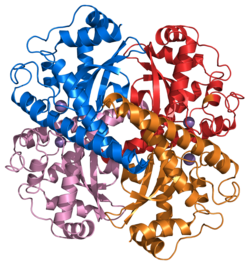 Ribbon diagram of superoxide dismutase


Although central to chemistry education, these representations are also fundamental to chemical research, where skeletal formulas, electron‑density isosurfaces, molecular graphics, and other models are routinely used to analyse structures, interpret data, and communicate molecular information.[136][j]
Laboratory instruction
edit
Laboratory instruction is a central component of chemistry education, providing opportunities for students to investigate chemical phenomena, practise experimental techniques, and connect theoretical ideas to observable outcomes.[137] School and university laboratories introduce skills such as measuring, mixing, heating, and observing substances, alongside more advanced practices including titration, spectroscopy, and synthesis. Effective laboratory teaching emphasises inquiry, safety, and the development of procedural fluency, with students learning to plan experiments, handle apparatus, record data, and evaluate sources of error.[138] Contemporary approaches incorporate guided‑inquiry and problem‑based formats, which encourage students to design investigations and interpret evidence rather than follow prescriptive “cookbook” procedures. Digital tools—such as data‑logging equipment, simulations, and virtual laboratory environments—are increasingly used to complement hands‑on work, support preparation, and extend access to experimental experiences.[139]
Digital tools and simulations
edit
Digital technologies play an increasingly prominent role in chemistry education, supporting visualisation, data collection, and conceptual understanding.[140] Interactive resources such as animations, molecular viewers—including surface and ribbon representations—and virtual laboratories allow students to explore chemical structures, reaction pathways, and experimental procedures in ways that may be difficult to achieve with physical equipment alone. Data‑logging devices and computer‑based interfaces enable real‑time measurement and analysis, helping students focus on interpreting results rather than managing apparatus. Simulations are used to model systems that are hazardous, expensive, or impractical to investigate directly, and can provide multiple representations of phenomena at macroscopic, particulate, and symbolic levels.[141] While digital tools are not a substitute for hands‑on experimentation, they are widely used to prepare students for laboratory work, reinforce conceptual learning, and extend access to experimental experiences.[142]
Common misconceptions
editStudents often develop persistent misconceptions about chemical ideas, many of which arise from difficulties in connecting macroscopic observations with particulate and symbolic representations.[143] Common misunderstandings include interpreting chemical equations as literal descriptions of particle‑by‑particle events, assuming that atoms or molecules in a substance are enlarged versions of the macroscopic sample, and believing that bonds store energy in the same way as mechanical springs. Learners may also conflate physical and chemical change, view equilibrium as a static state rather than a dynamic balance, or interpret acids and bases solely in terms of their sensory properties.[144] Research in chemistry education emphasises the importance of addressing these ideas directly through multiple representations, targeted feedback, and instructional strategies that make students’ reasoning visible.[145]
Notes
edit- ↑
Information regarding the images in the footer was trimmed; the full descriptions are below:
- Inorganic chemistry: a two‑dimensional representation of a glassy beryllium(II) fluoride (BeF₂) network, illustrating the amorphous (non‑crystalline) bonding patterns characteristic of inorganic glasses and extended network structures.
- Organic chemistry: a ball‑and‑stick molecular model of caffeine, showing the arrangement of carbon (grey), hydrogen (white), nitrogen (blue) and oxygen (red) atoms in a common organic heterocycle molecule.
- Physical chemistry: a reaction coordinate diagram depicting the conversion of reactant A to product C via a transition state, highlighting the activation energy (ΔG‡) and Gibbs free‑energy change (ΔG°) central to chemical kinetics and chemical thermodynamics.
- Analytical chemistry: a portion of a proton NMR spectrum (300 MHz, CDCl₃) of a nitrobenzene derivative, showing aromatic resonances near 6.6 ppm, representative of spectroscopic methods used to identify and characterise chemical compounds.
- Biochemistry: a ribbon diagram of the RGS4 protein, based on the crystal structure PDB entry 1AGR, illustrating secondary‑structure motifs such as α‑helices and loops commonly used to visualise protein folding.
- Applied chemistry: a glowstick in which hydrogen peroxide reacts with a phenyl oxalate ester to form 1,2-dioxetanedione, which decomposes and transfers energy to a fluorophore that emits light as part of a chemiluminescence reaction sequence.
- ↑ Although protons and neutrons are typically approximated as having a mass of 1 atomic unit in chemistry contexts, it is a frequent misassumption that they have exactly the same mass; neutrons are slightly more massive by about 0.1%.[32]
- ↑ In this representation, the carbon atom has four valence electrons of its own and shares four additional electron pairs with hydrogen atoms, giving it an octet of eight electrons in its valence shell. Each hydrogen atom attains a stable duet of two electrons, an exception to the octet rule.
- ↑ It is sometimes assumed that an electron shell is “full” once it contains eight electrons. In actuality, a full shell contains electrons, although such configurations may not be stable if they correspond to a valence shell.[49][50]
- ↑ Many stable species do not follow the octet rule, including electron‑deficient molecules such as boranes, expanded‑valence species such as sulfur hexafluoride, and numerous coordination complexes. Transition‑metal complexes are often better described by the 18-electron rule, which reflects the filling of valence , , and orbitals.[51][52]
- ↑ Within the MnO4− ion, the Mn–O bonds are covalent, while the attraction between K+ and MnO4− is ionic. The diagram highlights this distinction by marking electron pairs on the covalent bonds and labelling the charge signs of the ions.
- ↑ Although commonly shown as ranging from 0 to 14, pH values can fall outside this interval in sufficiently concentrated acidic or basic solutions.
- ↑ Stability is sometimes presented as a simple binary or “stable/unstable” property, but it is a continuous and context‑dependent quantity determined by the relative positions of states on an energy landscape.
- ↑ Reaction mechanisms are mentioned here only at a conceptual level. Detailed mechanistic pathways are covered in dedicated subarticles and are not elaborated in this section in accordance with WP:SUMMARYSTYLE, which avoids duplicating specialised content in overview articles.
- ↑ This subsection is placed under Education and pedagogy because its emphasis is on how formulae and representations help learners visualise and infer information about chemical substances and processes. Chemical models and formulae inherently serve a pedagogical function by making abstract or unobservable structures more accessible. Covering them under the Methods and practice section would require a different and more specialised focus on how chemists use such representations in research (e.g., crystallography, molecular graphics, computational modelling), which lies beyond the scope of this broad‑concept article.
See also
edit

References
edit- 1 2 Brown, Theodore L.; LeMay, H. Eugene Jr.; Bursten, Bruce E.; Murphey, Catherine J.; Woodward, Patrick M.; Stoltzfus, Matthew W.; Lufaso, Michael W. (2018). "Introduction: Matter, energy, and measurement". Chemistry: The Central Science (14th ed.). New York: Pearson. pp. 46–85. ISBN 978-0134414232.
- 1 2 Kofoed, Melissa; Miller, Shawn (2020). Introductory Chemistry. Utah State University: UEN Pressbooks.
- ↑ "Chemistry Is Everywhere". American Chemical Society. Retrieved 1 December 2020.
- ↑ Brown, Theodore L. (1999). Chemistry: The Central Science (8th ed.). Prentice Hall. pp. 3–4. ISBN 0-13-010310-1.
- 1 2 3 "1.1: The Scope of Chemistry". LibreTexts. 20 May 2018. Retrieved 5 January 2026.
- 1 2 3 "Chemistry – Chemistry and society". Britannica. Retrieved 6 May 2023.
- ↑ "alchemy", entry in The Oxford English Dictionary, J.A. Simpson and E.S.C. Weiner, vol. 1, 2nd ed., 1989, ISBN 0-19-861213-3.
- ↑ Weekley, Ernest (1967). Etymological Dictionary of Modern English. Dover. ISBN 0-486-21873-2.
- ↑ Emsley, John (2011). Nature's Building Blocks: An A–Z Guide to the Elements. Oxford University Press. ISBN 978-0199605637.
- ↑ Stapleton, Henry Ernest; Azo, R. F.; Hidayat Husain, M. (1927). "Chemistry in Iraq and Persia in the Tenth Century A.D.". Memoirs of the Asiatic Society of Bengal. VIII (6): 317–418.
- ↑ Kraus, Paul (1942–1943). Jâbir ibn Hayyân: Contribution à l'histoire des idées scientifiques dans l'Islam. Institut Français d'Archéologie Orientale.
- ↑ Newman, William R. (2011). "What Have We Learned from the Recent Historiography of Alchemy?". Isis. 102 (2): 313–321. doi:10.1086/660140.
- ↑ Principe, L. (2011). "In retrospect: The Sceptical Chymist". Nature. 469 (7328): 30–31. doi:10.1038/469030a. S2CID 6490305.
- ↑ Kim, Mi Gyung (2003). Affinity, That Elusive Dream: A Genealogy of the Chemical Revolution. MIT Press. p. 440. ISBN 978-0-262-11273-4.
- ↑ Principe, L. (2011). "In retrospect: The Sceptical Chymist". Nature. 469 (7328): 30–31. doi:10.1038/469030a. S2CID 6490305.
- ↑ Knight, David (2016). The Nature of Chemistry. Routledge.
- ↑ Davy, Humphry (1808). "On some new Phenomena of Chemical Changes produced by Electricity". Philosophical Transactions of the Royal Society. 98: 1–45. doi:10.1098/rstl.1808.0001.
- ↑ "Julius Lothar Meyer and Dmitri Ivanovich Mendeleev". Science History Institute. 2016. Retrieved 20 March 2018.
- ↑ Ihde, Aaron J. (1984). The Development of Modern Chemistry. Dover. p. 164. ISBN 978-0-486-64235-2.
- ↑ Kim, Mi Gyung (2003). Affinity, That Elusive Dream. MIT Press. ISBN 978-0-262-11273-4.
- ↑ Scerri, Eric (2007). The Periodic Table: Its Story and Its Significance. Oxford University Press. ISBN 978-0195305739.
- ↑ Baird, Davis (2009). Analytical Chemistry: A Modern Approach. Wiley. ISBN 978-0470511206.
- ↑ Atkins, Peter (2018). Atkins' Physical Chemistry. Oxford University Press. ISBN 978-0198769866.
- ↑ Leach, Andrew R. (1999). "From Molecular Mechanics to Molecular Modelling". Journal of Chemical Education. 76 (6): 743–748.
- ↑ Atkins, Peter (2018). Atkins' Physical Chemistry. Oxford University Press. ISBN 978-0198769866.
- ↑ Leach, Andrew R. (1999). "From Molecular Mechanics to Molecular Modelling". Journal of Chemical Education. 76 (6): 743–748.
- ↑ "Chemistry – Chemistry and society". Britannica. Retrieved 6 May 2023.
- 1 2 3 Atkins, Peter (2018). Atkins' Physical Chemistry (11th ed.). Oxford University Press. p. 3.
- ↑ Brown, Theodore L.; LeMay, H. Eugene; Bursten, Bruce E. (2018). Chemistry: The Central Science (14th ed.). Pearson. pp. 38–40.
- ↑ Silberberg, Martin S. (2015). Chemistry: The Molecular Nature of Matter and Change (8th ed.). McGraw-Hill. pp. 393–395.
- ↑ Atkins, Peter (2018). Atkins' Physical Chemistry (11th ed.). Oxford University Press. pp. 17–22.
- ↑ Mohr, Peter J.; Taylor, Barry N.; Newell, David B. “CODATA Recommended Values of the Fundamental Physical Constants: 2014.” Reviews of Modern Physics, vol. 88, 2016.
- ↑ Atkins, Peter (2018). Atkins' Physical Chemistry (11th ed.). Oxford University Press. pp. 17–22.
- ↑ Housecroft, Catherine E.; Sharpe, Alan G. (2018). Inorganic Chemistry (5th ed.). Pearson. pp. 1–4.
- ↑ Housecroft, Catherine E.; Sharpe, Alan G. (2018). Inorganic Chemistry (5th ed.). Pearson. pp. 5–7.
- ↑ Housecroft, Catherine E.; Sharpe, Alan G. (2018). Inorganic Chemistry (5th ed.). Pearson. pp. 27–31.
- ↑ Housecroft, Catherine E.; Sharpe, Alan G. (2018). Inorganic Chemistry (5th ed.). Pearson. pp. 8–15.
- ↑ Housecroft, Catherine E.; Sharpe, Alan G. (2018). Inorganic Chemistry (5th ed.). Pearson. pp. 12–15.
- ↑ Housecroft, Catherine E.; Sharpe, Alan G. (2018). Inorganic Chemistry (5th ed.). Pearson. pp. 8–12.
- ↑ Housecroft, Catherine E.; Sharpe, Alan G. (2018). Inorganic Chemistry (5th ed.). Pearson. pp. 13–17.
- ↑ Housecroft, Catherine E.; Sharpe, Alan G. (2018). Inorganic Chemistry (5th ed.). Pearson. pp. 92–95.
- ↑ Brown, Theodore L.; LeMay, H. Eugene; Bursten, Bruce E. (2018). Chemistry: The Central Science (14th ed.). Pearson. pp. 49–52.
- ↑ Brown, Theodore L.; LeMay, H. Eugene; Bursten, Bruce E. (2018). Chemistry: The Central Science (14th ed.). Pearson. pp. 49–52.
- ↑ Housecroft, Catherine E.; Sharpe, Alan G. (2018). Inorganic Chemistry (5th ed.). Pearson. pp. 63–67.
- ↑ Atkins, Peter (2018). Atkins' Physical Chemistry (11th ed.). Oxford University Press. pp. 105–108.
- ↑ McMurry, John (2016). Organic Chemistry (10th ed.). Cengage. pp. 40–45.
- ↑ Brown, Theodore L.; LeMay, H. Eugene; Bursten, Bruce E. (2018). Chemistry: The Central Science (14th ed.). Pearson. pp. 452–455.
- ↑ Atkins, Peter (2018). Atkins' Physical Chemistry (11th ed.). Oxford University Press. pp. 106–108.
- ↑ Atkins, Peter; Jones, Loretta. Chemical Principles: The Quest for Insight. 7th ed., W. H. Freeman, 2016.
- ↑ Silberberg, Martin S. Chemistry: The Molecular Nature of Matter and Change. 8th ed., McGraw–Hill, 2018.
- ↑ Housecroft, Catherine E.; Sharpe, Alan G. Inorganic Chemistry. 5th ed., Pearson, 2018.
- ↑ Miessler, Gary L.; Fischer, Paul J.; Tarr, Donald A. Inorganic Chemistry. 5th ed., Pearson, 2014.
- ↑ Atkins, Peter; de Paula, Julio (2018). Atkins' Physical Chemistry (11th ed.). Oxford University Press. pp. 347–349.
- ↑ Housecroft, Catherine E.; Sharpe, Alan G. (2018). Inorganic Chemistry (5th ed.). Pearson. pp. 68–75, 119–123.
- ↑ Atkins, Peter (2018). Atkins' Physical Chemistry (11th ed.). Oxford University Press. pp. 123–130.
- ↑ Brown, Theodore L.; LeMay, H. Eugene; Bursten, Bruce E. (2018). Chemistry: The Central Science (14th ed.). Pearson. pp. 402–407.
- ↑ Atkins, Peter; de Paula, Julio (2018). "Acid–base equilibria". Atkins' Physical Chemistry (11th ed.). Oxford University Press.
- ↑ Brown, Theodore L.; LeMay, H. Eugene; Bursten, Bruce E.; Murphy, Catherine; Woodward, Patrick (2018). "Acids and Bases". Chemistry: The Central Science (14th ed.). Pearson.
- ↑ Housecroft, Catherine E.; Sharpe, Alan G. (2018). "Acids and bases". Inorganic Chemistry (5th ed.). Pearson.
- ↑ Atkins, Peter; de Paula, Julio (2018). "Acid–base equilibria". Atkins' Physical Chemistry (11th ed.). Oxford University Press.
- ↑ Zumdahl, Steven S. (2017). "Acids and Bases". Chemical Principles (8th ed.). Cengage.
- ↑ Atkins, Peter; de Paula, Julio (2018). Atkins' Physical Chemistry (11th ed.). Oxford University Press. pp. 1–5.
- ↑ Atkins, Peter; de Paula, Julio. Atkins' Physical Chemistry. 11th ed., Oxford University Press, 2018.
- ↑ Levine, Ira N. Physical Chemistry. 6th ed., McGraw–Hill, 2009.
- ↑ Brown, Theodore L.; LeMay, H. Eugene; Bursten, Bruce E. (2018). Chemistry: The Central Science (14th ed.). Pearson. pp. 265–270.
- ↑ Atkins, Peter; de Paula, Julio (2018). Atkins' Physical Chemistry (11th ed.). Oxford University Press. pp. 55–63.
- ↑ Housecroft, Catherine E.; Sharpe, Alan G. (2018). Inorganic Chemistry (5th ed.). Pearson. pp. 104–110.
- ↑ Atkins, Peter; de Paula, Julio (2018). Atkins' Physical Chemistry (11th ed.). Oxford University Press. pp. 389–397.
- ↑ Atkins, Peter; de Paula, Julio (2018). Atkins' Physical Chemistry (11th ed.). Oxford University Press. pp. 15–20.
- ↑ Brown, Theodore L.; LeMay, H. Eugene; Bursten, Bruce E. (2018). Chemistry: The Central Science (14th ed.). Pearson. pp. 191–195.
- ↑ Atkins, Peter; de Paula, Julio (2018). Atkins' Physical Chemistry (11th ed.). Oxford University Press. pp. 83–85.
- ↑ Housecroft, Catherine E.; Sharpe, Alan G. (2018). Inorganic Chemistry (5th ed.). Pearson. pp. 100–104.
- ↑ Atkins, Peter; de Paula, Julio (2018). Atkins' Physical Chemistry (11th ed.). Oxford University Press. pp. 147–152.
- ↑ Housecroft, Catherine E.; Sharpe, Alan G. (2018). Inorganic Chemistry (5th ed.). Pearson. pp. 63–67.
- ↑ Brown, Theodore L.; LeMay, H. Eugene; Bursten, Bruce E. (2018). Chemistry: The Central Science (14th ed.). Pearson. pp. 77–80.
- ↑ Atkins, Peter; de Paula, Julio (2018). Atkins' Physical Chemistry (11th ed.). Oxford University Press. pp. 25–27.
- ↑ Silberberg, Martin S. (2015). Chemistry: The Molecular Nature of Matter and Change (8th ed.). McGraw-Hill. pp. 118–123.
- ↑ Clayden, J.; Greeves, N.; Warren, S. (2012). Organic Chemistry. Oxford University Press. pp. 1–15. ISBN 978-0-19-927029-3.
- ↑ Morrison, R. T.; Boyd, R. N.; Boyd, R. K. (1992). Organic Chemistry, 6th ed. Benjamin Cummings. ISBN 978-0136436690.
- ↑ American Chemical Society. "Careers in Chemistry: Inorganic Chemistry". Archived 29 October 2012.
- ↑ Greenwood, N. N.; Earnshaw, A. (1997). Chemistry of the Elements, 2nd ed. Butterworth–Heinemann. ISBN 978-0750633659.
- 1 2 3 4 Atkins, P.; de Paula, J. (2014). Atkins' Physical Chemistry, 10th ed. Oxford University Press. ISBN 978-0199697403.
- 1 2 Kellner, R. et al. (2004). Analytical Chemistry: A Modern Approach to Analytical Science, 2nd ed. Wiley‑VCH. ISBN 978-3-527-30590-2.
- 1 2 3 Skoog, D. A.; West, D. M.; Holler, F. J.; Crouch, S. R. (2013). Fundamentals of Analytical Chemistry, 9th ed. Cengage Learning. ISBN 978-0-495-55828-6.
- ↑ Voet, D.; Voet, J. G. (2005). Biochemistry, 3rd ed. Wiley. ISBN 978-0471193500.
- ↑ Karp, G. (2009). Cell and Molecular Biology: Concepts and Experiments, 6th ed. Wiley. ISBN 978-0470483374.
- 1 2 3 Cramer, C. J. (2014). Essentials of Computational Chemistry: Theories and Models, 2nd ed. Wiley. ISBN 978-0-470-09182-1.
- 1 2 3 4 5 6 7 National Research Council (2003). Beyond the Molecular Frontier: Challenges for Chemistry and Chemical Engineering. National Academies Press. ISBN 978-0-309-08719-9. Cite error: The named reference "NRC2003" was defined multiple times with different content (see the help page).
- ↑ Ozin, G. A.; Arsenault, A. C. (2005). Nanochemistry: A Chemical Approach to Nanomaterials. Royal Society of Chemistry. ISBN 978-0-85404-664-0.
- ↑ Callister, W. D.; Rethwisch, D. G. (2018). Materials Science and Engineering: An Introduction, 10th ed. Wiley. ISBN 978-1119321590.
- ↑ Schlesinger, W. H.; Bernhardt, E. S. (2013). Biogeochemistry: An Analysis of Global Change, 3rd ed. Academic Press. ISBN 978-0123858740.
- ↑ Mathews, C. K.; van Holde, K. E.; Appling, D. R.; Anthony-Cahill, S. J. (2013). Biochemistry, 4th ed. Pearson. ISBN 978-0321707338.
- ↑ Atkins, Peter; de Paula, Julio. Atkins’ Physical Chemistry. 10th ed., Oxford University Press, 2014, pp. 9–12.
- ↑ Housecroft, Catherine E.; Sharpe, Alan G. Inorganic Chemistry. 4th ed., Pearson, 2012, pp. 1–5.
- ↑ Britannica. “Chemical formula.” Encyclopaedia Britannica. Accessed 2026.
- ↑ OpenStax. Chemistry 2e. OpenStax, 2019, section 2.4.
- ↑ McMurry, John. Organic Chemistry. 9th ed., Cengage Learning, 2016, pp. 13–20.
- ↑ Brown, Theodore L.; LeMay, H. Eugene; Bursten, Bruce E.; et al. Chemistry: The Central Science. 14th ed., Pearson, 2018, pp. 79–86.
- ↑ IUPAC. “Nomenclature.” International Union of Pure and Applied Chemistry.
- ↑ IUPAC. Nomenclature of Organic Chemistry: IUPAC Recommendations and Preferred Names 2013. Royal Society of Chemistry, 2014.
- ↑ IUPAC. Nomenclature of Inorganic Chemistry: IUPAC Recommendations 2005. Royal Society of Chemistry, 2005.
- ↑ Cite error: The named reference
AnastasWarnerwas invoked but never defined (see the help page). - ↑ Patrick, Graham L. An Introduction to Medicinal Chemistry. 6th ed., Oxford University Press, 2017.
- ↑ Silverstein, Robert M.; Webster, Francis X.; Kiemle, David J. Spectrometric Identification of Organic Compounds. 8th ed., Wiley, 2014.
- ↑ Aulton, Michael E.; Taylor, Kevin M. G. Aulton's Pharmaceutics: The Design and Manufacture of Medicines. 6th ed., Elsevier, 2022.
- ↑ Rang, Humphrey P.; Ritter, James M.; Flower, Rod J.; Henderson, Graeme. Rang & Dale's Pharmacology. 9th ed., Elsevier, 2019.
- ↑ Atkins, Peter; de Paula, Julio. Atkins' Physical Chemistry. 11th ed., Oxford University Press, 2018.
- ↑ Somorjai, Gabor A.; Li, Yimin. Introduction to Surface Chemistry and Catalysis. 2nd ed., Wiley, 2010.
- ↑ Goodenough, John B.; Park, Kyu‑Young. “The Li‑Ion Rechargeable Battery: A Perspective.” Journal of the American Chemical Society, vol. 135, no. 4, 2013, pp. 1167–1176.
- ↑ Manahan, Stanley E. Environmental Chemistry. 10th ed., CRC Press, 2017.
- ↑ Callister, William D.; Rethwisch, David G. Materials Science and Engineering: An Introduction. 10th ed., Wiley, 2018.
- ↑ Ashby, Michael; Jones, David. Engineering Materials 1: An Introduction to Properties, Applications and Design. 5th ed., Elsevier, 2019.
- ↑ Ozin, Geoffrey A.; Arsenault, André; Cademartiri, Ludovico. Nanochemistry: A Chemical Approach to Nanomaterials. 2nd ed., Royal Society of Chemistry, 2015.
- ↑ Schaffer, James P. et al. The Science and Design of Engineering Materials. 2nd ed., McGraw‑Hill, 1999.
- ↑ Havlin, John L. et al. Soil Fertility and Fertilizers. 8th ed., Pearson, 2014.
- ↑ Mortvedt, John J. et al. Fertilizer Technology and Application. Meister Publishing, 2001.
- ↑ Belitz, Hans‑Dieter; Grosch, Werner; Schieberle, Peter. Food Chemistry. 5th ed., Springer, 2019.
- ↑ Damodaran, Srinivasan; Parkin, Kirk L. Fennema’s Food Chemistry. 5th ed., CRC Press, 2017.
- ↑ Myers, Richard T. The Basics of Chemistry. Greenwood Press, 2003.
- ↑ Brown, Theodore L.; LeMay, H. Eugene; Bursten, Bruce E. Chemistry: The Central Science. 14th ed., Pearson, 2018.
- ↑ McGee, Harold. On Food and Cooking: The Science and Lore of the Kitchen. Scribner, 2004.
- ↑ Ball, Philip. Made to Measure: New Materials for the 21st Century. Princeton University Press, 1997.
- ↑ Scerri, Eric R. The Periodic Table: Its Story and Its Significance. Oxford University Press, 2007.
- ↑ Rutherford, F. James; Ahlgren, Andrew. Science for All Americans. Oxford University Press, 1990.
- ↑ Weingart, Peter; Muhl, Claudia; Pansegrau, Petra. Science in Popular Culture: A Review of the Literature. Public Understanding of Science, vol. 12, no. 3, 2003, pp. 279–292.
- ↑ Bensaude‑Vincent, Bernadette; Stengers, Isabelle. A History of Chemistry. Harvard University Press, 1996.
- ↑ National Research Council. Discipline-Based Education Research: Understanding and Improving Learning in Undergraduate Science and Engineering. National Academies Press, 2012.
- ↑ Gilbert, John K.; Treagust, David F. Multiple Representations in Chemical Education. Springer, 2009.
- ↑ Cooper, Melanie M.; Stowe, Kristin A. “Chemistry Education Research—From Personal Empiricism to Evidence, Theory, and Informed Practice.” Chemical Reviews, vol. 118, no. 12, 2018, pp. 6053–6087.
- ↑ National Research Council. A Framework for K–12 Science Education: Practices, Crosscutting Concepts, and Core Ideas. National Academies Press, 2012.
- ↑ Taber, Keith S. Chemical Misconceptions: Prevention, Diagnosis and Cure. Royal Society of Chemistry, 2002.
- ↑ Cooper, Melanie M.; Stowe, Kristin A. “Chemistry Education Research—From Personal Empiricism to Evidence, Theory, and Informed Practice.” Chemical Reviews, vol. 118, no. 12, 2018, pp. 6053–6087.
- ↑ Gilbert, John K.; Treagust, David F. Multiple Representations in Chemical Education. Springer, 2009.
- ↑ Taber, Keith S. Chemical Misconceptions: Prevention, Diagnosis and Cure. Royal Society of Chemistry, 2002.
- ↑ Cooper, Melanie M.; Stowe, Kristin A. “Chemistry Education Research—From Personal Empiricism to Evidence, Theory, and Informed Practice.” Chemical Reviews, vol. 118, no. 12, 2018, pp. 6053–6087.
- ↑ Hoffmann, Roald (2015). "How Should Chemists Think?". Angewandte Chemie International Edition. 54 (37): 10145–10148. doi:10.1002/anie.201501460.
- ↑ Hofstein, Avi; Lunetta, Vincent N. “The Laboratory in Science Education: Foundations for the Twenty-First Century.” Science Education, vol. 88, no. 1, 2004, pp. 28–54.
- ↑ Domin, Daniel S. “A Review of Laboratory Instruction Styles.” Journal of Chemical Education, vol. 76, no. 4, 1999, pp. 543–547.
- ↑ National Research Council. America’s Lab Report: Investigations in High School Science. National Academies Press, 2006.
- ↑ Seery, Michael K. “Establishing the Laboratory as the Place to Learn How to Do Chemistry.” Journal of Chemical Education, vol. 92, no. 10, 2015, pp. 1613–1619.
- ↑ Kelly, Ryan M.; Jones, Loretta L. “Exploring How Different Features of Animations of Sodium Chloride Dissolution Affect Students’ Explanations.” Journal of Chemical Education, vol. 84, no. 4, 2007, pp. 613–619.
- ↑ National Research Council. America’s Lab Report: Investigations in High School Science. National Academies Press, 2006.
- ↑ Taber, Keith S. Chemical Misconceptions: Prevention, Diagnosis and Cure. Royal Society of Chemistry, 2002.
- ↑ Cooper, Melanie M.; Williams, Loretta C. “Chemistry Education Research and Practice: Misconceptions and Conceptual Change.” Journal of Chemical Education, vol. 91, no. 9, 2014, pp. 1241–1247.
- ↑ Gabel, Dorothy. “Improving Teaching and Learning through Chemistry Education Research: A Look to the Future.” Journal of Chemical Education, vol. 76, no. 4, 1999, pp. 548–554.
Further reading
editThe following works provide additional perspectives on chemistry, ranging from popular accounts to undergraduate and graduate‑level textbooks.
Popular reading
- Atkins, P. W. Galileo's Finger. Oxford University Press. ISBN 0-19-860941-8
- Atkins, P. W. Atkins' Molecules. Cambridge University Press. ISBN 0-521-82397-8
- Kean, Sam. The Disappearing Spoon – and Other True Tales from the Periodic Table. Black Swan, 2010. ISBN 978-0-552-77750-6
- Levi, Primo. The Periodic Table. Penguin Books, 1975; translated by Raymond Rosenthal, 1984. ISBN 978-0-14-139944-7
- Stwertka, A. A Guide to the Elements. Oxford University Press. ISBN 0-19-515027-9
- "Dictionary of the History of Ideas". Archived from the original on 10 March 2008.
- . Encyclopædia Britannica. Vol. 6 (11th ed.). 1911. pp. 33–76.
Introductory undergraduate textbooks
- Atkins, P. W.; Overton, T.; Rourke, J.; Weller, M.; Armstrong, F. Shriver and Atkins Inorganic Chemistry. 4th ed., Oxford University Press, 2006. ISBN 0-19-926463-5
- Chang, Raymond. Chemistry. 6th ed., Boston: James M. Smith, 1998. ISBN 0-07-115221-0
- Clayden, Jonathan; Greeves, Nick; Warren, Stuart; Wothers, Peter. Organic Chemistry. Oxford University Press, 2001. ISBN 978-0-19-850346-0
- Tucker, William (2024). Chemistry: Energy, Matter, and Change. CRC Press. ISBN 9781003479338.
Advanced undergraduate-level or graduate textbooks
- Atkins, P. W. Physical Chemistry. Oxford University Press. ISBN 0-19-879285-9
- Atkins, P. W.; Friedman, Ronald; et al. Molecular Quantum Mechanics. Oxford University Press.
- McWeeny, R. Coulson's Valence. Oxford Science Publications. ISBN 0-19-855144-4
- Pauling, L. The Nature of the Chemical Bond. Cornell University Press. ISBN 0-8014-0333-2
- Pauling, L.; Wilson, E. B. Introduction to Quantum Mechanics with Applications to Chemistry. Dover Publications. ISBN 0-486-64871-0
- Smart, Lesley; Moore, Elaine. Solid State Chemistry: An Introduction. Chapman and Hall. ISBN 0-412-40040-5
- Stephenson, G. Mathematical Methods for Science Students. Longman. ISBN 0-582-44416-0
External links
edit Definitions from Wiktionary
 Media from Commons
 Quotations from Wikiquote
 Texts from Wikisource
 Textbooks from Wikibooks


- General Chemistry: Principles, Patterns, and Applications – free open‑access textbook.

