
Salta | |
|---|---|
City and municipality | |
Panoramic view from the San Bernardo hill's aerial lift Salta Cabildo San Francisco church | |
 Coat of arms | |
| Nickname(s): La linda (English: "The Beautiful", "The Lovely" or "The Pretty One") | |
  Salta  Salta  Salta | |
| Coordinates: 24°47′S 65°25′W / 24.783°S 65.417°W | |
| Country |  Argentina Argentina |
| Province | Salta |
| Department | Capital |
| Founded | 16 April 1582 |
| Government | |
| • Intendant | Emiliano Durand (Vamos Salta) |
| Area | |
• Total | 120 km2 (46 sq mi) |
| Elevation | 1,187 m (3,894 ft) |
| Population (2022 census)[1] | |
• Total | 627,107 (Capital Department) |
| • Rank | 7th in Argentina |
| Demonym(s) | salteño, -a |
| Time zone | UTC−3 (ART) |
| CPA base | A4400 |
| Dialing code | +54 387 |
| Website | municipalidadsalta |


.jpg)
Salta (Spanish pronunciation: [ˈsalta]) is a municipality and the capital of the province of the same name in the Northwest region of Argentina. According to the 2010 census, it is the seventh-most populous city in the country with 520,683 inhabitants.[2] In the 2022 census, which has not published population numbers by city, the Capital Department (composed of Salta and San Lorenzo) had a population of 627,107 inhabitants.[1] The city is located in the Lerma Valley (or Salta Valley), a wide depression surrounded by pre-Andean hills,[3] together with other smaller municipalities that form the Lerma Valley Metropolitan Area (Spanish: Área Metropolitana del Valle de Lerma; AMVL), which also includes San Lorenzo, Cerrillos, La Merced, La Caldera, Vaqueros, Campo Quijano and Rosario de Lerma; of which Salta is the epicenter and concentrates over 86% of the population.[4] A related concept is that of Greater Salta (Gran Salta), the conurbation neighboring the city, which is home to slightly more than half of the province's total population.[5]
Before Spanish colonization, the valley where the city was founded was inhabited by the indigenous Diaguita people, who fiercely resisted the conquest in a series of confrontations known as the Calchaquí Wars, during the 1560–1667 period.[6] The Spaniards subjugated the native population and on 16 April 1582 the city was founded as San Felipe del Valle de Lerma by Hernando de Lerma, a direct envoy of viceroy Francisco de Toledo.[6] The city's founding document hints that it was established on the site of a pre-existing indigenous settlement, noting irrigation systems and walls when defining its boundaries, and shows that the name "Salta" was already in use, likely to designate the local indigenous group.[7] During the colonial era, Salta was a key city for the economic development of the southern Andes region, especially for its links with Potosí's mines in Upper Peru as well as Lima.[8][9] Due to this strategic location, Salta played a central role during the Argentine War of Independence and the Civil Wars, with Martín Miguel de Güemes emerging as its most notable military leader through his guerrilla warfare approach, today recognized as a hero of Salta and of the whole country.[8]
Nicknamed "la linda" (meaning "the beautiful", "the lovely" or "the pretty one"),
History
editPre-Columbian era
editAt the beginning of the 17th century, the Northwest region of present-day Argentina—encompassing the modern provinces of Catamarca, Jujuy, La Rioja, Salta, Santiago del Estero and Tucumán—was the most populated area of what would later become the country, with an estimated 200,000 inhabitants, and was characterized by significant cultural diversity sustained through constant interaction among various indigenous groups.[10]
1536–1782
editThe foundation of the city of Salta did not occur as an isolated event but rather as part of a broader series of exploratory and military expeditions that shaped the colonial expansion of the Spanish Empire in the southern Andes. After Diego de Almagro's expedition to Chile in 1536, which followed the path of the Inca Túpac Yupanqui, several Spanish forces moved through the region: those of Diego de Rojas in 1543, Núñez de Prado in 1550, Francisco de Villagra in 1551, Juan Pérez de Zurita in 1558, and Francisco de Aguirre in 1553. These movements gradually established the strategic importance of the Salta Valley—now known as the Lerma Valley—in the eyes of the Viceroyalty of Peru and the Royal Audiencia of Charcas, as the area became recognized as a key commercial and military corridor linking the Upper Peru mining centers with the Río de la Plata and Chile. Aguirre conceived a plan to found a city in the valley, and successive royal appointments of governors of Tucumán, including Gerónimo Luis de Cabrera (1571), Gonzalo de Abreu y Figueroa (1575), and Hernando de Lerma (1577), came with explicit instructions to establish a settlement there to control the Chiriguano and Calchaquí peoples.
Pedro de Zárate was authorized in 1575 to found a city in one of three valleys—Salta, Jujuy, or Calchaquí—and chose Jujuy, where he established San Francisco de Alava, soon destroyed by Indigenous resistance. Meanwhile, other attempts were made to settle the Salta Valley. Gonzalo de Abreu founded San Clemente de la Nueva Sevilla near the entrance of the Escoipe gorge, close to present-day Chicoana, on the site of earlier attempts such as Córdoba de Calchaquí (1559) and the second foundation of El Barco. These early efforts, repeatedly undone by Indigenous uprisings, underscored both the strategic importance and the difficulties of consolidating Spanish control in the region. Other colonial towns such as Nuestra Señora de Talavera, Nueva Madrid de las Juntas, and Talavera de Madrid (later known as Esteco) were also established in the surrounding area during the late sixteenth century but were eventually destroyed—most famously in 1692 when Esteco was leveled by an earthquake.
Hernando de Lerma arrived in Santiago del Estero in June 1580, appointed governor of Tucumán by royal decree issued in 1577, carrying orders from Viceroy Francisco de Toledo and the Audiencia to establish a town in Salta. After organizing recruitment and supplies in Potosí, he led expeditions southward. On 16 April 1582 he founded the city of Lerma in the Salta Valley on the same site the city occupies today. Although there were later attempts to relocate the settlement under different names such as San Felipe de la Nueva Rioja or along the Siancas River, these were unsuccessful, and the city eventually came to be known simply as Salta. In 1783, it was designated capital of the Salta del Tucumán Intendancy, and following the May Revolution it became the capital of the Province of Salta.
The name "Salta" predates the Spanish foundation and is of Indigenous origin, designating both the region and possibly a local group. Various etymological speculations arose later, but as with many northern Argentine localities, Spanish settlers retained the pre-Hispanic toponym rather than imposing a new one, as also happened with Talavera de Madrid (Esteco), San Miguel de Tucumán, San Fernando de Catamarca, and San Salvador de Jujuy. Hernando de Lerma, a native of Spain born in 1550, became the first civil governor of Tucumán and was a controversial figure in colonial politics. Upon taking office in Santiago del Estero, he had Gonzalo de Abreu arrested and executed, escalating tensions with ecclesiastical authorities. He was excommunicated, clashed with the bishop’s envoys, and eventually faced trial for his administration. In 1581 he gathered prominent settlers to decide whether the new city should be founded in the Calchaquí or Salta Valley. After heated debates, thirteen votes favored Salta against twelve for Calchaquí. This decision shaped the city’s location on the main route between the Río de la Plata and Upper Peru.
In February 1582, Lerma departed from Santiago del Estero with Bishop Francisco de Victoria and other officials to carry out the foundation. Upon establishing the settlement, he appointed its first officials, including Jerónimo García de la Jara and Juan Vizcaíno as alcaldes, Pedro Payán, Juan Fajardo, Francisco Morán de la Cerda, Diego Martínez, and Juan González as regidores, and Rodrigo Pereyra as notary. Pedro Payán became the alférez real. On 30 September 1582, Saint Bernard of Clairvaux was chosen as the city’s patron saint. Among those granted plots of land were members of the expedition such as Miguel de Ardiles, García Sánchez, Gaspar Rodríguez, Gonzalo Sánchez Garzón, Juan Pérez Moreno, and others from Santiago del Estero, Tucumán, Esteco, and Córdoba. Lerma’s rule was short-lived; in 1584 he was arrested on the orders of the Audiencia and transferred to Charcas, later tried by Governor Juan Ramírez de Velazco. His subsequent imprisonment in Spain marked the end of his direct involvement in the region, but the city he founded endured as one of the key urban centers of the colonial Andean south.
The foundation of Salta occurred within a broader context of Spanish expansion in the southern Andes. By the late sixteenth century, several cities had been established across the Tucumán jurisdiction—El Barco, Santiago del Estero, Córdoba, San Miguel de Tucumán, Talavera, and others—forming a network of settlements designed to secure routes to Upper Peru and Chile. The founding expedition included encomenderos and soldiers from different colonial towns, and the city’s layout reflected typical Spanish urban planning, with solar plots assigned to early settlers. Salta’s strategic position, conceived as a “dry port,” made it a crucial link in colonial trade and military logistics connecting the mines of Potosí with the lower Río de la Plata basin and the Pacific route to Chile. This strategic role, forged during the colonial era, would continue to shape the city’s historical trajectory in the centuries to come.
Despite the resistance and uprisings that took place both before and after the city's foundation, the arrival of the Spanish in the region in the 16th century had a profound impact on indigenous populations, leading to significant changes in their ways of life, social organization, demographic composition, and patterns of presence and displacement.[11]
1782–1810
edit1810–1824: War of Independence
edit
The political rupture initiated in 1810 with the May Revolution rapidly positioned the city of Salta and its immediate hinterland—especially the Lerma Valley—at the forefront of the conflict between the Río de la Plata revolution and royalist authority based in Lima.[12] Even before sustained campaigning reached the urban core, local militia structures and the Cabildo's efforts to police public life reveal a setting already marked by tensions over obedience, jurisdiction and social control.[12] Reports from the late colonial years document disputes between militiamen and municipal officers, anxieties about gatherings in plazas and pulperías, and rumors of plebeian conspiracy in 1809.[12] These frictions formed the institutional and social backdrop against which the city processed the political upheaval emanating from Buenos Aires.[12] Open warfare arrived inside the city with the Battle of Salta in February 1813, when combat unfolded in the central streets and main square.[12] The outcome strengthened the prestige of the Army of the North but did not resolve local divisions.[12] Following patriot defeats at Vilcapugio and Ayohuma, royalist forces re-entered the province in 1814.[12] Their efforts to provision themselves by seizing livestock and grain in the Lerma Valley directly affected producers and tenants, triggering a broader rural mobilization that linked the defense of property and subsistence with the revolutionary cause.[12]

Salta's strategic position was closely tied to the "mule trade", which connected Buenos Aires with the markets of Upper Peru.[12] Since the 18th century, annual mule caravans had used the valley as a staging ground where animals were fattened before being driven north.[12] This commercial activity brought metallic currency into local circulation, raised the value of valley pastures and stimulated both estate expansion and smallholding.[12] At the same time, it intensified conflicts over tenancy, arrears and the status of "intruders" on rural lands.[12] By the 1810s, these economic pressures overlapped with militia recruitment and Cabildo policing, creating a dynamic in which urban institutions, rural property relations and military organization were tightly interwoven.[12] In this context, Martín Miguel de Güemes emerged as the central military and political figure.[12] A native of Salta with extensive frontier experience, he rejoined the Army of the North in 1814 and quickly transformed dispersed militia energies into a coordinated defensive system based on mountain warfare and rapid raids.[12] As General and, from 1815, Governor of the Province, he consolidated a provincial military identity—most visibly in units such as the Infernales—while asserting control over weapons, enlistment, and promotions.[12] His well-known confrontation with José Rondeau in 1815, centered on retaining arms and local command, signaled Salta's determination to act autonomously while remaining aligned with the revolutionary project.[12]

The social composition and practices of the Salta mobilization reflected the province's rural realities.[12] Volunteers from peons, tenants, small proprietors and migrant laborers joined established militia bodies to form flexible forces frequently described as "gauchos".[12] Limited fiscal resources and the irregular flow of funds from Buenos Aires pushed the war effort toward requisitioning and confiscation, and complaints from estate owners about unpaid rents and unauthorized occupations multiplied.[12] Ecclesiastical fees were also contested.[12] These dynamics illustrate how the defense of the city and valley was inseparable from ongoing negotiations over land, labor and authority.[12] Salta's influence extended beyond its immediate surroundings through sustained ties with insurgent networks to the north.[12] Although the Army of the North was unable to secure Upper Peruvian cities permanently after 1811, Salta acted as a hinge between Buenos Aires's command and guerrilla leaders operating in Cochabamba, Ayopaya and adjacent districts.[12] Güemes's role in endorsing local commanders and coordinating operations helped sustain pressure on royalist logistics.[12] This connective function remained important even after formal military expeditions ceased, underpinning a "war of resources" that relied on local knowledge of passes, fords and supply corridors.[12]
Within the city, the Cabildo continued to serve as a key arena in which military demands, market regulation and public order measures intersected.[12] The constant interaction between municipal governance and a militarized countryside produced recurring frictions—over arrests, impressment and the use of public space—that were managed with varying degrees of success.[12] Nonetheless, the combined urban-rural apparatus maintained enough coherence to block royalist consolidation in the approaches to the valley after 1814.[12] This cycle reached its end with the death of Güemes in June 1821.[12] Without his authority to mediate among militia leaders, provincial officials and regional allies, Salta's leadership moved toward disengagement from continuous campaigning.[12] An armistice with the royalist commander Pedro Antonio de Olañeta effectively removed the city from front-line operations, even as fighting continued farther north until 1824.[12] By then, Salta's contribution was expressed less in territorial advances than in the cumulative effects of years of localized resistance: the city and its hinterland had converted geography, commerce and militia organization into a defensive belt that safeguarded the urban core and projected influence deep into the southern Andes.[12]
1880–1916
edit1969–1983
edithttps://www.pagina12.com.ar/423350-el-saltenazo-historia-de-una-lucha-popular
https://www.icsoh.unsa.edu.ar/System/assets/uploads/rizoma-3-9fd5b.pdf
 The Battle of Salta on 20 February 1813.
 Martín Miguel de Güemes leading his guerrilla as part of the Gaucho War.
 View of Salta in 1851 in a watercolor painted by Besnes e Irigoyen.
 View of Salta from the San Bernardo hill in a 1854 painting by Carlos Penuti.
 A cockfight in Salta as depicted by Juan León Pallière in 1858.
 A 1866 French map of the provinces of Salta and Jujuy as well as southern Bolivia.
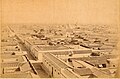 Photograph of Salta, c. 1900.
 Photograph of Caseros street, c. late 19h cenury.
 View of the San Bernardo convent in 1904.
 View of España street, c. 1880.
 View of Alberdi street, in the center of Salta, 1935.


Geography
editDemographics
editEconomy
editCulture
editGovernment
editEducation
editInternational relations
editSalta has the following sister cities:
 Calama, Chile
 Maracay, Venezuela
 San Cristóbal de La Laguna, Spain
 Santa Cruz de la Sierra, Bolivia
- Tarija, Bolivia
 Xuzhou, China[13]
See also
editReferences
edit- 1 2 "Salta ya tiene 1.440.672 habitantes". El Tribuno (in Spanish). Salta. 31 January 2023. Retrieved 28 November 2024.
- ↑ "Portal REDATAM. Censo 2010" (in Spanish). INDEC. 2010. Retrieved 29 November 2024.
- ↑ Elías, Leonardo; Montero-López, Carolina. "Las montañas que rodean el valle de Lerma (Salta)". Temas de biología y geología del NOA (in Spanish). 12 (1). Salta: Universidad Nacional de Salta. ISSN 1853-6700. Retrieved 29 November 2024 – via CONICET.
- ↑ "Área Metropolitana del Valle de Lerma" (in Spanish). Argentina.gob.ar. Retrieved 28 November 2024.
- ↑ "Plan de Ejecución Metropolitano PEM GRAN SALTA" (PDF). Desarrollo de Áreas Metropolitanas del Interior DAMI (BID AR-L1101) (in Spanish). Salta: Subsecretaría de Financiamiento. Ministerio de Finanzas y Obras Públicas. Provincia de Salta. November 2012. Retrieved 17 October 2025 – via Argentina.gob.ar.
- 1 2 López, Maira (16 April 2022). "440 años de la fundación de Salta: una historia de resistencia diaguita". Salta12. Página/12 (in Spanish). Retrieved 29 November 2024.
- ↑ Cornejo 1937, pp. 84–85.
- 1 2 Jaime Peire, Sara Mata (26 October 2021). Historia de las provincias: Salta - Sara Mata por Jaime Peire (YouTube video) (in Spanish). Instituto de Estudios Históricos. UNTREF. Retrieved 29 November 2024.
- ↑ Romero, María Irene (20 December 2020). "Aquel próspero comercio de mulas en Salta". El Tribuno (in Spanish). Salta. Retrieved 29 November 2024.
- ↑ Di Fabio Rocca, Francisco; Albeza, María Virginia; Postillone, María Bárbara; Acreche, Noemí; Lafage, Lucía; Parolín, María Laura; Dejean, Cristina; Carnese, Francisco Raúl; Avena, Sergio (2016). "Historia poblacional y análisis antropogenético de la ciudad de Salta". Andes (in Spanish). 27 (2). Salta: Universidad Nacional de Salta. ISSN 1668-8090. Retrieved 18 October 2025 – via SciELO.
- ↑ Bravo Galán, María Luján (16 April 2023). "Los pueblos que vivían en Salta cuando llegó Lerma". El Tribuno (in Spanish). Salta. Retrieved 18 October 2025.
- 1 2 3 4 5 6 7 8 9 10 11 12 13 14 15 16 17 18 19 20 21 22 23 24 25 26 27 28 29 30 31 32 33 Mata, Sara (2008). "Insurrección e independencia. La provincia de Salta y los andes del sur" (PDF). In Fradkin, Raúl (ed.). ¿Y el pueblo dónde está? Contribuciones para una historia popular de la revolución e independencia en el Río de la Plata (in Spanish). Buenos Aires: Prometeo Libros. pp. 177–208. ISBN 978-987-574-248-2. Retrieved 20 October 2025.
- ↑ "¡Salta y Xuzhou: ciudades hermanas!" (in Spanish). Consulado General y Centro de Promoción en Shanghái. Cancillería Argentina. 18 June 2021. Retrieved 29 November 2024.
Bibliography
edit- Cornejo, Atilio (1937). Apuntes históricos sobre Salta (PDF) (in Spanish) (2nd ed.). Buenos Aires: Talleres Gráficos Ferrari Hnos. Retrieved 17 October 2025 – via EDI-Salta.
- Lorandi, Ana María (1998). "Los diaguitas y el Tawantinsuyu. Una hipótesis de conflicto" (PDF). In Dillehay, Tom D.; Netherly, Patricia (eds.). La Frontera del Estado Inca (in Spanish) (2nd ed.). Quito: Alexander von Humboldt Foundation; Editorial Abya-Yala. pp. 197–214. Retrieved 17 October 2025.
External links
edit Media related to Salta at Wikimedia Commons
- Municipalidad de Salta (in Spanish), official website
