
Tel Adashim (Hebrew: תֵּל עֲדָשִׁים, lit. 'Lentils Hill') is a moshav in northern Israel. Located between Nazareth and Afula, it falls under the jurisdiction of Jezreel Valley Regional Council.[2] In 2024 it had a population of 1,335.[1]
Tel Adashim
| |
|---|---|
 | |
| Etymology: Lentils Hill | |
  Tel Adashim  Tel Adashim | |
| Coordinates: 32°39′19″N 35°18′4″E / 32.65528°N 35.30111°E | |
| Country | Israel |
| District | Northern |
| Council | Jezreel Valley |
| Affiliation | Moshavim Movement |
| Founded | 1923 |
| Founded by | Hashomer Members |
| Population (2024)[1] | 1,335 |
History
editArab and Jewish villages
editJewish settlement began in the area in 1913 when Hashomer established Tel Adash, a settlement whose purpose was to protect the oil pipeline from Iraq to Haifa. By 1918, only two families remained.[3]
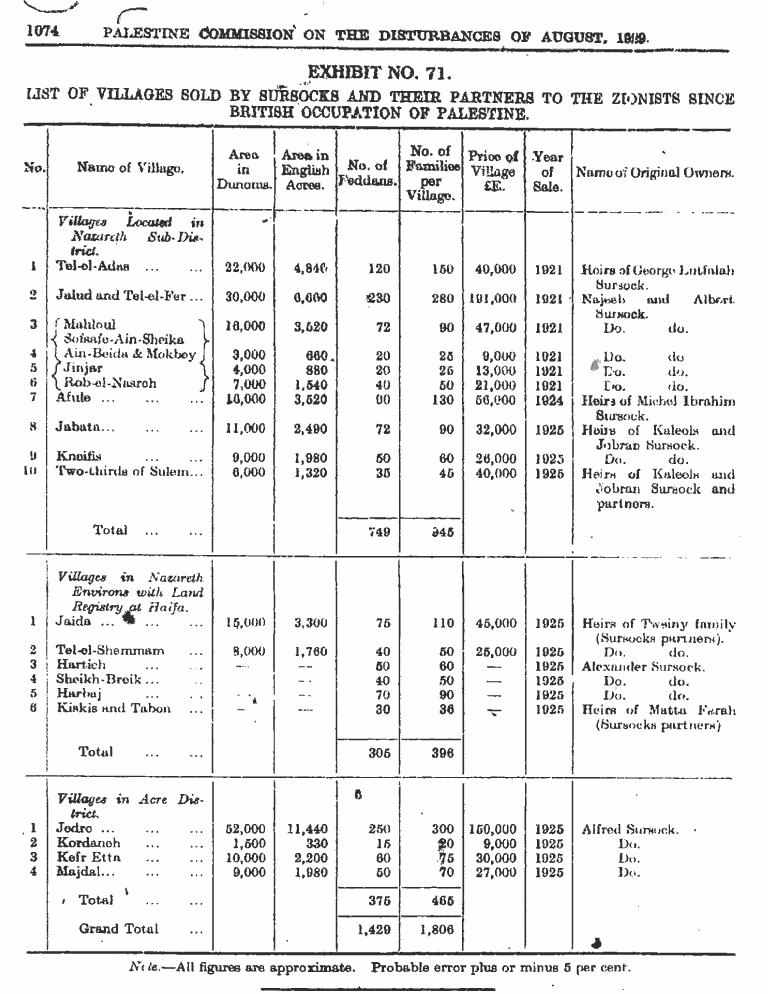
In 1921 Zionist activists completed a purchase of 22,000 dunams at Tell el-Adas from the Sursuk family of Beirut. At that time, there were 150 Muslim families living there.[4]
In the 1922 census of Palestine, conducted by the British Mandate authorities, Tal Adas had a population of 118; 98 Muslims, 16 Jews and 4 Christians.[5]
1923 moshav
editIn 1923, a moshav ovdim was established on the site and was named Tel Adashim.[3]
 Tel Adashim 1924
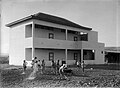 Tel Adashim 1930
 Tel Adashim from Mizra with Mount Tabor in background 1947


Notable residents
editNotable past and present residents include Rafael Eitan, Yigal Cohen, A. D. Gordon and Alexander Zaïd.[3]
References
edit
- 1 2 "Regional Statistics". Israel Central Bureau of Statistics. Retrieved 21 March 2026.
- ↑ Tel Adashim Archived 2021-10-17 at the Wayback Machine Moshavim of Israel
- 1 2 3 About Tel Adashim (in Hebrew)
- ↑ List of villages sold by Sursocks and their partners to the Zionists since British occupation of Palestine, evidence to the Shaw Commission, 1930
- ↑ Barron, J. B., ed. (1923). Palestine: Report and General Abstracts of the Census of 1922. Government of Palestine. p. 38.
External links
edit- Official website
- Moshav Tel Adashim Collection on the Digital collections of Younes and Soraya Nazarian Library, University of Haifa