
Talk:Mathematical Alphanumeric Symbols
 | This article is rated List-class on Wikipedia's content assessment scale. It is of interest to the following WikiProjects: | ||||||||||||||||||||||||||||||||||||||||
| |||||||||||||||||||||||||||||||||||||||||


Letters showing up
edithas no one noticed the fact that none of the letters shown up??? --AeomMai 23:29, 10 April 2006 (UTC)
- You need to have the correct fonts installed. —porges(talk) 03:23, 25 June 2006 (UTC)
Commercial at
editdose anyone know what is the name in maths of (@) IS —Preceding unsigned comment added by Joeyjomanco (talk • contribs) 18:01, 13 February 2009 (UTC)
The "at sign" is typographically known as commat, as in "commercial at". A few years ago, it was assigned a morse code symbol, the first change in morse in a veryh long time. —Preceding unsigned comment added by 112.203.198.236 (talk) 08:23, 11 January 2010 (UTC)
- Ampersat 82.47.159.6 (talk) 14:21, 19 May 2015 (UTC)
Incorrect values for ℛ (U+211B SCRIPT CAPITAL R), etc
editThis article, as it currently exists, is not correct. It shows a script capital R in this unicode block (U+1D400 ... U+1D7FF), but there is no script capital R here. Instead, unicode has a script capital R elsewhere (at U+211B). The same is true for a variety of other characters (looking at Unicode code chart U1D400 (PDF), which is currently an external link but should be a reference, it looks like Swiss cheese). If we want to stick with presenting these characters by Unicode block, we should just take out all those characters. If we want to keep together related characters, we need to get rid of the numbers (or come up with some presentation which can show the numbers, which might be in a different block, somehow). Kingdon (talk) 18:21, 18 September 2010 (UTC)
- Code point U+1D4AD <reserved-1D4AD> (is not assigned). The linked Unicode page (U1D400.pdf) says on page 7: <reserved>, meaning: not assigned (not a character). Then it refers specifically to {U+211B ℛ SCRIPT CAPITAL R (ℛ, ℛ). So the facts Kingdon writes are correct.
- But I don't understand the bigness of the problem. Anyone can change the chart here. See this edit. Go ahead if you like. And if it becomes Swiss cheese -- if its Unicode, it'll be OK. -DePiep (talk) 20:44, 18 September 2010 (UTC)
- Well, I trust you agree that having wrong information is a problem (I won't quibble about what size problem). I have fixed it as you suggest, by blanking the characters which aren't in this block (and I also removed the numbers at the top of the plain greek letter columns, as the plain characters are not in order). This means that we don't have any pointer to where characters such as ℛ actually are, but since I'm not thinking of a really obvious way to put such a pointer in, I'm not going to worry about that for now. Kingdon (talk) 15:16, 1 October 2010 (UTC)
- It would probably be nice to show what the numbers are, since these missing characters are a lot harder to find than the originals! Also it was my mistake initially to not realize that there were "holes" in the encoding, I was the one who put the numbers in the columns originally. Also some explanation as to why Unicode thought it was a bad idea to just make the "hole" print the glyph? They seem to allow duplicate glyphs lots of other places, so why not here? unsigned
- Unicode tries to avoid duplicates at great cost. In regular text, there is no difference for Unicode between roman or scripted, that's a font-style, and a higher level protocol than Unicode. The ones that are not here, were put in elsewhere earlier for more basic (common) mathematical use. Only versions later they had to admit that in maths there is a different meaning between script-A and italic-A, so these letters are different by style and had to be added. I think letterpickers search by "General category=Symbol, math", or have made tjheir own combination list.
- I've added a note about the block Letterlike symbols. Over all the charts we have in Category:Unicode chart templates, I have seen little use of such pointers yet. Unicode has them in the descriptive list, not the chart. Maybe flesh out in the overview page Mathematical operators and symbols in Unicode? -DePiep (talk) 02:36, 7 October 2010 (UTC)
- It would probably be nice to show what the numbers are, since these missing characters are a lot harder to find than the originals! Also it was my mistake initially to not realize that there were "holes" in the encoding, I was the one who put the numbers in the columns originally. Also some explanation as to why Unicode thought it was a bad idea to just make the "hole" print the glyph? They seem to allow duplicate glyphs lots of other places, so why not here? unsigned
Testing the table with unicode2 template
editAs an experiment I have wrapped all the &x1DXXX characters in the table below in the experimental {{unicode2}} template which tries to select an appropriate font to display the characters with (at present Code2001, Symbola, Segoe UI Symbol and Cambria Math). For me, I can now see all the characters where before I could just saw little square boxes, and so it is a big improvement; but I would like to know whether it is an improvement or not for other editors, and whether people think it is useful to have such a template even though it will only work if readers have downloaded an appropriate font. BabelStone (talk) 23:33, 12 October 2010 (UTC)
| normal | bold | italic | bold italic |
script | bold script |
fraktur | double- struck |
bold fraktur |
sans- serif |
sans- serif bold |
sans- serif italic |
sans- serif bold italic |
mono- space |
|---|---|---|---|---|---|---|---|---|---|---|---|---|---|
| 00041 | 1D400 | 1D434 | 1D468 | 1D49C | 1D4D0 | 1D504 | 1D538 | 1D56C | 1D5A0 | 1D5D4 | 1D608 | 1D63C | 1D670 |
| A | 𝐀 | 𝐴 | 𝑨 | 𝒜 | 𝓐 | 𝔄 | 𝔸 | 𝕬 | 𝖠 | 𝗔 | 𝘈 | 𝘼 | 𝙰 |
| B | 𝐁 | 𝐵 | 𝑩 | ℬ | 𝓑 | 𝔅 | 𝔹 | 𝕭 | 𝖡 | 𝗕 | 𝘉 | 𝘽 | 𝙱 |
| C | 𝐂 | 𝐶 | 𝑪 | 𝒞 | 𝓒 | ℭ | ℂ | 𝕮 | 𝖢 | 𝗖 | 𝘊 | 𝘾 | 𝙲 |
| D | 𝐃 | 𝐷 | 𝑫 | 𝒟 | 𝓓 | 𝔇 | 𝔻 | 𝕯 | 𝖣 | 𝗗 | 𝘋 | 𝘿 | 𝙳 |
| E | 𝐄 | 𝐸 | 𝑬 | ℰ | 𝓔 | 𝔈 | 𝔼 | 𝕰 | 𝖤 | 𝗘 | 𝘌 | 𝙀 | 𝙴 |
| F | 𝐅 | 𝐹 | 𝑭 | ℱ | 𝓕 | 𝔉 | 𝔽 | 𝕱 | 𝖥 | 𝗙 | 𝘍 | 𝙁 | 𝙵 |
| G | 𝐆 | 𝐺 | 𝑮 | 𝒢 | 𝓖 | 𝔊 | 𝔾 | 𝕲 | 𝖦 | 𝗚 | 𝘎 | 𝙂 | 𝙶 |
| H | 𝐇 | 𝐻 | 𝑯 | ℋ | 𝓗 | ℌ | ℍ | 𝕳 | 𝖧 | 𝗛 | 𝘏 | 𝙃 | 𝙷 |
| I | 𝐈 | 𝐼 | 𝑰 | ℐ | 𝓘 | ℑ | 𝕀 | 𝕴 | 𝖨 | 𝗜 | 𝘐 | 𝙄 | 𝙸 |
| J | 𝐉 | 𝐽 | 𝑱 | 𝒥 | 𝓙 | 𝔍 | 𝕁 | 𝕵 | 𝖩 | 𝗝 | 𝘑 | 𝙅 | 𝙹 |
| K | 𝐊 | 𝐾 | 𝑲 | 𝒦 | 𝓚 | 𝔎 | 𝕂 | 𝕶 | 𝖪 | 𝗞 | 𝘒 | 𝙆 | 𝙺 |
| L | 𝐋 | 𝐿 | 𝑳 | ℒ | 𝓛 | 𝔏 | 𝕃 | 𝕷 | 𝖫 | 𝗟 | 𝘓 | 𝙇 | 𝙻 |
| M | 𝐌 | 𝑀 | 𝑴 | ℳ | 𝓜 | 𝔐 | 𝕄 | 𝕸 | 𝖬 | 𝗠 | 𝘔 | 𝙈 | 𝙼 |
| N | 𝐍 | 𝑁 | 𝑵 | 𝒩 | 𝓝 | 𝔑 | ℕ | 𝕹 | 𝖭 | 𝗡 | 𝘕 | 𝙉 | 𝙽 |
| O | 𝐎 | 𝑂 | 𝑶 | 𝒪 | 𝓞 | 𝔒 | 𝕆 | 𝕺 | 𝖮 | 𝗢 | 𝘖 | 𝙊 | 𝙾 |
| P | 𝐏 | 𝑃 | 𝑷 | 𝒫 | 𝓟 | 𝔓 | ℙ | 𝕻 | 𝖯 | 𝗣 | 𝘗 | 𝙋 | 𝙿 |
| Q | 𝐐 | 𝑄 | 𝑸 | 𝒬 | 𝓠 | 𝔔 | ℚ | 𝕼 | 𝖰 | 𝗤 | 𝘘 | 𝙌 | 𝚀 |
| R | 𝐑 | 𝑅 | 𝑹 | ℛ | 𝓡 | ℜ | ℝ | 𝕽 | 𝖱 | 𝗥 | 𝘙 | 𝙍 | 𝚁 |
| S | 𝐒 | 𝑆 | 𝑺 | 𝒮 | 𝓢 | 𝔖 | 𝕊 | 𝕾 | 𝖲 | 𝗦 | 𝘚 | 𝙎 | 𝚂 |
| T | 𝐓 | 𝑇 | 𝑻 | 𝒯 | 𝓣 | 𝔗 | 𝕋 | 𝕿 | 𝖳 | 𝗧 | 𝘛 | 𝙏 | 𝚃 |
| U | 𝐔 | 𝑈 | 𝑼 | 𝒰 | 𝓤 | 𝔘 | 𝕌 | 𝖀 | 𝖴 | 𝗨 | 𝘜 | 𝙐 | 𝚄 |
| V | 𝐕 | 𝑉 | 𝑽 | 𝒱 | 𝓥 | 𝔙 | 𝕍 | 𝖁 | 𝖵 | 𝗩 | 𝘝 | 𝙑 | 𝚅 |
| W | 𝐖 | 𝑊 | 𝑾 | 𝒲 | 𝓦 | 𝔚 | 𝕎 | 𝖂 | 𝖶 | 𝗪 | 𝘞 | 𝙒 | 𝚆 |
| X | 𝐗 | 𝑋 | 𝑿 | 𝒳 | 𝓧 | 𝔛 | 𝕏 | 𝖃 | 𝖷 | 𝗫 | 𝘟 | 𝙓 | 𝚇 |
| Y | 𝐘 | 𝑌 | 𝒀 | 𝒴 | 𝓨 | 𝔜 | 𝕐 | 𝖄 | 𝖸 | 𝗬 | 𝘠 | 𝙔 | 𝚈 |
| Z | 𝐙 | 𝑍 | 𝒁 | 𝒵 | 𝓩 | ℨ | ℤ | 𝖅 | 𝖹 | 𝗭 | 𝘡 | 𝙕 | 𝚉 |
| 00061 | 1D41A | 1D44E | 1D482 | 1D4B6 | 1D4EA | 1D51E | 1D552 | 1D586 | 1D5BA | 1D5EE | 1D622 | 1D656 | 1D68A |
| a | 𝐚 | 𝑎 | 𝒂 | 𝒶 | 𝓪 | 𝔞 | 𝕒 | 𝖆 | 𝖺 | 𝗮 | 𝘢 | 𝙖 | 𝚊 |
| b | 𝐛 | 𝑏 | 𝒃 | 𝒷 | 𝓫 | 𝔟 | 𝕓 | 𝖇 | 𝖻 | 𝗯 | 𝘣 | 𝙗 | 𝚋 |
| c | 𝐜 | 𝑐 | 𝒄 | 𝒸 | 𝓬 | 𝔠 | 𝕔 | 𝖈 | 𝖼 | 𝗰 | 𝘤 | 𝙘 | 𝚌 |
| d | 𝐝 | 𝑑 | 𝒅 | 𝒹 | 𝓭 | 𝔡 | 𝕕 | 𝖉 | 𝖽 | 𝗱 | 𝘥 | 𝙙 | 𝚍 |
| e | 𝐞 | 𝑒 | 𝒆 | ℯ | 𝓮 | 𝔢 | 𝕖 | 𝖊 | 𝖾 | 𝗲 | 𝘦 | 𝙚 | 𝚎 |
| f | 𝐟 | 𝑓 | 𝒇 | 𝒻 | 𝓯 | 𝔣 | 𝕗 | 𝖋 | 𝖿 | 𝗳 | 𝘧 | 𝙛 | 𝚏 |
| g | 𝐠 | 𝑔 | 𝒈 | ℊ | 𝓰 | 𝔤 | 𝕘 | 𝖌 | 𝗀 | 𝗴 | 𝘨 | 𝙜 | 𝚐 |
| h | 𝐡 | ℎ | 𝒉 | 𝒽 | 𝓱 | 𝔥 | 𝕙 | 𝖍 | 𝗁 | 𝗵 | 𝘩 | 𝙝 | 𝚑 |
| i | 𝐢 | 𝑖 | 𝒊 | 𝒾 | 𝓲 | 𝔦 | 𝕚 | 𝖎 | 𝗂 | 𝗶 | 𝘪 | 𝙞 | 𝚒 |
| j | 𝐣 | 𝑗 | 𝒋 | 𝒿 | 𝓳 | 𝔧 | 𝕛 | 𝖏 | 𝗃 | 𝗷 | 𝘫 | 𝙟 | 𝚓 |
| k | 𝐤 | 𝑘 | 𝒌 | 𝓀 | 𝓴 | 𝔨 | 𝕜 | 𝖐 | 𝗄 | 𝗸 | 𝘬 | 𝙠 | 𝚔 |
| l | 𝐥 | 𝑙 | 𝒍 | 𝓁 | 𝓵 | 𝔩 | 𝕝 | 𝖑 | 𝗅 | 𝗹 | 𝘭 | 𝙡 | 𝚕 |
| m | 𝐦 | 𝑚 | 𝒎 | 𝓂 | 𝓶 | 𝔪 | 𝕞 | 𝖒 | 𝗆 | 𝗺 | 𝘮 | 𝙢 | 𝚖 |
| n | 𝐧 | 𝑛 | 𝒏 | 𝓃 | 𝓷 | 𝔫 | 𝕟 | 𝖓 | 𝗇 | 𝗻 | 𝘯 | 𝙣 | 𝚗 |
| o | 𝐨 | 𝑜 | 𝒐 | ℴ | 𝓸 | 𝔬 | 𝕠 | 𝖔 | 𝗈 | 𝗼 | 𝘰 | 𝙤 | 𝚘 |
| p | 𝐩 | 𝑝 | 𝒑 | 𝓅 | 𝓹 | 𝔭 | 𝕡 | 𝖕 | 𝗉 | 𝗽 | 𝘱 | 𝙥 | 𝚙 |
| q | 𝐪 | 𝑞 | 𝒒 | 𝓆 | 𝓺 | 𝔮 | 𝕢 | 𝖖 | 𝗊 | 𝗾 | 𝘲 | 𝙦 | 𝚚 |
| r | 𝐫 | 𝑟 | 𝒓 | 𝓇 | 𝓻 | 𝔯 | 𝕣 | 𝖗 | 𝗋 | 𝗿 | 𝘳 | 𝙧 | 𝚛 |
| s | 𝐬 | 𝑠 | 𝒔 | 𝓈 | 𝓼 | 𝔰 | 𝕤 | 𝖘 | 𝗌 | 𝘀 | 𝘴 | 𝙨 | 𝚜 |
| t | 𝐭 | 𝑡 | 𝒕 | 𝓉 | 𝓽 | 𝔱 | 𝕥 | 𝖙 | 𝗍 | 𝘁 | 𝘵 | 𝙩 | 𝚝 |
| u | 𝐮 | 𝑢 | 𝒖 | 𝓊 | 𝓾 | 𝔲 | 𝕦 | 𝖚 | 𝗎 | 𝘂 | 𝘶 | 𝙪 | 𝚞 |
| v | 𝐯 | 𝑣 | 𝒗 | 𝓋 | 𝓿 | 𝔳 | 𝕧 | 𝖛 | 𝗏 | 𝘃 | 𝘷 | 𝙫 | 𝚟 |
| w | 𝐰 | 𝑤 | 𝒘 | 𝓌 | 𝔀 | 𝔴 | 𝕨 | 𝖜 | 𝗐 | 𝘄 | 𝘸 | 𝙬 | 𝚠 |
| x | 𝐱 | 𝑥 | 𝒙 | 𝓍 | 𝔁 | 𝔵 | 𝕩 | 𝖝 | 𝗑 | 𝘅 | 𝘹 | 𝙭 | 𝚡 |
| y | 𝐲 | 𝑦 | 𝒚 | 𝓎 | 𝔂 | 𝔶 | 𝕪 | 𝖞 | 𝗒 | 𝘆 | 𝘺 | 𝙮 | 𝚢 |
| z | 𝐳 | 𝑧 | 𝒛 | 𝓏 | 𝔃 | 𝔷 | 𝕫 | 𝖟 | 𝗓 | 𝘇 | 𝘻 | 𝙯 | 𝚣 |
| 00131 | 1D6A4 | ||||||||||||
| ı | 𝚤 | ||||||||||||
| 00237 | |||||||||||||
| ȷ | 𝚥 | ||||||||||||
| normal | bold | italic | bold italic |
script | bold script |
fraktur | double- struck |
bold fraktur |
sans- serif |
sans- serif bold |
sans- serif italic |
sans- serif bold italic |
mono- space |
|---|---|---|---|---|---|---|---|---|---|---|---|---|---|
| 00041 | 1D400 | 1D434 | 1D468 | 1D49C | 1D4D0 | 1D504 | 1D538 | 1D56C | 1D5A0 | 1D5D4 | 1D608 | 1D63C | 1D670 |
| A | 𝐀 | 𝐴 | 𝑨 | 𝒜 | 𝓐 | 𝔄 | 𝔸 | 𝕬 | 𝖠 | 𝗔 | 𝘈 | 𝘼 | 𝙰 |
| B | 𝐁 | 𝐵 | 𝑩 | ℬ | 𝓑 | 𝔅 | 𝔹 | 𝕭 | 𝖡 | 𝗕 | 𝘉 | 𝘽 | 𝙱 |
Discussion on testing
edit- Why not fix the span "Unicode" so the older template can be used? — Preceding unsigned comment added by Spitzak (talk • contribs)
- There was talk Showing_Unicode (and subthread Template_with_double_showing. (started here). Main line: {{unicode2}} is a trial into using different fonts for usage in Supplementary planes (=not BMP). Probably unfeasible, since the user (a reader) needs to download good fonts on their side. Should we end up definitely with "unicode" (not -2), indeed we can use the span. -DePiep (talk) 03:53, 13 October 2010 (UTC)
- re BabelStone: I have not installed the extra fonts. In Firefox 3.6 I see everything, in Safari I see only thhe pink ones good. The regular ones are question mark -boxes each. -DePiep (talk) 03:53, 13 October 2010 (UTC)
- On an older Linux (SUSE 11) with Firefox 4.0 I see a lot of the characters. I see all pink entries, and all columns *except* the script, bold script, fraktur, and bold fraktur. The templates make no differnce to what characters are seen. On another Linux machinge with Ubuntu (not the latest) I see all characters in all cases.Spitzak (talk) 05:12, 13 October 2010 (UTC)
- That's interesting. For the record, on both my Windows XP and Windows Vista PCs (which both have Code2001 and Symbola installed) using my prefered browser of IE8 I can only see the pink-background characters in the table on the article page and the test table using {{unicode}}, but I can see all characters in the test table using {{unicode2}}. Testing under Windows XP with three different browsers I get the following results:
- IE8 : plain table and {{unicode}} table -- pink characters only; {{unicode2}} table -- all characters displayed OK.
- Firefox 3.0.17 : plain table, {{unicode}} table, and {{unicode2}} table -- all characters displayed OK in all cases.
- Chrome 6.0.472.63 : plain table, {{unicode}} table, and {{unicode2}} table -- all characters displayed OK in all cases.
- In all cases applying the {{unicode2}} template does not seem to have any adverse effect, and may be beneficial to readers using Internet Explorer; but it also suggests that forcing a particular font using the {{unicode2}} template may not be necessary for users of browsers other than Internet Explorer. BabelStone (talk) 12:05, 13 October 2010 (UTC)
- That's interesting. For the record, on both my Windows XP and Windows Vista PCs (which both have Code2001 and Symbola installed) using my prefered browser of IE8 I can only see the pink-background characters in the table on the article page and the test table using {{unicode}}, but I can see all characters in the test table using {{unicode2}}. Testing under Windows XP with three different browsers I get the following results:
- Firefox 3.? on Ubuntu displays all characters. Nothing, unicode, and unicode2 make no difference.Spitzak (talk) 16:57, 14 October 2010 (UTC)
- Chrome on Ubuntu for me however is missing the sans-serif bold, italic, and bold italic columns. Again nothing, unicode, and unicode2 make no difference.Spitzak (talk) 16:57, 14 October 2010 (UTC)
- Safari 5.0.1 on OS/X 10.5.8 only displays the BMP (first) column and the pink entries. The templates make no differenceSpitzak (talk) 16:57, 14 October 2010 (UTC)
- My feeling is that any template should detect IE and only fix it, as it is doing nothing on the other machines. I would guess if there actually was a font with the given names installed it would select that different font, which really is not nice to the user since it would change the appearance with no benefit.Spitzak (talk) 16:57, 14 October 2010 (UTC)
- There was talk Showing_Unicode (and subthread Template_with_double_showing. (started here). Main line: {{unicode2}} is a trial into using different fonts for usage in Supplementary planes (=not BMP). Probably unfeasible, since the user (a reader) needs to download good fonts on their side. Should we end up definitely with "unicode" (not -2), indeed we can use the span. -DePiep (talk) 03:53, 13 October 2010 (UTC)
Rho and Theta-symbol in Maths sans-serif bold
editI edited this article because I was seeing the Maths sans bold rho and the Maths sans bold theta-symbol the wrong way round, but BabelStone reverted my edit as he is seeing them the right way round. Having checked on my wife's laptop, it would seem that Mac and Windows seem to show these four characters differently:
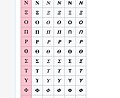 Screenshot in Chrome on MacOS, with text rendered in STIXGeneral
 Screenshot in Chrome on Windows 7, with text rendered in Cambria Math
.jpg)
.jpg)
So which of us is right? :D — OwenBlacker (talk; please {{ping}} me in replies) 17:19, 2 September 2018 (UTC)
- The official reference is https://www.unicode.org/charts/PDF/U1D400.pdf DRMcCreedy (talk) 19:51, 2 September 2018 (UTC)
- Yes, I am seeing them the right way round on Windows 10 using Cambria Math, but I reverted your edit because I checked the underlying character codes used on the page, and they are correct and match the character codes and character names defined in the Unicode Standard. Must be a bug in an old version of Cambria Math, although I did a quick search and did not find any related bug report for the font. BabelStone (talk) 21:50, 2 September 2018 (UTC)
Move discussion in progress
editThere is a move discussion in progress on Talk:Unicode block which affects this page. Please participate on that page and not in this talk page section. Thank you. —RMCD bot 22:20, 1 May 2019 (UTC)
Inaccessibility when used as substitute for formatting
editAn additional section on the page could be valuable to discuss the impact of the popularity of these symbols as a substitute for formatting (bold, italic, otherwise) in environments that don't have native inclusion of that formatting. With this misuse comes accessibility problems between screen readers literally interpreting characters and lack of support on (usually mobile) devices. I don't have immediately available references or familiarity with Unicode recommendations like mentioned about markup in the current article.
Sire TRM (talk) 03:26, 9 October 2019 (UTC)
- +1!
- Here’s a blog post with a video demo of the practical effect in some screen reader that seems to be roughly tuned to reading out equations. I have found that in Apple’s current VoiceOver screen reader, these are just omitted with no indication they’re there (I am not a regular user). —Michael Z. 17:20, 11 December 2020 (UTC)
Add "base" value?
editCurrently, the Mathematical Alphanumeric Symbols#Latin letters tables starts:
| Serif | Sans-serif | Script (or Calligraphy) | Fraktur | Mono- space |
Double- struck | ||||||||
|---|---|---|---|---|---|---|---|---|---|---|---|---|---|
| Normal | Bold | Italic | Bold italic |
Normal | Bold | Italic | Bold italic |
Normal | Bold | Normal | Bold | Normal | Bold |
| A | 𝐀 | 𝐴 | 𝑨 | 𝖠 | 𝗔 | 𝘈 | 𝘼 | 𝒜 | 𝓐 | 𝔄 | 𝕬 | 𝙰 | 𝔸 |
| B | 𝐁 | 𝐵 | 𝑩 | 𝖡 | 𝗕 | 𝘉 | 𝘽 | ℬ | 𝓑 | 𝔅 | 𝕭 | 𝙱 | 𝔹 |
| C | 𝐂 | 𝐶 | 𝑪 | 𝖢 | 𝗖 | 𝘊 | 𝘾 | 𝒞 | 𝓒 | ℭ | 𝕮 | 𝙲 | ℂ |
| ... | |||||||||||||
Since the unicode values are buried in the tooltips, I'd like to add a row at the top with the "base values" to which you can add the values in a new first "offset" column to get the Unicode value for most of the table (the ones that are not exceptions), like this:
| Serif | Sans-serif | Script (or Calligraphy) | Fraktur | Mono- space |
Double- struck | |||||||||
|---|---|---|---|---|---|---|---|---|---|---|---|---|---|---|
| Normal | Bold | Italic | Bold italic |
Normal | Bold | Italic | Bold italic |
Normal | Bold | Normal | Bold | Normal | Bold | |
| U+ | 0041 | 1D400 | 1D434 | 1D468 | 1D5A0 | 1D5D4 | 1D608 | 1D63C | 1D49C | 1D4D0 | 1D504 | 1D56C | 1D670 | 1D538 |
| 0 | A | 𝐀 | 𝐴 | 𝑨 | 𝖠 | 𝗔 | 𝘈 | 𝘼 | 𝒜 | 𝓐 | 𝔄 | 𝕬 | 𝙰 | 𝔸 |
| 1 | B | 𝐁 | 𝐵 | 𝑩 | 𝖡 | 𝗕 | 𝘉 | 𝘽 | ℬ | 𝓑 | 𝔅 | 𝕭 | 𝙱 | 𝔹 |
| 2 | C | 𝐂 | 𝐶 | 𝑪 | 𝖢 | 𝗖 | 𝘊 | 𝘾 | 𝒞 | 𝓒 | ℭ | 𝕮 | 𝙲 | ℂ |
| ... | ||||||||||||||
This is pretty standard for such tables here and elsewhere. Thoughts? —[AlanM1(talk)]— 11:51, 25 December 2019 (UTC)
 Done —[AlanM1(talk)]— 15:38, 5 January 2020 (UTC)
Double-struck Greek letters
editI'd just like to alert the creators to the fact that there exist a few double-struck Greek letters: ℼℽℾℿ⅀ with codes 213c,213d,213e,213f,2140. I think the article should at least mention them if not showcase them in one of the tables. Vpprof (talk) 01:02, 26 May 2021 (UTC)
- They seem like valid additions to the Greek letters and symbols tables. Go ahead and add a column in those tables for them if you like. DRMcCreedy (talk) 02:35, 26 May 2021 (UTC)
- In addition, there appears to exist five oddball latin characters in doublestruck form (one majiscule, four miniscule), present at Unicode codepoints 0000214𝜂 ⟦5≤𝜂≤9⟧ since U‑ver 3٫2: ⅅⅆⅇⅈⅉ. Going by that website, there currently exist a total of seventeen ‘doublestruck’ characters availed that do not have ‹Mathematical› appended to the name: the five stylized latin ones just listed, four Greek ones plus iterative summation operator (since ver≼ 4٫1), and seven non‑stylized capital latin letters corresponding to those with pink background in the rightmost column in the Wiki article's ‹Latin letters› table (since ver1٫1⁏ used primarily for designating the corresponding commonplace well‐defined infinite sets), with heretofore ❛stylized❜ ≘ ⟮bold ⩖ italic⟯ i.e. ⟮¬normal⟯ within its designated form of the evidently six forms extant for mathematical letters. I am guessing that there are other characters consistent with greek/latin/miscellaneous representations identified in the article, besides the few just mentioned of the blackboardbold form, that are not listed on the Wiki due in part or wholly to their codepoints' lying outside the regular codepoint range and in part to its original Unicode name—likely not in the more default ‘serif’ or ‘sans‑ຯ’ forms but aligning instead to one of the other three that have some pinks (such as normal∘⟮calligraphy ⩕ Fraktur⟯). 2601:204:C580:2290:0:0:0:F0A8 (talk) 03:28, 2 November 2022 (UTC)
"𝕏" listed at Redirects for discussion
edit The redirect 𝕏 has been listed at redirects for discussion to determine whether its use and function meets the redirect guidelines. Readers of this page are welcome to comment on this redirect at Wikipedia:Redirects for discussion/Log/2023 October 16 § 𝕏 until a consensus is reached. Formigable (talk) 18:05, 16 October 2023 (UTC)
What are the actual rules for whether the first columns have serifs?
editOn my machine the Bold Italic Bold-Italic columns do not have serifs, which seems pretty useless. Editing the source to select the font (which works for the first column to make it have serifs) does not fix it either. It seems these letters in the fallback fonts just don't have serifs... Anybody know what is going on, and whether or not my system is obeying the Unicode spec? Spitzak (talk) 18:00, 20 April 2026 (UTC)
- Certainly a font issue. Try installing Cambria, Cambria Math, or Segoe UI Symbol which all render with serifs. (I'm on a Windows machine so that might make a difference.) DRMcCreedy (talk) 00:22, 21 April 2026 (UTC)
- I mostly want to fix the text which describes this in a very confusing way, wanted to make sure that there was no intention for those columns to every not have serifs Spitzak (talk) 02:07, 21 April 2026 (UTC)