

The Minerals Portal

In geology and mineralogy, a mineral or mineral species is, broadly speaking, a solid substance with a fairly well-defined chemical composition and a specific crystal structure that occurs naturally in pure form.
The geological definition of mineral normally excludes compounds that occur only in living organisms. However, some minerals are often biogenic (such as calcite) or chemically organic compounds (such as mellite). Moreover, living organisms often synthesize inorganic minerals (such as hydroxylapatite) that also occur in rocks.
The concept of mineral is distinct from rock, which is any bulk solid geologic material that is relatively homogeneous at a large enough scale. A rock may consist of one type of mineral or may be an aggregate of two or more different types of minerals, spacially segregated into distinct phases.
Some natural solid substances without a definite crystalline structure, such as opal or obsidian, are more properly called mineraloids. If a chemical compound occurs naturally with different crystal structures, each structure is considered a different mineral species. Thus, for example, quartz and stishovite are two different minerals consisting of the same compound, silicon dioxide. (Full article...)
Mineralogy is a subject of geology specializing in the scientific study of the chemistry, crystal structure, and physical (including optical) properties of minerals and mineralized artifacts. Specific studies within mineralogy include the processes of mineral origin and formation, classification of minerals, their geographical distribution, and their utilization. (Full article...)
Selected articles

Andesite (/ˈændəzaɪt/) is a volcanic rock of intermediate composition. In a general sense, it is the intermediate type between silica-poor basalt and silica-rich rhyolite. It is fine-grained (aphanitic) to porphyritic in texture, and is composed predominantly of sodium-rich plagioclase plus pyroxene or hornblende.
Andesite is the extrusive equivalent of plutonic diorite. Characteristic of subduction zones, andesite represents the dominant rock type in island arcs. The average composition of the continental crust is andesitic. Along with basalts, andesites are a component of the Martian crust.
The name andesite is derived from the Andes mountain range, where this rock type is found in abundance. It was first applied by Christian Leopold von Buch in 1826. (Full article...)
Diamond is a mineral form of the element carbon with its atoms arranged in a crystal structure called diamond cubic. Diamond is a tasteless, odorless, strong, brittle solid, a poor conductor of electricity, colorless in pure form, and insoluble in water. Another solid form of carbon known as graphite is the chemically stable form of carbon at room temperature and pressure, but diamond is metastable and converts to it at a negligible rate under those conditions. Diamond has the highest hardness and thermal conductivity of any natural material, properties that are used in major industrial applications such as cutting and polishing tools.
Because the arrangement of atoms in diamond is extremely rigid, few types of impurity can contaminate it (two exceptions are boron and nitrogen). Small numbers of defects or impurities—about one per million of lattice atoms—can color a diamond blue (boron), yellow (nitrogen), brown (defects), green (radiation exposure), purple, pink, orange, or red. Diamond also has a very high refractive index and a relatively high optical dispersion.
Most natural diamonds have ages between 1 billion and 3.5 billion years. Most were formed at depths between 150 and 250 kilometres (93 and 155 mi) in the Earth's mantle, although a few have come from as deep as 800 kilometres (500 mi). Under high pressure and temperature, carbon-containing fluids dissolved various minerals and replaced them with diamonds. Much more recently (hundreds to tens of million years ago), they were carried to the surface in volcanic eruptions and deposited in igneous rocks known as kimberlites and lamproites.
Synthetic diamonds can be grown from high-purity carbon under high pressures and temperatures or from hydrocarbon gases by chemical vapor deposition (CVD). Natural and synthetic diamonds are most commonly distinguished using optical techniques or thermal conductivity measurements. (Full article...)
Sapphire is a precious gemstone, a variety of the mineral corundum, consisting of aluminium oxide (α-Al2O3) with trace amounts of elements such as iron, titanium, cobalt, lead, chromium, vanadium, magnesium, boron, and silicon. The name sapphire is derived from the Latin word sapphirus, itself from the Greek word sappheiros (σάπφειρος, itself from a Semitic origin), which referred to lapis lazuli. Sapphire with colors other than its typical blue is referred to as "fancy sapphire", and can be in yellow, purple, orange, and green colors; "parti sapphires" show two or more colors. Red corundum stones also occur, but are called rubies rather than sapphires. Pink-colored corundum may be classified either as ruby or sapphire depending on the locale. Commonly, natural sapphires are cut and polished into gemstones and worn in jewelry. They also may be created synthetically in laboratories for industrial or decorative purposes in large crystal boules. It occurs in association with ruby, zircon, biotite, muscovite, calcite, dravite and quartz.
Sapphire has a remarkable hardness, with a score of 9 on the Mohs scale, the third-hardest mineral after diamond at 10 and moissanite at 9.5. Non-ornamental applications include infrared optical components, high-durability windows, wristwatch crystals and movement bearings, and very thin electronic wafers, which are used as the insulating substrates of special-purpose solid-state electronics such as integrated circuits and GaN-based blue LEDs. (Full article...)
Chalcopyrite (/ˌkælkəˈpaɪˌraɪt, -koʊ-/ KAL-kə-PY-ryte, -koh-) is a copper iron sulfide mineral and the most abundant copper ore mineral. It has the chemical formula CuFeS2 and crystallizes in the tetragonal system. It has a brassy to golden yellow color and a hardness of 3.5 to 4 on the Mohs scale. Its streak is diagnostic as green-tinged black.
On exposure to air, chalcopyrite tarnishes to a variety of oxides, hydroxides, and sulfates. Associated copper minerals include the sulfides bornite (Cu5FeS4), chalcocite (Cu2S), covellite (CuS), digenite (Cu9S5); carbonates such as malachite and azurite, and rarely oxides such as cuprite (Cu2O). It is rarely found in association with native copper. Chalcopyrite is a conductor of electricity.
Copper can be extracted from chalcopyrite ore using various methods. The two predominant methods are pyrometallurgy and hydrometallurgy, the former being the most commercially viable. (Full article...)
The diamond crystal structure belongs to the face-centered cubic lattice, with a repeated two-atom pattern.
In crystallography, a crystal system is a set of point groups (a group of geometric symmetries with at least one fixed point). A lattice system is a set of Bravais lattices (an infinite array of discrete points). Space groups (symmetry groups of a configuration in space) are classified into crystal systems according to their point groups, and into lattice systems according to their Bravais lattices. Crystal systems that have space groups assigned to a common lattice system are combined into a crystal family.
The seven crystal systems are triclinic, monoclinic, orthorhombic, tetragonal, trigonal, hexagonal, and cubic. Informally, two crystals are in the same crystal system if they have similar symmetries (though there are many exceptions). (Full article...)
Kaolinite (/ˈkeɪ.ələˌnaɪt, -lɪ-/ KAY-ə-lə-nyte, -lih-; also called kaolin) is a clay mineral, with the chemical composition Al2Si2O5(OH)4. It is a layered silicate mineral, with one "tetrahedral" sheet of silicate tetrahedra (SiO4) linked to one "octahedral" sheet of aluminate octahedrons (AlO2(OH)4) through oxygen atoms on one side, and another such sheet through hydrogen bonds on the other side.
Kaolinite is a soft, earthy, usually white, mineral (dioctahedral phyllosilicate clay), produced by the chemical weathering of aluminium silicate minerals like feldspar. It has a low shrink–swell capacity and a low cation-exchange capacity (1–15 meq/100 g).
Rocks that are rich in kaolinite, and halloysite, are known as kaolin (/ˈkeɪ.əlɪn/) or china clay. In many parts of the world kaolin is colored pink-orange-red by iron oxide, giving it a distinct rust hue. Lower concentrations of iron oxide yield the white, yellow, or light orange colors of kaolin. Alternating lighter and darker layers are sometimes found, as at Providence Canyon State Park in Georgia, United States.
Kaolin is an important raw material in many industries and applications. Commercial grades of kaolin are supplied and transported as powder, lumps, semi-dried noodle or slurry. Global production of kaolin in 2021 was estimated to be 45 million tonnes, with a total market value of US $4.24 billion. (Full article...)
Zircon (/ˈzɜːrkɒn, -kən/) is a mineral belonging to the group of nesosilicates and is a source of the metal zirconium. Its chemical name is zirconium(IV) silicate, and its corresponding chemical formula is ZrSiO4. An empirical formula showing some of the range of substitution in zircon is (Zr1–y, REEy)(SiO4)1–x(OH)4x–y. Zircon precipitates from silicate melts and has relatively high concentrations of high field strength incompatible elements. For example, hafnium is almost always present in quantities ranging from 1 to 4%. The crystal structure of zircon is tetragonal crystal system. The natural color of zircon varies between colorless, yellow-golden, red, brown, blue, and green.
The name derives from the Persian zargun, meaning "gold-hued". This word is changed into "jargoon", a term applied to light-colored zircons. The English word "zircon" is derived from Zirkon, which is the German adaptation of this word. Yellow, orange, and red zircon is also known as "hyacinth", from the flower hyacinthus, whose name is of Ancient Greek origin. (Full article...)
Gypsum is a soft sulfate mineral composed of calcium sulfate dihydrate, with the chemical formula CaSO4·2H2O. It is widely mined and is used as a fertilizer and as the main constituent in many forms of plaster, drywall and blackboard or sidewalk chalk. Gypsum also crystallizes as translucent crystals of selenite. It forms as an evaporite mineral and as a hydration product of anhydrite. The Mohs scale of mineral hardness defines gypsum as hardness value 2 based on scratch hardness comparison.
Fine-grained white or lightly tinted forms of gypsum known as alabaster have been used for sculpture by many cultures including Ancient Egypt, Mesopotamia, Ancient Rome, the Byzantine Empire, and the Nottingham alabasters of Medieval England. (Full article...)
Rutile is an oxide mineral composed of titanium dioxide (TiO2), the most common natural form of TiO2. Rarer polymorphs of TiO2 are known, including anatase, akaogiite, and brookite.
Rutile has one of the highest refractive indices at visible wavelengths of any known crystal and also exhibits a particularly large birefringence and high dispersion. Owing to these properties, it is useful for the manufacture of certain optical elements, especially polarization optics, for longer visible and infrared wavelengths up to about 4.5 micrometres. Natural rutile may contain up to 10% iron and significant amounts of niobium and tantalum.
Rutile derives its name from the Latin rutilus ('red'), in reference to the deep red color observed in some specimens when viewed by transmitted light. Rutile was first described in 1803 by Abraham Gottlob Werner using specimens obtained in Horcajuelo de la Sierra, Madrid (Spain), which is consequently the type locality. (Full article...)
Opal is a hydrated amorphous form of silica (SiO2·nH2O); its water content may range from 3% to 21% by weight, but is usually between 6% and 10%. Due to the amorphous (chemical) physical structure, it is classified as a mineraloid, unlike crystalline forms of silica, which are considered minerals. It is deposited at a relatively low temperature and may occur in the fissures of almost any kind of rock, being most commonly found with limonite, sandstone, rhyolite, marl, and basalt.
The name opal is believed to be derived from the Sanskrit word upala (उपल), which means 'jewel', and later the Greek derivative opállios (ὀπάλλιος).
There are two broad classes of opal: precious and common. Precious opal displays play-of-color (iridescence); common opal does not. Play-of-color is defined as "a pseudo chromatic optical effect resulting in flashes of colored light from certain minerals, as they are turned in white light." The internal structure of precious opal causes it to diffract light, resulting in play-of-color. Depending on the conditions in which it formed, opal may be transparent, translucent, or opaque, and the background color may be white, black, or nearly any color of the visual spectrum. Black opal is considered the rarest, while white, gray, and green opals are the most common. (Full article...)
Frameworks of LTA-type (left) and FAU-type zeolites (right)
Zeolites are a group of several microporous, crystalline aluminosilicate minerals commonly used as commercial adsorbents and catalysts. They mainly consist of silicon, aluminium, and oxygen, and have the general formula Mn+
1/n(AlO
2)−
(SiO
2)
x・yH
2O where Mn+
1/n is either a metal ion or H+.
The term was originally coined in 1756 by Swedish mineralogist Axel Fredrik Cronstedt, who observed that rapidly heating a material, believed to have been stilbite, produced large amounts of steam from water that had been adsorbed by the material. Based on this, he called the material zeolith (changed later to zeolite in English, to fit the naming scheme for minerals in -ite) from the Greek ζέω (zéō), meaning "to boil" and λίθος (líthos), meaning "stone". (Full article...)
Cinnabar (/ˈsɪnəˌbɑːr/; from Ancient Greek κιννάβαρι (kinnábari)), also called cinnabarite (/ˌsɪnəˈbɑːraɪt/) or mercurblende, is the bright scarlet to brick-red form of mercury(II) sulfide (HgS). It is the most common source ore for refining elemental mercury and is the historic source for the brilliant red or scarlet pigment termed vermilion and associated red mercury pigments.
Cinnabar generally occurs as a vein-filling mineral associated with volcanic activity and alkaline hot springs. The mineral resembles quartz in symmetry and it exhibits birefringence. Cinnabar has a mean refractive index near 3.2, a hardness between 2.0 and 2.5, and a specific gravity of approximately 8.1. The color and properties derive from a structure that is a hexagonal crystalline lattice belonging to the trigonal crystal system, crystals that sometimes exhibit twinning.
Cinnabar has been used for its color since antiquity in the Near East, including as a rouge-type cosmetic, in the New World since the Olmec culture, and in China since as early as the Yangshao culture, where it was used in coloring stoneware. In Roman times, cinnabar was highly valued as paint for walls, especially interiors, since it darkened when used outdoors due to exposure to sunlight.
Associated modern precautions for the use and handling of cinnabar arise from the toxicity of the mercury component, which was recognized as early as ancient Rome. (Full article...)
Garnets ( /ˈɡɑːrnɪt/) are a group of silicate minerals that have been used since the Bronze Age as gemstones and abrasives.
Garnet minerals, while sharing similar physical and crystallographic properties, exhibit a wide range of chemical compositions, defining distinct species. These species fall into two primary solid solution series: the pyralspite series (pyrope, almandine, spessartine), with the general formula [Mg,Fe,Mn]3Al2(SiO4)3; and the ugrandite series (uvarovite, grossular, andradite), with the general formula Ca3[Cr,Al,Fe]2(SiO4)3. Notable varieties of grossular include hessonite and tsavorite.
Although garnets are often associated with metamorphism, they can also occur in volcanic rocks on rare occasions. (Full article...)
Talc, or talcum, is a clay mineral composed of hydrated magnesium silicate, with the chemical formula Mg3Si4O10(OH)2. Talc in powdered form, often combined with corn starch, is used as baby powder. This mineral is used as a thickening agent and lubricant. It is an ingredient in ceramics, paints, and roofing material. It is a main ingredient in many cosmetics. It occurs as foliated to fibrous masses, and in an exceptionally rare crystal form. It has a perfect basal cleavage and an uneven flat fracture, and it is foliated with a two-dimensional platy form.
The Mohs scale of mineral hardness, based on scratch hardness comparison, defines value 1 as the hardness of talc, the softest mineral. When scraped on a streak plate, talc produces a white streak, though this indicator is of little importance, because most silicate minerals produce a white streak. Talc is translucent to opaque, with colors ranging from whitish grey to green with a vitreous and pearly luster. Talc is not soluble in water, and is slightly soluble in dilute mineral acids.
Soapstone is a metamorphic rock composed predominantly of talc. (Full article...)
Green fluorite with prominent cleavage
Cleavage, in mineralogy and materials science, is the tendency of crystalline materials to split along definite crystallographic structural planes. These planes of relative weakness are a result of the regular locations of atoms and ions in the crystal, which create smooth repeating surfaces that are visible both in the microscope and to the naked eye. If bonds in certain directions are weaker than others, the crystal will tend to split along the weakly bonded planes. These flat breaks are termed "cleavage". The classic example of cleavage is mica, which cleaves in a single direction along the basal pinacoid, making the layers seem like pages in a book. In fact, mineralogists often refer to "books of mica".
Diamond and graphite provide examples of cleavage. Each is composed solely of a single element, carbon. In diamond, each carbon atom is bonded to four others in a tetrahedral pattern with short covalent bonds. The planes of weakness (cleavage planes) in a diamond are in four directions, following the faces of the octahedron. In graphite, carbon atoms are contained in layers in a hexagonal pattern where the covalent bonds are shorter (and thus even stronger) than those of diamond. However, each layer is connected to the other with a longer and much weaker van der Waals bond. This gives graphite a single direction of cleavage, parallel to the basal pinacoid. So weak is this bond that it is broken with little force, giving graphite a slippery feel as layers shear apart. As a result, graphite makes an excellent dry lubricant.
While all single crystals will show some tendency to split along atomic planes in their crystal structure, if the differences between one direction or another are not large enough, the mineral will not display cleavage. Corundum, for example, displays no cleavage. (Full article...)
Hematite (/ˈhiːməˌtaɪt, ˈhɛmə-/), also spelled as haematite, is a common iron oxide compound with the formula Fe2O3 and is widely found in rocks and soils. Hematite crystals belong to the rhombohedral lattice system which is designated the alpha polymorph of Fe
2O
3. It has the same crystal structure as corundum (Al
2O
3) and ilmenite (FeTiO
3). With this crystal structure geometry it forms a complete solid solution at temperatures above 950 °C (1,740 °F).
Hematite occurs naturally in black to steel or silver-gray, brown to reddish-brown, or red colors. It is mined as an important ore mineral of iron. It is electrically conductive. Hematite varieties include kidney ore, martite (pseudomorphs after magnetite), iron rose and specularite (specular hematite). While these forms vary, they all have a rust-red streak. Hematite is not only harder than pure iron, but also much more brittle. The term kidney ore may be broadly used to describe botryoidal, mammillary, or reniform hematite. Maghemite is a polymorph of hematite (γ-Fe
2O
3) with the same chemical formula, but with a spinel structure like magnetite.
Large deposits of hematite are found in banded iron formations. Gray hematite is typically found in places that have still, standing water, or mineral hot springs, such as those in Yellowstone National Park in North America. The mineral may precipitate in the water and collect in layers at the bottom of the lake, spring, or other standing water. Hematite can also occur in the absence of water, usually as the result of volcanic activity.
Clay-sized hematite crystals also may occur as a secondary mineral formed by weathering processes in soil, and along with other iron oxides or oxyhydroxides such as goethite, which is responsible for the red color of many tropical, ancient, or otherwise highly weathered soils. (Full article...)
Beryl (/ˈbɛrəl/ BERR-əl) is a mineral composed of beryllium aluminium silicate with the chemical formula Be3Al2(SiO3)6. Well-known varieties of beryl include emerald and aquamarine. Naturally occurring hexagonal crystals of beryl can be up to several meters in size, but terminated crystals are relatively rare. Pure beryl is colorless, but it is frequently tinted by impurities; possible colors are green, blue, yellow, pink, and red (the rarest). It is an ore source of beryllium. (Full article...)
Corundum is a crystalline form of aluminium oxide (Al2O3) typically containing traces of iron, titanium, vanadium, and chromium. It is a rock-forming mineral. It is a naturally transparent material, but can have different colors depending on the presence of transition metal impurities in its crystalline structure. Corundum has two primary gem varieties: ruby and sapphire. Rubies are red due to the presence of chromium, and sapphires exhibit a range of colors depending on what transition metal is present. A rare type of sapphire, padparadscha sapphire, is pink-orange.
The name "corundum" is derived from the Tamil-Dravidian word kurundam (ruby-sapphire) (appearing in Sanskrit as kuruvinda).
Because of corundum's hardness (pure corundum is defined to have 9.0 on the Mohs scale), it can scratch almost all other minerals. Emery, a variety of corundum with no value as a gemstone, is commonly used as an abrasive on sandpaper and on large tools used in machining metals, plastics, and wood. It is a black granular form of corundum, in which the mineral is intimately mixed with magnetite, hematite, or hercynite.
In addition to its hardness, corundum has a density of 4.02 g/cm3 (251 lb/cu ft), which is unusually high for a transparent mineral composed of the low-atomic mass elements aluminium and oxygen. (Full article...)
Borax (also referred to as sodium borate, tincal (/ˈtɪŋkəl/) and tincar (/ˈtɪŋkər/)) is a salt (ionic compound) normally encountered as a hydrated borate of sodium, with the chemical formula Na2H20B4O17. Borax mineral is a crystalline borate mineral that occurs in only a few places worldwide in quantities that enable it to be mined economically.
Borax can be dehydrated by heating into other forms with less water of hydration. The anhydrous form of borax can also be obtained from the decahydrate or other hydrates by heating and then grinding the resulting glasslike solid into a powder. It is a white crystalline solid that dissolves in water to make a basic solution due to the tetraborate anion.
Borax is commonly available in powder or granular form and has many industrial and household uses, including as a pesticide, as a metal soldering flux, as a component of glass, enamel, and pottery glazes, for tanning of skins and hides, for artificial aging of wood, as a preservative against wood fungus, as a food additive, and as a pharmaceutic alkalizer. In chemical laboratories it is used as a buffering agent.
The terms tincal and tincar refer to the naturally occurring borax historically mined from dry lake beds in various parts of Asia. (Full article...)
Tourmaline (/ˈtʊərməlɪn, -ˌliːn/ ⓘ TOOR-mə-lin, -leen) is a crystalline silicate mineral group in which boron is compounded with elements such as aluminium, iron, magnesium, sodium, lithium, or potassium. This gemstone comes in a wide variety of colors.
The name is derived from the Sinhalese tōramalli (ටෝරමල්ලි), which refers to the carnelian gemstones. (Full article...)
Amethyst is a violet variety of quartz. Ancient Greeks wore amethyst and carved drinking vessels from it in the belief that it would prevent intoxication. Amethyst, a semiprecious stone, is often used in jewelry. It occurs mostly in association with calcite, quartz, smoky quartz, hematite, pyrite, fluorite, goethite, agate, and chalcedony. (Full article...)
A crystalline solid: atomic resolution image of strontium titanate. Brighter spots are columns of strontium atoms and darker ones are titanium-oxygen columns.
Crystallography is the branch of science devoted to the study of molecular and crystalline structure and properties. The word crystallography is derived from the Ancient Greek word κρύσταλλος (krústallos; "clear ice, rock-crystal"), and γράφειν (gráphein; "to write"). In July 2012, the United Nations recognised the importance of the science of crystallography by proclaiming 2014 the International Year of Crystallography.
Crystallography is a broad topic, and many of its subareas, such as X-ray crystallography, are themselves important scientific topics. Crystallography ranges from the fundamentals of crystal structure to the mathematics of crystal geometry, including those that are not periodic or quasicrystals. At the atomic scale it can involve the use of X-ray diffraction to produce experimental data that the tools of X-ray crystallography can convert into detailed positions of atoms, and sometimes electron density. At larger scales it includes experimental tools such as orientational imaging to examine the relative orientations at the grain boundary in materials. Crystallography plays a key role in many areas of biology, chemistry, and physics, as well as in emerging developments in these fields. (Full article...)
Crystal structure of table salt (sodium in purple, chlorine in green)
In crystallography, crystal structure is a description of the ordered arrangement of atoms, ions, or molecules in a crystalline material. Ordered structures occur from the intrinsic nature of constituent particles to form symmetric patterns that repeat along the principal directions of three-dimensional space in matter.
The smallest group of particles in a material that constitutes this repeating pattern is the unit cell of the structure. The unit cell completely reflects the symmetry and structure of the entire crystal, which is built up by repetitive translation of the unit cell along its principal axes. The translation vectors define the nodes of the Bravais lattice.
The lengths of principal axes/edges, of the unit cell and angles between them are lattice constants, also called lattice parameters or cell parameters. The symmetry properties of a crystal are described by the concept of space groups. All possible symmetric arrangements of particles in three-dimensional space may be described by 230 space groups.
The crystal structure and symmetry play a critical role in determining many physical properties, such as cleavage, electronic band structure, and optical transparency. (Full article...)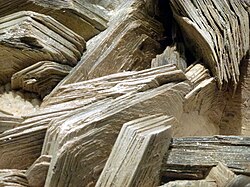
Micas (/ˈmaɪkəz/) are a group of silicate minerals whose outstanding physical characteristic is that individual mica crystals can easily be split into fragile elastic plates. This characteristic is described as perfect basal cleavage. Mica is common in igneous and metamorphic rock and is occasionally found as small flakes in sedimentary rock. It is particularly prominent in many granites, pegmatites, and schists, and "books" (large individual crystals) of mica several feet across have been found in some pegmatites.
Micas are used in products such as drywalls, paints, and fillers, especially in parts for automobiles, roofing, and in electronics. The mineral is used in cosmetics and food to add "shimmer" or "frost". (Full article...)
Galena, also called lead glance, is the natural mineral form of lead(II) sulfide (PbS). It is the most important ore of lead and an important source of silver.
Galena is one of the most abundant and widely distributed sulfide minerals. It crystallizes in the cubic crystal system often showing octahedral forms. It is often associated with the minerals sphalerite, calcite and fluorite.
As a pure specimen held in the hand, under standard temperature and pressure, galena is insoluble in water and so is almost non-toxic. Handling galena under these specific conditions (such as in a museum or as part of geology instruction) poses practically no risk; however, as lead(II) sulfide is reasonably reactive in a variety of environments, it can be highly toxic if swallowed or inhaled, particularly under prolonged or repeated exposure. (Full article...)


.jpg)

Selected mineralogist
Johan Afzelius (13 June 1753 in Larv – 20 May 1837 in Uppsala) was a Swedish chemist and notable as the doctoral advisor of one of the founders of modern chemistry, Jöns Jacob Berzelius. He was the brother of botanist Adam Afzelius and physician Pehr von Afzelius.
Afzelius received his PhD at Uppsala University in 1776 under Torbern Olof Bergman. In 1780 he became a lecturer at Uppsala and in 1784 a professor of chemistry. From 1792 to 1797 he undertook research trips to Norway, Denmark and Russia in order to study mineral deposits and to visit scientific institutions. His remarkable mineral collection became part of Uppsala University's mineral cabinet. (Full article...)- Waldemar Theodore Schaller (August 3, 1882 – September 28, 1967) was an American mineralogist and longtime employee of the United States Geological Survey (USGS). (Full article...)
Johannes Martin Bijvoet ForMemRS (23 January 1892, Amsterdam – 4 March 1980, Winterswijk) was a Dutch chemist and crystallographer at the van 't Hoff Laboratory at Utrecht University. He is famous for devising a method of establishing the absolute configuration of molecules. In 1946, he became member of the Royal Netherlands Academy of Arts and Sciences.
The concept of tetrahedrally bound carbon in organic compounds stems back to the work by van 't Hoff and Le Bel in 1874. At this time, it was impossible to assign the absolute configuration of a molecule by means other than referring to the projection formula established by Fischer, who had used glyceraldehyde as the prototype and assigned randomly its absolute configuration. (Full article...)
Robert Miller Hazen (born November 1, 1948) is an American mineralogist and astrobiologist. He is a research scientist at the Carnegie Institution of Washington's Geophysical Laboratory and Clarence Robinson Professor of Earth Science at George Mason University, in the United States. Hazen is the Executive Director of the Deep Carbon Observatory. (Full article...)- Fritz Henning Emil Paul Berndt Laves (27 February 1906 – 12 August 1978) was a German crystallographer who served as the president of the German Mineralogical Society from 1956 to 1958. He is the namesake of Laves phases and the Laves tilings; the Laves graph, a highly-symmetrical three-dimensional crystal structure that he studied, was named after him by H. S. M. Coxeter. (Full article...)

Count Lev Alekseyevich von Perovski (Russian: Лев Алексе́евич Перо́вский, also transliterated as Perofsky, Perovskii, Perovskiy, Perovsky, Perowski, and Perowsky; also credited as L.A. Perovski) (9 September 1792 – 21 November 1856) was a Russian nobleman and mineralogist who also served as Minister of Internal Affairs under Nicholas I of Russia.
In 1845, he proposed the creation of the Russian Geographical Society. (Full article...)
Joan Abella
Joan Abella i Creus (Sabadell, Barcelona, 1968) is a Catalan gemmologist and mineralogist who discovered abellaite, a mineral that receives this name in his honor. (Full article...)- Arthur Edmund Seaman (December 29, 1858 – July 10, 1937) was a professor at the Michigan College of Mines (now Michigan Technological University) and curator of the A. E. Seaman Mineral Museum which bears his name. (Full article...)
 Heinrich Girard.
Heinrich Girard (2 June 1814 – 11 April 1878) was a German mineralogist and geologist born in Berlin.
He studied natural sciences in Berlin, receiving his habilitation in 1845. Afterwards he became an associate professor of mineralogy and geology at the University of Marburg, and in 1854 a full professor at the University of Halle. In 1863/64 he was rector at the university. (Full article...)
Ernest-François Mallard (4 February 1833 – 6 July 1894) was a French mineralogist and a member of the French Academy of Sciences. He is also notable for his work with Henri Louis Le Chatelier in combustion as applied to mining safety. (Full article...)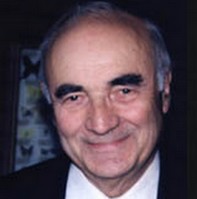
Hubert Curien (30 October 1924 – 6 February 2005) was a French physicist and a key figure in European science politics, as the President of CERN Council (1994–1996), the first chairman of the European Space Agency (ESA) (1981–1984), and second President of the Academia Europæa and a President of Fondation de France. (Full article...)- Wilhelm Joseph Grailich (16 February 1829, in Pressburg – 13 September 1859, in Vienna) was an Austrian physicist, mineralogist and crystallographer. (Full article...)
- James Burleigh Thompson Jr. (November 20, 1921 – November 15, 2011) was an American mineralogist and geologist. He was known for his research into the thermodynamics of minerals and the relationship to structure. He introduced the term polysomatic series for describing layered structures with chemically distinct layers. (Full article...)

Luiz Menezes
Luiz Alberto Dias Menezes (5 October 1950 – 9 July 2014) was a geologist, mineralogist and mineral dealer from Brazil. He was born in São Paulo.
He collected the material that was used for the discovery of new mineral was named in his honor as menezesite. He also contributed extensively in mineralogy of Brazil, participating in the discovery of up to seven mineral species. (Full article...)- Ivan Kostov Nikolov (Bulgarian: Иван Костов Николов) HonFGS HonFMinSoc (December 24, 1913 (O.S.) in Plovdiv, Bulgaria – March 31, 2004 in Sofia, Bulgaria), Aka Ivan Kostov, was a Bulgarian geologist, mineralogist and crystallographer. (Full article...)

Luca Bindi (born 1971) is an Italian geologist. He holds the Chair of Mineralogy and Crystallography and is the Head of the Department of Earth Sciences of the University of Florence. He is also a research associate at the Istituto di Geoscienze e Georisorse of the National Research Council (Italy) (CNR). He has received national and international scientific awards including the 2015 President of the Republic Prize in the category of Physical, Mathematical and Natural Sciences. Since 2019 he has been a Member of the National Academy of Lincei.
He is the Italian scientist who has contributed to the description of the highest number of new minerals and is among the top ten researchers in the world for the number of new mineralogical species described. In his career he has described about 2% of the 6,000 minerals known in nature. Most of the new materials were discovered in the collections of the Museum System of the University of Florence, with its approximately fifty thousand specimens. The (Full article...)- Adolf Schenck (4 April 1857 – 15 September 1936) was a German geographer, mineralogist and botanist who was a native of Siegen. He was a brother to botanist Heinrich Schenck (1860-1927).
Schenck studied at the Universities of Berlin and Bonn, obtaining his doctorate in 1884. From 1884 to 1887 he was a geographer on a mineralogical expedition to German Southwest Africa. The expedition was organized by merchant Adolf Lüderitz (1834–1886) and was under the leadership of Karl Höpfner (1857–1900). Several noted scientists participated in the venture, including Swiss botanist Hans Schinz (1868–1941), who performed botanical investigations in the northern part of German Southwest Africa. In the southern part of the colony, Schenck collected minerals and plants, particularly lichens. Prior to returning to Germany, he visited mines and goldfields that are now located in the present-day nations of South Africa, Botswana and Mozambique. (Full article...)
John George Children FRS FRSE FLS PRES DL (18 May 1777 – 1 January 1852 in Halstead, Kent) was a British chemist, mineralogist and zoologist. Children established a chemical laboratory at his father's home Ferox Hall and conducted experiments into galvanic cells. Following Children's father's bankruptcy and sale of the family estates in 1812 he was forced to seek employment, and in 1816 following a failed attempt at establishing a gunpowder business with his friend Sir Humphry Davy he became the assistant librarian of the department of antiquities at the British Museum in London. In 1822 Davy helped him secure a controversial appointment to the post of assistant keeper of the Natural History Department of the British Museum. He later served as Keeper of the Zoological Department following the division of the Natural History Department into three distinct departments in 1837, he remained in this post until his retirement from the museum in 1840. Along with Davy he built a large galvanic cell, assisted him in experiments and invented a method to extract silver from ore without the need for mercury. Children was also the founding president of the Royal Entomological Society. His daughter Anna Atkins became a pioneer of botanical photography. (Full article...)- Frank Rutley (14 May 1842 – 16 May 1904), an English geologist and petrographer, was born in Dover on 14 May 1842. He was educated partly in Bonn, but his interest in geology was kindled at the Royal School of Mines, where he studied from 1862 to 1864. He then joined the army, and served as lieutenant until 1867, when he became an Assistant Geologist on the Geological Survey.
Working in the Lake District, Rutley began to make a special study of rocks and rock-forming minerals, and soon qualified as acting petrographer on the Survey. For several years be worked in this capacity at the museum in Jermyn Street; he described the volcanic rocks of East Somerset and the Bristol district in 1876, and wrote special memoirs on The Eruptive Rocks of Brent Tor (1878) and on The Felsitic Lavas of England and Wales (1885). (Full article...) - Jean-André Mongez (21 November 1750 – May 1788) was a French priest and mineralogist. He is presumed to have died at Vanikoro, on the La Pérouse expedition. (Full article...)
- Dr. E-An Zen (Chinese: 任以安; pinyin: Rén Yǐ'ān) was born in Peking, China, May 31, 1928, and came to the U.S. in 1946. He became a citizen in 1963 and from 1990 was an adjunct professor at the University of Maryland. He died on March 29, 2014, at the age of 85.
He contributed articles to professional journals and was a fellow of the Geological Society of America (Councillor, 1985–88, 1990–93; President, 1991–92); the American Association for the Advancement of Science (AAAS), the American Academy of Arts and Sciences, the Mineralogical Society of America (Council, 1974–77;Pres., 1975–76). He was a member of the Geological Society of Washington (Pres. 1973), the National Academy of Sciences, and the Mineralogical Association of Canada. Zen was active in programs to bring geological knowledge to the general public. (Full article...) - Archibald Bruce (February 1777 – February 22, 1818) was an American physician and mineralogist. (Full article...)
- William Sansom Vaux (May 19, 1811 – May 5, 1882) was an American mineralogist. He served as vice-president of the Academy of Natural Sciences in Philadelphia from 1864 to 1882 and as president of the Zoological Society of Philadelphia. His mineral and archaeological collections were bequeathed to the Academy of Natural Sciences after his death. (Full article...)

Gustav Adolph Kenngott, c. 1860
Gustav Adolph Kenngott (January 6, 1818 – March 7, 1897) was a German mineralogist. (Full article...)
.jpg)


-Portrait-Portr_12032.tif_(cropped).jpg)
Related portals


Did you know...
- ... that nine days after his heart transplant, J. C. Walter Jr. merged his company Houston Oil & Minerals with Tenneco, then retired to his ranch and shortly after founded Walter Oil & Gas?
Get involved
For editor resources and to collaborate with other editors on improving Wikipedia's Minerals-related articles, see WikiProject Rocks and minerals.
General images

 Muscovite, a mineral species in the mica group, within the phyllosilicate subclass (from Mineral)
 Mohs hardness kit, containing one specimen of each mineral on the ten-point hardness scale (from Mohs scale)
 An example of elbaite, a species of tourmaline, with distinctive colour banding. (from Mineral)
 Red cinnabar (HgS), a mercury ore, on dolomite. (from Mineral)
 Black andradite, an end-member of the orthosilicate garnet group. (from Mineral)
 Diamond is the hardest natural material, and has a Mohs hardness of 10. (from Mineral)
 When minerals react, the products will sometimes assume the shape of the reagent; the product mineral is termed a pseudomorph of (or after) the reagent. Illustrated here is a pseudomorph of kaolinite after orthoclase. Here, the pseudomorph preserved the Carlsbad twinning common in orthoclase. (from Mineral)
 Hübnerite, the manganese-rich end-member of the wolframite series, with minor quartz in the background (from Mineral)
 Schist is a metamorphic rock characterized by an abundance of platy minerals. In this example, the rock has prominent sillimanite porphyroblasts as large as 3 cm (1.2 in). (from Mineral)
 Pink cubic halite (NaCl; halide class) crystals on a nahcolite matrix (NaHCO3; a carbonate, and mineral form of sodium bicarbonate, used as baking soda). (from Mineral)
 Sphalerite crystal partially encased in calcite from the Devonian Milwaukee Formation of Wisconsin (from Mineral)
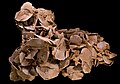 Gypsum desert rose (from Mineral)
 Perfect basal cleavage as seen in biotite (black), and good cleavage seen in the matrix (pink orthoclase). (from Mineral)
 Pyrite (from Lustre (mineralogy))
 Mohs Scale versus Absolute Hardness (from Mineral)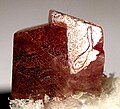
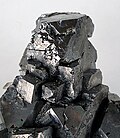
 Epidote often has a distinctive pistachio-green colour. (from Mineral)
 Native gold. Rare specimen of stout crystals growing off of a central stalk, size 3.7 x 1.1 x 0.4 cm, from Venezuela. (from Mineral)


In the news
- 18 May 2026 – Australia–China relations
- Australian treasurer Jim Chalmers orders several China-linked shareholders to divest their stakes in Northern Minerals under foreign investment laws aimed at protecting the country's rare earths sector. (AFP via HKFP)
Did you know ...?

- ... that the uncommon mineral aguilarite (pictured), named for discoverer Ponciano Aguilar, is known from the Americas, Europe, Asia, and Australasia?
- ... that the thallium-rich mineral lorandite from the Allchar deposit is being used to determine the flux of solar neutrinos?
- ... that seamanite is known from only four locations, with three in Michigan and one in Australia?
- ...that jerrygibbsite ((Mn,Zn)9(SiO4)4(OH)2) is a rare mineral of which there are only five known samples in the world?
Subcategories

- Select [►] to view subcategories
Topics
| Overview | | |
|---|---|---|
| Common minerals | ||
Gemmological classifications by E. Ya. Kievlenko (1980), updated | |||||||||
| Jewelry stones |
| ||||||||
| Jewelry-Industrial stones |
| ||||||||
| Industrial stones |
| ||||||||

Associated Wikimedia
The following Wikimedia Foundation sister projects provide more on this subject:
-
 Commons
Free media repository -
 Wikidata
Free knowledge base -
 Wikiquote
Collection of quotations -
 Wikisource
Free-content library -
 Wikiversity
Free learning tools -
 Wiktionary
Dictionary and thesaurus


References


