


Introduction

Erotica is art, literature or photography that deals substantively with subject matter that is erotic, sexually stimulating or sexually arousing. Some critics regard pornography as a type of erotica, but many consider them to be separate. Erotic art may use any artistic form to depict erotic content, including painting, sculpture, drama, film or music. Erotic literature and erotic photography have become genres in their own right. Erotica also exists in a number of subgenres including gay, lesbian, women's, monster, tentacle and bondage erotica.
Curiosa are curiosities or rarities, especially unusual or erotic books. In the antiquarian book trade, pornographic works are often listed under "curiosa", "erotica" or "facetiae". (Full article...)
Pornography (colloquially called porn, porno, and XXX, pronounced "triple X") is sexually suggestive material, such as a picture, video, text, or audio, intended for sexual arousal. Made for consumption by adults, pornographic depictions have evolved from cave paintings, some forty millennia ago, to modern-day virtual reality presentations. A general distinction of adults-only sexual content is made, classifying it as pornography or erotica.
The oldest artifacts considered pornographic were discovered in Germany in 2008 and are dated to be at least 35,000 years old. Human enchantment with sexual imagery representations has been a constant throughout history. However, the reception of such imagery varied according to the historical, cultural, and national contexts. The Indian Sanskrit text Kama Sutra (3rd century CE) contained prose, poetry, and illustrations regarding sexual behavior, and the book was celebrated; while the British English text Fanny Hill (1748), considered "the first original English prose pornography," has been one of the most prosecuted and banned books. In the late 19th century, a film by Thomas Edison that depicted a kiss was denounced as obscene in the United States, whereas Eugène Pirou's 1896 film Bedtime for the Bride was received very favorably in France. Starting from the mid-twentieth century on, societal attitudes towards sexuality became lenient in the Western world where legal definitions of obscenity were made limited. In 1969, Blue Movie by Andy Warhol became the first film to depict unsimulated sex that received a wide theatrical release in the United States. This was followed by the "Golden Age of Porn" (1969–1984). The introduction of home video and the World Wide Web in the late 20th century led to global growth in the pornography business. Beginning in the 21st century, greater access to the Internet and affordable smartphones made pornography more mainstream. (Full article...)
Selected article
Jacobson v. United States, 503 U.S. 540 (1992), is a case decided by the United States Supreme Court regarding the criminal procedure topic of entrapment. A narrowly divided court overturned the conviction of a Nebraska man for receiving child sexual abuse material through the mail, ruling that postal inspectors had implanted a desire to do so through repeated written entreaties.
It was the first time the court had considered an entrapment case other than regarding controlled-substance enforcement. By relying exclusively on whether the defendant had a predisposition to commit the crime, the court seemed to have finally resolved a lingering issue in its previous decisions on the subject.
The decision was considered as a rare triumph for defendants before a conservative court that frequently sided with prosecutors. Guidelines for federal law enforcement agents were changed in its wake, and it was described as having brought entrapment "back from the dead". (Full article...)
Selected work of erotic literature
Tropic of Cancer is an autobiographical novel by Henry Miller that is best known as "notorious for its candid sexuality", with the resulting social controversy considered responsible for the "free speech that we now take for granted in literature". It was first published in 1934 by the Obelisk Press in Paris, France; however, this edition was banned in the United States. Its publication in 1961 in the United States by Grove Press led to obscenity trials that tested American laws on pornography in the early 1960s. In 1964, the U.S. Supreme Court declared the book non-obscene. It is regarded as an important work of 20th-century literature. (Full article...)
Slideshow of selected contemporary images
 Pornographic actor and director Miles Long (submitted by self)
 Figure 12 in Zillmann, Dolf: "Effects of Prolonged Consumption of Pornography", included in the Report of the Surgeon General's Workshop on Pornography and Public Health, United States Public Health Service, Office of the Surgeon General, August 4, 1986
 Katsuni - French pornographic actress.
 Pornographic film set. Pictured from left to right: Cali Chase, Mikey Butders, and a photographer identified as "Nicole."
 Karenjit Kaur Vohra known by her stage nameSunny Leone, is a Canadian-born Indian-American actress and model, currently active in Indian film industry. She is a former pornstar. In 2016 she was chosen as one of 100 Women (BBC).
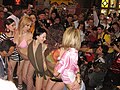 Evil Angel performers
 The COLT Studio Group, San Francisco
 Shy Love at AVN Adult Entertainment Expo 2012
 Pierre Woodman filming in Australia
 British pornographic actor, director and producer Keiran Lee attending the XBIZ Award ceremony in 2016.
 A Fluffer hands gay porn performers Jake Starr (seated) and Erik Grant (lying) items needed for a scene in the 2008 Lucas Entertainment production Pounding the Pavement.
 Hentai style of art, originally from Japan
 Sculpture by Kanayi Kunhiraman
 Carmen Luvana, Adult Entertainment Expo 2008

 Lord Longford, British politician and Anti-pornography campaigner
 Valentina Nappi at the AVN Awards Show, Las Vegas, Nevada on 21 January 2017


 Transsexual pornographic actress Erica Andrews


 Sean Michaels - pornographic actor.
 "Shiro Post", box for disposing of violent or sexual literature, Japan

 Avedon Carol, United States Feminist; anti-Censorship and Civil liberties campaigner; and a researcher in the field of Sex crime, residing in England
 Hugh Hefner with Karissa Shannon, Dasha Astafieva, and Kristina Shannon
 Pornographic DVDs, Japan, "Kawaii" section

- Jade-Blue Eclipse
 Audrey Hollander - American porn star
 Sasha Grey attending the AVN Awards Show at the Palms Casino Resort, Las Vegas, Nevada on January 9, 2010
 Xaviera Hollander, author and former Sex worker


 Scene from Second Life computer game


 Silvia Saint, wearing a Bomis tee-shirt (a site previously run by Jimmy Wales, the founder of Wikipedia).
 Playmate of the Year and People for the Ethical Treatment of Animals spokesperson Pamela Anderson, signing DVDs at the USS Halsey
 Erotic actress and public health advocate Sharon Mitchell.
 Bondage pornography, showing classic "wrist to ankle" rope hogtie. Other bondage methods depicted are breast bondage, elbow bondage, head to ankle tie, knees tied, and a crotch rope. Model is also wearing a muzzle gag.
 Rebeca Linares at AVN Adult Entertainment Expo 2009
![Image 57Yaoi (/ˈjaʊi/; Japanese: やおい, Japanese: [ja.o.i]), primarily known as boys' love (BL) (ボーイズ ラブ bōizu rabu) in Japan, is a Japanese genre of fictional media focusing on romantic or sexual relationships between male characters, typically marketed for a female audience and usually created by female authors.](http://wiki.nitrosworld.org/proxy-img/http%3A%2F%2Fupload.wikimedia.org%2Fwikipedia%2Fcommons%2Fthumb%2Fc%2Fc9%2FLesson_1_Private_Tutor.jpg%2F120px-Lesson_1_Private_Tutor.jpg) Yaoi (/ˈjaʊi/; Japanese: やおい, Japanese: [ja.o.i]), primarily known as boys' love (BL) (ボーイズ ラブ bōizu rabu) in Japan, is a Japanese genre of fictional media focusing on romantic or sexual relationships between male characters, typically marketed for a female audience and usually created by female authors.
Yaoi (/ˈjaʊi/; Japanese: やおい, Japanese: [ja.o.i]), primarily known as boys' love (BL) (ボーイズ ラブ bōizu rabu) in Japan, is a Japanese genre of fictional media focusing on romantic or sexual relationships between male characters, typically marketed for a female audience and usually created by female authors. Joanna Jet - transsexual pornographic actress and director
 Stormy Daniels attending the AVN Adult Entertainment Expo at the Sands Convention Center, Las Vegas, Nevada on January 8, 2010.
 SuicideGirls model "Tiffini"
 Penthouse Pet Dani Daniels, wearing Penthouse key necklace
 Performers at Eros PyramideStrip club, 2009


 Dean Flynn and Chi Chi LaRue
 Daisy Marie posing with a fan at the AVN Adult Entertainment Expo 2008
 Swedish/Tanzanian Playmate of the Year Ida Ljungqvist
 PhotographerSuze Randall
 American pornographic actor Ron Jeremy. One of top Porn Stars of All Time.

 Nude photography is the creation of any photograph which contains an image of a nude or semi-nude person, or an image suggestive of nudity. Nude photography is undertaken for a variety of purposes, including educational uses, commercial applications and artistic creations. The exhibition or publication of nude photographs may be controversial, more so in some cultures or countries than in others, and especially if the subject is a minor.
 Example of Erotic photography
 Michele_Merkin - Glamour photography


.jpg)

.jpg)


.jpg)


.jpg)


.jpg)


.jpg)


![Image 57Yaoi (/ˈjaʊi/; Japanese: やおい, Japanese: [ja.o.i]), primarily known as boys' love (BL) (ボーイズ ラブ bōizu rabu) in Japan, is a Japanese genre of fictional media focusing on romantic or sexual relationships between male characters, typically marketed for a female audience and usually created by female authors.](http://wiki.nitrosworld.org/wiki/File:Lesson_1_Private_Tutor.jpg)
.jpg)


Slideshow of selected historical images
 Katsushika Hokusai, "The Adonis Plant (Fukujusô)" Woodblock, ca. 1815, Japan Shunga
 artwork by Gerda Wegener
 Lasse Braun and Brigitte Maier, 1976
 15-year old girl from Vienna. Photo from the book Der Körper des Kindes und seine Pflege by Carl Heinrich Stratz (1909)
 French postcard, 1880s
 Sketch by Gustav Klimt
 Artwork by Martin van Maële
 The Venus of Willendorf prehistoric sculpture
 Egon Schiele - Kneeling Girl, Resting on Both Elbows
 Erotic art, 18th century India
 Classical Greek Bas Relief showing "Cowgirl" position
 Artwork by Johann Heinrich Füssli
 Lakshmana Temple, Khajuraho, India, taken by User:Ggia
 Photograph by Wilhelm von Gloeden
 Illustration from Balkangreuel by Gottfried Sieben
 Erotic detail from the Vishwanath temple at the Khajuraho Group of Monuments
 Vintage nude erotic picture (c. 1855) from the Uwe Scheid Collection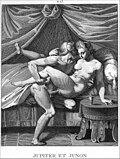
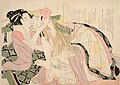 Hokusai, Untamed Lion, From the series Picture Book Patterns of Couples (Ehon tsui no hinagata), c. 1812
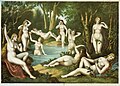 Female Bathers No. 4, 1886
 Illustration from Juliette by the Marquis de Sade.
 Sculpture, Egypt, ca 300 BCE
 Illustration of a toilet
 Gustav Klimt, Fishblood, 1898.
 Vixen! 1968 movie poster
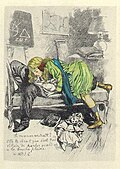 Illustration from La Grande Danse macabre des vifs, Martin van Maële (1905)
 Iconic pinup of Betty Grable, during World War II
 Drawing of a Roman fresco by César Famin
 Nineteenth century nude photograph.
 Photograph by Félix-Jacques Moulin, between 1851 and 1855
 Promises! Promises! poster, featuring Jayne Mansfield
 Unidentified nude, 1920s
 Warren Cup detail
 Drawing by Anton Peschka, 1925
 A rape scene by Utagawa Kuniyoshi (ca.1797-1861).
 Illustration from Le livre de la Marquise by Konstantin Somov
 Kama Sutra illustration (19th century?)
 Two 16 year old mulatto from Cairo, from anthropometry text, 1904
 Artwork by William Adolphe Bouguereau
 Artwork by Egon Schiele
 Kama Sutra Position.
 Sleep, by Gustave Courbet, 1866
 Miniature from 15th century Persian book
 Nymphs and Satyr, by William Adolphe Bouguereau
 Erotic art from China, for The Carnal Prayer Mat
 Bettie Page magazine layout
 Photograph by Wilhelm von Plüschow
 L'Origine du monde (The Origin of the World), 1866 painting by Gustave Courbet, at museum. Better image at Image:Origin-of-the-World.jpg
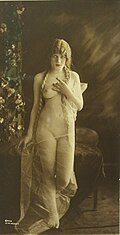 Photograph by Charles Gilhousen
 Prehistoric art
 Peep show at carnival
 Pool in a Harem, Jean-Léon Gérôme, ca. 1876. Example of Orientalist eroticism
 Nights of Horror, panel by Joe Shuster (public domain)
 Artwork by Franz von Bayros
 Cunnilingus portrayed at Pompeii - Source: John R. Clarke: Ars Erotica. Darmstadt: Primus 2009
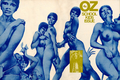 OZ Magazine number 28
 Roman oil lamp portraying intercourse
 Two nudes standing. ca.1850. Daguerreotype. 14.6 × 14.11 cm (5.7 × 5.6 in). The Metropolitan Museum of Art, New York
 Artwork by Achille Devéria, 1840
 étude pour Le Manteau légendaire (English: Study For Le Manteau Legendaire), Léon Comerre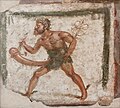
 Kama Sutra illustration (19th century?)
 Photograph by Wilhelm von Gloeden

 Erotic art from China
 Satirical cartoon by James Gillray
 Photograph by Wilhelm von Gloeden
 Hans Sebald Beham: Die Nacht, engraving, 1548
 Storyville, New Orleans, portrait by E. J. Bellocq, circa 1912
 The Garden of Aphrodite, Franz von Bayros
 19th century photograph
 Erotic art, India, 18th century
 Silver gelatin print by Charles Gilhousen (1915)
 Cunnilingus, Orientalist art referencing the Ottoman era
 Shunga, Japan
 Erotic scene. Rim of an Attic red-figure kylix, c. 510 BC., ancient Greece
 Artwork for Lysistrata by Aubrey Beardsley
 Hokusai, Untitled (Plate No. 4) From the series Picture Book Patterns of Couples (Ehon tsui no hinagata), c. 1812
 Striporama 1953 movie poster featuring Lili St. Cyr
 Sainte-Thérèse, Félicien Rops
 Virginia Biddle, 1927, by Alfred Cheney Johnston
 Drawing by Roger de La Fresnaye
 Oz magazine issue 31
 Artwork by Peter Fendi
 Photograph by Wilhelm von Plüschow
 Two Lovers, by Reza Abbasi.
 Page from the Bizarre Museum comic
 Kama Sutra illustration (19th century?)
 Marayat Andriane (1967)
- Tinted photograph credited to Julian Mandel, circa 1920

- Photograph credited to Julian Mandel, circa 1920
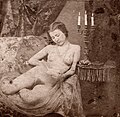 1860s early photograph
 “Cleo”, Kenneth Mclnnis (1915)
 Illustration for Théophile Gautier's poem Musée Secret
 Shunga illustration, Japan
 Les Sataniques. Le Sacrifice, Félicien Rops
 Artwork by Antonio Vargas
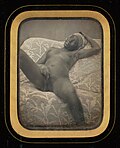 Nude Study of a Black Female daguerrotype, France, circa 1850s
 Johann Nepomuk Geiger, watercolor, 1840
 Phryne before the Areopagus, Jean-Léon Gérôme. (1861) Phryne, a famous hetaera (courtesan) of Ancient Greece, being disrobed before the Areopagus. Phryne was on trial for profaning the Eleusinian Mysteries, and is said to have been disrobed by Hypereides, who was defending her, when it appeared the verdict would be unfavourable. The sight of her nude body apparently so moved the judges that they acquitted her. Some authorities claim that this story is a later invention.
 Illustration from Le livre de la Marquise by Konstantin Somov
 Modern Pygmalion, Thomas Rowlandson
 Goodbye, Thomas Rowlandson
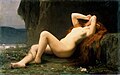 Mary Magdalene in the Cave by Jules Joseph Lefebvre

- French postcard, model: Alice Prin


 Ziegfeld girl Dorothy Flood, by Alfred Cheney Johnston (1920s)
 Early daguerrotype, Auguste Belloc, circa 1850-1855
 Artwork by Gerda Wegener
 Shunga illustration, Japan
 Artwork by Otto Schoff
 Shunga, Japan (ca 1750)
 The great epidemic of pornography. 19th-century French illustration
 '"Halbtakt" by Otto Mueller, ca. 1925
 The Fisherman and the Syren, Frederic Leighton, circa 1856-1858
 Artwork by Heinrich Lossow
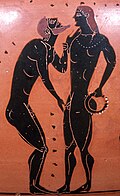 Traditional pederastic courtship scene on an Athenian black-figure amphora from the 5th century B.C.
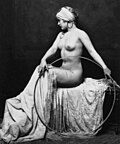 Photograph by Alfred Cheney Johnston
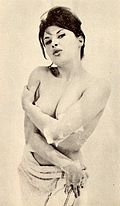 Photograph from Scamp, men's magazine, 1962
 Artwork by Eusebi Planas i Franquesa
 Early daguerrotype, Bruno Braquehais, circa 1850s
![Image 137Indian Princess, by Richard Borrmeister [de] (1888?)](http://wiki.nitrosworld.org/proxy-img/http%3A%2F%2Fupload.wikimedia.org%2Fwikipedia%2Fcommons%2Fthumb%2F0%2F01%2FRichard_Borrmeister_Indische_Prinzessin_1888.jpg%2F120px-Richard_Borrmeister_Indische_Prinzessin_1888.jpg) Indian Princess, by Richard Borrmeister (1888?)
Indian Princess, by Richard Borrmeister (1888?)


_-_n._0579.jpg)


_Patterns_of_Couples_(Ehon_tsui_no_hinagata),_c._1812.jpg)


.JPG)
,_Brooklyn_Museum_-_20110420.jpg)


,_Paris,_Petit_Palais.jpg)


_-_n._10510,_Galerie_Bassenge.jpg)


.jpg)


_-_n._0347_recto_-_Timbrata_a_secco_Gaetano_Pedo,_Roma.jpg)

.jpg)


_-_n._0488_-_Auch_ich_in_Arkadien,_p._139.jpg)


_From_the_series_Picture_Book()_Patterns_of_Couples_(Ehon_tsui_no_hinagata),_c._1812.jpg)


.jpg)


.jpg)


.jpg)


_-_01.jpg)


.jpg)


.jpg)


Eusebi_Planes-_Noble_Juego_del_Tresillo.JPG)
_Reclining_female_nude_1850s.jpg)
![Image 137Indian Princess, by Richard Borrmeister [de] (1888?)](http://wiki.nitrosworld.org/wiki/File:Richard_Borrmeister_Indische_Prinzessin_1888.jpg)
Did you know (auto-generated) -

- ... that the copyright holder of more than 2,000 pornographic films is the most prolific filer of copyright lawsuits in the US?
- ... that Burger Continental served dishes like "Chicken Erotica" to jurors in high-profile cases, including the trials of O. J. Simpson and the Menendez brothers?
- ... that in 2001, around 64 percent of all films produced in Malayalam were of the soft-porn variety?
- ... that a Japanese porn actor opened a restaurant that served poo-flavored curry?
- ... that Koh Masaki was one of the first gay pornographic film actors in Japan to openly appear in adult films without obscuring his identity?
- ... that while filming a music video for her debut album at a motel, Underscores had the police called on her by the motel staff because they thought she was shooting a pornographic film?
- ... that a 1998 documentary covers economic exploitation in post-communist gay pornography from Eastern Europe?
- ... that Rae Lil Black, who was at one point one of the 20 most popular models on Pornhub, left the adult industry and converted to Islam after visiting Malaysia?
Topics
| Pornography |
| ||||||||
|---|---|---|---|---|---|---|---|---|---|
| Opposition to pornography |
| ||||||||
| Views | |||||||||
| Media | |||||||||
| Possible effects | |||||||||
| People | |||||||||
| Events | |||||||||
| Miscellaneous | |||||||||
| See also | |||||||||


Categories

Related portals

.svg)


Associated WikiProjects
 |
 |
| Sexology and sexuality | Pornography |
Associated Wikimedia
The following Wikimedia Foundation sister projects provide more on this subject:
-
 Commons
Free media repository -
 Wikidata
Free knowledge base -
 Wikiquote
Collection of quotations -
 Wikisource
Free-content library -
 Wikiversity
Free learning tools -
 Wiktionary
Dictionary and thesaurus


