

The Cars PortalA car, or an automobile, is a motor vehicle with wheels. Most definitions of cars state that they run primarily on roads, seat 1-8 people, have four wheels, and mainly transport people rather than cargo. There are over 1.6 billion cars in use worldwide as of 2025. The French inventor Nicolas-Joseph Cugnot built the first steam-powered road vehicle in 1769, while the Swiss inventor François Isaac de Rivaz designed and constructed the first internal combustion-powered automobile in 1808. The modern car—a practical, marketable automobile for everyday use—was invented in 1886, when the German inventor Carl Benz patented his Benz Patent-Motorwagen. Commercial cars became widely available during the 20th century. The 1901 Oldsmobile Curved Dash and the 1908 Ford Model T, both American cars, are widely considered the first mass-produced and mass-affordable cars, respectively. Cars were rapidly adopted in the US, where they replaced horse-drawn carriages. In Europe and other parts of the world, demand for automobiles did not increase until after World War II. In the 21st century, car usage is still increasing rapidly, especially in China, India, and other newly industrialised countries. Cars have controls for driving, parking, passenger comfort, and a variety of lamps. Over the decades, additional features and controls have been added to vehicles, making them progressively more complex. These include rear-reversing cameras, air conditioning, navigation systems, and in-car entertainment. Most cars in use in the early 2020s are propelled by an internal combustion engine, fueled by the combustion of fossil fuels. Electric cars, which were invented early in the history of the car, became commercially available in the 2000s and widespread in the 2020s. The transition from fossil-fuel-powered cars to electric cars is a central feature of most climate change mitigation scenarios. (Full article...)
| ||||||||||||||||||||||||||||||||||||||||||||||||||||||||||||


.jpg)

 |
| Alfa Romeo 8C 2900B Touring Spider |
Selected biography -
.jpg)
Thomas Howard White (April 26, 1836 – June 22, 1914) was an American industrialist and philanthropist. In 1876 he founded the White Sewing Machine Company in Cleveland, Ohio, predecessor of White Consolidated Industries.
He was also an automotive pioneer through the White Motor Company, which went on to produce cars, trucks, buses and tractors. In 1913 he established the Thomas H. White Charitable Trust, which is still active as the Thomas H. White Foundation. (Full article...)
On this day June 8
- 1948 — Ferdinand Porsche completes the first Porsche prototype
Did you know...
- ...that the racing version of the Dauer 962 Le Mans, winner of 1994 24 Hours of Le Mans, is a roadcar converted from a Porsche 962 racecar, which dominated Le Mans, Group C and IMSA during the 1980s?
- ...that the 25 Millionth VW Golf rolled off the production line in Wolfsburg in March 2007? The first Golf started production in 1974, 33 years later the 1.4 litre TSI version became the 25 Millionth car.
- ...that the 2011 Ford Crown Victoria was the last car to offer a cassette tape player as an option?
- ...that the first production turbocharged cars were General Motors' A-body 1962 Chevrolet Corvair and Oldsmobile F-85?

- ...that Jeep introduced the 1993 Grand Cherokee and 2007 Wrangler in the same way — by driving them through a plate glass window?
- ...that a small number of Renault 20s, badged as Dacia 2000, were made in the 1980s by Dacia in Romania for Romanian communist dignitaries of that time?
- ...that the Autobianchi Primula was the Fiat's first automobile with the front-wheel drive, transverse engine setup and rack and pinion steering?
- ...that the Plymouth Sundance is a liftback, even though the outside appearance might suggest that it is a sedan?
- ...that the name Volvo really means 'I Roll?' That's how Volvo rolls.

Selected quote of the day
Topics
Part of a series of articles on cars | |||||||||||||
| Body |
| ||||||||||||
Exterior equipment |
| ||||||||||||


| By country |
| ||||||||||||
|---|---|---|---|---|---|---|---|---|---|---|---|---|---|
| Data | |||||||||||||
| History | |||||||||||||
| Manufacturers | |||||||||||||
| Organisations | |||||||||||||
| Related topics | |||||||||||||

General images
 A Chevrolet Suburban extended-length SUV weighs 3,300 kilograms (7,200 lb) (gross weight). (from Car)
 1946 GAZ-M20 Pobeda, one of the first mass-produced cars with a pontoon design (from History of the automobile)
 The Flocken Elektrowagen was the first four-wheeled electric car (from Car)
- The German Flocken Elektrowagen of 1888, perhaps the first electric car in the world (from History of the automobile)
 1924 Doble Model E (from History of the automobile)
 Steam machine of Verbiest, in 1678 (Ferdinand Verbiest) (from Car)
 Stuttgart, a cradle of the car with Gottlieb Daimler and Wilhelm Maybach working there at the Daimler Motoren Gesellschaft and place of the modern day headquarters of Mercedes-Benz Group and Porsche (from Car)
 The Präsident automobile (from History of the automobile)
 Model-T Ford car parked near the Geelong Art Gallery at its launch in Australia in 1915 (from History of the automobile)
 Ford Motor Company automobile assembly line in the 1920s (from Car)
 A Stanley Steamer racecar in 1903. In 1906, a similar Stanley Rocket set the world land speed record at 205.5 km/h (127.7 mph) at Daytona Beach Road Course. (from History of the automobile)
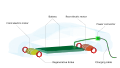 The weight of the low battery stabilises the car. This is a dual-motor, four-wheel-drive layout, but many cars only have one motor. (from Car)
 1982 Toyota Camry (from History of the automobile)
 Result of a serious car collision (from Car)
 The Selden Road-Engine (from History of the automobile)
 1974 Citroën DS (from History of the automobile)
 A replica of Richard Trevithick's 1801 road locomotive 'Puffing Devil' (from History of the automobile)
 Cugnot's 1771 fardier à vapeur, as preserved at the Musée des Arts et Métiers, Paris (from Car)

 1929 Austin Seven (from History of the automobile)
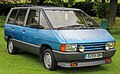 1987 Renault Espace (from History of the automobile)
 1959 Morris Mini-Minor (from History of the automobile)
 Car exhaust gas is one type of pollution
 A Tesla Model Y electric car, the world's best-selling electric car, and the best selling nameplate in 2023. (from History of the automobile)
 In the Ford Model T the left-side hand lever sets the rear wheel parking brakes and puts the transmission in neutral. The lever to the right controls the throttle. The lever on the left of the steering column is for ignition timing. The left foot pedal changes the two forward gears while the centre pedal controls reverse. The right pedal is the brake. (from Car)
 A car being assembled in a factory (from Car)
 Fiat 4 HP, the first car model produced by Italian manufacturer Fiat in 1899 (from History of the automobile)
 The first practical car, Carl Benz's Patent-Motorwagen Nr. 2 of 1886 (image from 1888) (from Car)
 The first automobile in Japan, a French Panhard-Levassor, in 1898 (from History of the automobile)
 Cugnot's steam wagon, the second (1771) version (from History of the automobile)
 The Ford Model T (foreground) and Volkswagen Beetle (background) are among the most mass-produced car models in history. (from History of the automobile)
 1929 Alfa Romeo 6C (from History of the automobile)

 The first production car: 1888 Benz Patent-Motorwagen Model 2 on loan from Science Museum, London to Automuseum Dr Carl Benz, Ladenburg, 2014 (from Car)
 Carl Benz, creator of the Benz Patent-Motorwagen, considered by many as the first modern car. (from History of the automobile)
 1955 Chevrolet Bel Air convertible (from History of the automobile)
 Road congestion is an issue in many major cities (pictured is Chang'an Avenue in Beijing). (from Car)
 The second Marcus car of 1888 (from History of the automobile)
 1926 Bugatti Type 35 (from History of the automobile)


,_réaménagement,_2012-04-05_39.jpg)


_02.jpg)


.jpg)


_Ascent_Sport_hatchback_(2018-11-02)_01.jpg)


Categories

Things you can do to help

If you wish to help, you can:
- Expand a short article
- - There are many short articles that require additional information.
- Update the car news
- - The car news needs to be up-to-date with current automotive events.
- Update the selected biography
- - Add a great biography to the portal.
- Find better selected pictures
- - We need pictures of the beautiful cars the world has to offer.
- - Upload picture for requested photographs of cars
- Join the WikiProject Automobiles
- - A place dedicated for enthusiasts dedicated to improving automobile coverage.
- Update the selected quote
- - Famous quotes from the past.
Associated Wikimedia
The following Wikimedia Foundation sister projects provide more on this subject:
-
 Commons
Free media repository -
 Wikidata
Free knowledge base -
 Wikiquote
Collection of quotations -
 Wikisource
Free-content library -
 Wikispecies
Directory of species -
 Wiktionary
Dictionary and thesaurus


