

The Drink Portal
A portal dedicated to all beverages
Introduction

A drink or beverage is a liquid intended for human consumption. In addition to their basic function of satisfying thirst, drinks play important roles in human culture. Common types of drinks include plain drinking water, milk, juice, smoothies and soft drinks. Traditionally warm beverages encompass coffee, tea, and hot chocolate. Caffeinated drinks that contain the stimulant caffeine have been consumed for centuries.
In addition, alcoholic drinks such as wine, beer, and liquor, which contain the psychoactive substance ethanol, have been part of human culture for more than 8,000 years. Non-alcoholic drinks typically refer to beverages that are traditionally alcoholic—such as beer, wine, or cocktails—but are produced with a very low alcohol by volume content. This category includes beverages that have undergone processes to remove or significantly reduce alcohol, such as non-alcoholic beers and de-alcoholized wines. (Full article...)
Selected article -

Although the preparation of pisco-based mixed beverages possibly dates back to the 1700s, historians and drink experts agree that the cocktail as it is known today was invented in the early 1920s in Lima, the capital of Peru, by the American bartender Victor Vaughen Morris. Morris left the United States in 1903 to work in Cerro de Pasco, a city in central Peru. In 1916, he opened Morris' Bar in Lima, and his saloon quickly became a popular spot for the Peruvian upper class and English-speaking foreigners. The oldest known mentions of the pisco sour are found in newspaper and magazine advertisements, dating to the early 1920s, for Morris and his bar published in Peru and Chile. The pisco sour underwent several changes until Mario Bruiget, a Peruvian bartender working at Morris' Bar, created the modern Peruvian recipe for the cocktail in the latter part of the 1920s by adding Angostura bitters and egg whites to the mix. (Full article...)
Did you know? -
- ... that communities around the Sirinumu Dam lack reliable access to electricity and drinking water?
- ... that 9 to 5 actor Dabney Coleman flew to New York City to pursue acting the day after an actor stopped by for a drink?
- ... that trembleuse cups and saucers enabled people with unsteady hands to drink hot beverages?
- ... that part of the bonus paid to bartender Gary Hoffman after he was selected in the 1984 NFL draft was a round of drinks for his friends?
- ... that The Banquet of Cleopatra depicts Cleopatra drinking a dissolved pearl to impress Mark Antony?
- ... that the chairman of the board of a Texas TV station was found to have died from drinking cyanide-laced cola?
General images -
 Peach kompot, traditional to several countries in Eastern and Southeastern Europe. (from List of national drinks)
 Palm wine is collected, fermented and stored in calabashes in Bandundu Province, Democratic Republic of the Congo. (from List of alcoholic drinks)
 Libyan tea with peanuts (from List of national drinks)
 Palm wine is an alcoholic beverage created from the sap of various species of palm trees such as the palmyra, date palms, and coconut palms. It is known by various names in different regions and is common in various parts of Africa, the Caribbean, South America, South Asia, Southeast Asia, and Micronesia. (from List of national drinks)
 A fully supplied bar with various types of drinks (from List of alcoholic drinks)
 Various bottles and containers of Russian vodka (from List of alcoholic drinks)
 A reservoir glass filled with a naturally colored verte absinthe, next to an absinthe spoon (from List of alcoholic drinks)
 Thai iced tea is a popular drink in Thailand and in many parts of the world. (from List of national drinks)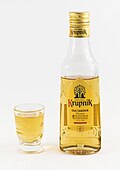
 A classical Chinese tea set and three gaiwan. (from List of national drinks)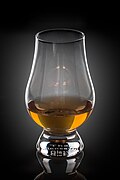
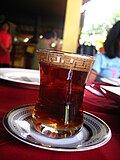 Per capita, people in Turkey drink more tea than in any other nation. (from List of national drinks)
 Mixed drinks: a non-alcoholic Shirley Temple (left) and alcoholic Cosmopolitan (right) (from List of drinks)
 Mai Tai is a cocktail made of rum, Curaçao liqueur, orgeat syrup, and lime juice. It is one of the characteristic cocktails in Tiki culture. (from List of national drinks)
 Coffee accessories in small shops in Baščaršija, Bosnia and Herzegovina. (from List of national drinks)
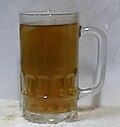 A glass mug of mugicha, a type of roasted barley tea (from List of drinks)
 Red wine is popular in many European countries, notably France and Italy. (from List of national drinks)
 Many in both Peru and Chile consider pisco sour their national drink. (from List of national drinks)
 Caipirinha is the national drink of Brazil and is made from cachaça, lime, and sugar. (from List of national drinks)
 A typical informal faikava in Tonga with the touʻa serving the men. (from List of national drinks)
 Ice milk and lemon tea (from List of drinks)
 2004 data of alcohol consumption per capita (age 15 or older), per year, by country, in liters of pure alcohol (from List of drinks)
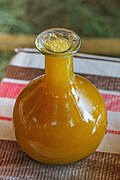 A berele glass containing tej, a honey wine brewed and consumed in Ethiopia. (from List of national drinks)
 Piña colada, a cocktail made with rum, cream of coconut, and pineapple juice, usually served either blended or shaken with ice. It may be garnished with either a pineapple wedge, maraschino cherry, or both. The drink originated in Puerto Rico. (from List of national drinks)
 Bottled beer (from List of drinks)
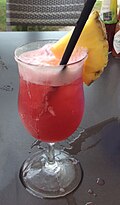 Singapore Sling, a gin-based sling cocktail from the city-state Singapore. (from List of national drinks)
 Clear vodka served with pickled cucumber – the usual way of consuming vodka in Slavic countries of the so-called "vodka belt". (from List of national drinks)
 Founders Old Curmudgeon old ale (from List of alcoholic drinks)
 The spritz is an Italian wine-based cocktail, commonly served as an apéritif across Italy. It consists of Prosecco, digestive bitters, and soda water. The original spritz veneziano uses Select as bitters and was created in Venice in 1920. (from List of national drinks)
 The espresso comes from the Italian esprimere, which means "to express," and refers to the process by which hot water is forced under pressure through ground coffee. (from List of national drinks)
 Mate, a traditional beverage in southern South America, especially in Argentina, Paraguay, Uruguay, and the south of Brazil. (from List of national drinks)
 Australian iced coffee served with ice-cream and coffee beans (from List of national drinks)
 Kaapi, Indian filter coffee. (from List of national drinks)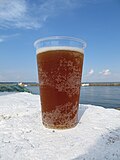
 A glass of grappa, a grape-based pomace brandy of Italian origin. Grappa is a protected name in the European Union. (from List of national drinks)
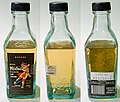 Various views of a bottle of mezcal. The "worm", which is actually the larval form of the moth Hypopta agavis that lives on the agave plant, can be seen in the middle image, at the bottom of the bottle. (from List of alcoholic drinks)
 Lemon, lime and bitters is commonly consumed in Australia and New Zealand. (from List of national drinks)
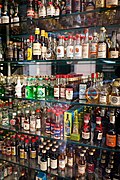 Various distilled drinks (from List of drinks)
 A hard cider produced in Michigan, U.S. (from List of alcoholic drinks)
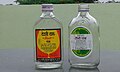 Desi daru from India (from List of alcoholic drinks)
 Bottles of Zhuyeqing (Chu Yeh Ching) baijiu produced in Shanxi, China. (from List of national drinks)
 Akpeteshie is a liquor produced by distilling palm wine or sugar cane, primarily in the region of Western Africa. (from List of national drinks)
 A display of spirits in a supermarket (from List of drinks)
 Cider (from List of drinks)


.JPG)


.jpg)


.jpg)


.jpg)


.jpg)


Selected image -

Selected biography -

Charles Leiper Grigg (May 11, 1868 – April 16, 1940) was an American businessman who invented 7 Up, once known as 7Up Lithiated Lemon Soda, in October 1929. Grigg became acquainted with the carbonated beverage business after moving to St. Louis, Missouri. Prior to inventing 7 Up, Grigg had created an orange soft drink named "Whistle" for the Vess Soda Company. It is still made and sold in St. Louis. (Full article...)
Selected quote -
| “ | Beer is proof that God loves us and wants us to be happy. | ” |
| — Benjamin Franklin |
Selected ingredient -

Caffeine is a bitter, white crystalline purine, a methylxanthine alkaloid, and is chemically related to the adenine and guanine bases of deoxyribonucleic acid (DNA) and ribonucleic acid (RNA). It is found in the seeds, fruits, nuts, or leaves of a number of plants native to Africa, East Asia, and South America and helps to protect them against herbivores and from competition by preventing the germination of nearby seeds, as well as encouraging consumption by select animals such as honey bees. The most common sources of caffeine for human consumption are the tea leaves of the Camellia sinensis plant and the coffee bean, the seed of the Coffea plant. Some people drink beverages containing caffeine to relieve or prevent drowsiness and to improve cognitive performance. To make these drinks, caffeine is extracted by steeping the plant product in water, a process called infusion. Caffeine-containing drinks, such as tea, coffee, and cola, are consumed globally in high volumes. In 2020, almost 10 million tonnes of coffee beans were consumed globally. Caffeine is the world's most widely consumed psychoactive drug. Unlike most other psychoactive substances, caffeine remains largely unregulated and legal in nearly all parts of the world. Caffeine is seen as socially acceptable in most cultures and is encouraged in some.[vague] (Full article...)
Topics
| General topics: | Bartending • Bottling • Drinking • Drinking water • Bottled water • Mineral water • Coffee • Energy drink • Juice • Tea • Milk • Plant milk • Pasteurization • Refrigeration • Steeping • Water purification |
| Alcoholic beverages: | Beer • Brandy • Brewing • Caffeinated alcoholic drinks • Cider • Cocktails • Distillation • Fermentation • Hard soda • Liquor • Liqueur • Malt drink • Mead • Proof • Rice Wine • Schnapps • Vodka • Whiskey • Wine |
| Soft Drinks: | Carbonation • Cola • Orange soft drink • Frozen carbonated drink • Root beer • Soda water • Lithia water • |
| Miscellaneous: | Drink industry • Lemonade • Limeade • Orange drink • Slush (beverage) |
List articles


Subcategories

Related portals


WikiProjects
.svg)

WikiProject Food & Drink is an association of Wikipedians with an interest in culinary-related subjects. They have come together to co-ordinate the development of food and drink articles here on Wikipedia as well as the many subjects related to food such as foodservice, catering and restaurants. If you wish to learn more about these subjects as well as get involved, please visit the project.
 WikiProject Beer – covers Wikipedia's coverage of beer and breweries and microbreweries
 WikiProject Wine – aims to compile thorough and accurate information on different vineyards, wineries and varieties of wines, including but not limited to their qualities, origins, and uses.
| Child projects: | Task forces: (All inactive) |
| Related projects: | |
Things you can do
 |
Here are some tasks awaiting attention:
|
Associated Wikimedia
The following Wikimedia Foundation sister projects provide more on this subject:
-
 Commons
Free media repository -
 Wikidata
Free knowledge base -
 Wikiquote
Collection of quotations -
 Wikisource
Free-content library -
 Wikiversity
Free learning tools -
 Wiktionary
Dictionary and thesaurus


More portals


