
Jiong (Chinese: 囧; pinyin: jiǒng; Jyutping: gwing2) is a once obscure Chinese character meaning a "patterned window".[1] Since 2008, it has become an internet phenomenon and widely used to express embarrassment and gloom because of the character's resemblance to a sad facial expression.[2]

It has historically been used as a Chinese dictionary radical and has Shuowen Jiezi number 240, but it is not included among the Kangxi radicals, nor by the Table of Indexing Chinese Character Components.
Original meanings
editInternet emoticon
edit
The character for jiong is nowadays more widely used on the Internet as an ideographic emoticon representing a range of moods, as it resembles a person's face. It is commonly used to express ideas or feelings such as annoyance, shock, embarrassment, awkwardness, etc.
The use of jiong as an emoticon can be traced to 2005 or earlier; it was referenced on 20 January 2005 in a Chinese-language article on Orz.[3] The character is sometimes used in conjunction with orz, OTZ, or its other variants to form "囧rz", representing a person on their hands and knees (jiong forming the face, while r and z represent arms and legs, respectively) and symbolising despair or failure.
Encoding
editThe character is included in Unicode at U+56E7 (囧).[4] Unicode also includes U+518F (冏), which is considered a variant.[5]
| Preview | 囧 | 冏 | ||
|---|---|---|---|---|
| Unicode name | CJK UNIFIED IDEOGRAPH-56E7 | CJK UNIFIED IDEOGRAPH-518F | ||
| Encodings | decimal | hex | dec | hex |
| Unicode | 22247 | U+56E7 | 20879 | U+518F |
| UTF-8 | 229 155 167 | E5 9B A7 | 229 134 143 | E5 86 8F |
| Numeric character reference | 囧 | 囧 | 冏 | 冏 |
| Shift JIS[6] | 153 103 | 99 67 | ||
| EUC-JP[7] | 143 182 250 | 8F B6 FA | 209 200 | D1 C8 |
| GBK / GB 18030[8] | 135 229 | 87 E5 | 131 215 | 83 D7 |
| KPS 9566-2011[9] | 200 130 | C8 82 | ||
| Big5[10] | 202 168 | CA A8 | 202 106 | CA 6A |
| EUC-TW[11][12] | 142 162 163 200 | 8E A2 A3 C8 | 142 162 163 172 | 8E A2 A3 AC |
| CCCII / EACC[4][13][14] | 33 115 119 | 21 73 77 | 33 105 110 | 21 69 6E |
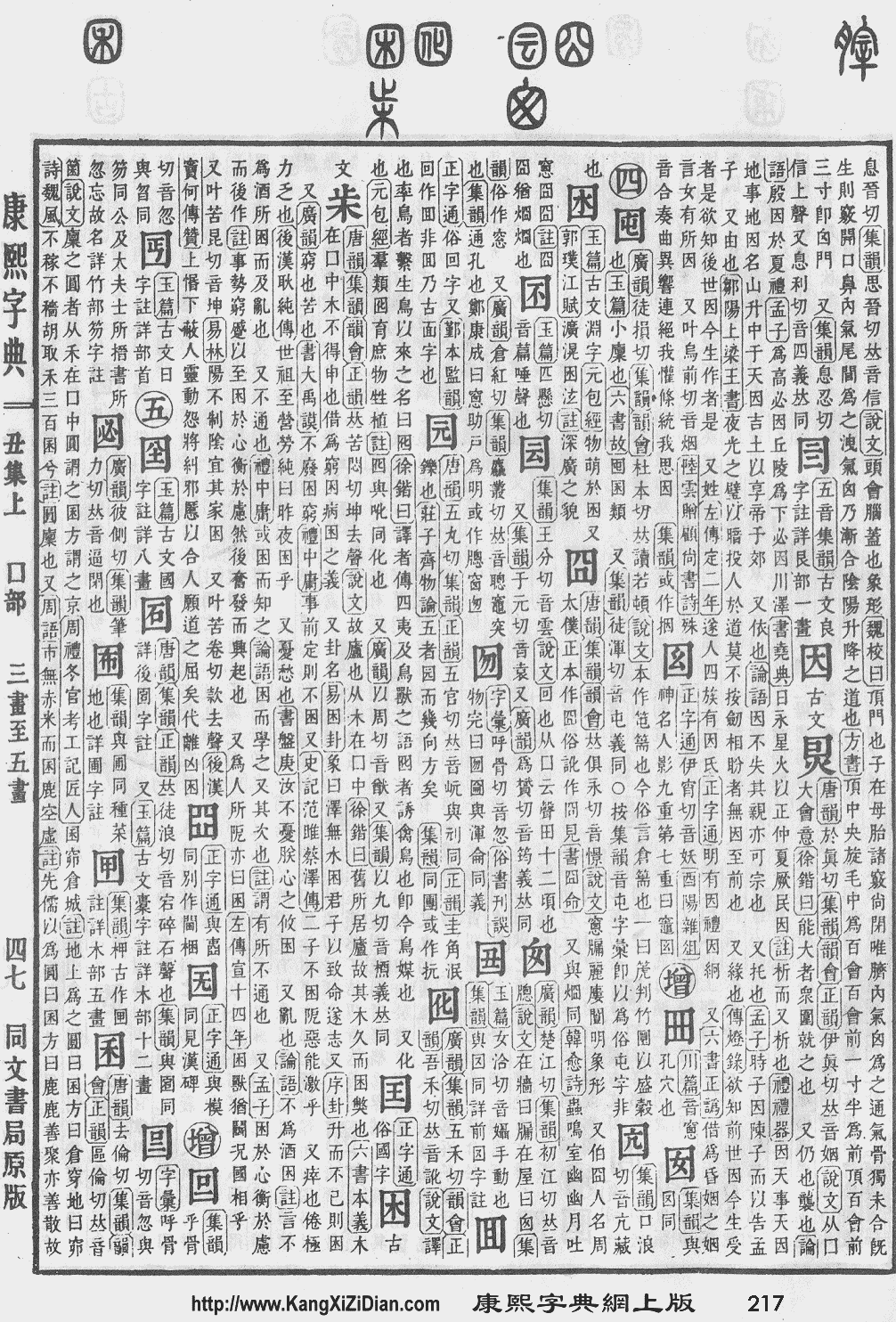
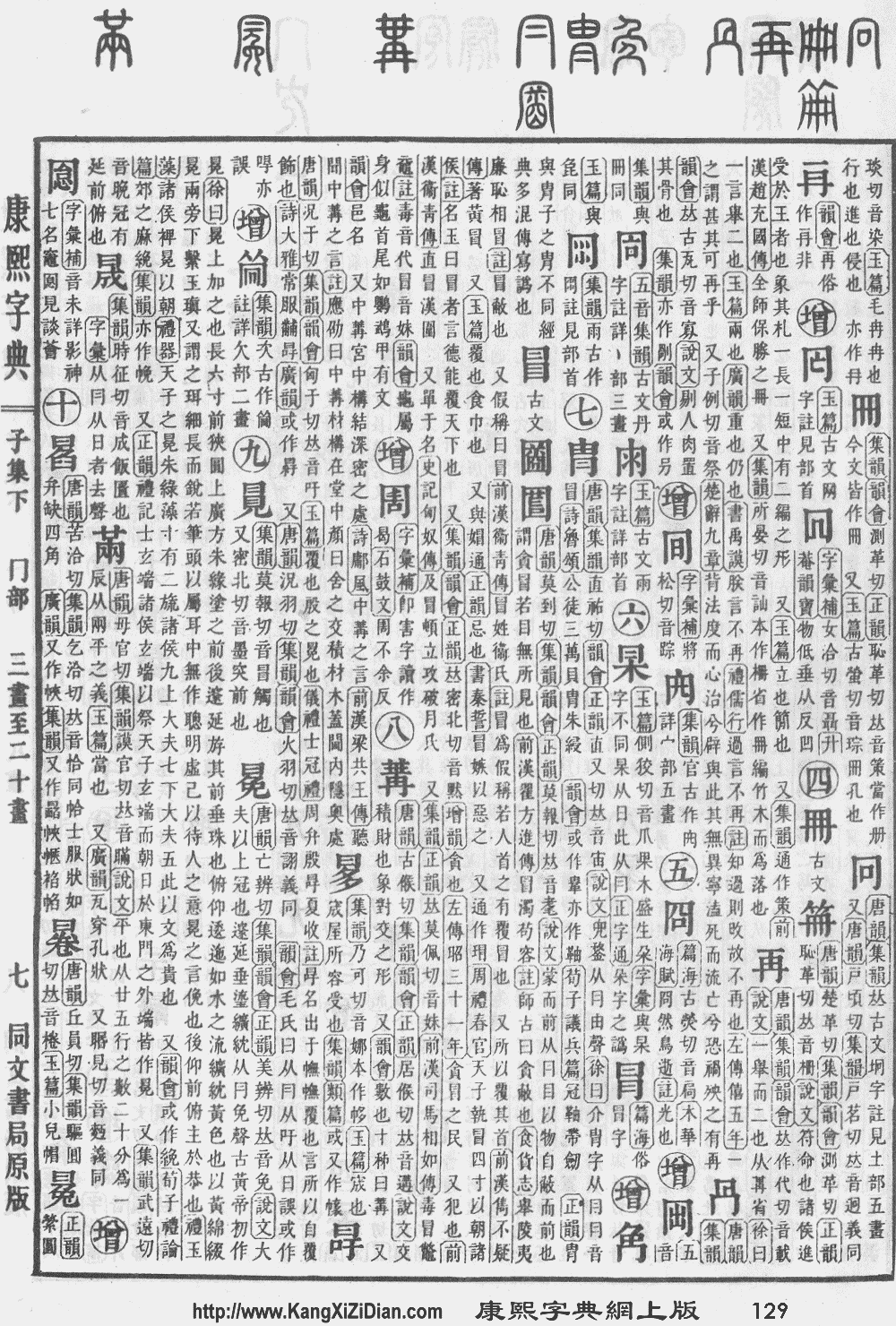
| Kangxi Dictionary reference[15][16] | Page 217, character 10 | Page 129, character 12 | ||
References
edit- ↑ Li & Li 2014, pp. 252–3.
- ↑ Hammond & Richey 2014, p. 141.
- ↑ "心情很orz嗎? 網路象形文字幽默一下". NOWnews.com. Archived from the original on 2012-11-15. Retrieved 2013-03-14.
- 1 2 "Unihan data for U+56E7". Unicode Consortium.
- ↑ "MJ008830". 文字情報基盤検索システム (in Japanese). Character Information Technology Promotion Council (CITPC).
辞書類等による関連字: 冏
- ↑ Unicode Consortium (2015-12-02) [1994-03-08]. "Shift-JIS to Unicode".
- ↑ Unicode Consortium; IBM. "EUC-JP-2007". International Components for Unicode.
- ↑ Standardization Administration of China (SAC) (2005-11-18). GB 18030-2005: Information Technology—Chinese coded character set.
- ↑ Chung, Jaemin (2018-01-05). "Information on the most recent version of KPS 9566 (KPS 9566-2011?)" (PDF). UTC L2/18-011.
- ↑ van Kesteren, Anne. "big5". Encoding Standard. WHATWG.
- ↑ "[囧] 2-2348". CNS 11643 Word Information. National Development Council.
- ↑ "[冏] 2-232C". CNS 11643 Word Information. National Development Council.
- ↑ "Unihan data for U+518F". Unicode Consortium.
- ↑ "EACC to Unicode". Library of Congress.
- ↑ "Page 217". Kangxi Dictionary.
- ↑ "Page 129". Kangxi Dictionary.
Bibliography
edit- Hammond, Kenneth J.; Richey, Jeffrey L. (3 December 2014). The Sage Returns: Confucian Revival in Contemporary China. SUNY Press. ISBN 978-1-4384-5493-1.
- Li, Yuming; Li, Wei (1 April 2014). The Language Situation in China. De Gruyter. ISBN 978-1-61451-365-0.
- Ru, Xin; Lu, Xueyi; Li, Peilin (25 March 2010). The China Society Yearbook. BRILL. ISBN 978-90-04-18221-9.