
 | This article may incorporate text from a large language model, which is prohibited in Wikipedia articles. (June 2026) |
Submission declined on 28 June 2026 by Gurkubondinn (talk).
Where to get help
How to improve a draft
You can also browse Wikipedia:Featured articles and Wikipedia:Good articles to find examples of Wikipedia's best writing on topics similar to your proposed article. Improving your odds of a speedy review To improve your odds of a faster review, tag your draft with relevant WikiProject tags using the button below. This will let reviewers know a new draft has been submitted in their area of interest. For instance, if you wrote about a female astronomer, you would want to add the Biography, Astronomy, and Women scientists tags. Editor resources
|  |
This draft is not adequately supported by reliable sources. Wikipedia's verifiability policy requires that all content be supported by reliable sources.
Declined by Hoary 14 days ago.
| |
 Comment: Which assertion is based on material in which reliable source? Hoary (talk)WWU 👍︎ 08:06, 28 June 2026 (UTC)
- Comment: In accordance with Wikipedia's Conflict of interest guideline, I disclose that I have a conflict of interest regarding the subject of this article. Garavi Ljovke (talk) 11:36, 27 June 2026 (UTC)
Branislav D. Marković | |
|---|---|
 Branislav Marković | |
| Born | 9 April 1948 Knjaževac, PR Serbia, FPR Yugoslavia |
| Died | 3 June 2010 (aged 62) Belgrade, Serbia |
| Education | Faculty of Fine Arts, University of Belgrade |
| Known for | Painting, drawing, illustration and printmaking |
| Movement | Poetic fantasy, magical realism |
Branislav D. Marković (9 April 1948 – 3 June 2010) was a Serbian academic painter, illustrator and graphic artist. His work is associated with poetic fantasy and magical realism and often dealt with mythological, archetypal and symbolic subjects.[1][2]
Biography
editBranislav Marković was born in Knjaževac, Serbia, in 1948.[3] He enrolled at the Academy of Fine Arts in the class of professor Đorđe Bošan and completed both his undergraduate and postgraduate studies under professor Zoran Petrović. He graduated in 1972 and completed his postgraduate studies in 1975.[4] He became a member of the Association of Fine Artists of Serbia (ULUS) in 1973.[5]
From 1970 onward, Marković regularly participated in solo and group exhibitions in Serbia and abroad, including exhibitions in Belgrade, Novi Sad, Zagreb, Paris and New York.[5] He lived and worked as a freelance artist in Belgrade until his death in 2010.[2] A posthumous retrospective exhibition of his works was organized at the Homeland Museum of Knjaževac in 2025.[3][6]
 Branislav Marković in his early years.
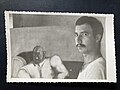 Portrait of the young painter in his studio.
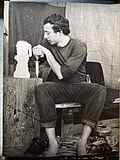 Marković during a sculpting session.
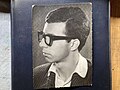 As a graduating student of the Knjaževac Gymnasium.


Artistic work
editMarković's work focused on historical, mythological and archetypal subjects, with particular attention to Slavic themes and tradition.[1] His paintings and drawings often include elements of fantasy, Christian iconography and pagan symbolism.[2]
Art historian Nikola Kusovac wrote that broader civilizational and cosmological motifs were an important part of Marković's work.[5]Kusovac also noted the frequent use of symbols such as shells and spirals, which he interpreted as references to eternity, cyclical time and the origins of life.[5]
Marković is also known for his pen-and-ink drawings, which received particular attention from art critics.[7]
Pen and ink drawings
edit


Oil paintings
edit


Artistic poetics and early works
editMarković rarely wrote about his own work and left few theoretical texts on his artistic practice. In 1996, the City of Belgrade assigned him a studio at 19 Kosančićev Venac through the Association of Fine Artists of Serbia (ULUS). The studio was located opposite the site of the former National Library of Serbia, which was destroyed during the German bombing of Belgrade in 1941.[8]
After encouragement from the art historian Zdravko Vučinić, Marković wrote a short text on his artistic ideas that was published in the introductory part of the monograph Urezi i zarezi (Incisions and Commas). In this text, he described drawing and painting as closely connected processes and referred to the blank surface of paper as the space in which his artistic worlds were created.[5]
Marković wrote that artistic creation involved both thought and emotion and believed that every completed work acquired an independent existence separate from its author. He also expressed the view that every human being possesses creative potential and, when describing the effort involved in drawing with pen and ink, quoted Umberto Eco's novel The Name of the Rose: "Three fingers hold the pen, but the whole body works. And it hurts."[5]
The title of the monograph was inspired by the incisions carved into an old oak post in the courtyard of his childhood home, which Marković regarded as a metaphor for the creative act. He described drawing as an inner necessity and viewed art as an authentic human response to life's experiences.[5]
Marković's interest in art began in early childhood. During primary school he made his first independent drawings of animals and birds in a sketchbook.[5] In the summer of 1958 he completed his first sculptural work, a relief carved from yellow sandstone depicting an elderly peasant wearing a traditional cap and holding a walking stick.[5] He regarded the landscape of his childhood in Knjaževac as an important source of artistic inspiration.[5]
His first visits to the City Library in Knjaževac in 1955 inspired a lifelong interest in books.[5] During his school years he also experimented with sculpture, modelling a plaster work entitled Girl's Head and, in 1962, creating a plaster cast of a boy with a ball that remained on display in his school for many years.[5]
Illustrations and book design
editA distinctive part of Branislav Marković's artistic oeuvre consists of his illustrations for literary works, which grew out of his deep affinity for poetry. His work in book design began in 1983, when he collaborated on the book Rečnik pesničkih slika ("Dictionary of Poetic Images") by Jovan Ćirilov, for which he created thirty-five drawings using a combined technique. The book was published in 1985 by the publishing house Knjaževačke novine.[5]
His illustrations also enriched the poetry collections Oro oko grotla by Zlata Kocić (1990) and Belino crni razgovori by Tomislav Mijović (1995). He also collaborated on Olivera Đurić's book Vodič kroz istoriju muzike ("A Guide to the History of Music"), published in 2007.
For his illustrations he received the Golden Pen of Belgrade award in 1987, as well as the Golden Pen of Politikin Zabavnik. These recognitions enabled him to publish illustrations regularly in Politikin Zabavnik over the following years, producing more than forty works, primarily inspired by science fiction. His drawings and illustrations also appeared in the magazines Književna reč, Politika, Književni glasnik and Razvitak.[5]
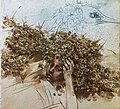 Illustration Imagination from Jovan Ćirilov's book Dictionary of Poetic Images, 1985.
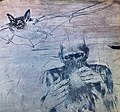 Illustration Night from Jovan Ćirilov's book Dictionary of Poetic Images, 1985.
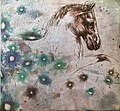 Illustration Stars from Jovan Ćirilov's book Dictionary of Poetic Images, 1985.
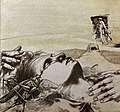 Illustration Dream from Jovan Ćirilov's book Dictionary of Poetic Images, 1985.
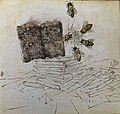 Illustration Word from Jovan Ćirilov's book Dictionary of Poetic Images, 1985.
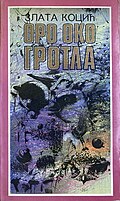 Cover illustration for Zlata Kocić's poetry collection Oro oko grotla, 1990.
 Cover illustration for the magazine Razvitak, July–October 1977 issue.
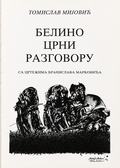 Illustration for Tomislav Mijović's book Belino crni razgovori, 1994.
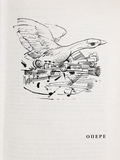 Illustration for Olivera Đurić's book A Guide to the History of Music, 1993.
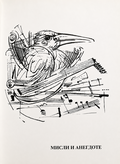 Illustration for Olivera Đurić's book A Guide to the History of Music, 1993.
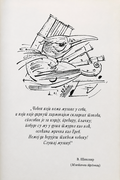 Illustration for Olivera Đurić's book A Guide to the History of Music, 1993.
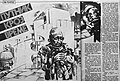 Traveller Through Time, illustration for Politikin Zabavnik, 1988.
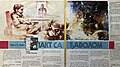 Pact with the Devil, illustration for Politikin Zabavnik, 1988.


Graphic works and serigraphy
editIn addition to drawing and painting, Branislav Marković also worked in serigraphy. His collaboration with the printmaker Miodrag Bata Knežević began in late 1980, and the first prints (Morning and Bird) were produced in June 1981. During this collaboration, around forty graphic prints were created, enabling the artist to transfer difficult-to-achieve visual effects from his drawings and oil paintings into another medium. His graphic works are held in private and museum collections throughout the former Yugoslavia, from Maribor, Ljubljana and Split to Belgrade, Novi Sad, Sarajevo, Čačak and Skopje. The collaboration between Marković and Knežević concluded in the spring of 1995, after which the artist gradually discontinued his work in serigraphy and, following the events of 1996, abandoned the technique altogether.[5]
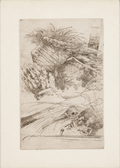 Drypoint print, untitled.
 Spring, serigraph, 42.5 × 47 cm, 1984.
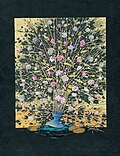 Blue Glass, serigraph, 80 × 65 cm, 1993.
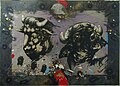 Field of Stars, serigraph, 100 × 70 cm, 1992.
 Rainbow, serigraph, 100 × 70 cm, 1992.


Dry pastel technique and commercial period (1996–1999)
editIn the late 1990s, due to unfavorable circumstances, Marković worked intensively in dry pastel, producing still lifes and landscapes commissioned by a private collector. These commercial works provided him with a stable income for everyday life and for the education of his children.[5]
This period lasted approximately three years and ended in the spring of 1999, when the client discontinued the commissions because of the crisis caused by the NATO bombing of Yugoslavia. After this period, Marković continued to use dry pastel alongside his primary artistic disciplines.[5]
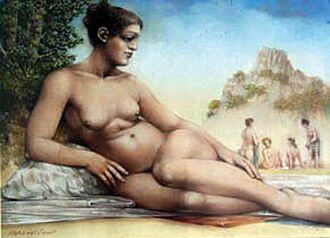 Bathing Women, dry pastel, date unknown.
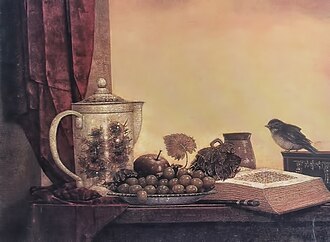 Still Life, dry pastel, 35 × 50 cm, 2001.


Solo exhibitions
edit- Solo exhibition of drawings, KNU Gallery, Belgrade (1974)
- Solo exhibition of drawings, Radulbeg Konak Gallery, National Museum, Zaječar (1977)
- Solo exhibition of drawings, Savremenici Gallery, Lazarevac (1980)
- Solo exhibition of drawings, Mali Salon, Novi Sad (1983)
- Solo exhibition of drawings, Zečević Gallery, Belgrade (1983)
- Solo exhibition of drawings, Oz Gallery, Belgrade (1990)
- Solo exhibition of drawings, ULUS Gallery, Belgrade (1993)
- Solo exhibition of drawings, National Museum, Zaječar (1995)
- Solo exhibition of drawings and paintings, Modern Gallery, Valjevo (2008)
- Solo exhibition of paintings, Pariski Krug Gallery, Belgrade (2009)[5]
- Posthumous retrospective exhibition of paintings and drawings, Homeland Museum of Knjaževac, Knjaževac (2025)[3][6]
Collective exhibitions and international presentations
edit- Contemporary Serbian Drawing, National Museum, Damascus, Syria (1982); transferred to Amman, Jordan (1983)
- 20th International Art Contest, Monte Carlo, Monaco (1986)
- Poetic Realism, XIMO43 Gallery, Basel, Switzerland (2000)
- Exposition de B. Mališić, S. Šefer, B. Marković, D. Živković et G. Mitrović, Cultural Centre of Serbia, Paris, France (2006)
- Included in the anthology project and monograph Pariski krug, published by Miodrag Ivanišević, Belgrade (2009)[5]
Chronological overview of group exhibitions
edit- The World We Live In – Second Exhibition of Drawings by Young Artists, Yugoslav People's Army Gallery, Belgrade (1973)
- Exhibition of Newly Admitted Members of ULUS (1973)
- Autumn '73, ULUS, Trade Union Hall, Belgrade (1973)
- Drawing '75, ULUS (1975)
- Fourth Triennial of Contemporary Yugoslav Drawing, Sombor (1975)
- October Salon, Cvijeta Zuzorić Pavilion, Belgrade (1976)
- Exhibition of Drawings, Graphic Collective Gallery, Belgrade (1976)
- Drawing and Small Sculpture, ULUS '76, Cvijeta Zuzorić Pavilion, Belgrade (1976)
- 58th ULUS Exhibition, Cvijeta Zuzorić Pavilion, Belgrade (1976)
- Sixth Zagreb Exhibition of Yugoslav Drawing, Zagreb (1977)
- October Salon, Cvijeta Zuzorić Pavilion, Belgrade (1978)
- Drawing and Small Sculpture '78, Cvijeta Zuzorić Pavilion, Belgrade (1978)
- Sixth Triennial of Contemporary Yugoslav Drawing, Sombor (1978)
- The World We Live In – Seventh Exhibition of Young Yugoslav Artists, Yugoslav People's Army Gallery, Belgrade (1980)
- Second Exhibition of Drawings Belgrade '80, NUBS Gallery, Belgrade (1980)
- New Belgrade Fantastic Art, Cultural Centre Gallery, Belgrade (1980)
- Artists of Savski Venac, Đuro Salaj Cultural Institution, Belgrade (1981)
- Drawing and Small Sculpture '82, Cvijeta Zuzorić Pavilion, Belgrade (1982)
- October Salon, Cvijeta Zuzorić Pavilion, Belgrade (1982)
- Ars et Animalia – From the Real to the Fantastic, Gallery 73, Belgrade (1982)
- 67th ULUS Exhibition, Cvijeta Zuzorić Pavilion, Belgrade (1982)
- Golden Pen of Belgrade '84, Cvijeta Zuzorić Pavilion, Belgrade (1984)
- Golden Pen of Belgrade '85, Belgrade Book Fair (1985)
- 25th Spring Exhibition of ULUS, Cvijeta Zuzorić Pavilion, Belgrade (1985)
- October Salon, Cvijeta Zuzorić Pavilion, Belgrade (1986)
- Golden Pen of Belgrade, Museum of Applied Arts, Belgrade (1987)
- Drawing and Small Sculpture, Cvijeta Zuzorić Pavilion, Belgrade (1987)
- Belgrade Drawing, NUBS Gallery, Belgrade (1987)
- Autumn Exhibition of ULUS, Cvijeta Zuzorić Pavilion, Belgrade (1988)
- Belgrade – Inspiration for Painters, Cultural Centre of Belgrade (1990)
- Autumn Exhibition of ULUS, Cvijeta Zuzorić Pavilion, Belgrade (1991)
- Spring Exhibition '92, Cvijeta Zuzorić Pavilion, Belgrade (1992)
- 15th Exhibition of Drawings, Belgrade (1993)
- Belgrade Biennial of Drawing and Small Sculpture, Cvijeta Zuzorić Pavilion, Belgrade (1993)
- Triennial of Contemporary Yugoslav Drawing, Art Autumn, Sombor (1994)
- Acquisitions and Donations of the Belgrade City Museum, 1973–1993 (1994)
- 36th Golden Pen of Belgrade and International Biennial of Illustration (1994)
- 37th Golden Pen of Belgrade, Cvijeta Zuzorić Pavilion, Belgrade (1995)
- First October Painting Salon, Cultural Centre, Knjaževac (1995)
- 39th Golden Pen of Belgrade '97 (1997)
- Kosančićev Venac 19, Belgrade (1998)
- Third Belgrade Biennial of Drawing and Small Sculpture, Cvijeta Zuzorić Pavilion, Belgrade (1998)
- First Annual Exhibition of Independent Artists of ULUS, Museum 25 May, Belgrade (1998)
- Watercolour and Drawing in Serbian Art, Belgrade Sales Gallery (1998)
- 42nd October Salon, Šabac (1998)
- Belgrade Then and Now, Belgrade Sales Gallery (1999)
- Watercolour and Drawing in Serbian Art, Belgrade Sales Gallery (1999)
- Spring Exhibition of ULUS, Belgrade (1999)
- Landscape in Contemporary Serbian Painting, Belgrade Sales Gallery (2000)
- Watercolour and Drawing in Serbian Art, ART EXPO, Belgrade (2001)
- Artists for Artists, Belgrade (2001)
- Petrovaradin 2001, Petrovaradin Gallery (2001)
- Contemporary Painters, Novi Pazar (2001)
- Nude, Guarnerius, Belgrade (2002)
- Petrovaradin 2002, Petrovaradin Gallery (2002)
- Contemporary Serbian Painters, Mladenovac (2002)
- Contemporary Serbian Painters, Meblo–Jugoeksport Gallery, Belgrade (2002)
- Belgrade Sales Gallery – Forty Years, Belgrade (2003)
- Binom, Belgrade (2004)
- Still Life, Pariski Krug Gallery, Belgrade (2006)
- Portrait – Between Reality and Imagination, Modern Gallery, Valjevo (2008)[5]
Awards
edit- Purchase Award at the exhibition The World We Live In (1973)
- Golden Pen of Politikin Zabavnik (1987)
- Second Prize at the exhibition Belgrade – Inspiration for Painters (1990)
- Second Prize at the 15th Exhibition of Drawings, Belgrade (1993)
- Commendation for the design of the book Dictionary of Poetic Images, 30th International Book Fair, Belgrade (1985)
- In recognition of his artistic achievements, a street in Knjaževac was named Branislav Marković Street.[9]
Acquisitions
edit- Exhibition The World We Live In – the City Assembly of Belgrade acquired the drawing Wounded Man (1973).
- October Salon – the Cultural Community of Serbia acquired the drawing Chrysanthemums (1978).
- Savremenici Gallery in Lazarevac acquired the drawing Broken Statues (1980).
- Sixth Zagreb Exhibition of Yugoslav Drawing – the drawing Mountain was acquired for the Print Cabinet of the Yugoslav Academy of Sciences and Arts (JAZU) (1977).
- 67th ULUS Exhibition – the print Morning was acquired (1982).
- Exhibition Belgrade – Inspiration for Painters – the painting Predvečerje was acquired by the Belgrade City Museum (1990).[5]
See also
edit- Association of Fine Artists of Serbia
- Homeland Museum of Knjaževac
References
edit- 1 2 Đorić, Dejan (25 November 2010). "Branislav Marković (1948–2010) – The Secret of the Proto-Slavic World". Pečat.
- 1 2 3 Đorić, Dejan (1 February 2020). "Looking Sideways: Remembering the Painter". Večernje novosti.
- 1 2 3 Ristić, Dragan (11 May 2025). "Retrospective Exhibition of Works by Branislav Bane Marković in the Homeland Museum of Knjaževac". RTS.
- ↑ "Retrospective Exhibition of Academic Painter Branislav Bane Marković in the Homeland Museum". Knjaževačka hronika. 7 May 2025.
- 1 2 3 4 5 6 7 8 9 10 11 12 13 14 15 16 17 18 19 20 21 Kusovac, Nikola (2009). "Letter to the Painter". Branislav Marković: Paintings and Drawings. Belgrade: Informatika. ISBN 978-86-84497-31-6.
- 1 2 "Beginning and End". Politika. 9 May 2025.
- ↑ "Retrospective Exhibition of Academic Painter Branislav Bane Marković at the Homeland Museum". Knjaževačka hronika. 7 May 2025.
- ↑ Đorić, Dejan (26 February 2025). "Looking Sideways: An Artistic Aristocrat". Večernje novosti.
- ↑ "Odluka o utvrđivanju naziva ulica i drugih delova naseljenih mesta na teritoriji opštine Knjaževac" (PDF) (in Serbian). Skupština opštine Knjaževac. 2019. p. 22. Retrieved 2026-06-28.
Sources
edit- Kusovac, Nikola. Branislav Marković: Paintings and Drawings. Belgrade: Informatika, 2009. ISBN 978-86-84497-31-6.
- Đorić, Dejan (25 November 2010). "Branislav Marković (1948–2010): The Secret of the Proto-Slavic World". Pečat.
- Đorić, Dejan (1 February 2020). "Looking Sideways: Remembering the Painter". Večernje novosti.
- Đorić, Dejan (26 February 2025). "Looking Sideways: An Artistic Aristocrat". Večernje novosti.
- Ristić, Dragan (11 May 2025). "Retrospective Exhibition of Works by Bane Marković at the Homeland Museum of Knjaževac". RTS.
- "Retrospective Exhibition of Branislav Bane Marković "Beginning and End" Opened at the Homeland Museum". Knjaževačka hronika. 13 May 2025.
- "Retrospective Exhibition of Academic Painter Branislav Bane Marković at the Homeland Museum". Knjaževačka hronika. 7 May 2025.
- "Beginning and End". Politika. 9 May 2025.
- Exhibition catalogue of paintings and drawings, Modern Gallery, Valjevo (2008).
- Kusovac, Nikola. Article published in Balkan Magazin, Belgrade (2010).
- Bošnjak, Sreta. Text published in Anthology of Serbian Painting of the Second Half of the 20th Century, fifth edition, Belgrade (2011).
LLM-generated pages with certain obvious signs of being machine generated may be deleted without notice.
These tools are prone to specific issues that violate our policies:
Instead, only summarize in your own words a range of independent, reliable, published sources that discuss the subject.
See the advice page on large language models for more information.