
1864–65 United States Senate elections
The 1864–65 United States Senate elections were held on various dates in various states. They occurred during the American Civil War and Abraham Lincoln's re-election. As these U.S. Senate elections were prior to the ratification of the Seventeenth Amendment in 1913, senators were chosen by state legislatures. Senators were elected over a wide range of time throughout 1864 and 1865, and a seat may have been filled months late or remained vacant due to legislative deadlock.[1] In these elections, terms were up for the senators in Class 2.
 | ||||||||||||||||||||||||||||||||||||||||||||||||||||||||||||||||||||
Various dates
| ||||||||||||||||||||||||||||||||||||||||||||||||||||||||||||||||||||
24 of the 72 seats in the United States Senate (with special elections) 25 seats needed for a majority | ||||||||||||||||||||||||||||||||||||||||||||||||||||||||||||||||||||
|---|---|---|---|---|---|---|---|---|---|---|---|---|---|---|---|---|---|---|---|---|---|---|---|---|---|---|---|---|---|---|---|---|---|---|---|---|---|---|---|---|---|---|---|---|---|---|---|---|---|---|---|---|---|---|---|---|---|---|---|---|---|---|---|---|---|---|---|---|
| ||||||||||||||||||||||||||||||||||||||||||||||||||||||||||||||||||||
 Results of the elections: Democratic gain Democratic hold Republican gain Republican hold Confederacy Barred from being seated | ||||||||||||||||||||||||||||||||||||||||||||||||||||||||||||||||||||
| ||||||||||||||||||||||||||||||||||||||||||||||||||||||||||||||||||||


The Republican Party gained two seats. Most of the Southern states were absent because of the Civil War.
Results summary
editSenate party division, 39th Congress (1865–1867)
- Majority party: Republican (37)
- Minority party: Democratic (9)
- Other parties: Unconditional Unionist (1); Unionist (1)
- Vacant: (24)
- Total seats: 72
Change in Senate composition
editBefore the elections
edit| V5 Seceded |
V4 Seceded |
V3 Seceded |
V2 | V1 | |||||
|---|---|---|---|---|---|---|---|---|---|
| V6 Seceded |
V7 Seceded |
V8 Seceded |
V9 Seceded |
V10 Seceded |
V11 Seceded |
D1 | D2 | D3 | D4 |
| UU5 Ran |
U1 | U2 | U3 Retired |
D10 Ran |
D9 Retired |
D8 Unknown |
D7 Retired |
D6 | D5 |
| UU4 | UU3 | UU2 | UU1 | R31 Ran |
R30 Ran |
R29 Retired |
R28 Ran |
R27 Ran |
R26 Retired |
| Majority → | R25 Unknown | ||||||||
| R16 | R17 | R18 | R19 | R20 | R21 | R22 | R23 Ran |
R24 Ran | |
| R15 | R14 | R13 | R12 | R11 | R10 | R9 | R8 | R7 | R6 |
| V16 | V15 | V14 | V13 | V12 | R1 | R2 | R3 | R4 | R5 |
| V17 | V18 | V19 | V20 | V21 | |||||
As a result of the elections
edit| V5 Seceded |
V4 Seceded |
V3 Seceded |
V2 | V1 | |||||
|---|---|---|---|---|---|---|---|---|---|
| V6 Seceded |
V7 Seceded |
V8 Seceded |
V9 Seceded |
V10 Seceded |
V11 Seceded |
D1 | D2 | D3 | D4 |
| UU2 | UU3 | UU4 | U1 | U2 | D9 Gain |
D8 Hold |
D7 Re-elected |
D6 | D5 |
| UU1 | R33 Gain |
R32 Gain |
R31 Re-elected new party |
R30 Hold |
R29 Hold |
R28 Hold |
R27 Re-elected |
R26 Re-elected |
R25 Re-elected |
| Majority → | |||||||||
| R15 | R16 | R17 | R18 | R19 | R20 | R21 | R22 | R23 Re-elected |
R24 Re-elected |
| R14 | R13 | R12 | R11 | R10 | R9 | R8 | R7 | R6 | R5 |
| V17 | V16 | V15 | V14 | V13 | V12 U Loss |
R1 | R2 | R3 | R4 |
| V18 | V19 | V20 | V21 | V22 | |||||
Beginning of the next Congress
edit| V6 | V5 | V4 | V3 | V2 | V1 | ||||
| V7 | V8 | V9 | V10 | V11 | D1 | D2 | D3 | D4 | D5 |
| R36 Changed |
R37 Changed |
UU1 | V13 UU Loss |
U1 | V12 D Loss |
D9 Gain |
D8 | D7 | D6 |
|---|---|---|---|---|---|---|---|---|---|
| R35 New state |
R34 New state |
R33 | R32 | R31 | R30 | R29 | R28 | R27 | R26 |
| Majority → | R25 | ||||||||
| R16 | R17 | R18 | R19 | R20 | R21 | R22 | R23 | R24 | |
| R15 | R14 | R13 | R12 | R11 | R10 | R9 | R8 | R7 | R6 |
| V18 | V17 | V16 | V15 | V14 | R1 | R2 | R3 | R4 | R5 |
| V19 | V20 | V21 | V22 | V23 | V24 | ||||
| Key: |
|
Race summaries
editElections during the preceding Congress
editSpecial elections were held to fill vacancies in the 38th United States Congress and two new seats created by the admission of Nevada.
| State | Incumbent | This race | |||
|---|---|---|---|---|---|
| Senator | Party | Electoral history |
Results | Candidates | |
| Maryland (Class 3) |
Thomas Holliday Hicks | Union | 1862 (ap.)[b] | Interim appointee elected with a new party January 11, 1864. Union gain.[b] |
First ballot (January 8, 1864)
|
| Delaware (Class 1) |
James A. Bayard Jr. | Democratic | 1851 1857 1863 |
Incumbent resigned January 29, 1864. New senator elected January 29, 1864. Democratic hold. |
First ballot (January 29, 1864)
|
| Arkansas (Class 3) |
Vacant | Seat vacant since July 11, 1861. Winner not seated. |
Fourth ballot (May 2, 1864)
| ||
| Arkansas (Class 2) |
Vacant | Seat vacant since July 11, 1861. Winner not seated. |
Twenty-first ballot (May 5, 1864)
| ||
| Louisiana (Class 3) |
Vacant | Seat vacant since February 4, 1861. Winner not seated. |
First ballot (October 10, 1864)
| ||
| Louisiana (Class 2) |
Vacant | Seat vacant since March 14, 1861. Winner not seated. |
First ballot (October 10, 1864)
| ||
| Nevada 2 seats |
None (new state) | Seat created October 31, 1864. Union gain. |
First ballot (December 15, 1864)
| ||
| Seat created October 31, 1864. Union gain. |
Ninth ballot (December 16, 1864)
| ||||
| Virginia (Class 1) |
Lemuel J. Bowden | Union | 1863 | Incumbent died January 2, 1864. Winner not seated. Union loss. |
First ballot (December 8, 1864)
|
| Maine (Class 2) |
Nathan A. Farwell | Union | 1864 (ap.) | Appointee re-elected. | First ballot (January 11, 1865)
|

Elections leading to the next Congress
editThese senators were elected for the term beginning March 4, 1865.
| State | Incumbent | This race | |||
|---|---|---|---|---|---|
| Senator | Party | Electoral history |
Results | Candidates | |
| Alabama | Vacant | Seat vacant since March 14, 1861. Winner not seated. |
First ballot (November 28, 1865)
| ||
| Arkansas | Vacant | Seat vacant since July 11, 1861. Winner not seated. |
Third ballot (December 30, 1864)
| ||
| Delaware | Willard Saulsbury Sr. | Democratic | 1858 | Incumbent re-elected. | First ballot (January 24, 1865)
|
| Georgia | Vacant | Seat vacant since March 14, 1861. No election. |
None. | ||
| Illinois | William Alexander Richardson | Democratic | 1863 (sp.) | Incumbent retired. Union gain. |
First ballot (January 4, 1865)
|
| Iowa | James W. Grimes | Republican | 1858 | Incumbent re-elected. | First ballot (January 16, 1864)
|
| Kansas | Jim Lane | Republican | 1861 | Incumbent re-elected. | First ballot (January 12, 1865)
|
| Kentucky | Lazarus W. Powell | Democratic | 1858 | Incumbent retired. Democratic hold. |
First ballot (January 11, 1865)
|
| Louisiana | Vacant | Seat vacant since February 4, 1861. Winner not seated. |
First ballot (January 9, 1865)
| ||
| Maine | Nathan A. Farwell | Union | 1864 (ap.) 1865 (sp.) |
Incumbent retired. Union hold. |
First ballot (January 11, 1865)
|
| Massachusetts | Henry Wilson | Republican | 1855 (sp.) 1859 |
Incumbent re-elected. | First ballot (January 10 & 20, 1865)
|
| Michigan | Jacob M. Howard | Republican | 1862 (sp.) | Incumbent re-elected. | First ballot (January 5, 1865)
|
| Minnesota | Morton S. Wilkinson | Union | 1859 | Incumbent lost renomination. Union hold. |
First ballot (January 10, 1865)
|
| Mississippi | Vacant since January 12, 1861 when Albert G. Brown (D) withdrew. | Legislature failed to elect during Civil War and Reconstruction. Seat remained vacant until 1870. |
None. | ||
| New Hampshire | John P. Hale | Republican | 1846 1853 (retired) 1855 (special) |
Incumbent retired. New senator elected in 1864. Republican hold. |
|
| New Jersey | John C. Ten Eyck | Republican | 1858 | Incumbent lost re-election. New senator elected in 1864. Democratic gain. Election was later disputed and seat declared vacant. |
|
| North Carolina | Vacant since March 6, 1861 when Thomas Bragg (D) resigned. | Legislature failed to elect during Civil War and Reconstruction. Seat remained vacant until 1868. |
None. | ||
| Oregon | Benjamin F. Harding | Democratic | 1862 (special) | Incumbent retired. New senator elected in 1864. Republican gain. |
|
| Rhode Island | Henry B. Anthony | Republican | 1858 | Incumbent re-elected in 1864. |
|
| South Carolina | Vacant since November 10, 1860 when James Chesnut Jr. (D) withdrew. | Legislature failed to elect during Civil War and Reconstruction. Seat remained vacant until 1868. |
None. | ||
| Tennessee | Vacant since March 3, 1861 when Alfred O. P. Nicholson (D) withdrew. | Legislature failed to elect during Civil War and Reconstruction. Seat remained vacant until 1866. |
None. | ||
| Texas | Vacant since July 11, 1861 when John Hemphill (D) was expelled. | Legislature failed to elect during Civil War and Reconstruction. Seat remained vacant until 1870. |
None. | ||
| Virginia | John S. Carlile | Democratic | 1861[c] | Incumbent retired. Winner not seated. Union loss. |
First ballot (December 9, 1864)
|
| West Virginia | Waitman T. Willey | Unconditional Unionist |
1863 | Incumbent re-elected in 1865 as a Republican. Republican gain. |
|
Special elections during the next Congress
edit| State | Incumbent | This race | |||
|---|---|---|---|---|---|
| Senator | Party | Electoral history |
Results | Candidates | |
| Maryland (Class 3) |
Vacant | Incumbent died February 14, 1865. New senator elected March 9, 1865. Union hold. |
First ballot (March 9, 1865)
| ||
| Alabama (Class 3) |
Vacant | Seat vacant since January 21, 1861. Winner not seated. |
Fourth ballot (November 28, 1865)
| ||
| Florida (Class 1) |
Vacant | Seat vacant since March 14, 1861. Winner not seated. |
First ballot (December 28, 1865)
| ||
| Florida (Class 3) |
Vacant | Seat vacant since January 21, 1861. Winner not seated. |
Ninth ballot (December 28, 1865)
| ||
Alabama
editTwo elections were held in Alabama, due to the withdrawal of the state's senators during the Civil War. The senators from the states of the former Confederacy were not seated by the Senate.[8]
Alabama (regular)
editNovember 28, 1865
| |||||||||||||||||||||||
Members of the Alabama Legislature Majority of voting members needed to win | |||||||||||||||||||||||
|---|---|---|---|---|---|---|---|---|---|---|---|---|---|---|---|---|---|---|---|---|---|---|---|
| |||||||||||||||||||||||
| |||||||||||||||||||||||


Two-term Democrat Clement Claiborne Clay withdrew from the Senate on March 14, 1861, following the secession of Alabama.[9]
The Alabama Legislature met on November 28, 1865, to hold an election for the unexpired term. Lewis E. Parsons defeated four other candidates on the first ballot.[10]
Alabama (special)
editNovember 28, 1865
| |||||||||||||||||||||||||||
Members of the Alabama Legislature Majority of voting members needed to win | |||||||||||||||||||||||||||
|---|---|---|---|---|---|---|---|---|---|---|---|---|---|---|---|---|---|---|---|---|---|---|---|---|---|---|---|
| |||||||||||||||||||||||||||
| |||||||||||||||||||||||||||

.jpg)
Two-term Democrat Benjamin Fitzpatrick withdrew from the Senate on January 21, 1861, following the secession of Alabama.[9]
The Alabama Legislature met on November 28, 1865, to hold an election for the unexpired term. George S. Houston defeated John Forsyth Jr. on the fourth ballot.[10]
Arkansas
editTwo special elections were held in Arkansas, in addition to the regular election for the Class 2 seat, due to the expulsion of the state's senators during the Civil War. The winners were not seated by the Senate.[11]
Arkansas (Class 3 special)
editMay 2, 1864
| ||||||||||||||||||||||||||||||
Members of the Arkansas General Assembly Majority of voting members needed to win | ||||||||||||||||||||||||||||||
|---|---|---|---|---|---|---|---|---|---|---|---|---|---|---|---|---|---|---|---|---|---|---|---|---|---|---|---|---|---|---|
| ||||||||||||||||||||||||||||||
| ||||||||||||||||||||||||||||||


One-term Democrat Charles B. Mitchel was expelled in 1861.[12]
The Arkansas General Assembly met on May 2, 1864, to hold a special election for the unexpired term. Elisha Baxter defeated William Meade Fishback on the fourth ballot.[13]
Arkansas (Class 2 special)
editMay 3–5, 1864
| |||||||||||||||||||||||
Members of the Arkansas General Assembly Majority of voting members needed to win | |||||||||||||||||||||||
|---|---|---|---|---|---|---|---|---|---|---|---|---|---|---|---|---|---|---|---|---|---|---|---|
| |||||||||||||||||||||||
| |||||||||||||||||||||||
Three-term Democrat William K. Sebastian was expelled in 1861.[12]
The Arkansas General Assembly met from May 3–5, 1864, to hold a special election for the unexpired term. William Meade Fishback defeated William D. Snow on the 21st ballot.[14]
Arkansas (regular)
editDecember 30, 1864
| |||||||||||||||||||||||||||||||||
Members of the Arkansas General Assembly Majority of voting members needed to win | |||||||||||||||||||||||||||||||||
|---|---|---|---|---|---|---|---|---|---|---|---|---|---|---|---|---|---|---|---|---|---|---|---|---|---|---|---|---|---|---|---|---|---|
| |||||||||||||||||||||||||||||||||
| |||||||||||||||||||||||||||||||||
.jpg)


William Meade Fishback was elected in 1864, but was not seated by the Senate.[11]
The Arkansas General Assembly met on December 30, 1864, to hold an election for the next term. William D. Snow defeated Orville Jennings on the third ballot.[15]
Delaware
editTwo elections were held in Delaware, due to the resignation of James A. Bayard, Jr.
Delaware (special)
editJanuary 29, 1864
| ||||||||||||||
Members of the Delaware General Assembly Majority of voting members needed to win | ||||||||||||||
|---|---|---|---|---|---|---|---|---|---|---|---|---|---|---|
| ||||||||||||||
| ||||||||||||||


Three-term Democrat James A. Bayard Jr. resigned on January 29, 1864.[16]
The Delaware General Assembly met on January 29, 1864, to hold an election for the unexpired term. The Democratic candidate George R. Riddle was elected on the first ballot.[17] The Union members of the legislature cast blank ballots.[18]
Delaware (regular)
editJanuary 24, 1865
| ||||||||||||||
Members of the Delaware General Assembly Majority of voting members needed to win | ||||||||||||||
|---|---|---|---|---|---|---|---|---|---|---|---|---|---|---|
| ||||||||||||||
| ||||||||||||||


One-term Democrat Willard Saulsbury Sr. was elected in 1858.[16]
The Delaware General Assembly met on January 24, 1865, to hold an election for the next term. Saulsbury defeated the Union candidate Edward Green Bradford on the first ballot.[19]
Florida (specials)
editTwo special elections were held in Florida, due to the withdrawal of the state's senators during the Civil War. The winners were not seated by the Senate.[20]
Florida (Class 1 special)
editDecember 28, 1865
| |||||||||||
Members of the Florida Legislature Majority of voting members needed to win | |||||||||||
|---|---|---|---|---|---|---|---|---|---|---|---|
| |||||||||||
| |||||||||||


Two-term Democrat Stephen Mallory withdrew from the Senate on March 14, 1861, following the secession of Florida.[21]
The Florida Legislature met on December 29, 1865, to hold a special election for the unexpired term. Wilkinson Call defeated James Patton Anderson on the first ballot.[22]
Florida (Class 3 special)
editDecember 28, 1865
| ||||||||||||||||||||||||||||||
Members of the Florida Legislature Majority of voting members needed to win | ||||||||||||||||||||||||||||||
|---|---|---|---|---|---|---|---|---|---|---|---|---|---|---|---|---|---|---|---|---|---|---|---|---|---|---|---|---|---|---|
| ||||||||||||||||||||||||||||||
| ||||||||||||||||||||||||||||||


One-term Democrat David Levy Yulee withdrew from the Senate on January 21, 1861, following the secession of Florida.[21]
The Florida Legislature met on December 29, 1865, to hold a special election for the unexpired term. William Marvin defeated Jesse J. Finley on the ninth ballot.[23]
Georgia
editNo election
| |||
|
| |||
| |||
Two-term Democrat Robert Toombs withdrew from the Senate on March 14, 1861, following the secession of Georgia. The Georgia General Assembly did not hold an election for the next term, and the seat remained vacant until 1871.[21]
Illinois
editJanuary 4, 1865
| ||||||||||||||
Members of the Illinois General Assembly Majority of voting members needed to win | ||||||||||||||
|---|---|---|---|---|---|---|---|---|---|---|---|---|---|---|
| ||||||||||||||
| ||||||||||||||

.jpg)
Incumbent Democrat William A. Richardson was elected in 1863.[24]
The Union members of the legislature held a caucus in advance of the election. Richard Yates Sr. defeated Elihu B. Washburne with 38 votes to Washburne's 22; John M. Palmer and John A. Logan each had two votes.[25]
The Illinois General Assembly met on January 4, 1865, to hold an election for the next term.[26] Yates defeated the Democratic candidate James Carroll Robinson on the first ballot.[25]
Iowa
editJanuary 16, 1864
| ||||||||||||||
Members of the Iowa General Assembly Majority of voting members needed to win | ||||||||||||||
|---|---|---|---|---|---|---|---|---|---|---|---|---|---|---|
| ||||||||||||||
| ||||||||||||||
_(1).jpg)
One-term Republican James W. Grimes was elected in 1858.[27]
Republicans won a landslide victory in the 1863 state elections. The upcoming senatorial election was an issue during the campaign. Grimes was broadly popular with the public, and Republican members of the incoming legislature were pledged to vote for his re-election.[28]
The Iowa General Assembly met on January 16, 1864, to hold an election for the next term. Grimes defeated the Democratic candidate John D. Jennings on the first ballot. One Democratic member voted for James M. Love.[29][30]
Kansas
editJanuary 12, 1865
| ||||||||||||||
Members of the Kansas Legislature Majority of voting members needed to win | ||||||||||||||
|---|---|---|---|---|---|---|---|---|---|---|---|---|---|---|
| ||||||||||||||
| ||||||||||||||

.jpg)
One-term Republican Jim Lane was elected in 1861.
Lane's controversial leadership split the Kansas Republican Party, leading Anti-Lane Republicans to organize the Union Party in 1862.[32][d] Although Lane's term would not end for more than a year, Anti-Lane legislators met on February 9, 1864, to hold an election for the next term, in an attempt to force his departure. Thomas Carney was elected on the first ballot with 68 votes, to three spoilt votes and 27 abstentions.[33] Lane's allies protested that the early election was illegal,[34] but a confrontation was averted when Carney declined the office.[33]
Lane's popularity rebounded following the attempted election, as the Union Party's fortunes similarly declined. The senator was credited with the successful response to Price's Missouri Expedition in September 1864, which saw fighting along the Kansas-Missouri border. Republicans swept the 1864 elections in Kansas; the large Republican legislative majority and Lane's recently burnished military record virtually assured his re-election.[35]
The Kansas Legislature met again on January 12, 1865, to hold an election for the next term. Lane defeated William A. Phillips on the first ballot.[36]
Kentucky
editJanuary 11, 1865
| ||||||||||||||
Members of the Kentucky General Assembly Majority of voting members needed to win | ||||||||||||||
|---|---|---|---|---|---|---|---|---|---|---|---|---|---|---|
| ||||||||||||||
| ||||||||||||||
.jpg)
.jpg)
One-term Democrat Lazarus W. Powell was elected in 1858.[37]
The Kentucky General Assembly met on January 11, 1865, to hold an election for the next term.[38] The Democratic candidate James Guthrie defeated the Unconditional Union candidate Lovell Rousseau on the first ballot.[39]
Louisiana
editTwo special elections were held in Louisiana, in addition to the regular election for the Class 2 seat, due to the withdrawal of the state's senators during the Civil War. The winners were not seated by the Senate.[40]
Louisiana (Class 3 special)
editOctober 10, 1864
| |||||||||||||||||
Members of the Louisiana State Legislature Majority of voting members needed to win | |||||||||||||||||
|---|---|---|---|---|---|---|---|---|---|---|---|---|---|---|---|---|---|
| |||||||||||||||||
| |||||||||||||||||
.jpg)

One-term Democrat John Slidell resigned in 1861.[41]
The Louisiana State Legislature met on October 10, 1864, to hold a special election for the unexpired term. R. King Cutler defeated Cuthbert Bullitt and Edward Henry Durell on the first ballot.[42] Cutler and Durell were Free State Republicans, while Bullitt was a Conservative Unionist.[43]
Louisiana (Class 2 special)
editOctober 10, 1864
| |||||||||||||||||
Members of the Louisiana State Legislature Majority of voting members needed to win | |||||||||||||||||
|---|---|---|---|---|---|---|---|---|---|---|---|---|---|---|---|---|---|
| |||||||||||||||||
| |||||||||||||||||
Two-term Democrat Judah P. Benjamin withdrew from the Senate in 1861.[41]
The Louisiana State Legislature met on October 10, 1864, to hold a special election for the unexpired term. Charles defeated Cuthbert Bullitt and Edward Henry Durell on the first ballot.[42] Smith and Durell were Free State Republicans, while Bullitt was a Conservative Unionist.[43]
Louisiana (regular)
editJanuary 9, 1865
| ||||||||||||||
Members of the Louisiana State Legislature Majority of voting members needed to win | ||||||||||||||
|---|---|---|---|---|---|---|---|---|---|---|---|---|---|---|
| ||||||||||||||
| ||||||||||||||

Free State Republican Charles Smith was elected in 1864, but was not seated by the Senate.[40]
The Louisiana State Legislature met on January 9, 1865, to hold an election for the next term. Michael Hahn defeated Smith on the first ballot.[44] Both candidates were Free State Republicans.[45]
Maine
editTwo elections were held in Maine, due to the resignation of William P. Fessenden.
Maine (regular)
editJanuary 11, 1865
| |||||||||||||||||
Members of the Maine Legislature Majority in both houses needed to win | |||||||||||||||||
|---|---|---|---|---|---|---|---|---|---|---|---|---|---|---|---|---|---|
| |||||||||||||||||
| |||||||||||||||||

Incumbent Unionist Nathan A. Farwell was appointed in 1864.[46]
The Senate and the House of Representatives met separately on January 11, 1865, to hold an election for the next term. Union candidate William P. Fessenden defeated Democratic candidate William P. Haines on the first ballot.[47]
Maine (special)
editJanuary 11, 1865
| |||||||||||||||||
Members of the Maine Legislature Majority in both houses needed to win | |||||||||||||||||
|---|---|---|---|---|---|---|---|---|---|---|---|---|---|---|---|---|---|
| |||||||||||||||||
| |||||||||||||||||
.jpg)
Incumbent Unionist Nathan A. Farwell was appointed in 1864.[46]
The Senate and the House of Representatives met separately on January 11, 1865, to hold an election for the unexpired term. Farwell defeated Democratic candidate William P. Haines on the first ballot.[47]
Maryland (specials)
editThere were two elections in Maryland, due to the deaths of James Pearce and Thomas Holliday Hicks.
Maryland (1864 special)
editJanuary 8, 1864
| ||||||||||||||
Members of the Maryland General Assembly Majority of voting members needed to win | ||||||||||||||
|---|---|---|---|---|---|---|---|---|---|---|---|---|---|---|
| ||||||||||||||
| ||||||||||||||
.jpg)
Incumbent Unionist Thomas Holliday Hicks was appointed in 1862 to fill the vacancy created by the death of James Pearce.[48]
The Union members of the legislature held a caucus in advance of the election. Hicks, a recent convert to abolitionism, was opposed by radical candidate Thomas A. Spence. Hicks defeated Spence on the first ballot.[49]
The Maryland General Assembly met on January 8, 1864, to hold a special election for the unexpired term. Hicks defeated the Democratic candidate Samuel Hambleton on the first ballot.[50][49]
Maryland (1865 special)
editMarch 9, 1865
| ||||||||||||||
Members of the Maryland General Assembly Majority of voting members needed to win | ||||||||||||||
|---|---|---|---|---|---|---|---|---|---|---|---|---|---|---|
| ||||||||||||||
| ||||||||||||||

Hicks died in office on February 14, 1865.[51]
The Union members of the legislature held a caucus in advance of the election. John Cresswell was nominated on the first ballot with 43 votes to 22 for other candidates.[52] Creswell, an Unconditional Unionist and protege of the Radical leader Henry Winter Davis, was opposed by supporters of Montgomery Blair, the leader of the Conservative Unionists. The Conservatives attempted to form a coalition with the Maryland Democratic Party for the senatorial election, but the Democratic legislators declined to support Blair, instead casting blank votes all through the proceedings.[53]
The Maryland General Assembly met on March 9, 1865, to hold a special election for the unexpired term. Creswell was elected on the first ballot.[54]
Massachusetts
editJanuary 10 & 20, 1865
| |||||||||||||||||
Members of the Massachusetts General Court Majority in both houses needed to win | |||||||||||||||||
|---|---|---|---|---|---|---|---|---|---|---|---|---|---|---|---|---|---|
| |||||||||||||||||
| |||||||||||||||||
.jpg)

Two-term Republican Henry Wilson was re-elected in 1859.
Wilson, a radical Republican, faced a challenge by John Albion Andrew, the moderate Republican governor of Massachusetts. The rift between Andrew and Wilson's Senate colleague, Charles Sumner, threatened to split the Massachusetts Republican Party, to the benefit of conservatives in the Republican–Union coalition. Andrew's candidacy attracted minimal support from Republicans, however; his allies' efforts to unseat Wilson were half-hearted, and few Republican legislators could have been elected had their opposition to Wilson's re-election been known.[55]
The Senate and the House of Representatives met separately on January 10 and 20, 1865, respectively, to hold an election for the next term. Wilson defeated Andrew and Robert C. Winthrop on the first ballot.[56][57]
Michigan
editJanuary 5, 1865
| |||||||||||||||||
Members of the Michigan Legislature Majority in both houses needed to win | |||||||||||||||||
|---|---|---|---|---|---|---|---|---|---|---|---|---|---|---|---|---|---|
| |||||||||||||||||
| |||||||||||||||||


Incumbent Republican Jacob M. Howard was elected in 1862.[58]
The Republican members of the legislature held a caucus on January 4, 1865.[59] Howard defeated Austin Blair on the first ballot with 56 votes to Blair's 42.[60]
The Senate and the House of Representatives met separately on January 5, 1865, to hold an election for the next term. Howard defeated Democratic candidate George V. N. Lothrop on the first ballot.[60]
Minnesota
editJanuary 10, 1865
| ||||||||||||||
Members of the Minnesota Legislature Majority of voting members needed to win | ||||||||||||||
|---|---|---|---|---|---|---|---|---|---|---|---|---|---|---|
| ||||||||||||||
| ||||||||||||||

One-term Unionist Morton S. Wilkinson was elected in 1859.[58]
The Union members of the legislature held a caucus on January 9, 1865.[61] Wilkinson, a radical Republican, was opposed by conservative Republicans and War Democrats in the Union coalition.[62] Six candidates challenged Wilkinson in the caucus, resulting in a protracted struggle for the nomination. War Democrat Daniel Sheldon Norton defeated Wilkinson on the 32nd ballot.[63]
The Minnesota Legislature met on January 10, 1865, to hold an election for the next term. Norton defeated the Democratic candidate James George on the first ballot.[61]
Mississippi
editThis section needs expansion. You can help by adding missing information. (May 2026) |
Nevada
editDecember 15–16, 1864
| |||||||||||||||||||||||||||||||||||||||||
Members of the Nevada Legislature Majority of voting members needed to win | |||||||||||||||||||||||||||||||||||||||||
|---|---|---|---|---|---|---|---|---|---|---|---|---|---|---|---|---|---|---|---|---|---|---|---|---|---|---|---|---|---|---|---|---|---|---|---|---|---|---|---|---|---|
| |||||||||||||||||||||||||||||||||||||||||
| |||||||||||||||||||||||||||||||||||||||||
.jpg)
.jpg)

Nevada elected two senators following its admission on October 31, 1864.
The Union Party won a landslide victory in the first state elections, electing the governor, U.S. representative, all but two seats in the Nevada Legislature. The overwhelming National Union majority in the legislature ensured that two Unionists would be chosen as the state's first U.S. senators.[65]
The Nevada Legislature met on December 15 and 16, 1864, to hold elections for both seats. Members voted for two candidates, with 27 votes necessary for election. William Morris Stewart was elected on the first ballot; no other candidate had a majority, requiring several additional rounds of voting.[66]
On subsequent rounds, each member cast one vote. James W. Nye defeated Charles E. DeLong on the ninth ballot.[67]
New Hampshire
editThis section needs expansion. You can help by adding missing information. (May 2026) |
New Jersey
editThis section needs expansion. You can help by adding missing information. (May 2026) |
North Carolina
editThis section needs expansion. You can help by adding missing information. (May 2026) |
Oregon
editThis section needs expansion. You can help by adding missing information. (May 2026) |
Rhode Island
editThis section needs expansion. You can help by adding missing information. (May 2026) |
South Carolina
editThis section needs expansion. You can help by adding missing information. (May 2026) |
Tennessee
editThis section needs expansion. You can help by adding missing information. (May 2026) |
Texas
editThis section needs expansion. You can help by adding missing information. (May 2026) |
Virginia
editThere were two elections in Virginia, due to the death of Lemuel J. Bowden. The winners were not seated by the Senate.[68]
Virginia (special)
editDecember 8, 1864
| |||||||||||||||||||||||||||||||
Members of the Restored Virginia General Assembly Majority of voting members needed to win | |||||||||||||||||||||||||||||||
|---|---|---|---|---|---|---|---|---|---|---|---|---|---|---|---|---|---|---|---|---|---|---|---|---|---|---|---|---|---|---|---|
| |||||||||||||||||||||||||||||||
| |||||||||||||||||||||||||||||||


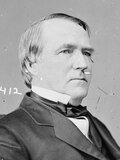
Bowden died on January 2, 1864, less than a year into his six-year term.[71]
The Restored Virginia General Assembly met on December 8, 1864, to hold a special election for the unexpired term. Union candidate Joseph Segar defeated John Curtiss Underwood, S. Ferguson Beach, and Lewis McKenzie on the first ballot.[72]
Virginia (regular)
editDecember 9, 1864
| |||||||||||||||||
Members of the Restored Virginia General Assembly Majority of voting members needed to win | |||||||||||||||||
|---|---|---|---|---|---|---|---|---|---|---|---|---|---|---|---|---|---|
| |||||||||||||||||
| |||||||||||||||||
One-term Unionist John S. Carlile was elected in 1861.[71]
The Restored Virginia General Assembly met on December 9, 1864, to hold a special election for the unexpired term. Union candidate John Curtiss Underwood defeated S. Ferguson Beach and Lewis McKenzie on the first ballot.[73]
West Virginia
editIncumbent Waitman T. Willey was re-elected by the legislature to his first full term as United States Senator, with Willey being elected as a Republican. Willey would serve his term until 1871.
 | |||||||||||||
January 31, 1865
| |||||||||||||
Needed to win: Majority of votes cast jointly by the Legislature 69 votes cast; 35 votes needed | |||||||||||||
|---|---|---|---|---|---|---|---|---|---|---|---|---|---|
| |||||||||||||
| |||||||||||||

Willey was the only candidate to be formally nominated, though attempted nominations were made of Archibald Campbell and House Speaker Lee Roy Kramer. Campbell's nomination was promptly withdrawn, and Kramer declined his.[74]
| Party | Candidate | 1st Ballot | ||
|---|---|---|---|---|
| Votes | % | |||
| Republican | Waitman Willey | 53 | 76.8 | |
| Republican | Lee Roy Kramer | 7 | 10.1 | |
| Republican | Daniel Polsley | 6 | 8.7 | |
| Republican | Archibald Campbell | 2 | 2.9 | |
| Republican | David Hunter Strother | 1 | 1.4 | |
| Total | 69 | 100 | ||
| Needed to win | 35 | >50 | ||
See also
editNotes
edit- ↑ as Republican Conference Chair
- 1 2 Contemporaneous sources count Hicks as a border state unionist prior to his election and a Republican-Unionist afterward.[2]
- ↑ Carlisle was elected as a Unionist and became a Democrat sometime during 1864.[7]
- ↑ The Kansas Union Party bore no relation to the National Union Party.
References
edit- ↑ "17th Amendment to the U.S. Constitution: Direct Election of U.S. Senators (1913)". National Archives and Records Administration. February 8, 2022.
- ↑ Evening Journal Almanac 1864, p. 37; Evening Journal Almanac 1865, p. 37.
- ↑ Wilder 1875, p. 376.
- ↑ Wilder 1875, p. 202.
- ↑ Baum 1984, p. 71.
- ↑ Baum 1984, p. 114.
- ↑ Greeley 1864, p. 24; Evening Journal Almanac 1865, p. 40.
- ↑ Foner 2014, p. 239.
- 1 2 Congressional Quarterly 1985, p. 579.
- 1 2 Alabama 1866, p. 63.
- 1 2 Taft, Furber & Buck 1903, p. 298.
- 1 2 Congressional Quarterly 1985, p. 580.
- ↑ Arkansas 1870, pp. 64–65.
- ↑ Arkansas 1870, pp. 86–87.
- ↑ Arkansas 1870, p. 299.
- 1 2 Congressional Quarterly 1985, p. 582.
- ↑ "Resignation of Mr. Bayard". Alexandria Gazette. February 2, 1864.
- ↑ "From the Capitol". Delaware State Journal. February 2, 1864.
- ↑ "General News". New York Daily Tribune. January 28, 1865.
- ↑ Davis 1913, p. 429.
- 1 2 3 Congressional Quarterly 1985, p. 583.
- ↑ Florida 1865, p. 108.
- ↑ Florida 1865, pp. 108–115.
- ↑ Congressional Quarterly 1985, p. 585.
- 1 2 "Bitter Senatorial Contest in Illinois". Weekly Pioneer and Democrat. January 13, 1865.
- ↑ Illinois 1865, p. 99.
- ↑ Congressional Quarterly 1985, p. 586.
- ↑ Clark 1912, pp. 130–31.
- ↑ "The Legislature [...]". Iowa Transcript. January 21, 1864.
- ↑ Clark 1912, p. 131.
- ↑ Wilder 1875, p. 322.
- ↑ Socolofsky 2001, p. 83.
- 1 2 Blackmar 1904, p. 293.
- ↑ Socolofsky 2001, p. 87.
- ↑ Blackmar 1904, pp. 295–97.
- ↑ Kansas 1865, p. 44.
- ↑ Congressional Quarterly 1985, p. 587.
- ↑ Kentucky 1865, p. 93.
- ↑ "Signs of Progress: The Recent Election of a U.S. Senator from Kentucky". Daily Intelligencer. January 16, 1865.
- 1 2 Taft, Furber & Buck 1903, p. 306.
- 1 2 Congressional Quarterly 1985, p. 588.
- 1 2 Hahn 1865, p. 3.
- 1 2 Summers 1983, pp. 51, 54.
- ↑ "Legislature". New Orleans Tribune. January 10, 1865.
- ↑ Summers 1983, p. 51.
- 1 2 Evening Journal Almanac 1865, p. 36.
- 1 2
- "A Glimpse of the Capitol". Portland Daily Press. January 13, 1865.
- "Legislature of Maine". Portland Daily Press. January 13, 1865.
- ↑ Evening Journal Almanac 1864, p. 37.
- 1 2 "Maryland". New York Daily Tribune. January 11, 1864.
- ↑ Maryland 1864, pp. 15–16.
- ↑ Congressional Quarterly 1985, p. 590.
- ↑ "J. A. Cresswell has been nominated [...]". Alexandria Gazette. March 9, 1865.
- ↑ Baker 1973, pp. 134–35.
- ↑ Maryland 1865, p. 387.
- ↑ Baum 1984, p. 184.
- ↑ Massachusetts 1865, p. 12.
- ↑ "Massachusetts United States Senator: Re-election of Hon. Henry Wilson". New York Times. January 21, 1865.
- 1 2 Congressional Quarterly 1985, p. 591.
- ↑ "The Senatorial Caucus". Lansing State Republican. January 11, 1865.
- 1 2 May 1964, p. 71.
- 1 2 "Close of the Senatorial Contest". St. Cloud Democrat. January 12, 1865.
- ↑ Dell 1975, p. 341.
- ↑ "The Senatorial Contest". Weekly Pioneer and Democrat. January 13, 1865.
- 1 2 Angel 1881, p. 86.
- ↑ Bowers 2013, p. 26.
- ↑ Nevada 1865, p. 34.
- ↑ Nevada 1865, p. 40.
- ↑ Taft, Furber & Buck 1903, p. 310.
- 1 2 "Virginia". New York Daily Tribune. May 28, 1863.
- 1 2 McPherson 1866, p. 124.
- 1 2 Congressional Quarterly 1985, p. 604.
- ↑ Virginia 1865, p. 20; Maddex 1970, p. 38.
- ↑ Virginia 1865, p. 21; Maddex 1970, p. 38.
- ↑ Journal of the House of Delegates of West Virginia for the Session Commencing January 17, 1865. Wheeling: West Virginia Legislature. 1865. p. 57.
- Party Division in the Senate, 1789-Present, via Senate.gov
Bibliography
editPrimary sources
edit- Alabama (1866). Journal [...] of the House of Representatives [...]. Montgomery.
- Arkansas (1870). Journal of the Senate [...]. Little Rock.
- Evening Journal Almanac (1864). The Evening Journal Almanac: 1864. Albany.
- Evening Journal Almanac (1865). The Evening Journal Almanac: 1865. Albany.
- Florida (1865). Journal of the Proceedings of the House of Representatives. Tallahassee.
- Greeley, Horace, ed. (1864). The Tribune Almanac and Political Register for 1864. New York.
- Hahn, Michael (1865). "Letter of the Governor of the State of Louisiana [...]". Index to the Miscellaneous Documents of the Senate of the United States [...]. Washington.
- Illinois (1865). Journal of the House of Representatives [...]. Springfield.
- Kansas (1865). House Journal [...]. Topeka.
- Kentucky (1865). Journal [...] of the Senate [...]. Frankfurt, KY.
- Maryland (1864). Journal of the Proceedings of the House of Delegates [...]. Annapolis.
- Maryland (1865). Journal of the Proceedings of the House of Delegates [...]. Annapolis.
- Massachusetts (1865). Journal of the House of Representatives [...]. Boston.
- Nevada (1865). Journal of the Assembly [...]. Carson City.
- McPherson, Edward, ed. (1866). A Political Manual for 1866 [...]. Washington D.C.
- Virginia (1865). Journal of the House of Delegates [...]. Alexandria.
Secondary sources
edit- Angel, Myron, ed. (1881). History of Nevada. Oakland, CA.
- Baker, Jean H. (1973). The Politics of Continuity: Maryland Political Parties from 1858 to 1870. Baltimore: Johns Hopkins University Press.
- Baum, Dale (1984). The Civil War Party System: The Case of Massachusetts, 1848–1876. Chapel Hill: University of North Carolina Press.
- Blackmar, Frank Wilson (1904). "State of Kansas". In Goodspeed, Weston Arthur (ed.). The Province and the States [...]. Vol. 7. Madison, WI: Western Historical Association.
- Bowers, Michael W. (2013). The Sagebrush State: Nevada's History, Government, and Politics (4th ed.). Reno: University of Nevada Press.
- Clark, Dan Ebert (1912). History of Senatorial Elections in Iowa: A Study in American Politics (PhD thesis). Iowa City: University of Iowa.
- Congressional Quarterly (1985). Congressional Quarterly's Guide to U.S. Elections (2nd ed.). Washington D.C.: Congressional Quarterly. ISBN 978-0-87187-339-2.
- Davis, William Watson (1913). The Civil War and Reconstruction in Florida. New York: Columbia University.
- Dell, Christopher (1975). Lincoln and the War Democrats: The Grand Erosion of Conservative Tradition. Rutherford, NJ: Farleigh Dickenson University Press.
- Foner, Eric (2014). Reconstruction: America's Unfinished Revolution, 1863–77 (Revised ed.). New York: HarperPerennial. ISBN 978-0-06-235451-8.
- Maddex, Jack P. Jr. (1970). The Virginia Conservatives, 1869–1879: A Study in Reconstruction Politics. Chapel Hill: University of North Carolina Press.
- May, George S. (1964). Michigan and the Civil War Years, 1860–1866: A Wartime Chronicle. [Lansing]: Michigan Civil War Centennial Observance Commission.
- Socolofsky, Homer E. (2001). Kansas Governors. Lawrence: University Press of Kansas. ISBN 978-0-7006-3170-4.
- Summers, Mark W. (Winter 1983). "The Moderates' Last Chance: The Louisiana Election of 1865". Louisiana History. 24 (1): 49–69.
- Taft, George S.; Furber, George P.; Buck, George M., eds. (1903). Compilation of Senate Election Cases from 1789 to 1885. Washington, D.C.: Government Printing Office.
- Wilder, Daniel W. (1875). The Annals of Kansas. Topeka.