
The College of Europe (French: Collège d'Europe; Dutch: Europacollege; Polish: Kolegium Europy) is a post-graduate institute of European studies with three campuses in Bruges, Belgium; Warsaw, Poland; and Tirana, Albania.
Collège d'Europe Europacollege Kolegium Europy | |
 | |
| Type | Private postgraduate institute Établissement d'utilité publique |
|---|---|
| Established | 1949 |
| Budget | €30.7 million (2026) |
| Chair | Herman Van Rompuy |
| Rector | Ewa Ośniecka-Tamecka (a.i.) João Gomes Cravinho (appointed) |
Academic staff | 300+ |
| Postgraduates | Annually ca. 500 students from over 55 countries |
| Location | |
| Working languages | English and French |
| Website | www |
 | |


The College of Europe in Bruges was founded in 1949 as a result of the 1948 Congress of Europe in The Hague by leading historical European figures and founding fathers of the European Union, including Salvador de Madariaga, Winston Churchill, Paul-Henri Spaak and Alcide De Gasperi, to promote "a spirit of solidarity and mutual understanding between all the nations of Western Europe and to provide elite training to individuals who will uphold these values"[1] and "to train an elite of young executives for Europe".[2] After the fall of communism, the College opened an additional campus in Natolin, Poland, that was donated to the institution by the Polish government in 1992.[3] A campus in the Albanian capital Tirana opened in 2024.[4]
The College of Europe is historically linked to the establishment of the European Union and its predecessors, and to the creation of the European Movement International, of which the College is a supporting member. João Gomes Cravinho, former Foreign Minister of Portugal, was appointed as the Rector in 2026;[5] former President of the European Council, Herman Van Rompuy, is chair of the board.[6]
The Financial Times writes that "the elite College of Europe in Bruges" is "an institution geared to producing crop after crop of graduates with a lifelong enthusiasm for EU integration", while the BBC called it "the EU's very own Oxbridge", and The New York Times described it as "school of the EU elite".[7][8][9] Each academic year, referred to as promotion, is named after a patron, and opened by a leading European politician.[10]
It has the status of Institution of Public Interest, operating according to Belgian law.
History
editHague Congress initiative to create a College of Europe
editThe College of Europe was the world's first university institute of postgraduate studies and training in European affairs. It was founded in 1949 by leading European figures, such as Salvador de Madariaga, Winston Churchill, Paul-Henri Spaak and Alcide De Gasperi, in the wake of the Hague Congress of 1948, that led to the creation of the European Movement.[1] At the Congress, the Spanish statesman Salvador de Madariaga strongly advocated for the creation of a College of Europe, where graduates from different European states could study together as a way to heal the wounds of the World War II. Although the cultural resolution adopted at the end of the Congress did not include explicit references to the establishment of a College of Europe and only advocated for the creation of a "European Cultural Centre and a European Institute for Childhood and Youth Questions", the idea of establishing a European University was put forward by Congress attendees immediately after the Congress.[11]

.jpg)
A group of Bruges citizens led by the Reverend Karel Verleye succeeded in attracting the College to Bruges. Professor Hendrik Brugmans, one of the intellectual leaders of the European Movement and the president of the Union of European Federalists, became its first Rector (1950–1972).[12] John Bowie, Professor of Modern History at Oxford University, was appointed director of the first session held by the College, in 1949.[13] Henri van Effenterre, who was a Professor of Ancient History at Caen University and Alphonse de Vreese, International Law professor at the University of Ghent, also contributed to that first session.[13] The topic of that first session taught to the first promotion of the College (frequently called préparatoire, for it is the only promotion not named after any prominent figure) was "Teaching history and the development of a European spirit in universities".[13]
In 1978, Guy Spitaels, at that time Belgian Minister for the Employment, was the first College alumnus to be invited as the Orateur of the opening ceremony of an academic year.
In the decades that followed the establishment of the institution, students were hosted at the Navarra Hotel in the historic centre of Bruges until 1981.[14] The College consolidated itself as an institution specialized in studies focused on the newly established European Communities (the College was founded in 1949, before the communities were established).
Bruges speech by Margaret Thatcher
edit
In 1988, British Prime Minister Margaret Thatcher delivered a speech that became known as the Bruges speech at the College of Europe[15] as part of the opening ceremony for that academic year. The Bruges speech is considered by observers as the cornerstone of the Eurosceptic movement that eventually led to Brexit.[16] Thatcher laid down her vision for Europe, claiming that the European Community should remain an economic union, refusing the claims for a closer political integration made by Commission President Jacques Delors. Thatcher outlined her opposition to any attempts to create "a European superstate exercising a new dominance from Brussels."[17]
Post-Cold War history
editAfter the fall of communism and changes in Central and Eastern Europe, the College of Europe campus at Natolin (Warsaw, Poland), was founded in 1992 with the support of the European Commission and the Polish government.[18] According to former president of the European Commission Jacques Delors, "this College of Europe at Natolin is more than the symbol of Europe found once again, it is the hope represented in this beautiful historic place. The hope that exchanges can multiply for greater mutual understanding and fraternity".[18] The establishment of a second campus in eastern has been frequently regarded as part of an effort aiming to train young students from eastern countries under the auspices of eastern enlargement.[19] Since the establishment of that second campus in Poland, the College operates as "one College – two campuses," and what was once referred to as the "esprit de Bruges", is now known as the "esprit du Collège".
In 2012, the College of Europe became a supporting member of the European Movement International.[20] In 2015, former Finnish Prime Minister Alexander Stubb was the second College alumnus to be invited as the Orateur of the opening ceremony of an academic year. The academic year 2018–2019 marked the first time in which a promotion was named after a College alumnus, Manuel Marín, Spanish statesman, European Commissioner and acting President of the Commission (known as "Father of the Erasmus Programme"), who had died early that year.
Campuses
editBruges campus
edit
The Bruges campus is situated in the centre of Bruges since its establishment in 1949. Bruges is located in the Flemish Region of Belgium, a Dutch-speaking area, although the College does not use Dutch as one of its working languages.
The College has a system of residences in the centre of Bruges and not far from the Dijver, where the main administrative and academic building and the library are situated. None of the residences lodges more than 60 students so that each residence in fact has its own small multinational and multicultural environment.[21]
It consists of the following campus buildings:
Dijver
editThe Paul Henri Spaak Building (named after the Belgian socialist prime minister and pioneer of European integration, nicknamed "Mr. Europe"), popularly known as Dijver, is the College's main administrative building on the Bruges campus. It hosts the College's main reception, some of its offices, classrooms and the library. It is located on the Dijver Canal. A white classic façade stands at the front of the main building (where the European, Belgian, Flemish and Brugeois flags hang together), while there is a garden in its back side. The garden is used by the students, who frequently spare their break time there due to its proximity to the library (which is connected to the main building by a corridor). Signed portraits of all the orateurs hang in the walls of the main corridor of the building.

The library building was built in 1965. Princess Beatrix of the Netherlands (later Queen Beatrix) laid the first stone of the library in a special commemorative event. Almost three decades after its completion, the library was reformed and enlarged (the works were completed in 1992). Most of the library funds are devoted to European Studies, together with law, economics, and political and administrative sciences.[22] Access to the library is restricted to College students and academic staff. A bust of Salvador de Madariaga presides over the library main reading hall.
Verversdijk
editFollowing the increase in the number of students attending the College each year, the College of Europe (with the support of different entities and institutions, including the Flemish Government and the City of Bruges[23]) reformed the 17th century protected monument[24] of Verversdijk to provide additional lecture theatres (auditoria), teaching rooms and offices for academics, research fellows and staff; and to extend its activities. The reform was led by the office of Xaveer De Geyter Architects (XDGA), and the project was nominated for the Mies van de Rohe award in 2009.[25] The Verversdijk premises began to be used by College students in 2007. Besides its academic and administrative use throughout the course, a cocktail is served in its garden to each promotion, following their graduation ceremony at St. Walburga Church (Bruges).
The historical site of Verversdijk owes its name to fact that the owners of the houses standing there at medieval times were dyers who used wool traded with Scotland, as the area was populated by several Englishmen during the Middle Ages.[26] During the Spanish rule, it hosted the schooling houses and the monastery established by the Jesuits in the 17th century.[27] In 1792, the monastery auditorium was used as a meeting place by the Jacobin Club.[24] The main monastery wing (dating back to 1701, and whose façade was plastered in 1865[28]) was built along the canal, and was used as an athenaeum since 1851.[24] its long inner corridor is an outstanding example of the rococo style in Bruges, whereas, the ashlar staircase is also an element of artistic relevance. The attic of the building, with a total length of 45 meters and a surprisingly well-preserved oak canopy, is currently used as a study room. During the First World War occupation of Belgium, the attic was used as a sleeping room for soldiers of the German Marine.[28]
The monastery wing was also home to the Museum of Modern Painting from 1898 to 1931[29] (when they were transferred to the newly established Groeninge Museum[30]). Since 2008, following and agreement between the College and the Groeninge Museum, the College hosts the 'Extraordinary Groeninghe Art Collection',[31] an installation of contemporary works of art featuring international artists at Verversdijk's hallways. Members of the Groeninghe Art Collection meet every two months at the College to discuss art, attend lectures by art experts and consider possible purchases.[31]
In March 2014, the so-called China Library was established at the Verversdijk compound.[32] A project sponsored by the Information Office of the State Council of the Chinese Government,[33] the library (decorated in Chinese style) is home to ten thousand books and documents in more than six languages,[32] as frequently hosts events related with Sino-European relations or the Chinese culture.
 View of Verversdijk Campus
 Old entrance to the Verversdijk buildings
 New entrance to the Verversdijk buildings


Garenmarkt
editThe Hotel Portinari in Garenmarkt 15 with its classical façade was formerly home to Tommaso Portinari, the administrator of the Florentine "Loggia de Medici" in the 15th century in Bruges. It contains eleven apartments for professors and forty student rooms, two "salons" in 19th-century style, the "salon du Recteur" with 18th-century wall paintings and a modern "Mensa" for students. A room dedicated to Winston Churchill (who was among the voices calling for the establishment of the College during The Hague Congress in 1948 and was one of its founders the year after) was inaugurated by his grandson, Sir Nicholas Soames, and the British ambassador in 2017.[34] Garenmarkt also hosts the canteen for all College students.
Biskajer
editThe residence is located in a home built in classicist style during the 19th century. The building is located in Biskajersplein, a small square named after the Spanish region of Biscay (the square is located on the side the dock where ships coming in from that region unloaded their merchandise in the 15th and 16th centuries). The actual residence is located on the lot occupied by the Mareminne house,[35] which hosted the consulate of Biscay in the past, although the original building was demolished. Traces of the old consulate building can be found in the inner garden of the residence, which kept the shape of the consulate's horse stable. The residence hosts 53 students every year.[36]
Gouden Hand
editThe Gouden Hand residence is housed in a Bruges-style building dating back to the 17th century. It is a listed monument. It was renovated during the 2005–2006 academic year. The name of the residence, directly translates from Dutch to "Golden Hand", after a medieval legend about the canal bordering the residence.[37][38] Gouden Hand is also the name of two streets along the same canal. The 15th century painter Jan Van Eyck lived and owned a studio in the Gouden-Handstraat nr. 6, behind the current residence.[39]
The Gouden Hand student bar is situated in the cellar. The building has been a backdrop for many films and documentaries.[36]
Natolin campus
edit
The Natolin Warsaw campus of the College was established in 1992 responding to the revolutions of 1989 and ahead of Poland's accession negotiations with the EU.
The Natolin Campus is located in a historic palace, part of a 120-hectare park and nature reserve—formerly the Royal hunting palace of Natolin—situated in the southern part of Warsaw about 20 minutes by metro from the city centre. The Natolin European Centre Foundation takes care of the complex and has conducted restoration of the former Potocki palace, making it available for the College.
The old historical buildings, including the manor house, the stables and the coach house, were converted to the needs of modern times and new buildings were constructed in a style preserving the harmony of the palace and its outlying estate.
In 2022, the Natolin campus of the College of Europe hosted one of the four European citizens' panels, organised as part of the EU's Conference on the Future of Europe.[40]
Tirana Campus
editIn 2023, the College announced the opening of a new campus in Tirana, the capital of Albania.[41] The Tirana campus of the College of Europe welcomed its inaugural cohort during the 2024–2025 academic year, comprising 32 students from 21 countries.[42] The student body primarily included individuals from the Western Balkans and the European Union. The College has indicated an expected increase in student enrollment in the future.[43] During the 2025–2026 academic year 40 students with 24 different nationalities were studying in Tirana.[44]
Organisation
editFaculty
editOriginally, the College had no permanent teaching staff. Instead, the courses were taught by prominent academics and sometimes government officials from around Europe.[45] While the College teaching is still mostly based on a flying faculty system, in the last couple of decades the institution has increasingly employed permanent academic staff, including directors of studies, permanent professors, and chairholders.[46] Overall, more than 300 professors taught at the College in 2024.[47]
Governance
editRectors
editThe rector directs and coordinates the College's activities.
- Hendrik Brugmans (1949–1971)
- Jerzy Łukaszewski (1972–1990)
- Werner Ungerer (1990–1993)
- Gabriel Fragnière (1993–1995)
- Otto von der Gablentz (1996–2001)
- Piet Akkermans (2001–2002)
- Robert Picht (a.i., 2002–2003)
- Paul Demaret (2003–2013)
- Jörg Monar (2013–2020)
- Federica Mogherini (2020–2025)
- Ewa Ośniecka-Tamecka (a.i., 2025–present)
- João Gomes Cravinho (2026-present)
Vice-rectors
editThe vice-rector is responsible for the day-to-day administration of the Natolin (Warsaw) campus.
- Ettore Deodato (1993)
- David W. P. Lewis (1994–1996)
- Jacek Saryusz-Wolski (1996–1999)
- Piotr Nowina-Konopka (1999–2004)
- Robert Picht (a.i. 2004–2005)
- Robert Picht (2005–2007)
- Ewa Ośniecka-Tamecka (2007– present)[48]
Presidents of the Administrative Council
editThe President of the Administrative Council of the College of Europe chairs its highest decision-making authority, and is responsible for the implementation of the College's objectives. The Council includes representatives of the European Commission, of the two countries hosting campuses in Bruges, Belgium and Natolin, Poland and of other European governments. The Executive Committee of the College, reporting to the Administrative Council, ensures the sound financial and administrative working of the College.
- Salvador de Madariaga (1950–1964)
- Jean Rey (1964–1974)
- François-Xavier Ortoli (1974–1975)
- Daniël Coens (1985–1990)
- Manuel Marín (1990–1995)
- Jacques Delors (1995–2000)
- Jean-Luc Dehaene (2000–2009)
- Íñigo Méndez de Vigo (2009 – 2019)[49]
- Herman Van Rompuy (2019–present)[50]
Finances
editThe College’s finances are structured separately between the Bruges and Tirana campuses on the one hand, and the Natolin campus on the other. Its total budget amounted to approximately €30.7 million in 2026. The institution is primarily funded through public sources, including annual operating grants from the European Commission under the Erasmus+ programme, as well as contributions from the governments of the host countries, namely Belgium, Poland, and Albania. For the 2026 financial year, the European Commission awarded an operating grant of approximately €10.2 million to the Bruges and Tirana campuses, while the Natolin campus was co-financed with about €5.0 million.[51][52]
For the 2026–2027 academic year, the annual fee covering tuition, accommodation and meals is €30,000 at the Bruges campus, €29,000 in Natolin, and €27,000 in Tirana.[53] Around 70% of students receive full or partial scholarships that are mostly funded by national and regional governments. Additional scholarships are provided through contributions from alumni, foundations, and private sponsors.[54]
Academics
editAdmissions
editEvery year, more than 2.000 people from over 100 countries apply to the College.[55] Application may be made to national selection committees or by direct application to the College of Europe for individuals from a country where no selection committee exists.[56] As of 2026, there are 32 national and regional selection committees.[57] Selection committees can grant scholarships. Approximately 70% of students receive a scholarship from either national governments or other public and private institutions.[54] For much of its history, the College only admitted few students, but the number has steadily increased since the 1990s.
Education
editThe College of Europe is a bilingual institution, requiring students to be proficient in both English and French.[58] In fact, students typically speak three to four languages.[59][60]
It offers several one-year advanced master's programmes in various fields related to European studies. At the Bruges campus, students can choose from four specialized master's programmes: European Political and Governance Studies, European Law, European Economic Studies, and EU International Relations and Diplomacy Studies. The Natolin campus offers a single programme: European Interdisciplinary Studies. At the Tirana campus, students are offered a programme in European Transformation and Integration. Additionally, in collaboration with the Fletcher School of Law and Diplomacy at Tufts University, the College offers a joint Master in Transatlantic Affairs, in which students spend one year at each institution.[61]
Libraries
editThe College libraries mainly focus on European integration, EU law, economics, political science, international relations, and related fields. Together, their holdings include around 115,000 printed volumes, over 600,000 e-books, 5,000 theses, nearly 200 journal titles, and more than 30 databases.[62][63]
Student life
editResidences
editDepending on the location, students are either accommodated in multiple residences, like in Bruges, or in a self-contained residential campus, like in Warsaw and Tirana. Within those, students are assigned individual private rooms and have access to shared spaces. Residences are overseen by administrative staff. Elected resident representatives serve as intermediary between residents and the administration. A campus canteen provides full-board meals throughout the week.[64][65][66]
Societies
editStudent societies organise study visits, conferences, debates, cultural events, and social gatherings, related to different cultural, academic, professional, and social fields.[67][68] Additionally, artistic groups like music ensembles and choirs have been established.[69][70] Inter-campus sporting activities, like football and volleyball matches, also take place.[71] Since 2010, during the annual Hendrik Brugmans Memorial Football Cup, named after the first rector of the College, teams of students of the current promotion as well as alumni compete against each other.[72]
Traditions
editThe College of Europe has developed several traditions: Each cohort referred to as a "promotion" is named after an outstanding European figure, which is called "patron".[73] Furthermore, each academic year is traditionally inaugurated by a prominent European person. During the formal opening and closing ceremony of every academic year the College's student choir sings the European Anthem Ode to Joy, usually in multiple languages.[74]
Another tradition dating back to the first years of existence of the College is the visit to Flanders fields of World War I during the first weeks of the academic year. During that visit, students lay a floral tribute at the Menin Gate war memorial in Ypres.[75]
Since its early years, the College has had national days and weeks as part of its traditions: During these events, students organize cultural activities, academic conferences, traditional meals, and social gatherings to show the diversity of their national heritages.[76][77]
Each year, College of Europe students are named honorary citizens of Bruges prior to their departure.[78]
Promotions
editAcademic years at the College are known as promotions. Each promotion is named after an outstanding European, referred to as the promotion's patron. The opening ceremony each year is presided over by a prominent European politician, referred to as the Orateur. Being invited as the College's Orateur is considered a high honour.[79]
The following chart shows the evolution of student numbers over time:
Notable people
editAlumni
editMany former students of the College, referred to as anciens (French for alumni), have gone on to serve as heads of state and governement, ministers, parliamentarians, diplomats, judges, senior civil servants, academics, journalists and business leaders. Since its founding, the College has educated more than 17,000 students from over 70 countries.[83][84] In 2021, a sample compiled by Politico Europe found the College to be the most represented alma mater among senior European Union officials.[85]
- Selection of Notable College of Europe Alumni
 Roberta Metsola, 17th President of the European Parliament (Locke, 2004)
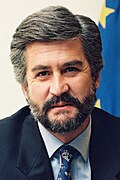 Manuel Marín, Acting President of the European Commission (Mazzini, 1974)
 Margaritis Schinas, Vice-President of the European Commission (Columbus, 1986)
 David O’Sullivan, 4th Secretary-General of the European Commission (Czartoryski, 1976)
 Thérèse Blanchet, 9th Secretary-General of the European Council and Council of the European Union (Dawson, 1989)
 Marc van der Woude, 5th President of the General Court of the European Union (Rey, 1984)
 Jo Leinen, President of the Union of European Federalists & Member of the European Parliament (Mazzini, 1974)
 Louise Fréchette, 1st United Nations Deputy Secretary-General (Renner, 1978)
 Marija Pejčinović Burić, 15th Secretary-General of the Council of Europe (Zweig, 1994)
 Alexander Stubb, 13th President of Finland & 43rd Prime Minister of Finland (Llull, 1995)
 Helle Thorning-Schmidt, 26th Prime Minister of Denmark (Charles IV, 1993)
 Alexander Schallenberg, 27th Chancellor of Austria (Hallstein, 1996)
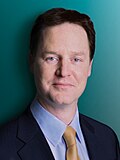 Nick Clegg, 4th Deputy Prime Minister of the United Kingdom (Mozart, 1992)
 Sabine Monauni, 20th Deputy Prime Minister of Liechtenstein (Aristotle, 2001)
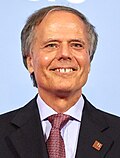 Enzo Moavero Milanesi, Foreign Minister of Italy (Beyen, 1982)
 Ursula Plassnik, Foreign Minister of Austria (De Madriaga, 1980)
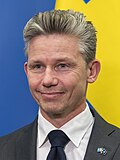 Pål Jonson, Defence Minister of Sweden (Da Vinci, 1999)
 Paweł Szałamacha, Finance Minister of Poland (Zweig, 1994)
 Clément Beaune, Minister Delegate for Transport of France (Montesquieu, 2005)
 Jon Ola Norbom, Finance Minister of Norway (Masaryk, 1953)
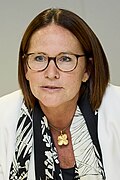 Yuriko Backes, Finance Minister of Luxembourg (Zweig, 1994)
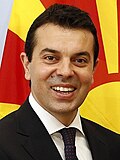 Nikola Poposki, Foreign Minister of North Macedonia (Montesquieu, 2005)
 Tanja Miščević, European Integration Minister of Serbia (Locke, 2004)
 Olesea Stamate, Justice Minister of Moldova (Montesquieu, 2005)
 Árni Páll Árnason, Economy Minister of Iceland (Mozart, 1992)
 Rafał Trzaskowski, Mayor of Warsaw & Deputy Foreign Affairs Minister of Poland (De Tocqueville, 1997)
.jpg)
.jpg)
_-_Protecting_our_European_way_of_life_(48838400957)_(cropped).jpg)

.jpg)
.jpg)

.JPG)
.jpg)
_(cropped).jpg)
.jpg)


.jpg)


.jpg)
.jpg)
.jpg)
.jpg)
.jpg)
_(cropped).jpg)
.jpg)
.jpg)

_(cropped).jpg)
The College’s alumni count 4 heads of state or government, multiple deputy prime ministers, national ministers, members of national parliaments, constitutional court judges, attorney-generals, and senior national and regional civil servants from numerous countries.
Former students have also included 1 President of the European Parliament, 1 acting President of the European Commission, 2 Vice-Presidents of the European Commission, 1 Secretary-General of the European Commission, 1 Secretary General of the European Council and Council of the European Union, and 1 Secretary-General of the European External Action Service. Other alumni have been at least 16 Members of the European Parliament, 17 Director-Generals of the European Commission, as well as 2 presidents, and several judges or advocates general of the Court of Justice of the European Union.
Beyond the European Union, former students have held leading posts in international organisations, including Secretary-General of the Council of Europe, United Nations Deputy Secretary-General, United Nations Under-Secretary-General for Legal Affairs, and Secretary-General of the United Nations World Tourism Organization. Others have held senior positions at the World Bank, UNESCO, and the International Labour Organization, or sat as judges at the European Court of Human Rights or the International Tribunal for the Law of the Sea.
More than ninety alumni have served as ambassadors or permanent representatives for the European Union or national governments. They have represented their countries or the EU at the United Nations, NATO, the European Union, and the Organization for Security and Co-operation in Europe, and have held diplomatic assignments in different countries, including the United States, China, India, Japan, Russia, and the United Kingdom.
Some others have achieved notability in academia, journalism, literature, civil society, and business. These alumni include professors at major European universities, editors and journalists, award-winning writers, civil society leaders, and business executives or founders.
Controversies
editControversy concerning Saudi Arabia
editIn February 2019, a series of press pieces published by EUobserver[86] revealed that the Bruges-based institute was paid by the Saudi government to set up private meetings between Saudi ambassadors, EU officials, and MEPs.[87] Although EU lobby transparency rules say that academic institutions should register if they "deal with EU activities and policies and are in touch with the EU institutions", the College of Europe is not listed in the EU joint-transparency register.[86] On 13 February, MEP Alyn Smith of Greens/EFA wrote to ask Jörg Monar, Rector of the College of Europe, to provide assurances that the institute has not received "financial contributions from the Saudi authorities in any form" in its efforts to set up meetings with the EU institutions.[88] On 20 February, Marietje Schaake of the ALDE group presented a written question to the European Commission on this issue.[89][90] This written question was the subject of a response from the European Commission published on 17 May in which it explained not having any direct evidence as to the facts reported, nor being able to comment on the sources of revenue of the College of Europe beyond European subsidies.[91] A group of College alumni collected signatures to demand the institution to stop organising private meetings between MEPs and the Saudi government.[92]
In a letter to the president of the European Parliament's Budget Control Committee Ingeborg Gräßle, Jörg Monar, Rector of the College of Europe, confirmed the organization of trainings for Saudi officials and criticized the media for reporting them as lobbying. The rector indicated that these meetings had no lobbying dimension but sought to show to the Saudis the reasons why the Union defended certain values, privileging communication over isolation to defend European values.[93][94]
Inside Arabia Online, an online publication, characterised the lobbying by Saudi Arabia as part of a concerted effort to reverse the Kingdom's inclusion on the EU's "blacklist", which intends to penalize countries failing to combat terrorism financing and money laundering.[95]
Allegations of sexual harassment and misogyny
editThe French language weekly news magazine Le Vif/L'Express published an article on 21 February 2019 based on the testimony of former students from recent years. The article reported a culture of sexual harassment and misogyny at the College of Europe. Cases of sexual harassment and inappropriate behaviour were described in the magazine, including frotteurism, forced kisses and groping. Various students reported to Le Vif/L'Express that the administration observes a code of silence on this issue. Cases of inappropriate behaviours by the academic staff were also reported. Contacted by Le Vif/L'Express magazine, the administration replied that: "In some occasions in the past, some students have crossed the personal barriers of other students".[96] On 5 March 2019, a former student of the College of Europe, published an opinion in Le Vif/L'Express magazine, stating that a culture of sexual harassment and misogyny existed at the College of Europe when she was studying there.[97]
In 2024, Politico Europe published an article detailing longstanding accusations of sexual harassment by an unnamed professor at the university. The article details that accusations against the professor had been logged as long ago as 2012, but that he continued to be employed by the university.[98] The publication of that article led to the dismissal of the professor Olivier Costa, whose identity was revealed further by Politico after the end of the disciplinary procedure.[99]
European Diplomatic Academy procurement corruption allegations
editIn December 2025, the Belgian police, on instructions by the European Public Prosecutor's Office (EPPO) and a Belgian investigating magistrate, raided the College of Europe premises in Bruges as well as the headquarters of the European External Action Service in Brussels as part of an investigation into suspected fraud related to EU-funded training for junior diplomats. The EPPO alleges that the College of Europe had prior knowledge that it would be attributed the bid to host the European Diplomatic Academy and purchased a new property based on this prior expectation. The rector, Federica Mogherini, as well as a high-ranking EU official and former Italian ambassador, Stefano Sannini, and a College of Europe staff member were detained as part of the investigation.[100][101] On 4 December 2025, Mogherini resigned as rector.[102]
See also
edit
References
edit- 1 2 "Le rôle du Collège d'Europe Archived 7 June 2011 at the Wayback Machine" [The role of the College of Europe], Journal de Bruges et de la Province, 7 October 1950, Vol. 114, No. 78, p. 1
- ↑ Henri Brugmans, "Former des cadres pour l'Europe Archived 7 June 2011 at the Wayback Machine" [Training executives for Europe], Fédération, January 1950, No. 60, pp. 42–44
- ↑ "College of Europe – College of Europe – Campuses – Natolin (Warsaw)". Coleurope.eu. Archived from the original on 10 June 2012. Retrieved 26 June 2012.
- ↑ "Speech by President von der Leyen at the inauguration ceremony for the College of Europe campus in Tirana". European Commission - European Commission. Retrieved 10 May 2026.
- ↑ Didili, Zoi (27 May 2020). "Former top diplomat Mogherini appointed as College of Europe rector". www.neweurope.eu. Archived from the original on 30 December 2020.
- ↑ "Appointment of the new President of the Administrative Council". College of Europe. Archived from the original on 1 July 2019. Retrieved 1 July 2019.
- ↑ Tony Barber (20 April 2010). "Europe in joyous disbelief over Nick Clegg and the Lib Dems". Financial Times. Archived from the original on 17 September 2011. Retrieved 17 September 2011.
- ↑ Adam Fleming (25 October 2013). "College of Europe in Bruges: Home of Thatcher speech". BBC. Retrieved 10 July 2015.
- ↑ "School of the E.U. Elite Adapts to a Changing Climate (Published 2014)". 3 August 2014. Archived from the original on 8 January 2024. Retrieved 11 December 2025.
- ↑ "School's in!". POLITICO. 23 October 2013. Retrieved 10 May 2026.
- ↑ "The College of Europe". cvce.eu. University of Luxembourg. CVCE. Archived from the original on 6 December 2022. Retrieved 21 November 2019.
- ↑ "Hendrik BRUGMANS † (1950-1972)". coleurope.eu. College of Europe. Archived from the original on 23 April 2019. Retrieved 12 May 2019.
- 1 2 3 "The College of Europe". cvce.eu. University of Luxembourg, CVCE. Archived from the original on 6 December 2022. Retrieved 21 November 2019.
- ↑ "RICHE HISTOIRE DE L'HÔTEL NAVARRA BRUGES" (PDF). hotelnavarra.com. Hotel Navarra Brugge. Archived (PDF) from the original on 16 August 2021. Retrieved 20 November 2019.
- ↑ "Speech to the College of Europe ("The Bruges Speech")". Margaret Thatcher Foundation. Archived from the original on 11 September 2022. Retrieved 20 November 2019.
- ↑ "How Thatcher's Bruges speech put Britain on the road to Brexit". Financial Times. 31 August 2018. Archived from the original on 14 November 2019. Retrieved 20 November 2019.
- ↑ McWilliams, David (1 December 2015). "How the Iron Lady drew up the original blueprint for a Brexit". Independent.ie. Archived from the original on 5 November 2022. Retrieved 5 November 2022.
- 1 2 "Welcome to Natolin". coleurope.eu. College of Europe. Archived from the original on 10 June 2012. Retrieved 20 November 2019.
- ↑ Poole, Peter A. (2003). Europe Unites: The EU's Eastern Enlargement. Westport, CT 06881: Praeger. p. 63. ISBN 0-275-97704-8. Retrieved 20 November 2019.
{{cite book}}: CS1 maint: location (link) - ↑ "EMI Board approves new Membership applications". EMI. Archived from the original on 24 March 2022. Retrieved 21 June 2019.
The EMI is closely linked to the creation of the College of Europe.
- ↑ "Residences". coleurope.eu. College of Europe. Archived from the original on 14 May 2020. Retrieved 11 May 2020.
- ↑ "College Libraries". coleurope.eu. College of Europe. Archived from the original on 13 May 2020. Retrieved 11 May 2020.
- ↑ "The Verversdijk extension". coleurope.eu. College of Europe. Archived from the original on 14 May 2020. Retrieved 10 May 2020.
- 1 2 3 "Jezuïetencollege". inventaris.onroerenderfgoed.be. Inventaris Vlaanderen. Archived from the original on 23 January 2020. Retrieved 11 May 2020.
- ↑ "College of Europe". xdga.be. XDGA. Archived from the original on 14 July 2020. Retrieved 11 May 2020.
- ↑ "Verversdijk". thedoghousebruges.co.uk. The Doghouse. Archived from the original on 10 August 2020. Retrieved 11 May 2020.
- ↑ "De Molenbrug: in het midden van verschillende werelden" (PDF). erfgoedcelbrugge.be. Erfgoed Brugge. Archived (PDF) from the original on 16 August 2021. Retrieved 11 May 2020.
- 1 2 "Verversdijk. The present and the future" (PDF). coleurope.eu. College of Europe. Archived (PDF) from the original on 16 August 2021. Retrieved 10 May 2020.
- ↑ "Groeninge Museum, Bruges". Web Gallery of Art. Archived from the original on 23 January 2021. Retrieved 11 May 2020.
- ↑ Turner, Christopher (2002). Landmark Visitors Guide Bruges: Belgium. Hunter Publishing. p. 36. ISBN 9781843060321.
- 1 2 "History". Groeninghe Art Collection. Archived from the original on 12 April 2023. Retrieved 11 May 2020.
- 1 2 ""China Library" inaugurated at College of Europe". chinaculture.org. China Culture. Archived from the original on 22 February 2020. Retrieved 11 May 2020.
- ↑ "Official Inauguration of the China Library". coleurope.eu. College of Europe. Archived from the original on 5 August 2020. Retrieved 10 May 2020.
- ↑ "Official inauguration of the Sir Winston Churchill Room | Coleurope". Archived from the original on 16 August 2021. Retrieved 16 August 2021.
- ↑ "BRUJAS - Auñamendi Eusko Entziklopedia". Archived from the original on 16 August 2021. Retrieved 16 August 2021.
- 1 2 "Residences | Coleurope". Archived from the original on 14 May 2020. Retrieved 11 May 2020.
- ↑ "Legend of Bruges – Young Travelling Scholarship". 25 September 2019. Archived from the original on 26 October 2021. Retrieved 26 October 2021.
- ↑ "Gouden-Handreibrug, Torenbrug & Augustijnenbrug". Archived from the original on 26 October 2021. Retrieved 26 October 2021.
- ↑ "Gouden-Handstraat nr 6 site van het voormalig huis van Jan van Eyck". www.erfgoedforumbrugge.be.
- ↑ de La Baume, Maïa (8 May 2022). "The EU spent months and millions asking for people's thoughts. Will it listen to them?". Politico. Archived from the original on 5 November 2022. Retrieved 5 November 2022.
- ↑ "College of Europe to open new campus in Albania". POLITICO. 16 March 2023. Retrieved 9 August 2023.
- ↑ "Our pioneering Tirana students officially welcomed! | Coleurope". www.coleurope.eu. Retrieved 21 April 2025.
- ↑ "EU and Western Balkans offer scholarships for the Tirana campus of the College of Europe". Consilium. Retrieved 21 April 2025.
- ↑ "EU Funding & Tenders Portal". ec.europa.eu. Retrieved 14 April 2026.
- ↑ Jozwiak, Rikard (28 October 2011). "Training The 'New Europeans' -- The College of Europe Breeds The EU Elite". Radio Free Europe/Radio Liberty. Radio Free Europe Radio Liberty. Archived from the original on 12 May 2019. Retrieved 12 May 2019.
- ↑ "Faculty members | Coleurope". www.coleurope.eu. Retrieved 14 April 2026.
- ↑ "General facts and figures | Coleurope". www.coleurope.eu. Retrieved 14 April 2026.
- ↑ "Vice-Rectors of the Natolin campus (Warsaw)". College of Europe. Archived from the original on 23 April 2019. Retrieved 12 May 2019.
- ↑ "Presidents of the Administrative Council". College of Europe. Archived from the original on 23 April 2019. Retrieved 12 May 2019.
- ↑ "Mr Herman VAN ROMPUY President of the Administrative Council of the College of Europe. Opening Ceremony, Bruges Campus, 13 November 2019" (PDF). coleurope.eu. College of Europe. Archived (PDF) from the original on 16 August 2021. Retrieved 26 November 2019.
- ↑ "EU Funding & Tenders Portal". ec.europa.eu. Retrieved 14 April 2026.
- ↑ "EU Funding & Tenders Portal". ec.europa.eu. Retrieved 14 April 2026.
- ↑ "Fees | Coleurope". www.coleurope.eu. Retrieved 14 April 2026.
- 1 2 "Scholarships | Coleurope". www.coleurope.eu. Retrieved 20 August 2023.
- ↑ "A Scalable Model for Multi-Campus Institutions: Inside the College of Europe's Admissions Platform | Full Fabric". www.fullfabric.com. Retrieved 6 December 2025.
- ↑ "College of Europe – Admission – Academic requirements". Coleurop.be. Archived from the original on 27 September 2011. Retrieved 17 September 2011.
- ↑ "Selection Committees | Coleurope". www.coleurope.eu. Retrieved 14 April 2026.
- ↑ "Language rule | Coleurope". www.coleurope.eu. Retrieved 6 December 2025.
- ↑ "Why study at the College of Europe, the most genuinely 'European' of all the University Institutes of European Studies?". Retrieved 6 December 2025.
- ↑ Schnabel, Virginie. "Élites européennes en formation: les étudiants du 'Collège de Bruges' et leurs études". Politix. Revue des sciences sociales du politique. 11 (43): 39.
- ↑ "Master of Arts in Transatlantic Affairs (MATA) | Coleurope". www.coleurope.eu. Retrieved 21 April 2025.
- ↑ "Bruges Library | Coleurope". www.coleurope.eu. Retrieved 14 April 2026.
- ↑ "Books". Retrieved 14 April 2026.
- ↑ Lindberg, Sara (2022). Forming EU-professionals: Geopolitical and Symbolic Hierarchies at the College of Europe. Uppsala University. pp. 71–72. ISBN 978-91-513-1629-1.
- ↑ "Residences | Coleurope". www.coleurope.eu. Retrieved 14 April 2026.
- ↑ "The Residence Representatives, Campus Bruges, 2020-2021 | Coleurope". www.coleurope.eu. Retrieved 14 April 2026.
- ↑ Lindberg, Sara (2022). Forming EU-professionals: Geopolitical and Symbolic Hierarchies at the College of Europe. Uppsala: Uppsala University. p. 84. ISBN 978-91-513-1629-1.
- ↑ "Student life | Coleurope". www.coleurope.eu. Retrieved 14 April 2026.
- ↑ "EuropARTy at the College of Europe | Coleurope". www.coleurope.eu. Retrieved 14 April 2026.
- ↑ "Pulse of Europe | College of Europe". www2.coleurope.eu. Retrieved 14 April 2026.
- ↑ "Soccer games results | Coleurope". www.coleurope.eu. Retrieved 14 April 2026.
- ↑ "Students organize 2022 edition of the Hendrik Brugmans Memorial Cup football tournament | Coleurope". www.coleurope.eu. Retrieved 14 April 2026.
- ↑ Tim Soutphommasane (19 November 2011). "Government by nerds one step from tyranny". The Australian. Archived from the original on 20 November 2011. Retrieved 20 November 2011.
It is no accident that institutes such as the celebrated Ecole Nationale d'Administration in France or the College of Europe in Belgium produce so many political leaders.
- ↑ "Natolin Graduation Ceremony of the Jacques Delors Promotion 2024/2025 | Coleurope". www.coleurope.eu. Retrieved 14 April 2026.
- ↑ "In Flanders Fields - historical study trip". coleurope.eu. College of Europe. Archived from the original on 28 September 2020. Retrieved 26 November 2019.
- ↑ Lindberg, Sara (2022). Forming EU-professionals: Geopolitical and Symbolic Hierarchies at the College of Europe. Uppsala University. pp. 123–131.
- ↑ "College of Europe Bruges campus national weeks | Coleurope". www.coleurope.eu. Retrieved 21 April 2025.
- ↑ "Honorary citizens of the city of Bruges". coleurope.eu. College of Europe. Archived from the original on 28 September 2020. Retrieved 26 November 2019.
- ↑ "College of Europe – College of Europe – History – Opening ceremonies". Coleurop.be. Archived from the original on 25 May 2011. Retrieved 17 September 2011.
- ↑ "Weekly schedule of President Donald Tusk". www.consilium.europa.eu. Archived from the original on 13 November 2019. Retrieved 13 November 2019.
- ↑ "Opening Ceremony, Bruges Campus | College of Europe". coleurope.eu. Archived from the original on 13 September 2017. Retrieved 13 September 2017.
- ↑ "Opening Ceremony of the Academic Year 2017-2018 at the Natolin campus of the College of Europe | College of Europe". coleurope.eu. Archived from the original on 13 September 2017. Retrieved 24 July 2017.
- ↑ "General facts and figures | Coleurope". www.coleurope.eu. Retrieved 8 May 2026.
- ↑ "Careers of alumni | Coleurope". www.coleurope.eu. Retrieved 8 May 2026.
- ↑ "How to join the EU bubble — Brussels careers by the numbers". Politico. 4 February 2021. Archived from the original on 3 November 2022. Retrieved 2 November 2022.
- 1 2 Nielsen, Nikolaj (12 February 2019). "Saudis paying College of Europe to lobby MEPs". EUobserver. Archived from the original on 7 April 2019. Retrieved 7 April 2019.
- ↑ Debusschere, Barbara (14 February 2019). "Brugse eliteschool kreeg Saudisch geld". De Morgen. Archived from the original on 17 June 2019. Retrieved 26 June 2019.
- ↑ "[Ticker] College of Europe rector questioned over Saudi visit". EUobserver. 13 February 2019. Archived from the original on 7 April 2019. Retrieved 21 May 2019.
- ↑ Schaake, Marietje. "College of Europe funding by the Saudi Government for lobbying practices". Marietje Schaake. Archived from the original on 25 June 2019. Retrieved 21 May 2019.
- ↑ Schaake, Marietje. "College of Europe in receipt of funding from the Saudi Government for lobbying practices". europarl.europa.eu. Archived from the original on 23 May 2019. Retrieved 21 May 2019.
- ↑ "Answer to Question No E-000928/19". europarl.europa.eu. Archived from the original on 21 May 2019. Retrieved 19 June 2019.
- ↑ "College of Europe alumni ask rector to cut Saudi ties". EUobserver. 19 February 2019. Archived from the original on 7 April 2019. Retrieved 10 April 2019.
- ↑ "EU college defends Saudi-style visits, attacks 'sloppy' media". EUobserver. 27 February 2019. Archived from the original on 7 April 2019. Retrieved 10 April 2019.
- ↑ "POLITICO EU Influence, presented by ISF: International Women's Day – Biased tweeting – College of Europe's Saudi links". POLITICO. 8 March 2019. Archived from the original on 13 April 2019. Retrieved 19 June 2019.
- ↑ Igrouane, Youssef (5 April 2019). "Saudi Lobbying Blocks Listing on EU Dirty Money Blacklist". Inside Arabia Online. Archived from the original on 10 April 2019. Retrieved 9 April 2019.
- ↑ Ghali, Soraya (22 February 2019). "Sexisme : omerta au Collège d'Europe ?". Le Vif/L'Express. Archived from the original on 7 April 2019. Retrieved 8 April 2019.
- ↑ "Le sexisme et le harcèlement font partie intégrantes du fonctionnement de nombreuses institutions universitaires européennes". Le Vif/L'Express. 5 March 2019. Archived from the original on 10 April 2019. Retrieved 8 April 2019.
- ↑ "Sexual harassment probe rocks College of Europe". POLITICO. 16 February 2024. Retrieved 16 February 2024.
- ↑ "Top EU college terminates professor's contract over sexual harassment claims". 20 March 2024.
- ↑ https://www.euractiv.com/news/exclusive-police-raid-eu-external-action-service-college-of-europe-in-sweeping-fraud-probe/
- ↑ "Belgium: EPPO conducts searches at College of Europe and European External Action Service | European Public Prosecutor's Office".
- ↑ "Statement by MRS. Federica Mogherini, Rector of the College of Europe | Coleurope".
Further reading
edit- Karel Verleye, De stichting van het Europacollege te Brugge, Stichting Ryckevelde, 1989.
- Dieter Mahncke, Léonce Bekemans, Robert Picht, The College of Europe. Fifty Years of Service to Europe, College of Europe, Bruges, 1999. ISBN 9080498319. Includes a list of all graduates 1949–1999.
- Paul Demaret, Inge Govaere, Dominik Hanf (eds), Dynamiques juridiques européennes. Edition revue et mise à jour de 30 ans d'études juridiques européennes au Collège d'Europe, Cahiers du Collège d'Europe, P. I. E. Peter Lang, Brussels, 2007.
External links
edit Media related to College of Europe at Wikimedia Commons
- Official website
- Politico – College of Europe section
- Alumni Association – College of Europe
- The Madariaga – College of Europe Foundation Archived 21 June 2014 at the Wayback Machine
- Behind the Walls, article by a College alumnus – Europe&Me Magazine
